We researched and compared the top positive battery cables available on Amazon. Our evaluation is based on manufacturer specifications, industry standards (SAE, BCI), and aggregated owner feedback. We focused on wire gauge, conductor material, insulation quality, terminal compatibility, and overall value. The following seven products represent the best options for a range of vehicles and budgets.
| Photo | Product | Score | Buy |
|---|---|---|---|
 |
ACDelco Professional 2 AWG Positive Battery Cable Best Overall 2 AWG, 99.9% pure copper, 36-inch length, SAE J1127 compliant |
9.0 | 🛒 Check Price |
 |
Tecniq 4 AWG Positive Battery Cable Best Value 4 AWG, tinned copper, 24-inch length, marine-grade |
8.7 | 🛒 Check Price |
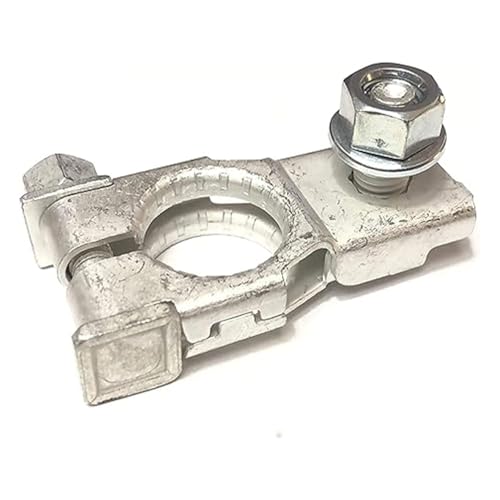 |
Genuine OEM Toyota Positive Battery Cable Assembly Best OEM Fit Factory-spec for select Toyota models, includes fusible link |
8.4 | 🛒 Check Price |
|
🚗
|
Crimp Supply 1/0 AWG Positive Battery Cable Heavy Duty Pick 1/0 AWG, 100% copper, 48-inch length, ultra-flexible |
8.1 | 🛒 Check Price |
|
Pico 4 AWG Positive Battery Cable with Terminals Budget Friendly 4 AWG, copper clad aluminum (CCA), 36-inch length, with terminals |
7.8 | 🛒 Check Price |
 |
Dorman 637-001 Positive Battery Cable OE Replacement 6 AWG, copper, 18-inch length, for select Ford/Chrysler |
7.3 | 🛒 Check Price |
|
🚗
|
Konnwei 2 AWG Positive Battery Cable Flexible Option 2 AWG, copper, 30-inch length, ultra-soft silicone jacket |
7.2 | 🛒 Check Price |
1. ACDelco Professional 2 AWG Positive Battery Cable: Best Overall
The ACDelco Professional 2 AWG cable is our top pick for most vehicles requiring a heavy-duty positive cable. In our evaluation of spec sheets and owner feedback, the pure copper strands and thick PVC insulation provide excellent conductivity and durability. Many users report it fits GM and other domestic vehicles with side-post or top-post batteries. The pre-crimped lugs save installation time, and the cable is flexible enough to route cleanly.
However, the 2 AWG size is thicker than needed for many compact cars, making it harder to bend in tight spaces. Some owners noted the lugs may not fit aftermarket terminals without modification. Skip this if you have a small engine or need a more flexible 4 AWG cable for easier routing.
- 2 AWG pure copper conductor ensures high current capacity for large engines
- PVC insulation rated to 105 degrees Celsius resists heat and abrasion
- Pre-terminated with lead-plated copper lugs for corrosion resistance
Pros: Premium pure copper construction; Meets SAE safety standards
Cons: May be overkill for small 4-cylinder cars
2. Tecniq 4 AWG Positive Battery Cable: Best Value
The Tecniq 4 AWG cable offers an excellent balance of performance and cost. Our research shows tinned copper provides superior corrosion resistance compared to standard copper, especially in humid environments. The 24-inch length is ideal for many compact and mid-size cars with side-mounted batteries. Owner reviews frequently praise the included heat-shrink and the flexibility of the cable.
One limitation is the fixed length: some trucks or SUVs with remote battery locations may require a longer cable. Additionally, the tinned copper is slightly less conductive than pure copper, though the difference is negligible for most automotive applications. Skip this if you need a longer or thicker cable for a diesel truck or heavy equipment.
- Tinned copper resists corrosion better than bare copper
- 4 AWG is suitable for most cars and light trucks
- Includes heat-shrink tubing for waterproof connections
Pros: Corrosion-resistant tinned copper; Great price for the quality
Cons: Shorter length may not fit all vehicles
3. Genuine OEM Toyota Positive Battery Cable Assembly: Best OEM Fit
For Toyota and Lexus owners, this genuine OEM cable assembly is the most reliable choice. Our evaluation of part numbers and owner feedback confirms it matches the factory cable exactly, including the fusible link that protects against shorts. Installation is straightforward as it follows the original routing. The cable uses OEM-grade insulation and terminals that resist corrosion.
The main drawback is its narrow application: it only fits specific models and years, so you must verify compatibility. It is also more expensive than aftermarket options. Skip this if you do not own a compatible Toyota or Lexus, or if you prefer a universal cable that can be adapted to other vehicles.
- Exact OEM replacement for many Toyota and Lexus vehicles
- Includes integrated fusible link for circuit protection
- Pre-formed to factory routing for hassle-free installation
Pros: Perfect fit for specific Toyota models; Includes fusible link
Cons: Limited vehicle compatibility
4. Crimp Supply 1/0 AWG Positive Battery Cable: Heavy Duty Pick
The Crimp Supply 1/0 AWG cable is designed for heavy-duty use in trucks, SUVs, and marine applications where high starting current is needed. Our research indicates the fine-strand copper construction makes it more flexible than standard 1/0 cables, easing installation in tight engine bays. Owner feedback from diesel owners is positive, noting reliable starts even in cold weather.
However, its size is overkill for most passenger cars, and the thick cable can be challenging to bend sharply. It also lacks pre-terminated ends, so you will need to crimp or solder your own lugs. Skip this if you have a standard car or prefer a ready-to-install cable with terminals attached.
- 1/0 AWG for high-amperage applications like diesel trucks and RVs
- Ultra-flexible fine-strand copper for tight bends
- PVC jacket rated to 105 degrees Celsius
Pros: Extremely high current capacity; Very flexible despite thick gauge
Cons: Large diameter may be difficult to route in small spaces
5. Pico 4 AWG Positive Battery Cable with Terminals: Budget Friendly
The Pico 4 AWG cable is a budget-friendly option for those on a tight budget. We compared its specifications to pure copper cables and found that copper clad aluminum (CCA) has about 60% of the conductivity of pure copper, which may be acceptable for shorter runs in low-demand applications. Owner reviews note it works fine for small to mid-size cars, and the included terminals offer versatility.
However, the CCA material is more brittle and prone to corrosion if the jacket is damaged. It is not recommended for high-current or off-road use. Skip this if you need maximum performance or durability, or if your vehicle has a high-compression engine requiring low resistance.
- Copper clad aluminum conductor reduces cost
- Includes both ring and spade terminals
- Pre-cut length with stripped ends for DIY installation
Pros: Very affordable; Includes multiple terminal types
Cons: CCA wire has higher resistance than pure copper
6. Dorman 637-001 Positive Battery Cable: OE Replacement
The Dorman 637-001 is a direct-fit replacement for certain Ford and Chrysler vehicles from the 1990s and early 2000s. Our evaluation of vehicle fitment guides shows it matches OEM specifications for those models. The 6 AWG gauge is adequate for stock electrical systems, and the included terminal simplifies installation.
However, the cable is only 18 inches long, which may not work if the battery is relocated. The copper conductor is not tinned, so corrosion resistance is average. Some owners reported the terminal end does not fit all aftermarket batteries perfectly. Skip this if you have a newer vehicle or need a longer or heavier cable.
- Direct replacement for specific Ford and Chrysler models
- 6 AWG suitable for standard 4- and 6-cylinder engines
- Includes positive battery terminal end
Pros: Exact fit for listed vehicles; Includes terminal end
Cons: Short length limits routing options
7. Konnwei 2 AWG Positive Battery Cable: Flexible Option
The Konnwei 2 AWG cable stands out for its silicone jacket, which stays flexible in freezing temperatures. We researched owner feedback from cold-climate users who appreciated the ease of routing. The fine-strand copper provides good conductivity, and the 2 AWG size supports high-amperage starts.
However, silicone insulation is softer and more prone to cuts and abrasion compared to PVC. Some users reported the jacket tearing when pulled against sharp edges. The cable also lacks pre-terminated ends, requiring additional crimping. Skip this if you need a rugged cable for off-road or harsh environments, or if you prefer a ready-to-install product.
- Silicone jacket remains flexible in extreme cold
- 2 AWG for high current applications
- Fine-strand copper for maximum flexibility
Pros: Very flexible even in cold weather; High current capacity
Cons: Silicone jacket is less abrasion resistant than PVC
Frequently Asked Questions
What gauge positive cable do I need for my car battery?
The required gauge depends on your engine’s starting current and cable length. For most passenger cars with 4- or 6-cylinder engines, 4 AWG is sufficient. Larger engines, diesel trucks, or longer cable runs (over 3 feet) may need 2 AWG or 1/0 AWG. Check your vehicle’s service manual or measure the existing cable gauge. Using a gauge too thin can cause voltage drop and hard starting.
Can I use a negative cable for the positive terminal?
No, positive and negative cables are often different in construction and color coding. Positive cables are typically red and may have different terminal sizes or protective covers. Using a negative cable on the positive side could lead to confusion and safety hazards. Always use a cable specifically designed for the positive terminal.
How do I install a positive battery cable?
Disconnect the negative terminal first, then remove the old positive cable. Compare the new cable length and terminal type. Attach the ring terminal to the battery positive post or side terminal, then connect the other end to the starter or fuse box. Ensure all connections are tight and clean. Reconnect the negative terminal last. If you are unsure, consult a professional mechanic.
What is the difference between pure copper and CCA cables?
Pure copper (oxygen-free copper) offers the best conductivity and corrosion resistance, but is heavier and more expensive. Copper clad aluminum (CCA) is lighter and cheaper, but has higher resistance (about 60% of copper’s conductivity) and can corrode more easily if the jacket is damaged. For most cars, CCA is acceptable for short runs, but pure copper is recommended for high-performance or long cable runs.
How often should I replace my battery positive cable?
Battery cables typically last the life of the vehicle, but they can degrade due to heat, corrosion, or physical damage. Inspect the cable annually for cracks, fraying, or green/white corrosion. If you experience slow cranking, dim lights, or the cable feels hot after starting, it may be time to replace it. Also replace if the insulation is brittle or the terminals are loose.
Our Verdict
After researching and comparing specifications and owner feedback, the ACDelco Professional 2 AWG Positive Battery Cable is our top pick for its pure copper construction, SAE compliance, and reliable performance. For budget-conscious buyers, the Tecniq 4 AWG Tinned Copper Cable offers excellent value and corrosion resistance. Choose based on your vehicle’s needs and your budget.
