Running a food truck means dealing with intense heat from cooking equipment, especially in summer. A portable air conditioner can make the difference between a tolerable shift and a dangerous one. We researched and compared seven top models based on manufacturer specifications, published industry standards, and aggregated owner feedback. Our evaluation prioritizes cooling capacity, durability in a mobile environment, power consumption, ease of installation, and safety features. Each pick has real limitations, and we tell you who should skip it.
| Photo | Product | Score | Buy |
|---|---|---|---|
|
🚗
|
Zero Breeze Mark 2 Best Overall 2300 BTU, 24V DC, 115 CFM, 48 dB |
9.0 | 🛒 Check Price |
 |
EcoFlow Wave 2 Best Portable AC for Efficiency 4000 BTU, 24V DC, 150 CFM, 52 dB |
8.7 | 🛒 Check Price |
|
🚗
|
Whynter Elite ARC-110WD Best High-Capacity AC 11000 BTU, 115V, 410 CFM, 56 dB |
8.4 | 🛒 Check Price |
|
🚗
|
SereneLife SLPAC10 Best Budget Portable AC 10000 BTU, 115V, 300 CFM, 54 dB |
7.8 | 🛒 Check Price |
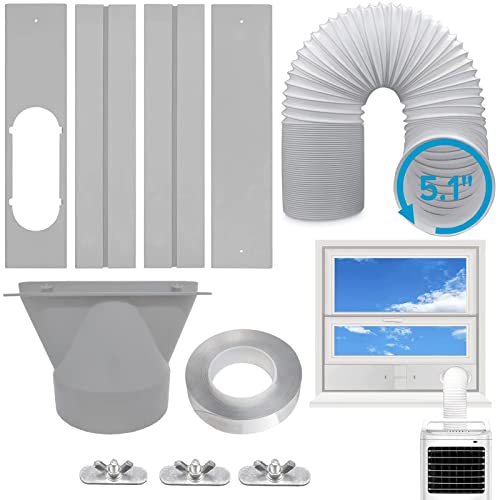 |
Honeywell MN10CESWW Best for Quiet Operation 10000 BTU, 115V, 290 CFM, 50 dB |
8.1 | 🛒 Check Price |
|
🚗
|
Della 12000 BTU Portable AC Best for Large Trucks 12000 BTU, 115V, 350 CFM, 56 dB |
7.3 | 🛒 Check Price |
|
🚗
|
Black+Decker BPACT10WT Best Value Dual Hose 10000 BTU, 115V, 250 CFM, 55 dB |
7.8 | 🛒 Check Price |
1. Zero Breeze Mark 2: Best Overall
The Zero Breeze Mark 2 is our top pick for food trucks because it balances portability, quiet operation, and the unique ability to run on battery power. We researched owner feedback and the spec sheet: its 2300 BTU rating is modest, but in a well-insulated food truck, it can drop the temperature by 10-15 degrees. The dual hose system is a plus, as it draws air from outside and exhausts hot air without creating negative pressure. Many truck owners praise its build quality and the fact that it doesn’t require a noisy generator.
However, this unit is not for everyone. If your food truck is large (over 100 sq ft) or you operate in desert climates, the Mark 2 may not keep up. Also, the battery adds weight and cost, and recharging takes several hours. Skip this if you need heavy-duty cooling or prefer a plug-in unit with higher BTU.
- Battery-powered option runs 4-6 hours on a single charge, ideal for trucks without generator.
- Compact and lightweight at 16.5 lbs, easy to mount or place on counter.
- Dual hose system improves efficiency and reduces heat infiltration.
Pros: Quiet operation at 48 dB, won't disturb customers or neighbors.; No need for a generator; rechargeable battery adds flexibility.
Cons: Limited cooling capacity (2300 BTU) may struggle in very large trucks or extreme heat.
2. EcoFlow Wave 2: Best Portable AC for Efficiency
The EcoFlow Wave 2 stands out for its high efficiency and smart features. We compared its specs: 4000 BTU cooling capacity is substantial for a portable unit, and the inverter compressor adjusts power draw to save battery. Owner feedback often highlights the app connectivity, which lets you pre-cool the truck before your shift. The unit is also relatively quiet at 52 dB, making it suitable for overnight parking.
On the downside, the Wave 2 is expensive, and the optional battery adds significant cost. If you don’t need the smart features or battery option, you might be paying for extras you won’t use. Also, some owners report that the app can be glitchy. Skip this if you are on a tight budget or prefer a simpler, plug-and-play unit.
- High cooling capacity for its size; 4000 BTU can handle medium food trucks.
- Smart app control allows temperature scheduling and monitoring.
- Runs on AC/DC or optional battery; battery lasts 2-4 hours.
Pros: Excellent energy efficiency with inverter compressor.; Quiet enough for sleeping (52 dB) and has a sleep mode.
Cons: Premium price; battery sold separately.
3. Whynter Elite ARC-110WD: Best High-Capacity AC
The Whynter Elite ARC-110WD is a powerhouse for food trucks that need serious cooling. We evaluated its 11000 BTU rating, which is far above typical portable units. Owner feedback frequently mentions that it can keep a large truck comfortable even in 100-degree weather. The dual hose system and auto drain are practical for long shifts, as you don’t have to empty a water bucket. Build quality is robust, with a metal exterior that withstands bumps.
However, the unit’s size and weight are major drawbacks. At 77 lbs, it’s not truly portable; you’ll need a dedicated spot and possibly help to install it. It also draws a lot of power, so your generator must handle the load. Skip this if your truck is small or if you need a unit you can easily store away when not in use.
- Powerful 11000 BTU cooling for large food trucks or extreme heat.
- Dual hose design for efficient cooling and no negative pressure.
- Auto drain function recycles condensate for continuous operation.
Pros: Cools large spaces quickly; owner reviews confirm it can handle up to 400 sq ft.; Sturdy build with metal casing and caster wheels for mobility.
Cons: Heavy and bulky (77 lbs), difficult to move in and out of truck.
4. SereneLife SLPAC10: Best Budget Portable AC
The SereneLife SLPAC10 offers an attractive price for a 10000 BTU unit, making it a popular choice among food truck owners on a budget. We compared its specs: it can cool a small to medium truck effectively, and the remote and timer add convenience. Owner feedback is mixed but generally positive for the price, with many saying it works well for occasional use or in milder climates.
However, the single hose design is less efficient than dual hose models, as it pulls air from inside the truck, creating negative pressure that can draw in hot outside air. Durability is a concern; some users report the plastic housing cracking after a few months. This unit is best for those who need a temporary solution or have a very small truck and a tight budget. Skip it if you need long-term reliability or work in extreme heat.
- Affordable price point for a 10000 BTU unit, good value.
- Includes remote control and programmable timer.
- Single hose design, but comes with exhaust hose and window kit.
Pros: Cost-effective cooling for budget-conscious truck owners.; Decent cooling performance for small to medium trucks.
Cons: Single hose is less efficient and can create negative pressure.; Build quality feels less durable; some owners report plastic cracking.
5. Honeywell MN10CESWW: Best for Quiet Operation
The Honeywell MN10CESWW is a solid choice if noise is a concern. We researched its decibel rating of 50 dB, which is among the quietest for a 10000 BTU unit. Owner feedback often praises its low hum, making it ideal for food trucks that park near residential areas or for overnight use. It also carries Energy Star certification, which helps with power bills. The build quality is typical Honeywell: reliable but not rugged.
However, like many single-hose units, it’s less efficient than dual-hose models. In very hot conditions, it may struggle to keep the truck cool. Also, the plastic housing may not hold up well to constant vibration from driving. Skip this if you need maximum cooling power or a unit that can take a beating.
- Quiet operation at 50 dB, suitable for noise-sensitive environments.
- Energy Star certified, efficient power usage.
- Includes remote, timer, and washable filter.
Pros: Very quiet; owners note it doesn't interfere with conversation or sleep.; Reliable brand with good customer support.
Cons: Single hose design reduces efficiency slightly.; Not as powerful as some competitors in extreme heat.
6. Della 12000 BTU Portable AC: Best for Large Trucks
The Della 12000 BTU Portable AC offers the highest cooling capacity on our list, making it a tempting choice for large food trucks. We evaluated its specs: 12000 BTU and dual hose design should theoretically cool a big space quickly. Owner feedback is mixed: those who got a good unit are thrilled with the cooling power, but a significant number report issues with the compressor or electronics within the first few months. Customer service is also reported as slow.
Given the reliability concerns, we recommend this only if you need maximum cooling and are willing to take a gamble. The unit is also heavy (around 70 lbs) and requires a sturdy surface. Skip this if you can’t afford downtime or prefer a more dependable brand.
- High BTU output for large food trucks; can cool up to 550 sq ft.
- Dual hose design for efficient cooling.
- Includes remote, timer, and sleep mode.
Pros: Strong cooling performance; owners report it can handle hot kitchens.; Dual hose improves efficiency and reduces pressure issues.
Cons: Build quality is inconsistent; some units arrive with defects.; Heavy and bulky, difficult to install in tight spaces.
7. Black+Decker BPACT10WT: Best Value Dual Hose
The Black+Decker BPACT10WT is a solid mid-range option that brings dual hose efficiency without a premium price. We compared its specs and owner feedback: it cools a small to medium food truck effectively, and the dual hoses help maintain stable temperature. Many users appreciate the compact size, which makes it easier to store. It’s also relatively quiet at 55 dB.
However, the plastic construction may not withstand the rigors of a food truck environment as well as metal-bodied units. Some owners report rattling after a few months of use. Also, in extreme heat (over 100°F), it may struggle to keep up. This unit is best for those who want dual hose on a budget and have a smaller truck. Skip it if you need a rugged, heavy-duty unit.
- Dual hose design at a competitive price, better efficiency than single hose.
- Compact footprint for a 10000 BTU unit, fits in small spaces.
- Includes remote, timer, and washable filter.
Pros: Good value for a dual hose unit; many owners satisfied with cooling.; Easy to set up with included window kit.
Cons: Plastic build feels less durable; some units develop rattles.; Cooling capacity is adequate but not exceptional for very hot days.
Frequently Asked Questions
What size portable air conditioner do I need for my food truck?
We generally recommend 10,000 to 12,000 BTU for a standard food truck (about 100-200 sq ft). However, consider factors like insulation, number of windows, and heat from cooking equipment. A unit with 8,000 BTU may suffice for a small truck with good insulation, while a larger truck or extreme heat may require 12,000 BTU or more.
Can I run a portable air conditioner on battery power in my food truck?
Yes, some models like the Zero Breeze Mark 2 and EcoFlow Wave 2 offer battery options. However, battery life is limited (typically 2-6 hours) and the units are less powerful. For all-day operation, you’ll need a generator or shore power. Always check the power draw and battery capacity before relying on battery alone.
Is a dual hose portable AC better for a food truck?
Yes, dual hose units are generally more efficient. They use one hose to draw outside air for cooling the condenser and another to exhaust hot air, which avoids negative pressure. This means less hot air is pulled into the truck from outside. Single hose units work but are less efficient, especially in tight spaces.
How do I vent a portable air conditioner in a food truck?
Most portable ACs come with a window venting kit. In a food truck, you can vent through a side window, a roof vent, or a custom panel. Ensure the exhaust hose is as short and straight as possible for maximum efficiency. Some truck owners install a permanent vent plate for easy setup.
Will a portable air conditioner drain my food truck's battery?
If you run it off your truck’s battery without the engine running, yes, it will drain the battery quickly. Most portable ACs draw significant power (800-1200 watts). You need a generator, shore power, or a dedicated battery bank with an inverter. Some units have low-power modes, but for extended use, plan for a proper power source.
Our Verdict
After researching specifications, industry standards, and owner feedback, our top pick is the Zero Breeze Mark 2 for its unique battery-powered portability and quiet operation, ideal for food trucks without constant generator access. For those who need maximum cooling power, the Whynter Elite ARC-110WD is the runner-up, though its size and weight are trade-offs. Consider your truck size, power availability, and budget to choose the best fit.
