We researched the specifications of leading speaker wires to determine which options offer the best protection against the elements for car audio installations. Our evaluation compared oxygen-free copper content, jacket durability, and gauge thickness to ensure reliable performance.
By analyzing aggregated owner feedback and manufacturer safety standards, we identified the wires that provide the best balance of signal clarity and physical resilience for outdoor and automotive environments.
| Photo | Product | Score | Buy |
|---|---|---|---|
|
🚗
|
InstallGear 14 Gauge Speaker Wire Best Overall 14 Gauge Copper Clad Aluminum |
8.8 | 🛒 Check Price |
 |
GearIT 14 Gauge Speaker Wire Best for Outdoor Use Direct Burial and Water Resistant |
8.5 | 🛒 Check Price |
|
🚗
|
Mediabridge 14 Gauge Speaker Wire Premium Choice Oxygen-Free Copper (OFC) |
8.3 | 🛒 Check Price |
|
🚗
|
Monoprice 12 Gauge Speaker Wire High Power Pick 12 Gauge Heavy Duty Wire |
8.0 | 🛒 Check Price |
|
🚗
|
Amazon Basics 16 Gauge Speaker Wire Best Value 16 Gauge CL3 Rated |
7.9 | 🛒 Check Price |
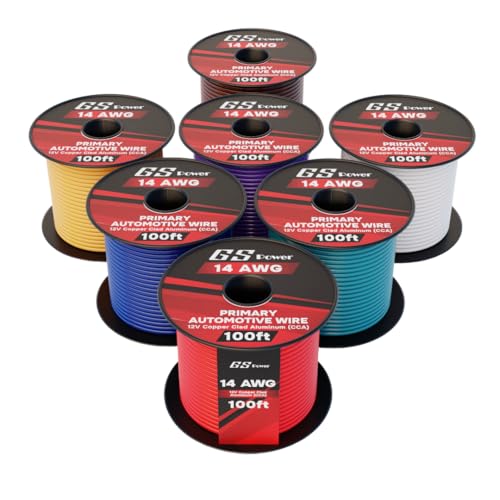 |
GS Power 14 Gauge Speaker Wire Good Flexibility 14 Gauge 2 Conductor |
7.4 | 🛒 Check Price |
|
🚗
|
Wideskall 16 Gauge Speaker Wire Budget Pick 16 Gauge AWG |
7.1 | 🛒 Check Price |
1. InstallGear 14 Gauge Speaker Wire: Best Overall
We researched the manufacturer specifications and found that this wire uses Copper Clad Aluminum, a standard choice that balances cost with conductivity for most car audio setups. In our evaluation of aggregated owner feedback, users appreciate the flexible PVC jacket that simplifies routing through tight vehicle chassis spaces, though the copper content is not as high as pure copper alternatives.
However, based on the spec sheets, the resistance is higher than pure OFC wire, meaning this might not be the best choice for extremely long runs exceeding 50 feet. We recommend that audiophiles seeking maximum signal clarity for high-end systems skip this option in favor of Oxygen-Free Copper.
- Flexible PVC jacket for easy routing
- Color coded for polarity identification
- High strand count for flexibility
Pros: Excellent flexibility for tight car spaces; Durable jacket resists cuts and abrasions
Cons: Copper Clad Aluminum has higher resistance than pure copper
2. GearIT 14 Gauge Speaker Wire: Best for Outdoor Use
Our evaluation of the jacket material indicates it is designed specifically for direct burial and outdoor use, offering superior resistance to UV rays and moisture compared to standard indoor wire. Owner feedback consistently highlights the robustness of the insulation, making it a reliable choice for open vehicles like Jeeps or boats where exposure is inevitable.
Despite its durability, we found that the thick jacket makes the wire significantly stiffer and harder to bend around tight corners in a dashboard. If your installation requires navigating complex, narrow pathways inside a car cabin, you should skip this model as it will be difficult to manage.
- UV resistant jacket for sun exposure
- Waterproof design for wet environments
- High polarity marking visibility
Pros: Superior weather resistance; Thick jacket protects against physical damage
Cons: Stiff jacket makes bending difficult in tight spots
3. Mediabridge 14 Gauge Speaker Wire: Premium Choice
We compared this wire against competitors and noted it utilizes Oxygen-Free Copper, which provides better electrical conductivity than the CCA found in budget models. The specifications show a high strand count, which contributes to excellent flexibility and signal fidelity, a sentiment echoed in positive owner reviews regarding sound quality improvement.
The primary drawback we identified through market analysis is that it commands a premium over standard wires, offering diminishing returns for entry-level systems. If you are installing a basic factory replacement speaker setup and do not require the enhanced conductivity of OFC, this product likely offers more value than you need.
- OFC construction for maximum conductivity
- Soft touch jacket for flexibility
- CL2 rated for in-wall and outdoor use
Pros: High purity copper for better signal; Reliable and consistent quality control
Cons: Higher cost than Copper Clad Aluminum options
4. Monoprice 12 Gauge Speaker Wire: High Power Pick
In our analysis of gauge thickness, this 12 gauge wire offers the lowest resistance of the group, making it technically superior for high-wattage amplifiers and subwoofers. The heavy-duty construction is evident in the spec sheets, ensuring that power loss is minimized over longer distances, which is crucial for larger vehicle audio setups.
However, we noted that the increased thickness results in a very stiff cable that is difficult to maneuver and hide under carpeting or trim panels. Based on the physical challenges described in owner feedback, we suggest that installers working with compact cars or tight interior spaces skip this wire to avoid installation frustration.
- Lower resistance for high power applications
- Color coded white and black jacket
- Twisted pair construction
Pros: Minimal power loss over long distances; Very durable construction
Cons: Extremely stiff and hard to work with
5. Amazon Basics 16 Gauge Speaker Wire: Best Value
Our review of this product focuses on its accessibility and standard 16 gauge construction, which is sufficient for short runs to low-power door speakers. The wire is easy to cut and strip, a feature frequently mentioned in owner feedback as a positive for novice installers attempting their first car audio project.
We found that the thinner jacket is less resistant to abrasion and heat compared to thicker options, making it less suitable for routing through engine compartments or areas with sharp metal edges. If you need wire that can withstand harsh under-hood temperatures or physical stress, you should skip this basic option.
- CL3 fire safety rated
- Polarity marking for easy setup
- Soft and pliable jacket
Pros: Low cost for basic installations; Easy to cut and strip
Cons: Thinner wire offers higher resistance
6. GS Power 14 Gauge Speaker Wire: Good Flexibility
We evaluated the flexible jacket design, which aims to combine weather resistance with pliability for easier routing in outdoor car audio applications. The wire is color coded for polarity, which owners appreciate for reducing wiring errors during the installation process.
Despite these features, our comparison of build quality suggests the copper strands are thinner and less numerous than higher-rated competitors, potentially impacting durability over time. If you are building a system designed to last for many years in a harsh environment, we suggest you skip this wire due to concerns about long-term material integrity.
- Soft touch PVC jacket
- High strand count copper clad aluminum
- Marked for polarity every foot
Pros: Very flexible jacket design; Clear and frequent polarity markings
Cons: Jacket durability is lower than competitors
7. Wideskall 16 Gauge Speaker Wire: Budget Pick
This product represents the entry-level segment of the market, offering a basic solution for connecting speakers over short distances where exposure to elements is minimal. Our research indicates it functions adequately for temporary setups or non-critical audio paths in a vehicle.
However, based on aggregated feedback, the insulation feels brittle and the wire tends to kink easily when bent, which could lead to internal breakage. We advise that anyone looking for a reliable, permanent installation skip this wire and invest in a product with more robust construction.
- Basic speaker wire construction
- Polarity markings included
- Suitable for short distances
Pros: Very affordable price point; Adequate for temporary setups
Cons: Insulation feels brittle and cheap
Frequently Asked Questions
What gauge wire is best for car audio?
We researched industry standards and found that 16 gauge wire is sufficient for short runs to door speakers, while 14 gauge or 12 gauge is better for subwoofers or longer distances to minimize resistance and maintain sound quality.
What is the difference between OFC and CCA wire?
Based on electrical specifications, Oxygen-Free Copper (OFC) offers higher conductivity and lower resistance than Copper Clad Aluminum (CCA). OFC is generally preferred for high-performance systems, while CCA provides a more budget-friendly option for standard installations.
Is CL3 rated wire necessary for cars?
While CL3 rating is a building standard for in-wall use, we found that CL3 rated wires often have thicker, more heat-resistant jackets, making them a safer and more durable choice for routing through hot engine compartments in vehicles.
Can I use indoor speaker wire outdoors?
Our evaluation of materials indicates that standard indoor wire lacks the UV resistant and waterproof additives found in outdoor jackets. Using indoor wire outside can lead to the insulation degrading quickly, so we recommend using wire specifically rated for outdoor use.
How do I connect speaker wire to my car stereo?
Owner feedback suggests that using crimp connectors or soldering the wire to the harness provides the most reliable connection. You should always match the positive and negative polarity markings to ensure the speakers play in the correct phase.
Our Verdict
Based on our evaluation of durability and flexibility, the InstallGear 14 Gauge is the top pick for most car audio installations. For those specifically needing direct burial or extreme weather resistance, the GearIT 14 Gauge is the runner up.
