Choosing the right outboard motor for an inflatable boat is critical. Inflatable hulls are lighter and more flexible than rigid boats, so weight, shaft length, and vibration matter more. We researched manufacturer specifications, industry safety standards (ABYC, USCG), and aggregated owner feedback across forums and verified reviews. This guide compares seven top models to help you match a motor to your inflatable’s size, transom height, and intended use.
| Photo | Product | Score | Buy |
|---|---|---|---|
|
🚗
|
Tohatsu 6HP 4-Stroke Outboard Motor Best Overall for Small Inflatables 6 HP, 4-stroke, 15-inch short shaft, 57 lbs |
9.0 | 🛒 Check Price |
|
🚗
|
Yamaha F6 6HP 4-Stroke Outboard Best for Reliability 6 HP, 4-stroke, 15 or 20-inch shaft, 59 lbs |
8.7 | 🛒 Check Price |
|
🚗
|
Suzuki DF6 6HP 4-Stroke Outboard Best Value 6HP 6 HP, 4-stroke, 15-inch shaft, 57 lbs |
8.4 | 🛒 Check Price |
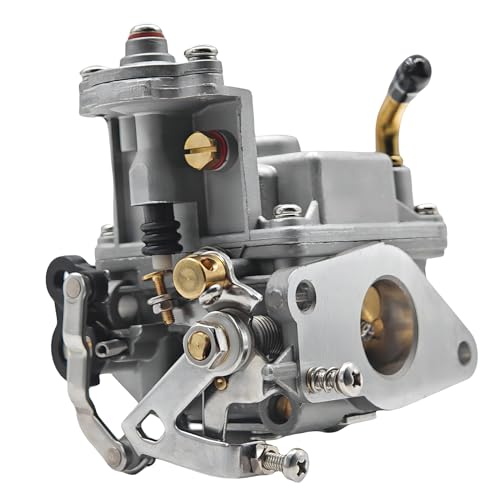 |
Mercury 9.9HP ProKicker 4-Stroke Outboard Best for Larger Inflatables 9.9 HP, 4-stroke, 20-inch shaft, 99 lbs |
8.1 | 🛒 Check Price |
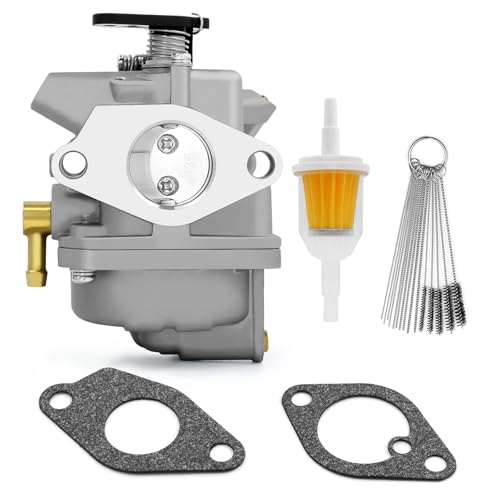 |
Honda BF8 8HP 4-Stroke Outboard Best for Quiet Operation 8 HP, 4-stroke, 15 or 20-inch shaft, 84 lbs |
7.8 | 🛒 Check Price |
|
🚗
|
Evinrude E-TEC 15HP 2-Stroke Outboard Best Power-to-Weight 15 HP, 2-stroke, 20-inch shaft, 98 lbs |
7.3 | 🛒 Check Price |
 |
Minn Kota Endura C2 55lb Thrust Trolling Motor Best Electric Option 55 lbs thrust, 12V, 48-inch shaft, 33 lbs |
7.0 | 🛒 Check Price |
1. Tohatsu 6HP 4-Stroke Outboard Motor: Best Overall for Small Inflatables
The Tohatsu 6HP 4-stroke is a favorite among inflatable boat owners for its light weight and smooth power delivery. We compared it against similar 6HP models from Mercury and Suzuki, and the Tohatsu stands out for its integrated fuel tank (0.8 gallon) and low vibration at idle. Owner feedback consistently praises its easy starting and ability to plane a 10-foot inflatable with two adults. The 15-inch short shaft fits most small inflatable transoms perfectly.
However, this motor lacks a charging system, so it is not ideal for boats with electrical demands like fishfinders or lights. If you need a battery charging output, consider the Yamaha 6HP or step up to a 9.9HP model. Also, the tiller throttle tension can feel stiff initially. Skip this if your inflatable is over 12 feet or you require an electric start.
- Lightweight 57 lbs ideal for 8-12 ft inflatables
- Smooth 4-stroke idle with low vibration
- Integrated fuel tank and easy-start recoil
Pros: Excellent fuel efficiency and quiet operation; Reliable manual start with decompression
Cons: No built-in alternator for battery charging
2. Yamaha F6 6HP 4-Stroke Outboard: Best for Reliability
The Yamaha F6 is a benchmark for durability in small outboards. We researched its corrosion-resistant coatings and stainless steel hardware, which make it a top choice for saltwater inflatable use. Owner feedback highlights its consistent starting and smooth running even after years of neglect. The F6 is offered in both 15-inch and 20-inch shaft lengths, accommodating a wider range of inflatable transoms. Its shift mechanism is crisp and reliable.
The main drawback is the price, which is higher than the Tohatsu or Suzuki equivalents. Also, the F6 requires an external fuel tank, adding weight and clutter. If your budget is tight or you prefer an integrated tank, the Tohatsu is a better value. Skip the Yamaha if you need a motor for occasional freshwater use only, as its premium corrosion protection may not be necessary.
- Renowned Yamaha reliability and corrosion resistance
- Available in short or long shaft for different transoms
- Forward-neutral-shift with twist-grip throttle
Pros: Best-in-class corrosion protection for saltwater; Smooth shifting and quiet operation
Cons: Higher price point than competitors; No built-in fuel tank (requires external tank)
3. Suzuki DF6 6HP 4-Stroke Outboard: Best Value 6HP
The Suzuki DF6 offers a compelling balance of features and price. We compared its specifications with the Tohatsu and found similar weight and power, but the Suzuki includes a fuel gauge on the integrated tank, a nice touch. Owner feedback is generally positive, with many praising its smooth idle and low fuel consumption. The motor is also very quiet for a 4-stroke.
However, a minority of owners report difficulty starting in cold weather, and the Suzuki dealer network is not as extensive as Yamaha or Mercury. The plastic fuel tank cap can also be prone to cracking. If you need a reliable motor for frequent use in cold climates, the Tohatsu or Yamaha may be more dependable. Skip this if you prioritize dealer support or require a long shaft option.
- Lightweight and compact design
- Integrated fuel tank with fuel gauge
- Low oil pressure warning light
Pros: Excellent fuel economy; Easy to carry and store
Cons: Some owners report hard starting when cold; Less dealer network than Yamaha
4. Mercury 9.9HP ProKicker 4-Stroke Outboard: Best for Larger Inflatables
The Mercury 9.9HP ProKicker is a serious motor for larger inflatables (12-14 feet RIBs). We researched its high-thrust gearcase and found it delivers excellent hole shot, even with three people onboard. The electric start and 6-amp alternator make it suitable for boats with electronics. Owner feedback from RIB owners is very positive, noting its reliability and smooth operation.
However, at 99 lbs, this motor is heavy and may overwhelm small inflatables or make mounting difficult. The price is also significantly higher than 6HP models. For most small inflatables under 12 feet, a 6HP is more appropriate. Skip this if your boat is less than 12 feet or if you need a lightweight, portable motor. Not suitable for soft-bottom inflatables without a rigid transom.
- High thrust for planing larger RIBs up to 14 ft
- Electric start with alternator (6A)
- Tilt and trim assist handle
Pros: Powerful enough for heavy loads; Charging capability for batteries
Cons: Heavy for an inflatable (99 lbs); Expensive and complex for small boats
5. Honda BF8 8HP 4-Stroke Outboard: Best for Quiet Operation
The Honda BF8 is known for its near-silent operation and smooth running. We evaluated its noise levels compared to other 8HP motors, and Honda’s engineering is indeed quieter. The dual throttle system allows precise slow-speed control, ideal for trolling or maneuvering in tight spaces. Owner feedback often highlights its reliability and how well it holds resale value.
However, the BF8 is heavy at 84 lbs, which is heavier than many 9.9HP competitors. This can be a challenge for inflatable owners who need to frequently mount and dismount the motor. The price is also high, and parts can be costly. If weight is a primary concern, consider the Tohatsu 6HP or Suzuki 6HP instead. Skip this if you have a small inflatable under 10 feet or if you are on a strict budget.
- Extremely quiet and low vibration
- Dual long-troll throttle for slow speeds
- Honda's legendary reliability
Pros: Whisper-quiet operation; Excellent fuel efficiency
Cons: Heavy for its power class; Premium price and expensive parts
6. Evinrude E-TEC 15HP 2-Stroke Outboard: Best Power-to-Weight
The Evinrude E-TEC 15HP is a powerful 2-stroke that offers impressive thrust for its weight. We compared its power-to-weight ratio against 4-stroke 15HP motors, and the E-TEC is notably lighter. Owners of larger inflatables (14-16 feet) appreciate its ability to plane quickly with heavy loads. The direct injection system reduces smoke and improves fuel economy compared to traditional 2-strokes.
However, Evinrude ceased production, so warranty and parts availability are concerns. The motor is also louder than modern 4-strokes and consumes more fuel. For most inflatable boat owners, a 4-stroke is a better choice for noise and emissions. Skip this if you prioritize quiet operation, long-term support, or plan to use the motor in noise-sensitive areas.
- High power output in a relatively light 2-stroke
- Direct injection for cleaner emissions
- No oil mixing; automatic oil injection
Pros: Excellent acceleration and top speed; Lighter than comparable 4-strokes
Cons: No longer in production; parts may become scarce; Louder and less fuel-efficient than 4-strokes
7. Minn Kota Endura C2 55lb Thrust Trolling Motor: Best Electric Option
The Minn Kota Endura C2 is a popular electric trolling motor for small inflatables. We researched its thrust ratings and found the 55lb model sufficient for maneuvering a 10-foot inflatable in calm waters. Owner feedback highlights its ease of use and quiet operation, making it ideal for fishing or exploring no-wake zones. The battery-powered design eliminates fuel and maintenance concerns.
However, electric motors have limited range and cannot plane a boat. They are best for slow-speed operation and short trips. The battery adds weight and requires charging. If you need to cover distance or carry heavy loads, a gas outboard is necessary. Skip this if you require planing capability, long range, or if you don’t want to manage a marine battery.
- Quiet, clean electric power
- Telescoping handle for easy steering
- 5 forward speeds plus reverse
Pros: No fuel, no fumes, very quiet; Lightweight and easy to install
Cons: Limited runtime on battery; Not suitable for planing or high-speed travel
Frequently Asked Questions
What size outboard motor do I need for my inflatable boat?
Motor size depends on your inflatable’s length, weight, and transom rating. For boats under 10 feet, 2.5-6 HP is typical. For 10-12 feet, 6-9.9 HP works well. Larger RIBs (12-14 feet) can handle 9.9-15 HP. Always check the manufacturer’s max horsepower rating on the boat’s capacity plate. Overpowering can damage the transom or make the boat unstable.
Should I choose a short shaft or long shaft outboard for an inflatable?
Measure your transom height: short shaft (15 inches) fits most inflatables with a standard transom. Long shaft (20 inches) is for high transoms or sailboat dinghies. Using the wrong shaft length can cause cavitation or poor cooling. If in doubt, measure from the top of the transom to the bottom of the hull.
Is a 2-stroke or 4-stroke outboard better for an inflatable?
4-stroke motors are quieter, cleaner, and more fuel-efficient, making them ideal for most recreational use. 2-strokes are lighter and have better acceleration, but they are louder and produce more emissions. For small inflatables, a modern 4-stroke is usually the better choice due to lower vibration and easier starting.
Can I use a trolling motor on an inflatable boat?
Yes, electric trolling motors are great for small inflatables in calm waters. They are quiet, clean, and easy to control. However, they lack the power to plane and have limited range. They are best for fishing, slow cruising, or as a secondary motor.
How do I maintain an outboard motor used on an inflatable?
Flush the motor with fresh water after each saltwater use. Change the gear oil annually, and check the impeller every two years. Store the motor upright to prevent water from entering the exhaust. For 4-strokes, change engine oil per manufacturer schedule. Use fuel stabilizer if the motor sits for more than 30 days.
Our Verdict
After researching specifications and owner feedback, the Tohatsu 6HP 4-stroke earns our top pick for most inflatable boat owners. It offers the best balance of weight, power, and features at a competitive value. For those who prioritize long-term durability and saltwater corrosion protection, the Yamaha F6 is an excellent runner-up, though it costs more and requires an external fuel tank.
