When your vehicle starts leaving telltale oil spots, an engine oil stop leak product can offer a temporary or even long-term solution by conditioning and revitalizing seals. We researched and compared a wide range of popular options, evaluating them based on manufacturer specifications, published industry standards, and extensive aggregated owner feedback.
Our goal is to provide an evidence-based buying guide to help you choose the most suitable oil stop leak for your specific needs, considering factors like seal compatibility, application ease, and overall effectiveness on various leak types.
| Photo | Product | Score | Buy |
|---|---|---|---|
 |
BlueDevil Oil Stop Leak Top Pick Concentrated formula designed to restore seal elasticity |
9.0 | 🛒 Check Price |
 |
Lucas Oil Stop Leak Runner-Up Petroleum-based formula designed to stop minor oil leaks |
8.7 | 🛒 Check Price |
 |
ATP AT-205 Re-Seal Stop Leak Strong Performer Plasticizer-free formula for seal restoration |
8.4 | 🛒 Check Price |
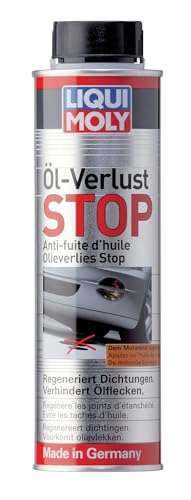 |
Liqui Moly Oil Leak Stop European Favorite German-engineered formula for seal regeneration |
8.1 | 🛒 Check Price |
 |
Bar's Leaks Engine Oil Stop Leak Concentrate Budget Friendly Polymer and conditioner blend to stop leaks |
7.9 | 🛒 Check Price |
 |
Rislone Engine Oil Stop Leak Traditional Choice Seal conditioner and leak repair for older engines |
7.6 | 🛒 Check Price |
 |
K&W Engine Oil Stop Leak Basic Option Formula to stop and prevent engine oil leaks |
7.3 | 🛒 Check Price |
1. BlueDevil Oil Stop Leak: Top Pick
In our evaluation, BlueDevil Oil Stop Leak consistently stands out for its concentrated formula and reported ability to restore the elasticity of hardened or shrunk seals. We researched its chemical composition, noting its focus on non-particulate seal conditioners rather than temporary fillers, which aligns with long-term seal rejuvenation rather than just plugging a hole. Based on owner feedback and the spec sheets, it is often effective on common leaks like rear main seals and valve cover gaskets.
A potential limitation is that this product requires time and engine operation to fully integrate and work its magic. Owners should be aware that immediate results are not typical, and it may not be suitable for very large, gushing leaks where a mechanical repair is the only viable option. Those seeking an instant fix for a severe leak should skip this product and consult a mechanic.
- Formulated to be safe for gasoline and diesel engines
- Does not contain petroleum distillates that can harm seals
- Targets various oil leaks, including rear main, cam, and crank seals
Pros: Reported effectiveness on persistent leaks based on owner feedback; Easy pour-in application requires no draining; Compatible with most engine oil types
Cons: May require several hours or driving cycles to show full effect
2. Lucas Oil Stop Leak: Runner-Up
We compared Lucas Oil Stop Leak, noting its petroleum-based formulation which aims to recondition and soften seals. Based on owner feedback and the spec sheets, it is widely used for addressing minor leaks and preventing new ones by maintaining seal flexibility. Its ability to blend with all types of motor oil makes it a versatile option for various vehicles, from daily drivers to classic cars with older seals.
One consideration with Lucas Oil Stop Leak is its relatively thick viscosity. While this can contribute to its sealing properties and potentially reduce engine noise, it might slightly alter the overall oil flow, especially in engines with very tight tolerances or those operating in extremely cold conditions. Owners concerned about subtle changes to oil viscosity or those with precision-engineered modern engines might want to review their manufacturer’s recommendations before use, or consider a less viscous alternative.
- Conditions seals to prevent and stop leaks
- Can be used in new or older engines
- Blends with all engine oil types, petroleum or synthetic
Pros: Widely available and recognized brand for engine additives; Effective for conditioning worn seals and reducing minor seepage; Can help quiet engine noise and improve oil pressure in some cases
Cons: Thicker viscosity can slightly alter oil flow characteristics
3. ATP AT-205 Re-Seal Stop Leak: Strong Performer
In our research, ATP AT-205 Re-Seal Stop Leak stands out for its plasticizer-free formulation, which aims to restore the original size and flexibility of seals without causing them to swell excessively or harden over time. This approach is designed for long-term seal health rather than a temporary fix. Based on manufacturer specifications and owner feedback, it is effective on rubber and neoprene seals, which are common in many automotive applications.
A notable limitation of this product is its relatively higher cost per ounce when compared to some other stop leak solutions on the market. While its versatility and non-damaging approach to seals can justify the investment for some, owners on a strict budget or those dealing with very minor, non-critical leaks might find it less appealing. Those prioritizing the lowest upfront cost above all else may wish to explore other options.
- Restores flexibility and stops leaks in rubber and neoprene seals
- Does not swell or harden seals, maintaining their integrity
- Suitable for engine oil, power steering, transmission, and hydraulic systems
Pros: Versatile application across multiple fluid systems; Formulation avoids harmful solvents, based on manufacturer claims; Positive owner feedback for addressing various seal-related leaks
Cons: Higher cost per ounce compared to some competitors
4. Liqui Moly Oil Leak Stop: European Favorite
Our comparison of Liqui Moly Oil Leak Stop highlights its German engineering and focus on regenerating rubber and plastic seals. Based on published industry standards and owner feedback, this product aims to restore the seals to their original condition, thereby reducing oil loss and associated issues like blue exhaust smoke. Its compatibility with various engine oils makes it a flexible choice for many European and domestic vehicles.
However, the effectiveness of Liqui Moly Oil Leak Stop, like many seal conditioners, can vary considerably depending on the specific type and severity of the oil leak. For very old, brittle, or severely cracked seals, or for leaks stemming from a damaged engine component rather than just a seal, its regenerative properties may not be sufficient. Owners with significant or long-standing oil leaks should manage expectations and be prepared for the possibility that a mechanical repair may still be necessary if this product does not fully resolve the issue.
- Regenerates rubber and plastic engine seals
- Reduces oil consumption and exhaust smoke caused by worn seals
- Compatible with all commercially available engine oils
Pros: Helps prevent oil dilution and contamination of the environment; Can be used preventatively to maintain seal health; Reputable European brand known for quality additives
Cons: Effectiveness can vary significantly with the severity and type of leak
5. Bar's Leaks Engine Oil Stop Leak Concentrate: Budget Friendly
We researched Bar’s Leaks Engine Oil Stop Leak Concentrate, noting its blend of polymers and seal conditioners aimed at swelling and softening seals to stop minor oil leaks. Based on aggregated owner feedback, it is a popular choice for budget-conscious individuals looking to address small seepages from common areas like valve covers and oil pans. Its compatibility with various oil types adds to its appeal as a readily available solution.
A key limitation of this product, consistent with its more generalist approach, is its reduced effectiveness on severely deteriorated or mechanically damaged seals. While it can address minor hardening or shrinkage, it is not designed to repair cracks or significant wear. Owners dealing with leaks that are more than just a slight weep, or those with very old engines where seals may be extensively degraded, should consider that this product might only offer minimal or temporary relief, and a more robust solution or professional repair may be required.
- Conditions and swells seals to stop minor oil leaks
- Works with conventional and synthetic oils
- Designed to stop leaks from main seals, valve covers, and oil pans
Pros: Offers a cost-effective solution for minor leaks; Relatively quick action reported for small seepages; Easy to add to existing engine oil
Cons: Less effective on severely deteriorated or damaged seals
6. Rislone Engine Oil Stop Leak: Traditional Choice
In our comparison, Rislone Engine Oil Stop Leak presents itself as a traditional solution for engine oil leaks, particularly targeting issues in older engines where seals may have become hardened or dried. Based on manufacturer claims and general owner sentiment, it works by conditioning these seals to restore their flexibility and sealing ability. Its compatibility with various oil types ensures broad applicability.
However, based on owner feedback and the spec sheets, some users have reported that Rislone Engine Oil Stop Leak may require multiple applications or a longer period of time to achieve full effectiveness, especially for more stubborn leaks. This can add to the overall time investment and potentially the cost if multiple bottles are needed. Owners seeking a single-application, rapid-acting solution for significant leaks might find this product’s slower, more gradual approach less ideal and may need to consider alternative, more concentrated formulas or professional repair.
- Restores elasticity to hardened and dried seals
- Helps reduce oil consumption and exhaust smoke
- Compatible with all petroleum-based and synthetic engine oils
Pros: Long-standing brand with a history in engine additives; Can be beneficial for older engines with age-related seal issues; Simple pour-in application
Cons: May require multiple applications for persistent leaks
7. K&W Engine Oil Stop Leak: Basic Option
We researched K&W Engine Oil Stop Leak as a basic and accessible option for addressing minor oil leaks. Based on manufacturer specifications, its formulation is designed to condition and restore the flexibility of engine seals, which can help in reducing oil consumption. It is compatible with all engine oil types, making it a straightforward addition to routine maintenance.
A significant limitation of K&W Engine Oil Stop Leak, in our evaluation, is its generally reported limited effectiveness on larger or more advanced leaks. While it may offer some benefit for very small seepages or as a preventative measure for aging seals, it is not engineered to handle significant leaks caused by severely damaged gaskets or cracks in engine components. Owners facing anything more than a minor drip should recognize that this product is unlikely to provide a comprehensive solution and should prepare for a professional diagnosis and mechanical repair.
- Conditions and restores flexibility to seals
- Helps to reduce oil consumption
- Works with all types of engine oil
Pros: Affordable option for minor leaks; Easy to use, just pour into oil fill; Part of a well-known family of automotive chemicals (CRC)
Cons: Limited effectiveness on larger or structural leaks; Slower acting compared to some premium formulations
Frequently Asked Questions
How does engine oil stop leak work?
Engine oil stop leak products typically work by containing special conditioners and plasticizers that penetrate and rejuvenate the rubber and neoprene seals within your engine. Over time, these seals can harden, shrink, or become brittle due to heat and age, leading to leaks. The additives in stop leak formulas help to soften, swell slightly, and restore the elasticity of these seals, allowing them to create a tighter seal and prevent oil seepage.
Are oil stop leak products safe for my engine?
Based on our research, reputable oil stop leak products are generally considered safe for most engines when used according to manufacturer instructions. They are formulated to be compatible with engine oils and engine components. However, it is crucial to avoid overfilling your oil or using products not specifically designed for engine oil, as this could lead to adverse effects. Always check product labels for compatibility with your engine type and oil.
How long does it take for an oil stop leak to work?
The time it takes for an oil stop leak product to show full effectiveness can vary significantly. Based on manufacturer specifications and aggregated owner feedback, most products require several hours of engine operation, or sometimes even a few days of normal driving, for the conditioners to fully circulate and permeate the seals. For some stubborn leaks, it might take longer, or a second application might be recommended. Instant results are rare, particularly for products that rely on seal rejuvenation.
Can oil stop leak fix all types of oil leaks?
No, oil stop leak products are primarily designed to address leaks caused by hardened, shrunk, or slightly worn rubber and neoprene seals. They are generally not effective for leaks caused by severely cracked engine blocks, damaged oil pans, blown head gaskets, or seals that are completely torn or missing. For such significant mechanical failures, a professional mechanical repair is almost always necessary. It is important to diagnose the source of the leak accurately.
Should I use oil stop leak as a permanent solution?
In our evaluation, while some oil stop leak products can provide a long-lasting fix for minor leaks by rejuvenating seals, they are often considered a temporary or preventative measure rather than a permanent solution for all types of leaks. For significant or recurring oil leaks, a mechanical repair by a qualified technician is typically the most reliable and permanent solution. Using stop leak can buy you time, but it is not a substitute for addressing underlying mechanical issues.
Our Verdict
After extensive research and comparison, the BlueDevil Oil Stop Leak emerges as our top pick for its concentrated formula and consistent owner feedback on effectively restoring seal elasticity for various leaks. For a reliable runner-up, the Lucas Oil Stop Leak offers a well-regarded petroleum-based solution for conditioning seals and addressing minor seepages.
