A phone clamped to your handlebars is fine until rain hits the screen, vibration kills the camera focus, or summer heat throttles it into a black slab right when you need a turn. A purpose built motorcycle GPS unit solves all three at once. It runs glove-friendly touch, survives a downpour, mounts on vibration-dampened cradles, and routes you down twisty back roads instead of the soulless motorway your car app loves.
We tested the leading motorcycle GPS units for daylight readability, glove response, waterproof rating, mounting security at speed, and how well each one builds genuinely fun routes. Below are the seven that earned their place on the bars, ranked best first, with honest weaknesses called out so you know exactly what you are getting before you buy.
| Photo | Product | Score | Buy |
|---|---|---|---|
 |
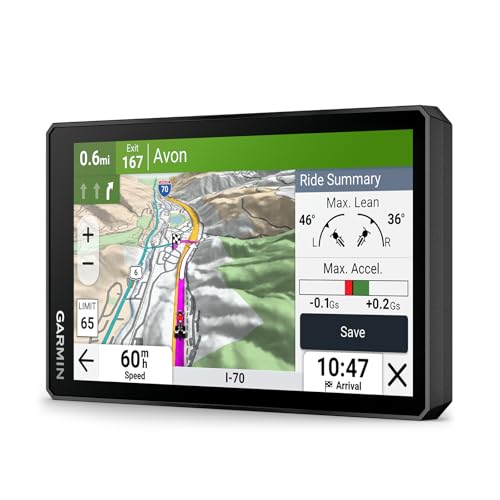
Garmin zumo XT2 Best Overall 6 inch glove-friendly display, IPX7 waterproof, on-board and Garmin Explore maps |
9.5 | 🛒 Check Price |
 |
Garmin zumo XT Best Value Touring 5.5 inch ultrabright display, IPX7 and military thermal rating, on-board maps |
9.2 | 🛒 Check Price |
 |
TomTom Rider 550 Best Winding Roads 4.3 inch glove-touch display, world maps, winding and hilly route planner |
9.0 | 🛒 Check Price |
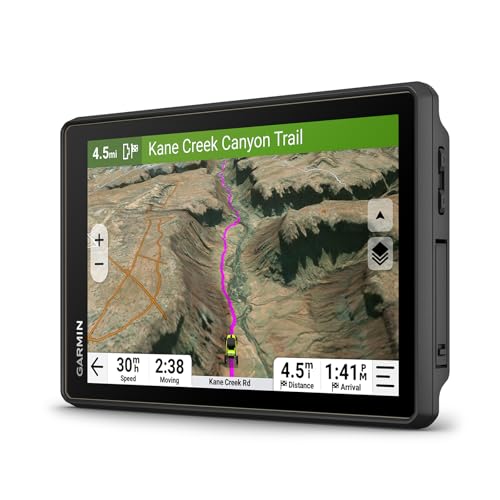 |
Garmin Tread Base Edition Best for Off-Road 5.5 inch sunlight readable display, IP67 rugged, powersport and trail maps |
8.8 | 🛒 Check Price |
 |
Garmin zumo 396 LMT-S Best Compact Tourer 4.3 inch sunlight readable display, lifetime maps, live traffic via app |
8.5 | 🛒 Check Price |
 |
Beeline Moto II Most Minimalist Round 1.3 inch display, app-based routing, ultra-compact waterproof puck |
8.2 | 🛒 Check Price |
 |
Carpuride W702 Best CarPlay Screen 7 inch IPS touchscreen, wireless Apple CarPlay and Android Auto, IP67 |
8.0 | 🛒 Check Price |
1. Garmin zumo XT2: Best Overall
The Garmin zumo XT2 is the motorcycle GPS we kept reaching for. The 6 inch screen is the headline feature, and it earns its size with a bright panel that we could read at a glance in direct summer sun, plus touch sensitivity that responded reliably through winter gloves. Garmin built the adventure routing to think like a rider, not a commuter, so the curvy roads and round-trip planning tools actually surface roads worth riding rather than the fastest grey line between two points.
Where it stumbles is bulk and setup. On a compact naked bike or a minimalist cockpit, the XT2 dominates the bars and can sit close to your line of sight. First-time setup also asks for patience, since pairing the Tread app, loading Explore content, and pushing map updates is not as smooth as it should be for a flagship. Get past that initial fuss and it is the most complete touring and adventure unit here, which is why it takes the top spot.
- 6 inch high-brightness display readable in direct sun and usable with gloves
- Dual on-board mapping with Garmin Explore and detailed topographic layers for on and off-road
- Built-in motorcycle mount with bare-wire power and rugged IPX7 weatherproofing
Pros: Bright, large screen that stays legible in harsh midday glare; Adventure routing and round-trip planning that finds genuinely good roads; Robust mount and waterproofing built for long touring days
Cons: Larger footprint can crowd a smaller cockpit; App pairing and map updates can be fiddly on first setup
2. Garmin zumo XT: Best Value Touring
The Garmin zumo XT remains a brilliant motorcycle GPS and, for most riders, the smartest pick on this list when you weigh capability against what you actually need. Its 5.5 inch transflective display is built to fight glare rather than just turn up the brightness, so it stayed readable on bright days without washing out. The routing brain is the same rider-first logic that makes Garmin units worth the money, with curvy-road and round-trip planning that turns a dull A to B into a proper ride.
The honest weakness is that it now sits in the shadow of the XT2. The screen is a touch smaller and not quite as bright, and glove touch, while genuinely good, is a small step behind the newer model. None of that stops the XT from being a dependable, weatherproof, vibration-tested unit that will serve a tourer or commuter for years. If you do not need the biggest screen Garmin makes, this is the value sweet spot.
- 5.5 inch ultrabright transflective display tuned for daylight visibility
- Curvy roads, round trip and adventurous routing modes built for riders
- IPX7 waterproofing with military standard rating for thermal and vibration
Pros: Excellent sunlight readability for the screen size; Rider-focused routing modes that prioritize fun roads; Proven durability across heat, rain and vibration
Cons: Smaller and slightly less bright than the newer XT2; Touch response through thick gloves is good but not class leading
3. TomTom Rider 550: Best Winding Roads
If your idea of a good ride is a road that refuses to go straight, the TomTom Rider 550 was built for you. Its winding-and-hilly route planner is the best simple tool here for deliberately seeking out curves, with a slider that lets you dial in how aggressively it hunts for bends and elevation. World maps come included with WiFi updates, so you can refresh everything straight from the unit without ever opening a laptop, which is a genuinely civilised touch.
The trade-off is the hardware around that clever software. The 4.3 inch screen is noticeably smaller than the Garmin flagships, and while it handles gloves and rain well, the interface and menu styling feel a generation behind. For pure point-to-point touring on a big screen, look elsewhere. For carving out the most entertaining loop through a mountain region, the Rider 550 still punches above its size.
- Winding and hilly roads slider that tunes routes for thrill or efficiency
- World maps included with lifetime updates over WiFi, no computer needed
- Glove-friendly capacitive screen with a secure motorcycle mount
Pros: Standout twisty-road route planner for spirited riders; WiFi map updates without ever connecting to a laptop; Compact screen fits neatly on tight cockpits
Cons: Smaller 4.3 inch display than the leading Garmin units; Interface feels dated next to newer rivals
4. Garmin Tread Base Edition: Best for Off-Road
The Garmin Tread Base Edition is the unit to grab when the pavement runs out. Built on a powersport platform, it leans into trail data, public land boundaries, and off-road navigation in a way the road-focused zumo units do not. The 5.5 inch screen stays readable in open sun, and the IP67 rugged housing shrugs off dust and water, which matters far more on a dual-sport or adventure bike than a few extra software niceties.
Its limitation is the flip side of that focus. On long tarmac tours the Tread feels a little bare next to a zumo, since the curvy-road touring polish and some convenience features are not the priority here. The Base Edition also drops some of the group-ride and inReach satellite extras found higher up the Tread range. Buy it for the dirt and the back-country, not for motorway mile-crunching, and it delivers.
- Powersport oriented mapping with public land and trail data
- Sunlight readable 5.5 inch display in a compact rugged housing
- IP67 dust and water resistance built for trail abuse
Pros: Strong off-road and trail navigation focus; Tough, dust-sealed build for adventure and dual-sport use; Bright screen that holds up in the open
Cons: On-road touring features are leaner than the zumo line; Base edition omits some group ride and inReach extras
5. Garmin zumo 396 LMT-S: Best Compact Tourer
The Garmin zumo 396 LMT-S is the answer for riders fighting for handlebar space. At 4.3 inches it slips onto cramped cockpits where a 5.5 or 6 inch unit simply will not fit, yet it keeps the rider-first essentials that make Garmin worth it: curvy-road routing, sunlight readability, and helpful rider alerts for sharp bends, speed changes, and upcoming hazards. Lifetime maps and app-fed live traffic mean it quietly stays useful for years.
The compromise is exactly what you would expect from the smallest screen here. You see less of the map at once, which means more glances and a touch more cognitive load on unfamiliar routes. It also skips the rugged, trail-ready hardware of the Tread and the big-screen comfort of the XT2. As a tidy, weatherproof, no-drama tourer for a smaller bike, though, it does its job without complaint.
- 4.3 inch sunlight readable screen sized for tight handlebar real estate
- Lifetime map updates and live traffic through the Smartphone Link app
- Curvy roads routing plus rider alerts for sharp turns and conditions
Pros: Compact size fits cockpits where bigger units will not; Lifetime maps keep it current without extra fuss; Rider alerts add useful safety prompts
Cons: Small screen shows less map at a glance; Lacks the rugged adventure features of pricier Garmins
6. Beeline Moto II: Most Minimalist
The Beeline Moto II takes the opposite philosophy to every other unit here, and that is exactly its appeal. Instead of a busy map, you get a small round display that shows your distance and the direction of the next turn, nothing more. Paired with its phone app, it delivers calm, glance-and-go guidance, and the adventure mode that simply points you toward a destination and lets you find your own way is genuinely one of the most fun ways to ride a new area.
This minimalism is also its honest limit. There is no detailed map on the device itself, so it leans on your phone for the heavy routing, and dense, junction-heavy city navigation can leave you wanting more context than a single arrow provides. If you want every street name and lane guidance, this is not your tool. If you want to strip navigation back to its purest, most enjoyable form, nothing else here comes close.
- Tiny round display showing distance and the next turn at a glance
- App-driven routing with a fun adventure mode that just points the way
- Compact, waterproof puck that mounts almost anywhere on the bars
Pros: Distraction-free, glance-and-go navigation; Tiny footprint fits any bike and any handlebar; Long battery life and simple, charming interface
Cons: No detailed on-screen map, relies on your phone; Not suited to complex turn-by-turn city navigation
7. Carpuride W702: Best CarPlay Screen
The Carpuride W702 is the pick for riders who would rather use the maps they already know. Instead of a proprietary GPS brain, it gives you a big, bright 7 inch IPS touchscreen that mirrors wireless Apple CarPlay or Android Auto, so Google Maps, Waze, or Apple Maps run right on the bars in their full, always-current form. The IP67 housing and solid mount mean it handles weather and vibration far better than strapping your actual phone to the stem.
The catch is that it is a display, not a true GPS unit. With no on-board offline maps, it leans entirely on a paired phone for navigation, so a dead phone, lost signal, or no data means no guidance. Riders who venture far off grid will want a standalone unit with stored maps instead. But for connected touring and commuting, where you simply want a big rugged screen for the apps you already trust, the W702 is a smart and capable choice.
- 7 inch IPS touchscreen running wireless Apple CarPlay and Android Auto
- Uses your phone's maps so navigation is always current
- IP67 waterproof housing with a sturdy handlebar mount
Pros: Large, bright screen with familiar CarPlay and Android Auto; Always-current maps straight from your phone; Great value for the screen size and feature set
Cons: Depends entirely on a paired phone for navigation; Not a standalone GPS, no on-board offline maps
Frequently Asked Questions
Do I really need a dedicated motorcycle GPS, or is my phone enough?
A phone works for casual rides, but it struggles where a dedicated unit shines. Motorcycle GPS units have transflective or high-brightness screens built to beat sunlight glare, glove-friendly touch, true waterproofing, and vibration-dampened mounts that will not shake your camera or shorten your phone’s life. They also route like a rider, favouring curvy and scenic roads over the fastest grey line. If you ride often, tour, or head off the beaten path, a dedicated unit pays you back in reliability and enjoyment.
Are these motorcycle GPS units waterproof enough for heavy rain?
Yes. The units here carry ratings like IPX7, IP67, or military standard sealing, which means they handle sustained rain, splashes, and washdowns without trouble. The Garmin zumo XT and XT2 are tested against thermal, vibration, and water extremes, while rugged units like the Tread and the Carpuride W702 use sealed IP67 housings. You should still route power cables sensibly and keep ports covered, but you do not need to dash for cover when the clouds open.
Can I use a motorcycle GPS with gloves on?
Glove-friendly touch is a core feature of a proper motorcycle GPS, which is one of the biggest reasons to choose one over a phone. The Garmin zumo XT2 leads the pack for glove response thanks to its larger, more sensitive panel, and the TomTom Rider 550 and the rest of the Garmin range all handle gloved input well. Very thick winter gauntlets can still test any capacitive screen, so if you ride in deep cold, lean toward the larger screened units with the most responsive touch.
What screen size should I look for on a motorcycle GPS?
It depends on your bike and your eyes. Bigger screens like the 6 inch zumo XT2 or the 7 inch Carpuride W702 show more map at a glance and reduce how often you look down, which is genuinely safer on unfamiliar roads. But they need handlebar real estate. On a compact naked bike or a crowded cockpit, a 4.3 inch unit like the zumo 396 or the Rider 550 fits far more comfortably. Measure your available space before committing to a large display.
Do these units work offline without a phone signal?
The Garmin zumo and Tread units and the TomTom Rider 550 all store on-board maps, so they navigate fully offline with no phone or data connection required, which makes them ideal for remote and back-country riding. The Beeline Moto II and the Carpuride W702 are different: they lean on a paired phone for the heavy routing, so they need your phone nearby and, for the Carpuride, an active data connection. If you ride far off grid, prioritise a unit with stored offline maps.
Our Verdict
For most riders, the Garmin zumo XT2 is the best motorcycle GPS unit you can buy, combining a big, glare-beating glove-friendly screen, rugged waterproofing, and the smartest rider-focused routing on the market. Our runner up is the Garmin zumo XT, which delivers nearly all of that proven touring capability in a slightly smaller, equally dependable package that hits a sweeter balance for riders who do not need the largest screen. Twisty-road fanatics should give the TomTom Rider 550 a hard look, while minimalists and connected commuters are well served by the Beeline Moto II and the Carpuride W702 respectively.
