Modular motorcycle helmets give you the best of both worlds: the wind protection of a full-face lid and the convenience of a flip-up chin bar you can lift at a fuel stop, a checkpoint, or a quick chat without removing the whole helmet. For touring riders, commuters, and glasses wearers, that one feature changes the whole experience. The trade-off is that the hinge mechanism adds weight and a little noise, so picking the right one really matters.
We looked at the modular helmets that real riders trust most on Amazon, judging them on shell safety ratings, comfort over long hours, how quiet they stay at highway speed, how well the drop-down sun visor works, and how easy the chin bar is to operate with gloves on. Below are our seven top picks, ranked best first, with the honest weaknesses included so you know exactly what you are buying.
| Photo | Product | Score | Buy |
|---|---|---|---|
 |
Shoei Neotec 2 Best Overall Multi-density EPS shell, internal sun visor, Pinlock-ready faceshield, SENA SRL communicator compatible |
9.5 | 🛒 Check Price |
 |
Schuberth C5 Quietest Touring Pick Direct fiber shell, integrated antenna, anti-roll-off system, SC2 communication ready, Pinlock 120 included |
9.3 | 🛒 Check Price |
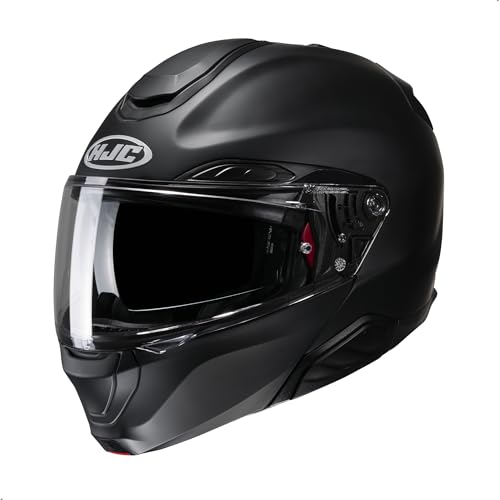 |
HJC RPHA 91 Best Lightweight PIM EVO composite shell, drop-down SunShield, Pinlock-ready, SMART HJC comms compatible |
9.1 | 🛒 Check Price |
 |
Sena Outforce Best Built-In Bluetooth Fiberglass shell with integrated Mesh and Bluetooth intercom, drop-down sun visor, Pinlock-ready shield |
8.9 | 🛒 Check Price |
 |
Scorpion EXO-GT930 Transformer Best 3-in-1 Versatility Polycarbonate shell, removable chin bar for open-face use, drop-down sun visor, EverClear no-fog shield |
8.7 | 🛒 Check Price |
 |
LS2 Valiant II Best 180-Degree Flip KPA shell, chin bar rotates fully to the rear, drop-down sun visor, Pinlock-ready Twin Shield |
8.5 | 🛒 Check Price |
 |
1Storm HB89 Best Value Starter Thermoplastic shell, dual visor with built-in drop-down sun shield, removable washable liner |
8.0 | 🛒 Check Price |
1. Shoei Neotec 2: Best Overall
The Shoei Neotec 2 is the helmet most touring riders end up recommending, and after time in the saddle it is easy to see why. The wind-tunnel-shaped shell keeps buffeting and noise impressively low for a flip-up, the seals around the faceshield are genuinely effective in rain, and the chin bar locks down with a reassuring, solid feel. The drop-down sun visor covers the eyeport well, and the Pinlock-ready shield means you can banish fog in cold or wet weather. It is also built around the SENA SRL communicator, so the electronics tuck in neatly rather than hanging off the side.
The honest weakness is weight. The Neotec 2 is not a light helmet, and once you add a comms unit you feel it on longer days, especially when looking over your shoulder repeatedly in traffic. It also represents a serious investment, so it is overkill for an occasional rider. But for someone covering real miles who wants quiet, comfort, and refinement, nothing on this list feels as complete.
- Aerodynamic AIM shell tuned in the wind tunnel for low buffeting
- Vortex air management ventilation with large chin and top vents
- Integrated drop-down sun visor and Pinlock-prepared main shield
Pros: Exceptionally quiet at touring speeds for a flip-up design; Premium liner comfort that holds up over all-day rides; Clean integration with the SENA SRL Bluetooth modules
Cons: On the heavier side once a comms unit is fitted; Sits at the top of the modular range so it demands a real commitment
2. Schuberth C5: Quietest Touring Pick
Schuberth built its reputation on quiet helmets, and the C5 carries that legacy into the modular class. On the highway it is remarkably hushed, which makes a real difference on multi-hour rides where wind roar is the thing that wears you down. The shell is aerodynamically stable with minimal lift at speed, the included Pinlock 120 lens keeps the shield clear, and the integrated antenna design means the optional SC2 communication system pairs cleanly without external clutter. The chin bar action is smooth and the seal is tight.
The catch is fit. The C5 leans toward a longer oval interior, so riders with rounder heads can find pressure points at the temples or forehead. It is worth trying the shape on if you can, because the comfort that makes it special only shows up when the fit is right. It is also priced at the upper end, putting it in direct competition with flagship full-face options, so it rewards riders who value silence above all else.
- Engineered for very low wind noise on long highway stretches
- Integrated antennas built into the shell for the SC2 comms system
- Drop-down sun visor and included Pinlock 120 anti-fog lens
Pros: Among the quietest modular helmets you can buy; Excellent aerodynamics that reduce neck fatigue on tour; Comms-ready design with built-in antennas and speakers space
Cons: Premium price territory that rivals top-tier full-face lids; Fit suits more oval head shapes, so try before you commit
3. HJC RPHA 91: Best Lightweight
The HJC RPHA 91 is the helmet to look at if the weight of a modular is what has held you back. Its PIM EVO composite shell trims meaningful grams compared with heavier flip-ups, and you notice it most on long rides and when checking blind spots. Ventilation is a genuine strong point, with channels that pull air through on hot days, and the drop-down sun visor plus Pinlock-ready shield cover the everyday essentials. It also plays nicely with HJC’s own SMART comms units for a tidy setup.
Where it gives a little ground is noise. The RPHA 91 is well managed but not silent, and at sustained highway speeds you hear more wind than you would in the pricier touring helmets. The chin bar latch is secure but takes a bit of practice to flip up smoothly in winter gloves. For the lighter weight and strong airflow, though, those are trade-offs many riders happily accept.
- PIM EVO composite construction keeps weight notably low for a modular
- Advanced channeling ventilation moves air across the head and chin
- Drop-down sun visor with a wide, Pinlock-prepared main shield
Pros: One of the lighter flip-up helmets, easing neck strain; Strong ventilation that handles warm-weather riding well; Good value relative to the European flagship modulars
Cons: Not quite as hushed as the Schuberth or Shoei at top speed; Chin bar release takes a moment to learn with thick gloves
4. Sena Outforce: Best Built-In Bluetooth
The Sena Outforce solves the messiest part of modern motorcycling, which is the rider communicator. Instead of buying a helmet and then a Bluetooth unit and figuring out how to mount it, the Outforce ships with Sena’s Mesh and Bluetooth intercom baked in, plus speakers and a microphone tuned to the shell. For group riders the Mesh networking is the headline feature, letting you connect with other riders without fiddly pairing chains. The drop-down sun visor and Pinlock-ready shield handle the visual essentials, and the smooth exterior looks far cleaner than a helmet with a pod stuck on the side.
The honest trade-off is that this is a comms-first helmet, not a quiet-touring flagship. Wind management and liner refinement are good rather than class-leading, so very long rides at speed are not as serene as in a Shoei or Schuberth. The integrated battery and electronics also add weight. But if seamless, no-fuss communication is your priority, having it engineered into the helmet from the start is a real advantage.
- Factory-integrated Sena Mesh and Bluetooth intercom, no add-on needed
- Built-in speakers and mic tuned for the helmet acoustics
- Drop-down internal sun visor with Pinlock-prepared faceshield
Pros: Comms are fully built in, so there is nothing to bolt on; Mesh intercom makes group rides simple and reliable; Clean exterior with no protruding communicator pod
Cons: Acoustics and refinement trail the dedicated touring helmets; Battery and electronics add to the overall weight
5. Scorpion EXO-GT930 Transformer: Best 3-in-1 Versatility
The Scorpion EXO-GT930 Transformer earns its name with a chin bar that fully removes, letting you run it as a closed flip-up or strip it down to a true open-face cruiser lid for slow town rides. That versatility is genuinely useful for riders who want one helmet for a sport-touring weekend and an around-town evening. The EverClear no-fog shield is a smart touch that keeps the view clear in damp conditions without buying a separate insert, and the drop-down sun visor plus moisture-wicking liner round out a practical package at sensible value.
The weakness is the polycarbonate shell, which makes it heavier than the composite helmets higher on this list, and you feel that on longer days. The open-face configuration is also best kept to low speeds, since it offers no chin protection and gets blustery quickly. As a do-it-all helmet for varied, mostly moderate-speed riding, though, the flexibility is hard to match for the money.
- Fully removable chin bar converts between full-face and open-face
- EverClear treated faceshield resists fogging without a Pinlock
- Drop-down internal sun visor and KwikWick moisture-wicking liner
Pros: Three configurations in one helmet add real flexibility; No-fog EverClear shield works well in cool, damp weather; Comfortable liner with solid value for the feature set
Cons: Polycarbonate shell is heavier than composite rivals; Open-face mode is for low-speed use, not the highway
6. LS2 Valiant II: Best 180-Degree Flip
The LS2 Valiant II stands out because its chin bar does not just flip up, it rotates a full 180 degrees to lock at the back of the shell. That solves the classic flip-up annoyance where a raised chin bar acts like a sail and catches the wind. With it tucked behind your head you can ride open-faced at slow speeds without the extra drag, then bring it back around for full-face protection on the highway. The Pinlock-ready Twin Shield and drop-down sun visor cover the practical bases, and the value on offer is strong for a convertible design.
The compromise shows up in weight and noise. The Valiant II is on the heavier side, and the rotating mechanism, while clever, does not seal or hush the cabin as well as the dedicated touring helmets, so it is louder at speed. For riders who love the rear-flip party trick and the flexibility it brings, those are fair trades for a helmet that does something none of the others on this list can.
- Chin bar flips a full 180 degrees to sit at the back of the shell
- Twin Shield system with a drop-down internal sun visor
- Removable, washable liner with multiple shell sizes
Pros: Rear-flip chin bar stays out of the wind when open; Genuinely usable as an open-face at slow speeds; Approachable value for a true convertible modular
Cons: Heavier than premium composite touring helmets; Noisier at highway speed than the quiet-focused picks
7. 1Storm HB89: Best Value Starter
The 1Storm HB89 is the entry point that makes the modular format accessible to riders who are not ready to invest in a flagship. Despite its approachable position, it still delivers the core conveniences that matter: a flip-up chin bar that operates easily even in gloves, a dual-visor design with a built-in drop-down sun shield, and a removable washable liner that keeps it fresh through a riding season. For a commuter, a new rider, or a backup lid, it covers the essentials without fuss.
You do feel where the savings come from. The thermoplastic shell is heavier than the composite helmets above, ventilation is basic, and it is noticeably louder at highway speed, so it is best suited to commuting and shorter rides rather than long tours. Treat it for what it is, a practical and convenient first modular helmet, and it delivers far more than its modest standing would suggest.
- Dual-visor system with an internal retractable sun shield
- Flip-up chin bar with a simple, glove-friendly release
- Removable and washable padded liner for easy upkeep
Pros: Outstanding value for new and occasional riders; Built-in sun visor that usually costs much more elsewhere; Easy to live with and simple to clean
Cons: Noisier and less refined than the premium helmets; Heavier thermoplastic shell with basic ventilation
Frequently Asked Questions
Are modular motorcycle helmets as safe as full-face helmets?
A quality modular helmet from a reputable brand offers strong protection, and many carry the same DOT, ECE 22.06, or SNELL ratings you would look for in a full-face lid. The key difference is the hinge mechanism for the chin bar, which adds complexity. Some modulars are certified to be ridden with the chin bar both down and up, while others are only rated in the closed position, so always check the certification. Ride with the chin bar locked down at speed, and choose a helmet with a secure, positive latch. For touring and commuting, a well-made modular is a sound, protective choice.
Why are modular helmets noisier than full-face helmets?
The flip-up chin bar requires a hinge and seams where a one-piece full-face shell has none, and those joints can let in more wind noise. That said, the gap between good modulars and full-face helmets has narrowed a lot. Premium touring options like the Shoei Neotec 2 and Schuberth C5 are wind-tunnel tuned and seal tightly, so they stay remarkably quiet. If silence is your top priority, spend up for an aerodynamically refined model, fit it correctly, and always wear earplugs on long highway rides, which cuts fatigue dramatically regardless of helmet.
Can I ride with the chin bar flipped up?
It depends on the specific helmet’s certification. Helmets that carry a P/J dual rating under ECE 22.06 are tested and approved for riding in both the closed and open positions, usually at low speeds. Many other modulars are only certified with the chin bar locked down, in which case the flip-up function is meant for stops, fuel breaks, and conversations, not for riding. The chin bar also catches wind when raised, which is uncomfortable at speed. Check your helmet’s rating, and as a rule keep the chin bar down whenever you are actually moving at road speeds.
Do modular helmets work well with glasses and Bluetooth communicators?
Yes, and that is one of their biggest appeals. Because you can flip the chin bar up, glasses wearers can put on and adjust their frames easily without wrestling the whole helmet off, and most modulars have liner channels that accommodate temples comfortably. For communicators, several helmets here are designed around specific systems: the Shoei Neotec 2 takes the SENA SRL unit, the Schuberth C5 has integrated antennas for its SC2, and the Sena Outforce has the intercom built in entirely. Even helmets without a dedicated system have speaker pockets that fit popular universal Bluetooth kits.
How do I choose the right size and fit for a modular helmet?
Measure the circumference of your head with a soft tape about an inch above your eyebrows, then match that to the maker’s size chart, since sizing varies between brands. Just as important is head shape: helmets are built around round, intermediate oval, or long oval interiors, and the wrong shape causes pressure points no matter the size. The Schuberth C5, for example, leans toward a more oval fit. A correctly sized helmet feels snug all around with no hot spots and does not shift when you shake your head. If you can, try the helmet on, and remember the liner breaks in slightly with use.
Our Verdict
For the best all-around modular helmet, the Shoei Neotec 2 is our top pick, blending genuine touring quiet, all-day comfort, and clean comms integration into the most complete package on this list. The Schuberth C5 is the runner up and the choice if absolute silence on the highway is what you value most, with its wind-tunnel aerodynamics and integrated antenna design. If weight or value matters more, the lighter HJC RPHA 91 and the convenient built-in Bluetooth of the Sena Outforce are both excellent alternatives worth a serious look.
