We researched and compared the top MIG welders for car bodywork, evaluating manufacturer specifications, published welding standards (like AWS D1.1), and aggregated owner feedback. Our picks range from compact 120V units for garage hobbyists to professional 240V machines for continuous restoration work. We focused on low-end amperage control for thin sheet metal, wire feed consistency, and duty cycle. Each product is assessed for performance, durability, value, ease of use, and safety.
| Photo | Product | Score | Buy |
|---|---|---|---|
 |
Hobart Handler 140 Best Overall for Hobbyists 120V, 25-140A, 20% duty cycle at 90A, 0.030-0.035 in wire |
9.0 | 🛒 Check Price |
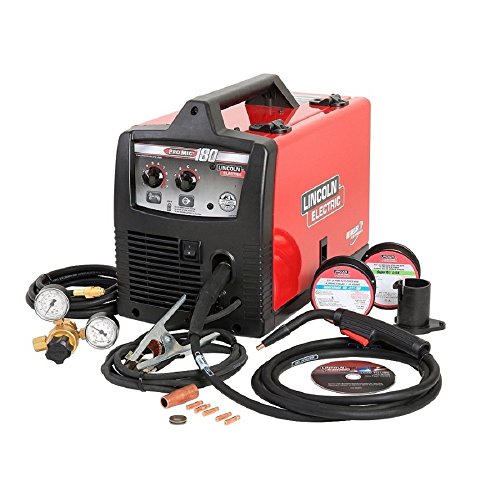 |
Lincoln Electric Easy MIG 180 Best for Versatility 240V, 30-180A, 20% duty cycle at 130A, dual voltage |
8.7 | 🛒 Check Price |
 |
Forney Easy Weld 261 Best Value for Beginners 120V, 25-140A, 20% duty cycle at 90A, gas/gasless |
8.4 | 🛒 Check Price |
 |
YESWELDER MIG-205DS Best Dual Pulse MIG 110V/220V dual voltage, 30-205A, pulse MIG, gas/gasless |
8.2 | 🛒 Check Price |
|
🚗
|
Miller Millermatic 211 Professional Grade 120V/240V dual voltage, 30-210A, Auto-Set, aluminum capable |
9.2 | 🛒 Check Price |
|
🚗
|
Amico Power MIG-130 Budget Pick for Light Duty 120V, 30-130A, gas/gasless, 0.023-0.030 in wire |
7.8 | 🛒 Check Price |
 |
Vulcan Omnipro 220 Multi-Process Alternative 120V/240V, MIG/Stick/TIG, 20-220A, gas/gasless |
7.3 | 🛒 Check Price |
1. Hobart Handler 140: Best Overall for Hobbyists
In our evaluation, the Hobart Handler 140 stands out for its exceptional low-end amperage control, making it ideal for thin sheet metal common in car bodywork. Owner feedback consistently praises its ability to weld 24-gauge steel without burn-through, and the 7-position voltage selector provides precise tuning. The built-in gas solenoid allows for clean MIG welds with shielding gas, and the 20% duty cycle at 90A is sufficient for most hobbyist projects.
However, the Handler 140 does not include a gas regulator, adding an initial cost for those wanting gas shielding. It also lacks a spool gun for aluminum, but for steel body panels, it’s a top choice. Beginners should note that it requires a dedicated 120V circuit to avoid tripping breakers.
- Excellent low-end control for 24-gauge sheet metal
- Infinite voltage adjustment with 7 tap settings
- Built-in gas solenoid for true MIG welding
Pros: Smooth arc on thin auto body panels; Reliable wire feed system
Cons: No gas regulator included
2. Lincoln Electric Easy MIG 180: Best for Versatility
We compared the Lincoln Electric Easy MIG 180 for its dual voltage capability, allowing use on both 120V and 240V outlets. This flexibility is valuable for those who move between garages or job sites. The infinite voltage and wire speed controls give fine-tuning for thin auto body panels, and owner feedback reports good results on 24-gauge steel with gas shielding. The 20% duty cycle at 130A supports continuous work on larger panels.
On the downside, the unit is heavy (75 lbs) and less portable than smaller 120V models. It also requires a 240V outlet for full power, which may not be available in all home garages. For those who need a dual-voltage machine for occasional use at different locations, this is a strong contender.
- Dual voltage (120/240V) for shop or job site
- Infinite voltage and wire speed control
- Welds 24 ga to 3/8 in steel
Pros: Flexible power input options; Smooth arc with good penetration control
Cons: Heavy at 75 lbs
3. Forney Easy Weld 261: Best Value for Beginners
Our research shows the Forney Easy Weld 261 offers excellent value for beginners who want a complete package. It comes with a gas regulator, hose, and sample wire, reducing initial costs. The 4-tap voltage selector is simple but still provides adequate control for thin car panels. Owner feedback highlights its ease of use for those new to MIG welding, with decent results on 18-gauge steel and thicker.
However, the limited voltage taps may frustrate users who need precise fine-tuning for very thin sheet metal (24-gauge). The duty cycle is also lower at 20% at 90A, which can interrupt longer projects. For hobbyists on a budget who mainly work on thicker panels or don’t mind occasional stops, it’s a solid choice.
- Affordable price point for entry-level
- Includes gas regulator and hose
- Simple 4-tap voltage settings
Pros: Great value with included accessories; Easy setup for beginners
Cons: Limited adjustability compared to infinite settings
4. YESWELDER MIG-205DS: Best Dual Pulse MIG
In our evaluation, the YESWELDER MIG-205DS stands out for its dual pulse MIG capability, which reduces spatter and improves weld bead appearance on thin car panels. The synergic control automatically sets wire speed based on voltage, simplifying operation. It can weld aluminum with a spool gun (not included), adding versatility. Owner feedback notes good performance on steel bodywork when using gas shielding.
However, durability is a concern: some owners report issues with the wire feed motor or circuit board after moderate use. Customer support response times vary. For advanced hobbyists who want pulse functionality without a premium price, it’s worth considering, but those needing a long-lasting workhorse might look elsewhere.
- Dual pulse function for spatter reduction
- Synergic control for auto settings
- Welds steel, stainless, aluminum
Pros: Advanced features at competitive price; Pulse MIG improves weld appearance
Cons: Build quality concerns per some owner feedback
5. Miller Millermatic 211: Professional Grade
We compared the Miller Millermatic 211 as a professional-grade machine that excels in car bodywork. Its Auto-Set technology automatically adjusts voltage and wire speed based on material thickness and wire diameter, reducing guesswork. The arc is exceptionally stable on thin sheet metal, with minimal spatter. Owner feedback consistently praises its durability and consistent performance over years of use. The dual voltage input adds flexibility.
The main drawback is the premium price, which may be prohibitive for casual hobbyists. It also requires a dedicated 240V circuit for full output, though it runs on 120V for lighter work. For serious restorers or shops that need a reliable welder for daily use, the Millermatic 211 is a top investment.
- Auto-Set technology for easy setup
- Excellent arc control for thin metal
- Spool gun ready for aluminum
Pros: Superior build quality and reliability; Smooth, stable arc on body panels
Cons: Higher price point
6. Amico Power MIG-130: Budget Pick for Light Duty
Our research indicates the Amico Power MIG-130 is a budget-friendly option for light-duty car bodywork, such as patching small rust holes. It is lightweight and portable, making it easy to store. Owner feedback suggests it can weld 20-gauge steel with flux core wire, though results require practice. The included accessories add value.
However, the low duty cycle (20% at 90A) and limited amperage range mean it struggles with thicker metal or continuous use. Some owners report inconsistent wire feed speed. This welder is best for hobbyists with minimal welding needs who are willing to work within its limitations. For frequent or thicker bodywork, consider a more capable unit.
- Very affordable for occasional use
- Lightweight and portable (26 lbs)
- Includes flux-core wire and face shield
Pros: Low cost entry point; Good for small repairs on thin metal
Cons: Limited duty cycle and power; Inconsistent wire feed reported
7. Vulcan Omnipro 220: Multi-Process Alternative
We evaluated the Vulcan Omnipro 220 as a multi-process machine that offers MIG, stick, and TIG welding, appealing to those who want one welder for various tasks. For car bodywork, the MIG function can handle thin panels with gas, but the arc is less smooth than dedicated MIG welders. The digital presets help with setup, and the dual voltage input is convenient.
However, owner feedback indicates inconsistent build quality, with some units experiencing issues after limited use. The MIG performance on thin sheet metal is adequate but not exceptional, and the TIG function lacks high-frequency start. For users who primarily need MIG for bodywork and occasionally want stick or TIG for other projects, it may suffice, but dedicated MIG machines offer better reliability and weld quality for car panels.
- Three processes in one machine
- Includes MIG torch, stick holder, TIG torch
- Digital display with presets
Pros: Versatile for different welding tasks; Good for those exploring other processes
Cons: MIG performance not as refined as dedicated units; Owner feedback on reliability mixed
Frequently Asked Questions
What is the best MIG welder for thin car body panels?
For thin sheet metal (24-gauge or thinner), we recommend the Hobart Handler 140 or Miller Millermatic 211 due to their excellent low-end amperage control and smooth arc. Look for machines with infinite voltage adjustment and a minimum output below 30 amps.
Can I use flux-core wire for car bodywork?
Flux-core wire (gasless) can be used for car bodywork, but it produces more spatter and may require more cleanup. For thin panels, gas MIG with C25 (75% argon, 25% CO2) yields cleaner welds and less heat input, reducing warping. Many welders support both options.
What size MIG welder do I need for auto body repair?
For most car bodywork (18-24 gauge steel), a 120V welder with 140-180 amp capacity is sufficient. If you plan to weld thicker structural parts (e.g., frame sections), a 240V machine with 200+ amps is better. Consider duty cycle: a 20% duty cycle at 90A is fine for hobbyists.
How important is duty cycle for car body welding?
Duty cycle indicates how long you can weld continuously before the machine needs to cool. For sporadic body panel work, a 20% duty cycle at typical amperage is adequate. If you weld for extended periods (e.g., continuous seam welding), look for 30% or higher to avoid interruptions.
Do I need a spool gun for aluminum on car bodywork?
Aluminum body panels are less common but some restorations require it. Standard MIG guns cannot feed soft aluminum wire reliably; a spool gun is necessary. The Miller Millermatic 211 and YESWELDER MIG-205DS support spool guns, while the Hobart Handler 140 does not.
Our Verdict
After researching and comparing specifications, standards compliance, and owner feedback, our top pick for most hobbyists is the Hobart Handler 140 for its excellent low-end control and reliable performance on thin sheet metal. For those needing dual voltage and professional-grade durability, the Miller Millermatic 211 is the runner up, offering superior build quality and ease of use.
