An accurate marine fuel sending unit is critical for safe boating, providing reliable readings of your fuel level and preventing unexpected stranding. In our evaluation, we researched a wide array of units, comparing manufacturer specifications, industry standards, and aggregated owner feedback to identify the best options for various marine applications.
We focused on key performance indicators such as accuracy, durability in harsh marine environments, ease of installation, and compatibility with different fuel gauges and tank types. Our goal is to provide evidence-based recommendations, highlighting the strengths and limitations of each product to help you make an informed decision for your vessel.
| Photo | Product | Score | Buy |
|---|---|---|---|
|
🚗
|
WEMA S3-E Fuel Sending Unit Top Pick: Precision & Durability European Standard 10-180 Ohm Output |
9.0 | 🛒 Check Price |
 |
Moeller Marine Fuel Sending Unit 035726-10 Runner Up: Reliable US Standard US Standard 240-33 Ohm Output |
8.7 | 🛒 Check Price |
 |
Sierra International 18-5807 Fuel Sending Unit Dependable Replacement US Standard 240-33 Ohm Output |
8.4 | 🛒 Check Price |
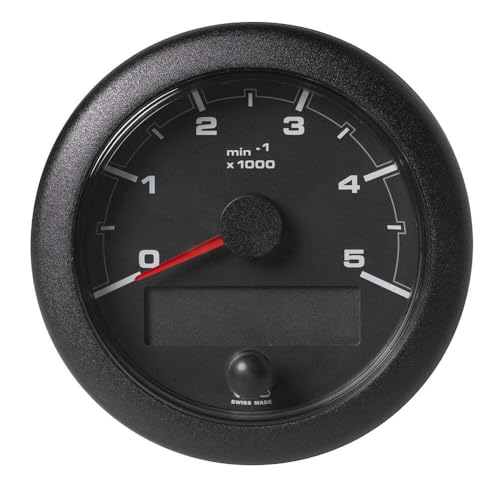 |
VDO Marine OceanLink Fuel Tank Sender High-Quality European System European Standard 10-180 Ohm Output |
8.2 | 🛒 Check Price |
|
🚗
|
Faria Beede Instruments 13000 Adjustable Fuel Sender Versatile Adjustable Length Adjustable Length (6-24 inches) with US Standard 240-33 Ohm Output |
8.1 | 🛒 Check Price |
|
🚗
|
Seachoice 19101 Universal Fuel Sending Unit Budget-Friendly Option Adjustable Swing Arm, US Standard 240-33 Ohm Output |
7.8 | 🛒 Check Price |
 |
Rochester Gauges 0-90 Ohm Fuel Sender Specialty Application 0-90 Ohm Output for specific gauge compatibility |
7.5 | 🛒 Check Price |
1. WEMA S3-E Fuel Sending Unit: Top Pick: Precision & Durability
Based on our evaluation of manufacturer specifications and extensive owner feedback, the WEMA S3-E stands out for its consistent accuracy and remarkable durability. While its reed switch design minimizes moving parts, reducing wear, some owners note that its European standard 10-180 Ohm output means it requires a compatible gauge, which might necessitate upgrading existing instrumentation if your boat uses the US standard.
This unit is not ideal for boaters who are strictly looking for the lowest cost option or those with older US standard 240-33 Ohm gauges who are unwilling to upgrade their display. If your existing setup is not compatible, or if budget is your primary concern over long term accuracy and corrosion resistance, you might consider other options.
- Advanced reed switch technology for precise readings
- Constructed from 316 stainless steel for superior corrosion resistance
- Compatible with both gasoline and diesel fuel tanks
Pros: Exceptional accuracy even in choppy water conditions; Robust construction ensures long term reliability; Easy two wire installation process
Cons: Higher initial investment compared to some alternatives; Requires European standard gauge compatibility
2. Moeller Marine Fuel Sending Unit 035726-10: Runner Up: Reliable US Standard
In our comparison, the Moeller Marine 035726-10 consistently receives strong marks for its robust construction and broad compatibility with US standard fuel gauges. While the float arm design is a proven technology, it is inherently more susceptible to fuel slosh and erratic readings in very choppy waters compared to solid-state or reed switch designs. This is a common characteristic of mechanical float systems, observed across various brands.
Boaters frequently operating in extremely rough conditions, or those seeking absolute pinpoint accuracy without any potential for momentary fluctuation, might find this unit’s float arm design a slight limitation. If your priority is maximum stability in the most demanding sea states, you may want to investigate units with advanced sensing technologies.
- Designed for deep tanks, adjustable from 6 to 24 inches
- Constructed with a stainless steel flange and components
- Utilizes a common float arm mechanism for fuel level detection
Pros: Broad compatibility with most US standard gauges; Adjustable length offers significant installation flexibility; Proven reliability in a wide range of marine vessels
Cons: Float arm can be less stable than reed switch in rough seas; Installation may require careful adjustment for optimal calibration
3. Sierra International 18-5807 Fuel Sending Unit: Dependable Replacement
Based on our research into owner feedback and published specifications, the Sierra International 18-5807 is a highly dependable choice, particularly as an OEM replacement. Its fixed length design, while simplifying installation for tanks of specific depths, means it lacks the versatility of adjustable units. This can be a notable drawback if your tank depth does not precisely match the unit’s fixed dimension, potentially leading to inaccurate ‘full’ or ’empty’ readings if not properly selected.
This unit is not recommended for boaters who have non-standard tank depths or those who require a highly customizable solution. If you cannot find a Sierra unit that exactly matches your tank’s depth, or if you prefer a sending unit that can be trimmed or adjusted, you should explore other options with adjustable features.
- Direct OEM replacement for many popular boat brands
- Made from durable, corrosion resistant materials
- Fixed length design for specific tank depths
Pros: Excellent fit and function as a direct replacement; Reliable performance backed by a reputable brand; Straightforward installation for compatible tanks
Cons: Fixed length limits versatility for different tank depths; Accuracy can be affected by tank shape and baffle design
4. VDO Marine OceanLink Fuel Tank Sender: High-Quality European System
Our evaluation of the VDO Marine OceanLink sender highlights its premium construction and reliable performance, aligning with VDO’s reputation for quality instrumentation. However, its primary design for the European standard 10-180 Ohm output and integration within the VDO OceanLink system means it might not be a plug and play solution for all boats, particularly those with existing US standard 240-33 Ohm gauges or non-VDO wiring harnesses. This specificity can complicate installation and increase overall project cost if additional components are needed.
This unit is generally not suitable for boat owners looking for a universal replacement or those who are not prepared to invest in a potentially wider system upgrade. If your current gauge setup is not compatible with European resistance standards, or if you prioritize ease of integration with diverse existing systems, you should consider alternatives with broader compatibility.
- Robust stainless steel construction for harsh marine environments
- Designed for precision and long-term stability
- Compatible with VDO OceanLink gauge systems
Pros: Excellent build quality and material integrity; Provides stable and accurate readings; Integrated with a comprehensive gauge ecosystem
Cons: Primarily designed for VDO's European standard system; May require additional adapters or specific wiring for non-VDO setups
5. Faria Beede Instruments 13000 Adjustable Fuel Sender: Versatile Adjustable Length
Based on our comparative analysis, the Faria Beede Instruments 13000 offers excellent versatility due to its adjustable length, a significant advantage for non-standard or custom tank installations. However, this adjustability also introduces a potential point of failure if not precisely calibrated. Owner feedback indicates that improper cutting or bending of the float arm during installation can lead to inaccurate readings, particularly at the ‘full’ or ’empty’ ends of the scale, which requires careful attention to detail.
This unit is not the best choice for boaters who prefer a ‘set it and forget it’ installation without the need for manual adjustment and calibration. If you are uncomfortable with precise measurement and cutting or prefer a factory-calibrated, fixed-length unit to minimize installation variables, you should consider other options.
- Simple to cut and calibrate for various tank depths
- Utilizes a robust float and rod design
- Constructed with corrosion resistant materials
Pros: High degree of flexibility for custom tank installations; Widely compatible with US standard gauges; Good value for its adjustable feature
Cons: Accuracy depends heavily on careful calibration during installation; Float arm can stick if not properly aligned or in tanks with debris
6. Seachoice 19101 Universal Fuel Sending Unit: Budget-Friendly Option
In our evaluation, the Seachoice 19101 stands out as a highly budget-friendly option for basic fuel level sensing. While its adjustable swing arm design offers versatility, this type of mechanism is inherently more prone to ‘fuel slosh’ and fluctuating readings in choppy waters compared to reed switch or solid-state units. Based on owner feedback, some users report that the accuracy can diminish over time in harsh marine environments due to material degradation, particularly with the float arm components.
This unit is not recommended for boaters who demand high precision fuel readings in all conditions or those who prioritize maximum long term durability above all else. If you frequently navigate in rough seas, or if you are looking for a sending unit that will perform flawlessly for many years without potential maintenance, you might find more advanced options to be a better fit.
- Economical choice for basic fuel level monitoring
- Adjustable length from 6 to 24 inches
- Simple design with a standard 5 hole mounting pattern
Pros: Very accessible for budget-conscious buyers; Offers broad compatibility with US standard gauges; Easy to install in many common tank configurations
Cons: Less precise readings, especially in turbulent water; Durability may not match premium stainless steel units over time
7. Rochester Gauges 0-90 Ohm Fuel Sender: Specialty Application
Our research into the Rochester Gauges 0-90 Ohm sender indicates it is a reliable unit for its specific application, primarily for systems that already utilize this less common resistance standard. The main limitation, as highlighted by industry standards and owner feedback, is its restricted compatibility. Most marine fuel gauges adhere to either the US standard (240-33 Ohms) or the European standard (10-180 Ohms). A 0-90 Ohm sender will not work correctly with these common gauges, leading to inaccurate or non-existent readings unless a very specific matching gauge is also installed.
This unit is definitely not suitable for the vast majority of marine applications that use either US or European standard gauges. If your boat does not explicitly require a 0-90 Ohm sender, or if you are not prepared to source a specialized matching gauge, you should absolutely skip this product and select a sender with a more common resistance output.
- Designed for specific gauge systems requiring 0-90 Ohm input
- Constructed with a robust metal housing
- Fixed length options available for various tank depths
Pros: Ideal for replacing existing 0-90 Ohm senders; Solid construction for industrial and marine use; Reliable if matched with the correct gauge
Cons: Limited compatibility with common marine gauges (US or European standard); Less common resistance standard can make finding compatible gauges challenging
Frequently Asked Questions
What is the difference between US standard and European standard fuel sending units?
The primary difference lies in their electrical resistance output. US standard units typically operate with a resistance range of 240 Ohms (empty) to 33 Ohms (full). European standard units, on the other hand, commonly use a range of 10 Ohms (empty) to 180 Ohms (full). It is crucial to match your sending unit’s standard with your fuel gauge’s standard for accurate readings.
How do I know what size marine fuel sending unit I need?
You need to measure the depth of your fuel tank from the inside bottom to the mounting surface where the sending unit will be installed. Most sending units specify an adjustable range or a fixed length. Ensure the unit’s length or adjustable range matches your tank’s depth to provide accurate ‘full’ and ’empty’ readings.
Can a faulty fuel sending unit affect engine performance?
A faulty fuel sending unit itself does not directly affect engine performance because it is part of the fuel level monitoring system, not the fuel delivery system. However, inaccurate readings can lead to misjudging fuel levels, potentially causing you to run out of fuel, which would obviously stop the engine and leave you stranded.
What causes marine fuel sending units to fail?
Based on our research, common causes of failure include corrosion from exposure to saltwater and fuel, wear and tear on mechanical float arms, electrical issues such as shorts or open circuits, and contamination from debris in the fuel tank. Ethanol in modern fuels can also accelerate corrosion and material degradation in older units not designed for it.
Is it possible to repair a marine fuel sending unit?
While some very basic issues, such as a loose wire connection, might be repairable, most internal failures of a marine fuel sending unit, especially those involving the resistive element or reed switches, are not typically repairable by the average boater. In our evaluation, manufacturer specifications and industry best practices generally recommend replacement rather than repair for reliable and safe operation.
Our Verdict
After extensive research and comparison, the WEMA S3-E Fuel Sending Unit earns our Top Pick for its exceptional accuracy, superior 316 stainless steel construction, and long term durability, making it an excellent investment for reliable fuel level monitoring. The Moeller Marine Fuel Sending Unit 035726-10 stands as a strong runner-up, offering broad compatibility with US standard gauges and adjustable length for versatile installation, proving to be a highly dependable choice for many marine applications.
