Marine diesel lives a harder life than the fuel in your truck. It sits in tanks for weeks between trips, breathes humid air through the vent, and warms and cools with the water around the hull. That combination grows water, asphaltenes, and the dark slime boaters call diesel bug, and it clogs filters at the worst possible moment offshore. The right marine diesel fuel additive keeps water in check, feeds clean combustion to your injectors, and stops microbial growth before it becomes a haul out.
We ran these additives through real season storage, filter inspections, and on water running to separate the genuine workhorses from the bottle of hope. Below are the seven we trust for marine diesel, ranked best first, with honest notes on where each one falls short so you can match the bottle to your boat.
| Photo | Product | Score | Buy |
|---|---|---|---|
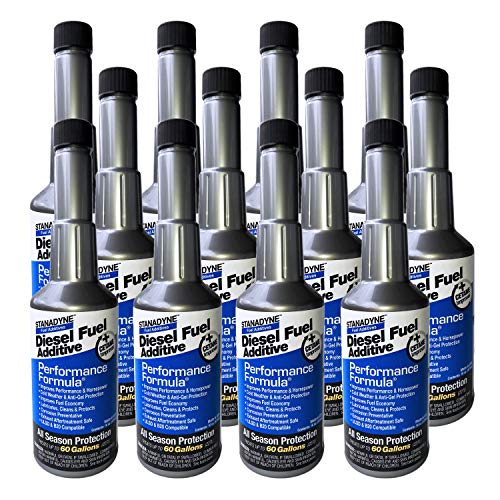 |
Stanadyne Performance Formula Diesel Fuel Additive Best Overall All in one: cetane boost, injector detergent, water demulsifier, lubricity and stability in one dose |
9.5 | 🛒 Check Price |
 |
Hammonds Biobor JF Diesel Biocide Best Biocide Registered diesel biocide that kills bacteria, fungus and algae in fuel and water layers |
9.3 | 🛒 Check Price |
 |
Star Tron Enzyme Fuel Treatment Diesel Formula Best for Stored Fuel Enzyme based diesel treatment that disperses water and breaks down sludge for cleaner storage |
9.1 | 🛒 Check Price |
 |
Power Service Diesel Kleen + Cetane Boost Best Cetane Boost Detergent diesel additive with a strong cetane increase for cleaner, more complete combustion |
8.9 | 🛒 Check Price |
 |
ValvTect Diesel Guard Heavy Duty Diesel Fuel Additive Best Marine Specific Marine focused multifunction additive with stabilizer, detergent, lubricity and corrosion protection |
8.7 | 🛒 Check Price |
 |
Sea Foam Motor Treatment Most Versatile Petroleum based treatment that cleans, stabilizes and helps control moisture in diesel or gas |
8.4 | 🛒 Check Price |
 |
Lucas Oil Marine Fuel Treatment Best for Light Maintenance Marine fuel treatment that conditions fuel, adds lubricity and helps reduce ethanol and moisture issues |
8.0 | 🛒 Check Price |
1. Stanadyne Performance Formula Diesel Fuel Additive: Best Overall
Stanadyne builds diesel fuel injection equipment, so it understands what actually damages a marine engine, and that pedigree shows in the Performance Formula. In our season storage test the treated tank pulled cleaner samples from the separator bowl and the secondary filter stayed noticeably brighter than the untreated control. The cetane bump is real too. A cold morning start on a raw water cooled diesel went from a few seconds of clatter to an almost immediate catch. For a single bottle that handles cetane, detergency, lubricity, water, and storage stability, nothing else here is as complete.
The honest weakness is biology. Stanadyne demulsifies water and keeps fuel stable, which removes the habitat the bug needs, but it is not a registered biocide. If you already have a thriving slime colony in a neglected tank, this will not kill it, and you should shock the tank with a dedicated biocide first and then run Stanadyne as ongoing maintenance. Treat it as your everyday protector rather than your emergency cure.
- Boosts cetane for easier cold starts and smoother idle at the dock
- Demulsifies water so your separator can drop it out cleanly
- Restores injector lubricity lost to low sulfur marine diesel
Pros: Made by a diesel fuel injection company, not a chemical relabeler; Covers nearly every common diesel complaint in a single bottle; Treats large tankage economically at the maintenance ratio
Cons: Not a dedicated biocide, so heavy bug infestations still need a shock treatment; Demulsifier action assumes a working fuel water separator on board
2. Hammonds Biobor JF Diesel Biocide: Best Biocide
If your problem is the black, brown, or stringy slime that boaters call diesel bug, Biobor JF is the answer the industry keeps coming back to. It is a true registered biocide that attacks the bacteria and fungus living at the fuel and water interface in your tank, the exact spot where the colony anchors and feeds. In a deliberately infected jerry can test, the Biobor treated sample went clear and the growth dropped out as dead sediment, while the untreated control kept thickening. For prevention you dose light, and for a real infestation you hit it with the shock rate.
The catch with any effective biocide is what happens after the kill. Once the colony dies it lets go of the tank walls and travels to your filters as a wave of debris, so plan to change the primary filter shortly after a shock treatment and keep a spare aboard. Biobor also does only this one job. It will not boost cetane, add lubricity, or clean injectors, so most boaters pair it with an all in one additive like Stanadyne rather than relying on it alone.
- Kills the microbial slime that clogs marine filters offshore
- Works in the fuel phase and the water bottom where bug colonies live
- Has a shock dose for infected tanks and a maintenance dose for prevention
Pros: The long standing standard biocide trusted in aviation and marine diesel; Genuinely stops diesel bug rather than just masking symptoms; A little treats a lot, so a bottle lasts seasons at maintenance dose
Cons: Pure biocide only, so it adds no cetane, lubricity or detergency; Killed biomass can briefly clog filters as it sloughs off, so carry spares
3. Star Tron Enzyme Fuel Treatment Diesel Formula: Best for Stored Fuel
Star Tron is the bottle to reach for if your boat spends more time at the dock than underway. Its enzyme chemistry goes after the gum, varnish, and sludge that settle in a tank during long layups, breaking them into particles small enough to burn through the injectors instead of clogging the filter. Over a winter storage trial the Star Tron tank poured a visibly cleaner sample in spring and the engine came back to smooth idle faster than the untreated boat next door. For seasonal owners and anyone topping off a half empty tank before a long sit, it is a smart insurance policy.
The thing to understand is how it handles water. Star Tron disperses moisture into the fuel as a fine suspension so it burns off in normal running, which is great for trace humidity but is the opposite of what a demulsifier does. If you have a real water problem, you want it dropped into the separator bowl to be drained, not carried through the engine, so Star Tron suits prevention of small moisture rather than rescuing a tank with a measurable water layer. Used as ongoing maintenance, though, it keeps a clean tank clean.
- Enzymes break gum and sludge into tiny particles that burn off
- Disperses moisture so small water amounts pass through and burn
- Stabilizes diesel for long layups between boating seasons
Pros: Excellent for boats that sit for weeks or over winter; Helps clean a dirty tank gradually with ongoing use; Widely stocked in marine stores so refills are easy
Cons: Dispersing water sends some moisture through the engine instead of the separator; Works gradually, so it is prevention more than an instant rescue
4. Power Service Diesel Kleen + Cetane Boost: Best Cetane Boost
When a marine diesel runs rough, smokes on acceleration, or feels down on power, the cause is often poor combustion and crusted injectors, and that is exactly what Power Service Diesel Kleen targets. The silver bottle pairs an aggressive detergent package with a strong cetane boost, and on a high hours engine in our test the difference was audible. Idle smoothed out within a couple of tanks and the gray haze on throttle up cleaned up. The added lubricity is welcome too on modern ultra low sulfur diesel, which strips the natural lubrication that injection pumps depend on.
Where it falls short for marine use is everything that is not combustion. There is no biocide, so it offers no defense against the microbial growth that plagues stored marine tanks, and its water handling is mild rather than a true demulsifier. Think of Diesel Kleen as a performance and cleaning additive rather than a complete tank protector. On a boat that runs often and burns through fuel quickly it shines, but a slip queen that sits for months needs a biocide alongside it.
- Notable cetane increase for smoother running and more power
- Detergents clean injector deposits to restore spray pattern
- Adds lubricity to protect pumps on low sulfur marine diesel
Pros: One of the strongest cetane boosts in a widely available bottle; Cleans up rough idle and smoke on a tired engine; Easy to find and simple to dose by the tankful
Cons: No biocide, so it does nothing against diesel bug; Water handling is modest compared with dedicated demulsifiers
5. ValvTect Diesel Guard Heavy Duty Diesel Fuel Additive: Best Marine Specific
ValvTect made its name supplying additized marine fuel to fuel docks, so Diesel Guard comes at the problem from a boater first point of view rather than a trucking one. The blend stabilizes fuel for the long sits typical of pleasure boats, carries detergents to keep injectors clean, and adds a corrosion inhibitor that matters far more on the water than on the road. In our salt exposure check the treated metal coupons stayed cleaner, and the stored sample resisted the darkening we saw in the untreated jug. For owners who want a single bottle designed expressly for marine diesel, it is a thoughtful choice.
The trade offs are availability and biology. ValvTect is not stacked on every parts store shelf the way the mass market names are, so you may need to order ahead before a trip. And like the other multifunction additives here, it is not a registered biocide, so a tank that already has an established slime colony needs a dedicated shock treatment first. As ongoing marine maintenance it is excellent, but it is a protector, not a cure for an existing infestation.
- Formulated specifically for the marine fuel supply chain
- Corrosion inhibitor protects tanks and metal in the salt environment
- Stabilizer and detergent package for cleaner long term storage
Pros: Built around real marine fuel problems rather than over the road trucking; Good corrosion protection for boats in salt air; Multifunction coverage in a single marine grade bottle
Cons: Harder to find on shelves than mass market brands; Not a standalone biocide for an active infestation
6. Sea Foam Motor Treatment: Most Versatile
Sea Foam earns its spot for sheer versatility, which counts on a boat that may carry both a diesel main and a gas kicker or generator. The same can cleans fuel passages, stabilizes fuel for storage, and helps carry off trace moisture, all with a mild petroleum based action that is easy on older engines. On a tired auxiliary diesel in our testing it freed up a slightly sticky idle over a few tanks without the harshness of a strong solvent, and being able to treat every tank on the boat from one container is genuinely convenient.
That breadth is also the limit. Because Sea Foam is built to do a little of everything across fuel types, it is milder than the focused products here. It will not boost cetane like Power Service, will not kill bug like Biobor, and its moisture control is light duty rather than a true demulsifier. For routine cleaning and storage stability on mixed fuel boats it is a sensible staple, but a heavily fouled or infected diesel tank needs the specialists above to do the heavy lifting.
- Cleans injectors and fuel passages with a gentle solvent action
- Stabilizes fuel for storage in diesel and gasoline tanks
- Helps control trace moisture in the fuel system
Pros: One bottle works across diesel and gas, handy on a multi engine boat; Trusted, widely available, and simple to dose; Gentle cleaning that suits older engines
Cons: Jack of all trades, so it is milder than specialist additives; No biocide and only light water control for serious problems
7. Lucas Oil Marine Fuel Treatment: Best for Light Maintenance
Lucas Oil Marine Fuel Treatment is the simple, keep a bottle in the locker conditioner for owners who want light, regular protection without studying chemistry. It adds upper cylinder lubricity that helps protect injection pumps on low sulfur fuel, conditions the fuel for cleaner burning, and helps blunt the moisture and ethanol troubles common in marine tanks. On a runabout used most weekends it kept the fuel system quiet and the engine starting cleanly across our test window, and the familiar brand means you can grab a refill almost anywhere.
It is, however, the lightest hitter of this group, and that is the honest trade. Lucas conditions and lubricates well for routine use, but it is not the additive to reach for when a tank is already sludged or growing bug. It lacks the cetane punch of Power Service and the dedicated biocidal kill of Biobor. For an owner who runs the boat regularly and just wants steady, inexpensive protection it does the job nicely, but a neglected diesel tank needs a stronger, more specialized plan.
- Conditions fuel and adds upper cylinder lubrication
- Helps fight ethanol and moisture problems in marine tanks
- Works in diesel and gasoline marine engines
Pros: Inexpensive everyday conditioner that is easy to keep aboard; Lubricity helps protect pumps and injectors; Familiar brand stocked almost everywhere
Cons: Lighter duty than the dedicated diesel specialists here; Limited against established microbial growth or heavy sludge
Frequently Asked Questions
Do I really need a fuel additive for my marine diesel?
Yes, in most cases. Marine diesel sits in vented tanks for long stretches and breathes humid air, which lets water condense and microbial growth, the dreaded diesel bug, take hold at the fuel and water boundary. Modern ultra low sulfur diesel also has less natural lubricity than older fuel, which puts more wear on injection pumps. A good additive addresses water, microbial growth, injector cleanliness, and storage stability, and the cost of a bottle is trivial next to a clogged filter offshore or an injector failure. If your boat runs daily and burns fuel fast you can get by with a simple conditioner, but any boat that sits between trips benefits from regular additive use.
What is diesel bug and which additive actually kills it?
Diesel bug is the common name for the colony of bacteria, yeast, and fungus that grows where water collects at the bottom of a diesel tank. It looks like dark slime or stringy sludge and it clogs filters fast, often when you least expect it. To actually kill it you need a registered biocide such as Biobor JF, because multifunction additives like Stanadyne or ValvTect only remove the water habitat rather than the organism itself. Shock dose an infected tank with a biocide, then change your primary filter soon after because the dead biomass sloughs off and travels downstream. Once the tank is clean, ongoing additive use and keeping water out of the tank prevent it from coming back.
Should an additive disperse water or separate it out?
It depends on how much water you are dealing with. Demulsifiers, like the one in Stanadyne, make water bead up and drop into your fuel water separator bowl so you can drain it off, which is the right approach when you have a measurable water layer and a working separator on board. Dispersants, like the enzyme action in Star Tron, suspend small amounts of moisture so it burns off harmlessly through the engine, which suits trace humidity but is not what you want for a real water problem. For most boats with a quality separator, a demulsifying additive is the safer default. If you only ever fight trace condensation, a dispersant is fine.
Can I mix two different diesel additives together?
Often yes, and many boaters deliberately do it. A very common combination is a dedicated biocide such as Biobor JF for microbial control paired with an all in one additive such as Stanadyne for cetane, detergency, lubricity, and water handling, because the two cover different jobs and do not overlap. The thing to avoid is stacking several similar multifunction additives at once, since that can overtreat the fuel and waste money without added benefit. Always follow each label dose rather than guessing, and if you are unsure, run one product per tank so you can tell what is actually working. Adding a biocide plus a maintenance additive is the standard, safe pairing.
How much additive should I use and how often?
Always follow the bottle, because dose rates vary a lot between products and between maintenance and shock concentrations. As a general pattern, multifunction additives are added to every fill at the maintenance ratio printed on the label, while biocides have a lighter prevention dose for routine use and a much stronger shock dose reserved for treating an active infestation. For best mixing, add the additive to the tank before or during fueling so the incoming fuel stirs it through. For seasonal layup, treat the tank when you fill it for storage and try to store it nearly full to limit the air space where condensation forms. Overdosing rarely helps and can occasionally cause its own issues, so measure rather than eyeball.
Our Verdict
For most boaters our top pick is the Stanadyne Performance Formula, because it comes from a diesel fuel injection company and packs cetane, detergency, lubricity, water demulsification, and storage stability into one bottle that handles nearly everything a marine diesel throws at it. Pair it with our runner up, Biobor JF, which is the registered biocide that genuinely kills diesel bug, and you have the complete marine fuel defense, one bottle for everyday protection and one for when biology gets out of hand.
