Putting boost through an LS engine changes everything about how the intake manifold needs to behave. A naturally aspirated runner design that loves high-RPM scavenging can choke a turbo or supercharged combination, while a manifold that seals beautifully at 14 PSI can keep your tune honest and your bottle of power safe. The wrong choice shows up as plenum cracking, lifted gaskets, uneven cylinder fueling, and intake air temps that wreck timing. The right one feeds every cylinder evenly and holds pressure without flexing.
We looked at the manifolds boosted LS builders actually run, from cast aluminum sheet-metal style fabricated units to budget-friendly cathedral and LS3-port castings. The picks below favor strong plenum volume, even runner distribution under positive pressure, good gasket sealing surfaces, and a flange that bolts to common LS heads without surprise machining. Whether you run a single turbo, twin turbos, or a Roots blower, one of these will match your goals.
| Photo | Product | Score | Buy |
|---|---|---|---|
 |
Holley Hi-Ram Modular LS Intake Manifold Best Overall Modular two-piece design, fits cathedral and LS3 ports, single or dual throttle body top |
9.5 | 🛒 Check Price |
 |
Edelbrock Pro-Flo XT LS Intake Manifold Best Sealing Cast aluminum, large plenum, 90mm or 102mm throttle body opening, cathedral port |
9.2 | 🛒 Check Price |
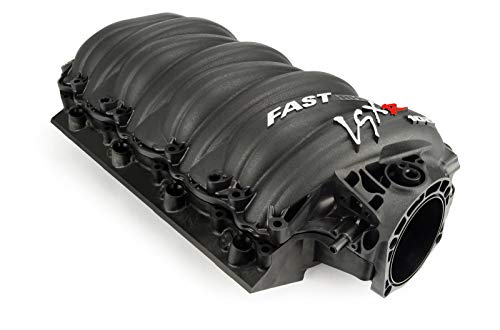 |
FAST LSXR 102mm Intake Manifold Best for Street Boost Composite construction, 102mm throttle body, removable runners, cathedral or LS3 |
9.0 | 🛒 Check Price |
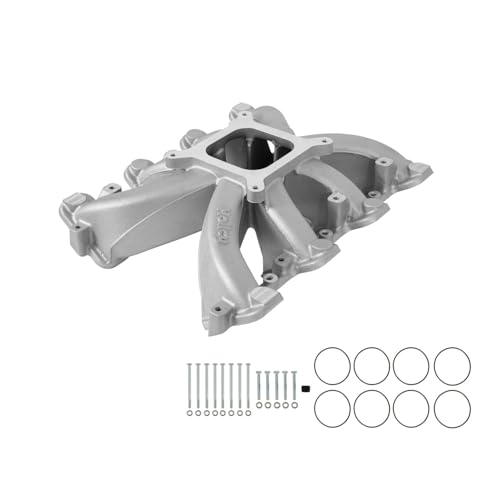 |
Holley Mid-Rise EFI LS Intake Manifold Best Hood Clearance Cast aluminum, mid-height plenum, 105mm throttle body opening, cathedral or LS3 |
8.8 | 🛒 Check Price |
 |
MSD Atomic AirForce LS Intake Manifold Best Low Profile Composite, low-profile plenum, 103mm throttle body opening, multiple port options |
8.6 | 🛒 Check Price |
 |
Dorman LS Cathedral Port Intake Manifold Best Value Base Cathedral port replacement manifold, factory-style flange, accepts stock or aftermarket throttle body |
8.3 | 🛒 Check Price |
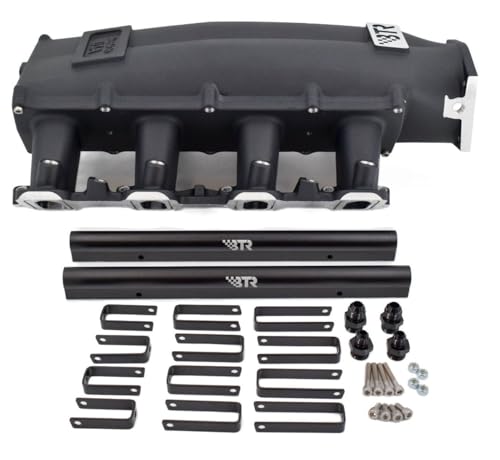 |
Brian Tooley Racing Cathedral Port LS Intake Manifold Best Race Sheet-Metal Style Fabricated-style cast plenum, large volume, single or dual throttle body, race oriented |
8.1 | 🛒 Check Price |
1. Holley Hi-Ram Modular LS Intake Manifold: Best Overall
The Holley Hi-Ram earns the top spot because it was built to be modified and pushed hard, which is exactly what a boosted LS asks for. The two-piece architecture means you start with a single throttle body top and move to a dual setup as you add more turbo or blower, without buying a whole new manifold. The plenum is genuinely large, so it acts as a buffer that smooths pressure pulses and feeds all eight cylinders with even charge under positive pressure. Builders running big single turbos consistently report clean, balanced fueling across cylinders, which makes tuning far less nerve-wracking when timing margins get tight.
The honest weakness is height. This is a tall manifold, and on a street car you will almost certainly need a cowl hood, a scoop, or a custom hood to close everything up. It also ships bare, so the raw aluminum will discolor over time unless you coat or seal it. Neither issue affects performance, but both matter if your build lives on the street and you care about fitment and appearance. For a dedicated boost build chasing big numbers, this is the manifold to beat.
- Tall modular plenum top swaps between single and dual throttle body configurations
- Available in cathedral port and rectangular LS3 port flanges
- Bungs and provisions for nitrous, boost reference, and port injection fuel rails
Pros: Huge plenum volume feeds high-boost combinations evenly; Modular top lets you scale throttle body airflow as the build grows; Excellent sealing flanges and fuel rail support out of the box
Cons: Tall height clears many hoods only with a cowl or scoop; Bare aluminum finish needs sealing or coating to stay clean
2. Edelbrock Pro-Flo XT LS Intake Manifold: Best Sealing
If your number one priority is a manifold that simply will not leak under pressure, the Edelbrock Pro-Flo XT is the one we reach for. The casting is thick and rigid, which directly addresses the most common boosted LS failure mode of plenum flex and lifted intake gaskets. The plenum volume is large enough to support meaningful turbo or supercharger flow while still keeping cylinder-to-cylinder distribution tidy. Edelbrock machines the gasket surfaces well, so you get a flat, true sealing face that mates cleanly to cathedral port heads with standard gaskets.
The limitation is in the name of the head it was designed for. This is a cathedral port manifold, so anyone running LS3, L92, or rectangular port heads is out of luck and needs a different casting. It is also a more traditional one-piece design, so you do not get the swap-the-top modularity that a Hi-Ram offers. For a cathedral port boost build that values reliability and clean sealing over reconfigurability, the Pro-Flo XT is an outstanding choice.
- Thick cast plenum walls resist flex and cracking under boost
- Generous plenum volume supports forced induction and high RPM
- Machined gasket surfaces seal cleanly against cathedral port heads
Pros: Rigid casting holds pressure without lifting gaskets; Wide throttle body compatibility for staged airflow upgrades; Proven Edelbrock fit and finish reduces install headaches
Cons: Cathedral port only, so LS3 head builders must look elsewhere; Less modular than fabricated or two-piece designs
3. FAST LSXR 102mm Intake Manifold: Best for Street Boost
The FAST LSXR is the manifold we recommend most often for a street-driven boosted LS, and the reason is heat. Its composite construction does not soak and radiate heat the way an aluminum casting does, so on a daily-driven or street and track car your intake air temps stay lower and your tune stays safe in traffic. The removable runners are a genuinely useful feature, letting you inspect, port match, or swap runners without replacing the whole manifold. It comes in both cathedral and LS3 port flavors, so it fits the broadest range of LS heads on this list.
The trade-off for that heat advantage is material strength. Composite handles street and moderate race boost very well, but at the most extreme cylinder pressures aluminum and fabricated manifolds give you more margin against cracking. The runner seals also reward patience, since rushing reassembly can introduce small leaks. For the vast majority of street boost builds running sane PSI, the LSXR is a smart, lower-profile pick that keeps charge temps in check.
- Removable runners allow porting and inspection without a new manifold
- Composite body resists heat soak and keeps charge temps lower
- Available in both cathedral port and LS3 rectangular port versions
Pros: Composite material keeps intake air temps down under boost; Serviceable runners make port matching and tuning easy; Lower profile fits more factory and aftermarket hoods
Cons: Composite is less forgiving of extreme cylinder pressure than aluminum; Runner seals require care during repeated assembly
4. Holley Mid-Rise EFI LS Intake Manifold: Best Hood Clearance
The Holley Mid-Rise exists to solve the single most frustrating problem with boost-friendly manifolds, which is that the best ones are too tall to fit under a hood. It splits the difference with a mid-height plenum that gives you most of the volume and flow benefit of a tall intake while clearing many factory and cowl hoods that a full Hi-Ram would not. The aluminum casting is rigid enough to hold boost without the flex worries, and the 105mm throttle body opening means airflow is not the bottleneck on most builds.
The honest compromise is in the plenum size. Because it is shorter than a true Hi-Ram, it gives up some top-end flow potential at the very highest RPM and boost levels, so an all-out drag combination may prefer the taller option. It is also still taller than a stock manifold, so the tightest engine bays may need a check before buying. For a boosted street build that has to live under a real hood, this is the most practical manifold here.
- Mid-rise height clears many factory and cowl hoods
- Cast aluminum plenum stands up to forced induction pressure
- Accepts up to a 105mm throttle body for serious airflow
Pros: Strong aluminum casting handles boost reliably; Lower than a true Hi-Ram for easier hood fitment; Large throttle body opening supports big power goals
Cons: Plenum is smaller than a tall Hi-Ram for top-end flow; Still taller than a stock-style manifold on some cars
5. MSD Atomic AirForce LS Intake Manifold: Best Low Profile
When clearance is everything, the MSD Atomic AirForce is the manifold that fits where nothing else will. Its low-profile composite design slips under stock and mildly modified hoods that would never close over a Hi-Ram or even a mid-rise, which makes it the natural pick for swaps and engine bays with no vertical room to spare. The composite construction carries the same heat advantage as the FAST unit, keeping intake air temps lower than a comparable aluminum manifold, which matters a great deal once you add boost. The fueling provisions are generous, so port injection and supplemental fuel strategies are straightforward.
The cost of that slim profile is plenum volume, and there is no way around it. A low manifold simply holds less air, so at the highest boost and RPM it will give up power to taller designs. This is a manifold for moderate boost builds and clearance-constrained swaps, not for chasing the biggest possible dyno number. Within that lane it is excellent, and it solves a real problem that frustrates a lot of LS builders.
- Low overall height fits tight engine bays and stock hoods
- Composite body resists heat soak for cooler intake temps
- Multiple injector bungs support port and direct fuel strategies
Pros: Lowest profile here for the tightest hood clearance; Composite keeps charge temperatures down under boost; Flexible fueling provisions for boosted applications
Cons: Low plenum volume limits all-out top-end power; Best suited to moderate rather than extreme boost
6. Dorman LS Cathedral Port Intake Manifold: Best Value Base
Not every boosted LS build starts with a race manifold, and the Dorman cathedral port intake is the sensible base for a first turbo or low-PSI blower combination. It is a direct-fit replacement that bolts to common cathedral port heads without machining, so it gets a swap or a budget boost project running reliably while you sort out the rest of the combination. For mild boost on a stock or lightly built short block, the factory-style flow is perfectly adequate and the install is genuinely simple.
The honest limitation is that this is fundamentally a replacement-grade manifold, not a forced induction specialist. The plenum and runners follow a factory-style design, so as boost and RPM climb it becomes the restriction in the system and you will outgrow it. Think of it as the manifold that gets you on the road and boosted now, with a clear upgrade path to a Hi-Ram or LSXR later. For value-focused builders dipping into boost, it does exactly what it needs to.
- Direct-fit cathedral port flange for common LS swaps
- Solid base for entry-level boost on a budget build
- Bolts to factory heads without machining
Pros: Easy direct-fit installation on cathedral port heads; Reliable starting point for a first boosted LS build; Strong availability and broad fitment
Cons: Factory-style plenum limits high-boost top-end flow; Not designed for extreme forced induction goals
7. Brian Tooley Racing Cathedral Port LS Intake Manifold: Best Race Sheet-Metal Style
The Brian Tooley Racing manifold is the choice when the build is unapologetically a race car. The fabricated-style plenum is large and stout, designed from the start to feed the biggest turbo and supercharger combinations while resisting the flex that destroys lesser manifolds at extreme cylinder pressure. With single and dual throttle body provisions and a serious plenum volume, it supports airflow goals that the street-oriented manifolds on this list simply cannot reach. BTR has deep LS knowledge, and it shows in how this manifold distributes charge under heavy boost.
The reason it sits lower in the ranking is that it is a specialist, not an all-rounder. The height and race focus make it impractical for a street car, demanding a custom hood and a fueling and tuning setup that matches its ambitions. Install it on a daily driver and you will fight clearance and drivability the whole way. But for a dedicated high-boost LS race build where peak power is the only metric that matters, it is exactly the right tool.
- Large fabricated-style plenum built for high-boost race use
- Single and dual throttle body provisions for big airflow
- Stout construction resists flex at extreme cylinder pressure
Pros: Built specifically for serious boost and high RPM; Big plenum supports the largest turbo and blower combinations; Rigid design holds pressure under race conditions
Cons: Race focus and tall height make it impractical for the street; Requires custom hood and careful fuel and tuning support
Frequently Asked Questions
Do I really need a different intake manifold for a boosted LS?
You do not always need to change it to make boost, but the manifold quickly becomes a limiting factor. A factory or naturally aspirated style manifold can flex and lift gaskets under positive pressure, and its plenum and runners are tuned for vacuum operation rather than forced air. A boost-oriented manifold gives you a larger, more rigid plenum that holds pressure, distributes charge evenly across all eight cylinders, and provides bungs for boost reference and extra fueling. On mild boost you may get away with a stock-style unit at first, but as PSI and RPM climb, an upgraded manifold is one of the most worthwhile changes you can make for both reliability and power.
Does the intake manifold need to match my cylinder head port shape?
Yes, and this is the most common mistake LS builders make. LS heads come in two main intake port shapes, cathedral port found on early LS1, LS6, and 5.3 and 6.0 truck heads, and rectangular LS3 or L92 style ports on later heads. The manifold flange must match your head port shape, so a cathedral port manifold will not seal correctly on LS3 heads and the reverse is also true. Always confirm your head casting before buying. Several manifolds in this guide, including the FAST LSXR and Holley Hi-Ram, are offered in both port versions, which makes them safe choices if you are unsure or planning a head change later.
Will a tall boost intake manifold fit under my hood?
Often it will not without modification, and you should measure before you buy. Tall manifolds like the Holley Hi-Ram and the BTR race unit deliver the most plenum volume and top-end flow, but that height frequently means you need a cowl hood, a scoop, or a custom hood to close everything. If you need to keep a stock or mildly modified hood, look at the mid-rise and low-profile options such as the Holley Mid-Rise, MSD Atomic AirForce, or FAST LSXR, which trade some peak flow for real-world clearance. Measure from the manifold mounting surface to the underside of your closed hood and compare against the manifold height before ordering.
Are composite manifolds safe to run with boost?
For street and moderate race boost, yes, and composite even offers a real advantage. Composite manifolds like the FAST LSXR and MSD Atomic AirForce resist heat soak far better than aluminum, so they keep intake air temperatures lower in traffic and during repeated runs, which protects your timing and your tune. At the most extreme cylinder pressures used in all-out race builds, aluminum and fabricated manifolds give you more structural margin against cracking, so dedicated high-boost race cars often step up to metal. But for the large majority of street and street-and-track boost builds running sensible PSI, a quality composite manifold is both safe and beneficial.
What throttle body size should I run on a boosted LS intake?
Bigger is not automatically better, but boost generally rewards a larger throttle body than a naturally aspirated combination of the same power. Most of the manifolds here accept a 102mm to 105mm throttle body, which suits the airflow demands of serious turbo and supercharger setups. For a mild boost street build a 92mm can be plenty and may give crisper part-throttle response, while high-boost combinations chasing big numbers benefit from the larger openings. Match the throttle body to your target power and the manifold opening, and remember that on a boosted application the turbo or blower, not the throttle body alone, sets the ultimate airflow ceiling.
Our Verdict
For most boosted LS builds, the Holley Hi-Ram Modular is our top pick because its large plenum, even cylinder distribution, and swap-the-top modularity let it grow with your turbo or blower while sealing reliably under pressure. If your priority is a manifold that simply refuses to leak, the Edelbrock Pro-Flo XT is the runner up, with a thick, rigid casting that shrugs off the plenum flex and lifted gaskets that plague lesser units. Street builders fighting heat and hood clearance should give the FAST LSXR a hard look, but for a no-compromise boost combination, the Hi-Ram is the one to beat.
