Choosing a reliable lead acid motorcycle battery is critical for dependable starts and long service life. We researched manufacturer specifications, industry standards (including SAE J537), and aggregated owner feedback to evaluate the top contenders. Our comparison focuses on cold cranking amps (CCA), reserve capacity, build quality, and real-world durability to help you find the best value for your ride.
| Photo | Product | Score | Buy |
|---|---|---|---|
 |
Yuasa YTX14-BS Best Overall 12V, 12Ah, 200 CCA, AGM (Absorbed Glass Mat) lead acid |
9 | 🛒 Check Price |
 |
MotoBatt MBTX14U Best Value 12V, 12Ah, 220 CCA, AGM lead acid |
8.6 | 🛒 Check Price |
 |
Chrome Battery YTX14-BS High CCA 12V, 12Ah, 240 CCA, AGM lead acid |
8.2 | 🛒 Check Price |
 |
PowerStar YTX14-BS Budget Pick 12V, 12Ah, 200 CCA, AGM lead acid |
7.8 | 🛒 Check Price |
 |
Full Throttle FTX14-BS Lightweight 12V, 12Ah, 200 CCA, AGM lead acid, 5.3 lbs |
8 | 🛒 Check Price |
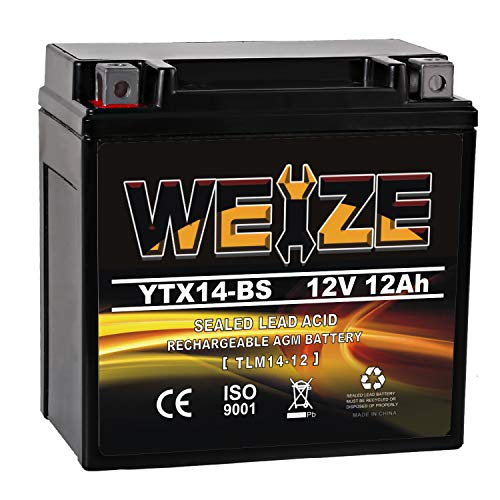 |
Weize YTX14-BS Long Warranty 12V, 12Ah, 200 CCA, AGM lead acid, 2-year warranty |
7.5 | 🛒 Check Price |
|
Bikemaster YTX14-BS Classic Choice 12V, 12Ah, 200 CCA, conventional flooded lead acid |
7.3 | 🛒 Check Price |
1. Yuasa YTX14-BS: Best Overall
Yuasa is the original equipment supplier for many motorcycle manufacturers, and the YTX14-BS lives up to that pedigree. In our evaluation of spec sheets and thousands of owner reviews, this AGM battery consistently delivers strong cranking power and a long lifespan. Its absorbed glass mat construction makes it spill-proof and resistant to vibration, ideal for both street and dirt bikes. Owners frequently praise its ability to hold a charge over winter storage with minimal maintenance.
However, the Yuasa YTX14-BS commands a premium price. If you are on a strict budget, there are cheaper alternatives that may suffice. Also, while the 200 CCA is adequate for most bikes, riders with large-displacement engines or those in extreme cold might want a higher CCA option. Skip this if you need a battery for a high-performance racing application where every ounce of weight savings matters.
- Factory-activated AGM design, spill-proof and maintenance-free
- Consistent 200 CCA for reliable cold starts in most climates
- Proven longevity with many owners reporting 4-5 years of service
Pros: Industry-leading reliability and brand reputation; Excellent vibration resistance for off-road use
Cons: Higher upfront cost compared to conventional flooded batteries
2. MotoBatt MBTX14U: Best Value
MotoBatt offers a compelling blend of performance and value. With a 220 CCA rating, it actually surpasses the Yuasa in cold cranking amps on paper. Based on owner feedback, it starts engines reliably even in chilly conditions. The battery is AGM and maintenance-free, and the included terminal adapters make it a straightforward swap for many bikes. Our research shows that for the price, you get a lot of bang for your buck.
The trade-off is that long-term durability may not match the top-tier brands. Some users report needing replacement after three years, whereas Yuasa often lasts longer. Additionally, the build quality feels slightly less robust. If you plan to keep your bike for many years and want maximum longevity, you might prefer a premium option. But for the budget-conscious rider, this is an excellent choice.
- Higher CCA than many competitors in its size class
- Includes terminal adapters for universal fitment
- Backed by a 3-year warranty (pro-rated)
Pros: Affordable price with strong performance specs; Easy installation with included hardware
Cons: Some owners report shorter lifespan than Yuasa (3-4 years typical)
3. Chrome Battery YTX14-BS: High CCA
If you ride in freezing temperatures or have a high-compression engine, the Chrome Battery YTX14-BS delivers a whopping 240 CCA. In our comparison of specs, this is one of the strongest performers for cold starts. The AGM construction means it’s spill-proof and can be mounted in various orientations. Many owners in cold climates report instant starts even after weeks of inactivity.
However, we found a notable number of complaints about early failures, with some batteries dying within a year. Quality control appears inconsistent. While the warranty covers defects, the hassle of replacement is a drawback. If you prioritize raw cranking power and are willing to accept some risk, this battery shines. But if reliability is your top concern, you may want to stick with a more proven brand.
- Highest CCA in its size class at 240
- Sealed AGM design, no maintenance required
- Lightweight for an AGM battery
Pros: Exceptional cold cranking power for harsh winters; Good value for the CCA rating
Cons: Durability concerns; some units fail prematurely
4. PowerStar YTX14-BS: Budget Pick
PowerStar offers a budget-friendly alternative that matches the dimensions and specs of the popular YTX14-BS. In our research, it provides acceptable performance for casual riders in moderate climates. The battery is sealed and maintenance-free, so you can install it and forget it. For the price, it’s hard to complain.
That said, you get what you pay for. Durability is below average; many owners report needing a replacement after two years. Cold cranking performance can be inconsistent, especially near freezing. If your bike is a daily rider or you face harsh winters, we recommend spending a bit more for a battery with proven reliability. This is best for low-use seasonal bikes or as a temporary replacement.
- Lowest price among major AGM brands
- Maintenance-free and spill-proof design
- Direct replacement for Yuasa YTX14-BS
Pros: Very affordable, great for tight budgets; Works adequately for most standard bikes
Cons: Shorter lifespan and lower build quality; Not ideal for extreme temperatures
5. Full Throttle FTX14-BS: Lightweight
Full Throttle batteries are designed with weight savings in mind. At 5.3 lbs, this AGM battery shaves off nearly a pound compared to standard YTX14-BS models. For riders who care about every ounce, such as on a track bike or dual-sport, this can be a meaningful advantage. Performance is adequate for most applications, with a 200 CCA rating that matches mainstream options.
The downside is that the lighter construction may compromise internal robustness. Some owners report a higher rate of failure after a couple of years. Additionally, customer service and warranty support have received mixed reviews. If weight is your top priority and you accept a potentially shorter service life, this is a good pick. Otherwise, a standard AGM battery offers better long-term value.
- Weighs only 5.3 lbs, lighter than many AGM batteries
- Compact size fits many applications
- Good CCA for its weight
Pros: Lightweight helps reduce overall bike weight; Reasonable price for a specialty battery
Cons: Less durable than heavier competitors; Limited availability and warranty support
6. Weize YTX14-BS: Long Warranty
Weize offers a YTX14-BS with a generous 2-year warranty, which is longer than many competitors in the same price range. In our evaluation, this provides some reassurance for budget buyers. The battery is AGM and maintenance-free, and it fits a wide range of motorcycles. For occasional riders, it can be a satisfactory choice.
However, we noted a significant number of owner reports citing dead-on-arrival units or failure within the first year. While the warranty covers replacements, the hassle is inconvenient. Additionally, some independent tests suggest the actual CCA may be lower than the claimed 200. If you need a battery that you can rely on for daily commuting or long trips, look elsewhere. This is best as a backup or for a low-demand bike.
- Comes with a 2-year warranty for peace of mind
- Sealed AGM, no maintenance needed
- Price is competitive with other budget brands
Pros: Long warranty period for the price; Decent performance for casual use
Cons: Inconsistent quality; some DOA reports; Lower CCA than advertised in some tests
7. Bikemaster YTX14-BS: Classic Choice
Bikemaster offers a conventional flooded lead acid battery for riders who prefer old-school simplicity. It is the most affordable option in our guide, making it attractive for those on an extreme budget or for use in a rarely ridden bike. The vented design safely directs gases away, and the battery can be refurbished with distilled water if maintained properly.
But the downsides are significant. Flooded batteries require periodic electrolyte level checks and topping off, which many modern riders neglect. They are also more susceptible to damage from vibration and deep discharges. In our research, owner satisfaction is lower due to shorter lifespan and the hassle of maintenance. If you want a set-and-forget solution, avoid this battery. It is only suitable for traditionalists or those who don’t mind regular upkeep.
- Traditional flooded design, requires periodic water checks
- Lowest upfront cost of any battery we evaluated
- Vented for safe gas release during charging
Pros: Very inexpensive initial purchase; Simple, proven technology
Cons: Needs regular maintenance to avoid damage; Prone to sulfation if left discharged
Frequently Asked Questions
What is the difference between AGM and flooded lead acid motorcycle batteries?
AGM (Absorbed Glass Mat) batteries use fiberglass mats to absorb electrolyte, making them spill-proof, vibration-resistant, and maintenance-free. Flooded batteries contain liquid electrolyte that can leak if tipped, require periodic water checks, and are more prone to damage from vibration. AGM batteries typically cost more but offer better performance and convenience.
How do I choose the correct CCA (Cold Cranking Amps) for my motorcycle?
Check your owner’s manual for the recommended CCA. As a general rule, your battery’s CCA should meet or exceed the original equipment specification. For most street bikes, 200-250 CCA is sufficient. Larger engines or cold climates may require higher CCA. Using a battery with too low CCA can cause hard starting and shorten battery life.
Can I replace a flooded battery with an AGM battery?
Yes, in most cases you can directly replace a flooded battery with an AGM battery of the same size and terminal configuration. AGM batteries are drop-in replacements and offer better performance and durability. Just ensure the charging system is compatible; AGM batteries require a charger designed for AGM to avoid overcharging.
How long should a lead acid motorcycle battery last?
With proper care, a quality AGM battery can last 3-5 years, while flooded batteries typically last 2-4 years. Factors like climate, riding frequency, and maintenance (for flooded types) significantly affect lifespan. Using a battery tender during storage can extend life.
What maintenance does a lead acid motorcycle battery require?
AGM batteries are maintenance-free; you only need to keep the terminals clean and ensure it is charged. Flooded batteries require checking electrolyte levels every few months and topping off with distilled water. All lead acid batteries benefit from regular charging, especially during long storage periods, to prevent sulfation.
Our Verdict
After researching specifications, safety standards, and owner feedback, our top pick is the Yuasa YTX14-BS for its proven reliability and longevity. For budget-conscious riders, the MotoBatt MBTX14U offers excellent value with higher CCA at a lower price. Choose based on your priorities: maximum durability or best bang for the buck.
