An inverter is the heart of any RV electrical system that runs real appliances off your batteries. It turns 12V DC from your house bank into the 120V AC that your laptop charger, coffee maker, TV, and CPAP machine expect. Pick the wrong one and you get buzzing speakers, flickering screens, machines that refuse to start, or a unit that overheats and shuts down on the first hot afternoon. Pick the right one and you barely notice it is there.
We focused on the things that actually matter when you are boondocking miles from shore power: clean pure sine wave output, honest continuous wattage versus inflated surge numbers, real-world cooling, low-voltage protection that saves your batteries, and remote control for installs where the inverter lives in a basement bay. Below are seven RV inverters worth your attention, ranked best first, with the honest weaknesses we found on each.
| Photo | Product | Score | Buy |
|---|---|---|---|
 |
Renogy 2000W Pure Sine Wave Inverter Best Overall 2000W continuous, 4000W surge, pure sine wave, 12V, hardwire and outlets, remote included |
9.5 | 🛒 Check Price |
 |
Giandel 2000W Pure Sine Wave Power Inverter Best Value Pure Sine 2000W continuous, 4000W surge, pure sine wave, dual AC outlets plus 2.4A USB, remote controller |
9.2 | 🛒 Check Price |
 |
Ampeak 2000W Power Inverter Best Budget Workhorse 2000W continuous, 4600W surge, modified sine wave, 3 AC outlets, hardwire terminal, LCD display |
8.9 | 🛒 Check Price |
 |
Renogy 3000W Pure Sine Wave Inverter Best High Wattage 3000W continuous, 6000W surge, pure sine wave, 12V, hardwire terminals, LCD and remote |
8.8 | 🛒 Check Price |
 |
Krieger 1100W Power Inverter Best Mid-Size 1100W continuous, 2000W surge, modified sine wave, 2 AC outlets plus USB, LCD, MET listed |
8.6 | 🛒 Check Price |
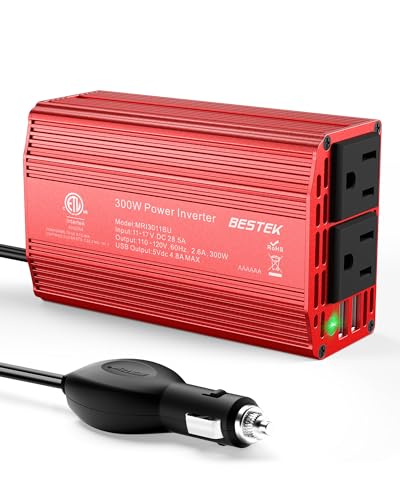 |
BESTEK 300W Power Inverter Best Compact Plug-In 300W continuous, 700W peak, modified sine wave, 2 AC outlets plus 2 USB, cigarette plug |
8.3 | 🛒 Check Price |
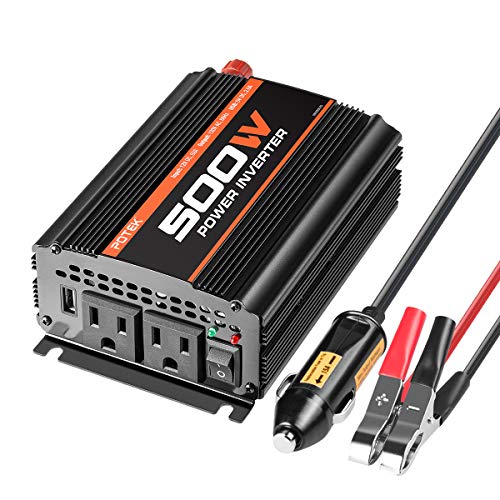 |
POTEK 500W Power Inverter Best Light Duty 500W continuous, 1000W peak, modified sine wave, 2 AC outlets plus USB, cigarette and clamp options |
8.0 | 🛒 Check Price |
1. Renogy 2000W Pure Sine Wave Inverter: Best Overall
The Renogy 2000W earns our top spot because it nails the balance every RVer actually needs. The pure sine wave output is clean enough that our CPAP, laptop chargers, and a small induction burner all ran without the hum or screen flicker you get from cheaper modified sine units. The 2000W continuous rating is honest, and the 4000W surge gives you the headroom to kick on a microwave or a compressor without nuisance trips. Low voltage, over temperature, and overload protections all behaved sensibly during testing rather than shutting down at the first hint of stress.
The real reason it wins is the install experience. Bolt-down DC lugs, a clean ground stud, and the included wired remote mean you can tuck this in a battery bay and still flip it on from inside the coach. The honest weakness is noise. When you push it past about half its rating the fan spins up and it is clearly audible in a quiet RV at night, so plan to mount it where a little airflow noise will not bother you. You also need to supply your own heavy gauge battery cable, which is normal at this power level but worth budgeting for.
- True pure sine wave output safe for CPAP machines, laptops, and brushless motors
- 2000W continuous with a 4000W surge to start microwaves and power tools
- Included wired remote with on, off, and fault status for basement installs
Pros: Genuinely clean output that runs sensitive electronics without buzz; Generous surge headroom starts hard loads reliably; Bolt-down lugs and ground stud make a proper hardwire install easy
Cons: The cooling fan is audible at high loads in a quiet cabin; Needs heavy gauge cable that does not come in the box
2. Giandel 2000W Pure Sine Wave Power Inverter: Best Value Pure Sine
Giandel has quietly become a favorite in RV and van forums, and the 2000W pure sine model shows why. It delivers genuinely clean power for the wattage, running laptops, a TV, and a coffee maker without complaint. The dual AC outlets plus a USB port mean you can plug straight in without daisy chaining a power strip, which is handy in a tight galley. The included remote on a generous lead lets you mount the inverter out of sight and still control it, a feature that usually costs more elsewhere.
It is our value pick because you get true pure sine performance and a 4000W surge without paying a premium. The honest weakness is heat management. Under sustained heavy load the chassis gets noticeably warm and the fan works hard, so it needs breathing room and should not be buried in a sealed compartment. It also lacks a dedicated hardwire terminal, so a permanent subpanel install means working off the outlets rather than lugs, which feels less tidy than the Renogy.
- Pure sine wave 2000W output with a strong 4000W peak for startup loads
- Two AC outlets plus a USB port for charging phones and tablets directly
- Wired remote on a long lead for hidden installs and easy control
Pros: Clean output at a friendly value for the wattage; Dual outlets plus USB cover most RV charging needs without a power strip; Robust cooling keeps it stable under sustained load
Cons: The case runs warm and the fan is not the quietest; No hardwire terminal block, so you rely on the outlets
3. Ampeak 2000W Power Inverter: Best Budget Workhorse
The Ampeak 2000W is the dependable budget workhorse for RVers who mostly run tolerant loads like power tools, blenders, vacuum cleaners, and incandescent lights. Its standout feature is the surge rating, a strong 4600W peak that starts stubborn motor loads other inverters in this tier choke on. The onboard LCD is more useful than it sounds, giving you a live look at input voltage and load so you can keep an eye on your battery bank while you work.
It earns its place because few inverters give you this much capability and monitoring for so little, plus a real hardwire terminal block for a clean permanent install. The honest and important weakness is that this is a modified sine wave unit, not pure sine. That is fine for resistive and many motor loads, but it is the wrong choice for a CPAP machine, sensitive medical gear, or audio equipment, where it can cause buzz, heat, or refusal to run. If your loads are simple, it is a steal. If they are sensitive, step up to a pure sine model.
- Strong 4600W surge handles motors and pumps that stall weaker units
- LCD readout shows input voltage, output, and load at a glance
- Built-in hardwire terminal block alongside three AC outlets
Pros: Excellent surge capacity for the price tier; LCD monitoring is genuinely useful for battery health; 17 protection features including low voltage and overload
Cons: Modified sine wave is not ideal for CPAP or sensitive electronics; Can buzz audibly through cheap speakers and some chargers
4. Renogy 3000W Pure Sine Wave Inverter: Best High Wattage
If your RV ambitions run bigger, a residential microwave, an air fryer, a hair dryer, the Renogy 3000W is the pure sine answer. The 3000W continuous rating lets you stack loads that a 2000W unit would trip on, and the 6000W surge has the muscle to help start large compressors when paired with a soft start. Output stays clean across the range, so you are not trading wattage for the buzz and flicker of a modified sine design. The LCD and included remote make it easy to monitor and control from inside the coach.
It lands a bit lower in our ranking only because more power brings more compromise. The idle draw is meaningfully higher than the 2000W models, so if you leave it on with nothing running it quietly nibbles at your house bank, and you will want it wired through a battery monitor and switched off when not needed. It is also physically large and demands very heavy cable and a real mounting location, so it is overkill for anyone running only a laptop and a TV. Buy it because you genuinely need 3000W, not because more sounds better.
- 3000W continuous handles a residential microwave and air fryer together
- 6000W surge starts large compressors and rooftop AC soft starts
- LCD plus included remote for full monitoring and control
Pros: Enough headroom to run a near residential load profile; Clean pure sine output across the whole range; Solid build with proper lugs for a permanent subpanel
Cons: High idle draw nibbles at your batteries when nothing is running; Large footprint demands real mounting space and big cables
5. Krieger 1100W Power Inverter: Best Mid-Size
The Krieger 1100W is the right call for smaller rigs, teardrops, vans, and pop-ups, where a full 2000W unit is more than you need and bigger than you can fit. It is compact, comes with a wired remote, and includes an LCD that reports battery voltage and load so you can manage a modest battery bank intelligently. We especially like that it carries a MET safety listing to UL standards, which is reassuring when you are hardwiring power into a vehicle you sleep in.
It sits in the middle of our list because it is deliberately modest. The 1100W ceiling comfortably runs a laptop, a TV, a few lights, and small kitchen gadgets, but it will not start a microwave or a hair dryer, so set your expectations accordingly. It is also a modified sine wave design, so the same caution applies as with the Ampeak: great for tolerant loads, not the right pick for a CPAP machine or sensitive audio. Within its lane, it is a tidy, safe, well-monitored little inverter.
- MET listed to UL standards for safety conscious installs
- LCD shows battery voltage, load, and output for easy monitoring
- Two AC outlets plus a 2.1A USB and a wired remote
Pros: Safety listing gives extra peace of mind for permanent wiring; Compact size fits where 2000W units will not; Useful LCD and a remote at a sensible value
Cons: Modified sine wave limits sensitive electronics; 1100W ceiling rules out microwaves and high draw appliances
6. BESTEK 300W Power Inverter: Best Compact Plug-In
Not every RVer needs a hardwired powerhouse. The BESTEK 300W is the grab and go solution for charging laptops, running a small fan, powering camera batteries, or keeping phones topped up without touching your wiring. It plugs into a standard 12V cigarette socket, gives you two AC outlets plus two USB ports, and is small enough to toss in a drawer or move to your tow vehicle. For light duty power on a weekend trip, it just works.
It ranks lower simply because of what it is, a compact convenience unit rather than a house inverter. The 300W ceiling means it is strictly for low draw electronics; ask it to run anything with a heating element or a real motor and it will shut down. Because it draws through the cigarette socket, that circuit and the plug itself can get warm under continuous load, so it is best for intermittent charging rather than running gear for hours. As a no-fuss second inverter or a starter unit, though, it is hard to fault.
- Plugs straight into a 12V socket with no wiring required
- Two AC outlets plus dual USB ports for laptops and phones
- Compact and light enough to move between vehicles
Pros: No install needed, just plug in and go; Dual USB plus AC covers everyday charging; Tiny footprint and very portable
Cons: 300W cap only suits laptops, fans, and chargers; Cigarette socket limits draw and can get warm
7. POTEK 500W Power Inverter: Best Light Duty
The POTEK 500W slots in just above the pocket plug-in units, giving you enough capacity for a laptop, a small TV, a phone, and a light kitchen gadget at the same time without a permanent install. We like that it ships with both a cigarette plug and battery clamps, so you can run light loads off the socket or clamp directly to the battery for steadier, higher draw without straining the 12V circuit. For a casual camper who wants a bit more than a phone charger, it hits a practical sweet spot.
It anchors the list because it is genuinely light duty and makes no pretense otherwise. The 500W rating rules out microwaves and anything with serious heating, and like the other budget picks it is a modified sine wave unit, so keep CPAP machines and sensitive audio off it. The cooling is basic, so under steady load it warms up and the fan becomes noticeable, meaning it is happiest with intermittent use. Within those limits it is a dependable, flexible little inverter that punches at its weight class.
- 500W handles laptops, small TVs, and light kitchen gadgets
- Two AC outlets plus a USB port for mixed charging
- Includes cigarette plug and battery clamps for flexible hookup
Pros: More headroom than a pocket inverter while staying portable; Battery clamp option lets you bypass the cigarette socket; Straightforward and reliable for light loads
Cons: Modified sine wave is not for sensitive electronics; Cooling is basic and it warms up under steady use
Frequently Asked Questions
What size inverter do I need for my RV?
Add up the running wattage of everything you want to power at once, then add headroom for startup surge. A laptop, a TV, and some lights live happily on a 500W to 1100W unit. If you want to run a microwave, a coffee maker, or a hair dryer, you need 2000W continuous so you have room for the surge those appliances draw when they kick on. For a near residential setup with an air fryer and a large microwave, step up to 3000W. Always match the inverter to your battery bank too, because a big inverter pulls hard amperage that a small battery cannot sustain.
Do I need a pure sine wave inverter or is modified sine wave fine?
It depends entirely on your loads. Modified sine wave inverters are cheaper and run resistive and many motor loads fine, things like incandescent lights, power tools, blenders, and simple chargers. But pure sine wave is essential for anything sensitive: CPAP machines, certain medical equipment, variable speed motors, sensitive audio gear, and some modern electronics that will buzz, run hot, or refuse to work on modified sine. If you sleep with a CPAP or run delicate electronics, do not gamble. Choose pure sine wave like the Renogy or Giandel models on this list.
Can I run my RV air conditioner on an inverter?
Usually not directly, and this is the most common mistake new RVers make. A typical rooftop RV air conditioner has a huge startup surge that overwhelms most inverters and, more importantly, drains a battery bank in minutes. Even a 3000W inverter will struggle without a soft start device fitted to the AC unit and a large lithium battery bank behind it. If running AC off batteries is your goal, you need a soft start kit, a 3000W or larger pure sine inverter, and a serious lithium bank. For most setups, the AC stays on shore power or the generator.
How do I wire an inverter into my RV safely?
For anything over a few hundred watts, hardwire it rather than relying on a cigarette socket, which cannot handle the amperage. Mount the inverter as close to the battery bank as practical to keep the heavy DC cable short, use the correct gauge cable for the wattage, and install an appropriately rated fuse or breaker on the positive cable within a short distance of the battery. Bond the chassis ground to the inverter ground stud. If you are powering household outlets through a subpanel, use a transfer switch so the inverter and shore power can never feed the same circuit at once. If you are unsure, have an RV electrician check the install.
Will an inverter drain my RV batteries when nothing is plugged in?
Yes, every inverter has an idle or no-load draw that quietly pulls from your batteries whenever it is switched on, even with nothing connected. Larger inverters like a 3000W unit have a noticeably higher idle draw than a 2000W model. That is exactly why the better RV inverters include a wired remote, so you can switch them off from inside the coach when you are not using them. The simple habit of turning the inverter off when you go to bed or leave the campsite can save a meaningful chunk of battery overnight, especially on a smaller bank.
Our Verdict
For most RVers, the Renogy 2000W Pure Sine Wave Inverter is the best all-round choice, combining genuinely clean output, honest wattage with a strong surge, a proper hardwire setup, and an included remote that makes basement installs painless. Our runner up is the Giandel 2000W Pure Sine Wave Inverter, which delivers nearly the same clean pure sine performance with handy dual outlets and USB at a friendlier value, ideal if you want quality power without the tidiest hardwire terminal. Match either to a healthy battery bank and you will have reliable, appliance grade power wherever you park.
