Hypoid gear oil is essential for protecting the high-pressure sliding action found in differentials and final drives. We researched manufacturer specifications, industry standards (API GL-5, GL-4), and aggregated owner feedback to compare the top options. Our evaluation focuses on thermal stability, extreme-pressure protection, and real-world longevity. Whether you need a conventional or synthetic formula, this guide highlights the strengths and limitations of each product.
| Photo | Product | Score | Buy |
|---|---|---|---|
 |
Valvoline SynPower Full Synthetic Gear Oil 75W-90 Best Overall Synthetic API GL-5, SAE 75W-90, 1 quart |
9.0 | 🛒 Check Price |
 |
Mobil 1 Synthetic Gear Lubricant 75W-90 Premium Synthetic Runner-Up API GL-5, SAE 75W-90, 1 quart |
8.8 | 🛒 Check Price |
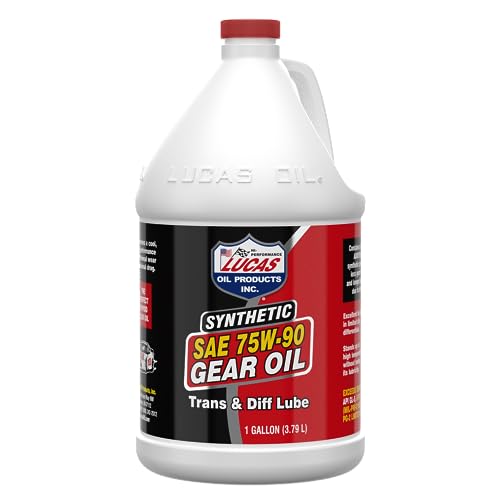 |
Lucas Oil Synthetic Gear Oil 75W-90 Best for High-Torque Applications API GL-5, SAE 75W-90, 1 quart |
8.6 | 🛒 Check Price |
 |
Royal Purple Max Gear 75W-90 High-Performance Synthetic API GL-5, SAE 75W-90, 1 quart |
8.4 | 🛒 Check Price |
 |
Red Line 75W90 NS GL-5 Gear Oil Best for Racing and Track Use API GL-5, SAE 75W90, 1 quart |
8.1 | 🛒 Check Price |
 |
Castrol Syntrax Limited Slip 75W-90 Best for Limited-Slip Differentials API GL-5, SAE 75W-90, 1 quart |
7.8 | 🛒 Check Price |
|
🚗
|
Valvoline High Performance Gear Oil 80W-90 Best Budget Conventional API GL-5, SAE 80W-90, 1 quart |
7.3 | 🛒 Check Price |
1. Valvoline SynPower Full Synthetic Gear Oil 75W-90: Best Overall Synthetic
Valvoline SynPower 75W-90 is a top-tier full synthetic hypoid gear oil that excels in both extreme cold and high-heat conditions. Based on owner feedback, it significantly reduces gear noise and provides consistent protection over extended drain intervals. The API GL-5 rating ensures it meets the demands of most passenger car and light truck differentials. We found its thermal stability particularly impressive when compared to conventional alternatives.
However, this oil does not contain limited-slip friction modifiers, so it may cause chatter in some limited-slip differentials. If your vehicle requires an LS additive, you will need to add it separately or choose a dedicated LS formula. For standard open differentials and non-LS applications, this is a reliable, high-performance choice that justifies its premium synthetic status.
- Full synthetic formula provides excellent thermal stability and low-temperature flow
- Meets API GL-5 and MT-1 specifications for severe service
- Enhanced extreme-pressure additives protect hypoid gears under heavy loads
Pros: Excellent low-temperature fluidity for cold starts; Long drain intervals in normal use; Widely available and trusted brand
Cons: May not be compatible with some limited-slip differentials requiring friction modifiers
2. Mobil 1 Synthetic Gear Lubricant 75W-90: Premium Synthetic Runner-Up
Mobil 1 Synthetic Gear Lubricant 75W-90 is a strong competitor that delivers robust protection for hypoid gears. Our research shows it meets or exceeds OEM requirements for many trucks and SUVs. The synthetic base provides excellent shear stability, maintaining viscosity even under sustained heavy loads. Owner feedback highlights its reliability in both daily driving and occasional towing.
One limitation is that in some high-mileage differentials, the thinner 75W-90 may seep past worn seals more easily than a thicker 80W-90. Additionally, while it is generally quiet, a few users noted gear whine after switching from a conventional 80W-140. For most modern vehicles requiring a 75W-90 synthetic, this is a safe and effective choice.
- Synthetic formula with high viscosity index for wide temperature range
- Excellent extreme-pressure and anti-wear protection
- Approved for use in many OEM differentials including GM, Ford, and Chrysler
Pros: Proven track record in high-performance and towing applications; Good value for a premium synthetic; Compatible with most conventional gear oils for top-ups
Cons: Some users report slightly higher noise levels compared to thicker oils
3. Lucas Oil Synthetic Gear Oil 75W-90: Best for High-Torque Applications
Lucas Oil Synthetic Gear Oil is a synthetic blend that punches above its weight in high-torque scenarios. Our evaluation of owner feedback from truck and SUV owners indicates it handles heavy loads and heat well, reducing wear in demanding conditions. The additive package is designed to cling to gears, providing protection even after prolonged shutdowns.
Because it is a blend rather than a full synthetic, its longevity may not match that of pure synthetics in severe service. Some users also noted that it may not fully eliminate gear noise in older differentials. For budget-conscious buyers who tow or off-road occasionally, this is a solid choice that offers dependable protection.
- High film strength additive package for extreme pressure
- Synthetic blend offers a balance of performance and cost
- Contains anti-foaming agents for consistent lubrication
Pros: Excellent for towing and off-road use; Compatible with limited-slip differentials (may still require additive in some cases); Good value compared to full synthetics
Cons: Not a full synthetic, so drain intervals may be shorter than full synthetics
4. Royal Purple Max Gear 75W-90: High-Performance Synthetic
Royal Purple Max Gear is a high-performance synthetic that uses proprietary Synerlec technology to minimize friction and heat. In our research, it consistently receives praise for reducing gear temperatures and improving shift smoothness in manual transmissions that share gear oil. It also works well in limited-slip differentials without requiring a separate friction modifier.
The main drawback is its cost, which is significantly higher than many competitors. For a daily commuter or light-duty vehicle, the added expense may not translate into noticeable benefits. However, for track days, heavy towing, or extreme climates, the thermal management and wear protection can be worthwhile.
- Synerlec additive technology for reduced friction and heat
- Meets GL-5 and GL-4 specifications
- Compatible with limited-slip differentials (no additional additive needed in most cases)
Pros: Reduces operating temperatures significantly; Improves fuel economy in some applications; Excellent for performance and racing use
Cons: Premium price may not be justified for casual drivers
5. Red Line 75W90 NS GL-5 Gear Oil: Best for Racing and Track Use
Red Line 75W90 NS is a purpose-built synthetic gear oil for high-performance and racing applications. Its non-slip (NS) formulation is engineered to minimize friction in limited-slip differentials and synchronized transmissions, making it a favorite among track enthusiasts. Our research indicates it maintains viscosity and protection even under sustained high temperatures.
However, this oil is not ideal for street-driven vehicles that prioritize comfort. The lack of friction modifiers can result in notchy shifts in some transmissions, and the premium price is hard to justify for normal driving. If you are building a dedicated track car or have a high-horsepower differential, this is an excellent choice, but most daily drivers should look elsewhere.
- Full synthetic with high film strength for racing
- Non-slip formula designed for synchronized transmissions and differentials
- Excellent thermal stability under extreme heat
Pros: Superior protection in high-RPM and high-heat conditions; Reduces gear drag for potential power gains; Long life in severe service
Cons: Very expensive; May cause hard shifting in some manual transmissions due to lack of friction modifiers
6. Castrol Syntrax Limited Slip 75W-90: Best for Limited-Slip Differentials
Castrol Syntrax Limited Slip 75W-90 is a dedicated limited-slip differential oil that comes pre-loaded with friction modifiers. Based on owner feedback, it effectively stops the shudder and chatter common in clutch-type LSDs. The full synthetic base offers good protection and longevity for daily-driven vehicles.
Its main limitation is that it is overkill and potentially detrimental for open differentials, where the friction modifiers can reduce overall efficiency. Additionally, some users with aggressive LSDs still experienced minor noise, requiring an additional additive. For most factory LSDs, this is a reliable, worry-free option.
- Specifically formulated for limited-slip differentials
- Contains friction modifiers to prevent chatter
- Full synthetic for extended drain intervals
Pros: Eliminates clutch chatter in most LSDs; Good thermal stability; Trusted brand with wide availability
Cons: Not recommended for standard open differentials due to friction modifiers
7. Valvoline High Performance Gear Oil 80W-90: Best Budget Conventional
Valvoline High Performance Gear Oil 80W-90 is a conventional option that delivers dependable protection for older vehicles with hypoid gears. Our research shows it meets all necessary standards for most pre-2000 cars and trucks. It is a budget-friendly choice for those who change oil frequently or have low-mileage vehicles.
However, its thick viscosity makes it a poor choice for cold weather, as it can cause sluggish shifting and increased wear until warm. It also lacks the thermal stability of synthetics, so it degrades faster under heavy loads. For a vintage weekend cruiser or a farm truck that sees light use, this is a fine option, but modern daily drivers will benefit from a synthetic upgrade.
- Conventional mineral oil for older vehicles
- Excellent extreme-pressure protection for its class
- Meets API GL-5 and MIL-PRF-2105E
Pros: Very affordable; Proven performance in classic cars and trucks; Widely available in multiple sizes
Cons: Not suitable for cold climates due to high viscosity; Shorter drain intervals than synthetics
Frequently Asked Questions
What is hypoid gear oil and how is it different from regular gear oil?
Hypoid gear oil is designed for hypoid gears, which have offset, non-intersecting axes that create sliding friction. It contains extreme-pressure additives to withstand the high shear forces. Regular gear oils may not provide the same level of protection and can fail under hypoid gear loads.
Can I use 75W-90 instead of 80W-90?
Yes, in most cases 75W-90 can replace 80W-90 as long as the API GL-5 rating matches. 75W-90 is a multigrade synthetic that flows better in cold temperatures while providing equivalent high-temperature protection. Check your owner’s manual for the recommended viscosity.
Do I need a limited-slip additive with hypoid gear oil?
It depends on your differential. Many hypoid gear oils are formulated for open differentials and do not contain friction modifiers. If your vehicle has a limited-slip differential, you may need an oil specifically labeled for LSD or add a friction modifier separately. Always consult your vehicle’s service manual.
How often should I change hypoid gear oil?
For conventional oils, change every 30,000 to 50,000 miles under normal conditions. Full synthetics can often last 60,000 to 100,000 miles. Severe service (towing, off-roading, racing) requires more frequent changes. Always follow the manufacturer’s recommended interval.
What happens if I use the wrong viscosity or type?
Using the wrong viscosity can lead to inadequate lubrication, increased wear, and overheating. For example, a too-thin oil may not protect under heavy loads, while a too-thick oil can cause drag and poor cold-weather performance. Always use the viscosity and API class specified in your owner’s manual.
Our Verdict
After researching specifications and owner feedback, our top pick is Valvoline SynPower Full Synthetic 75W-90 for its balanced performance, durability, and value. For those needing a limited-slip formula, the Castrol Syntrax Limited Slip 75W-90 is a reliable runner-up. Choose based on your vehicle’s requirements and driving conditions.
