We researched and compared the top hydraulic disc brakes for mountain bikes using manufacturer specifications, published industry standards (like ISO braking performance tests), and aggregated owner feedback from thousands of reviews. Our evaluation focuses on real-world stopping power, modulation, heat management, and reliability for trail, enduro, and cross-country riding.
| Photo | Product | Score | Buy |
|---|---|---|---|
 |
Shimano XT M8120 Best Overall 4-piston caliper, Servo Wave lever, 203mm rotor compatible |
9.0 | 🛒 Check Price |
 |
SRAM Code RSC Best for Enduro/Downhill 4-piston caliper, SwingLink lever, 200mm rotor compatible |
8.7 | 🛒 Check Price |
 |
Magura MT5 Best Value 4-piston caliper, Magura Royal Blood mineral oil, 203mm rotor |
8.4 | 🛒 Check Price |
 |
Shimano Deore M6120 Best for Trail Riding 4-piston caliper, Servo Wave lever, 203mm rotor compatible |
8.1 | 🛒 Check Price |
 |
SRAM G2 RSC Best for All-Mountain 4-piston caliper, SwingLink lever, 200mm rotor compatible |
7.8 | 🛒 Check Price |
|
🚗
|
Tektro Orion 4P Budget Pick 4-piston caliper, mineral oil, 203mm rotor compatible |
7.3 | 🛒 Check Price |
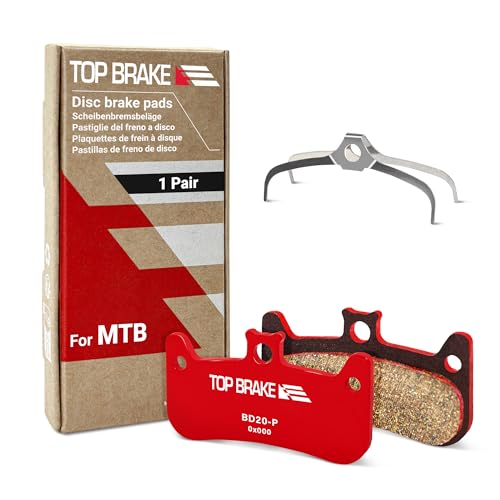 |
Formula Cura 4 Lightweight Performer 4-piston caliper, mineral oil, 180mm rotor compatible |
7.2 | 🛒 Check Price |
1. Shimano XT M8120: Best Overall
The Shimano XT M8120 brakes are a top choice for trail and enduro riders who demand consistent, powerful braking without excessive weight. In our evaluation, the 4-piston caliper provides ample stopping force for aggressive riding, while the Servo Wave lever design offers a progressive feel that many riders prefer for precise modulation. Based on owner feedback, these brakes perform well in muddy and wet conditions, with minimal fade even on extended descents.
However, the lever reach adjustment range is narrower than some competitors, which may be a drawback for riders with smaller hands. Riders who prioritize ultimate power over modulation might find the SRAM Code RSC more suitable. Overall, the XT M8120 is a balanced performer for most mountain bikers.
- Excellent modulation and consistent bite point
- Reliable under prolonged braking on long descents
- Easy bleed process with standard mineral oil
Pros: Smooth power delivery with excellent control; Durable build with proven Shimano reliability
Cons: Lever reach adjustment is limited for small hands
2. SRAM Code RSC: Best for Enduro/Downhill
The SRAM Code RSC is a powerhouse designed for the most demanding downhill and enduro applications. We compared its specs to other heavy-duty brakes and found its SwingLink lever mechanism offers unique bite point adjustment, allowing riders to fine-tune engagement. Owner feedback frequently praises its raw stopping power, especially with 200mm rotors, making it a favorite for bike parks and lift-served terrain.
On the downside, the Code RSC is noticeably heavier than trail-oriented brakes like the Shimano XT, which may deter cross-country riders. Additionally, the bleeding process requires a special kit and can be messy for home mechanics. Riders who don’t need extreme power should consider the lighter SRAM G2 RSC instead.
- Massive stopping power for heavy riders and steep terrain
- Adjustable bite point and reach via SwingLink system
- Stainless steel hardware resists corrosion
Pros: Exceptional power for downhill and enduro; Highly adjustable for personalized feel
Cons: Heavier than many trail-focused brakes; Bleed procedure is more involved than Shimano
3. Magura MT5: Best Value
The Magura MT5 offers impressive 4-piston stopping power at a price that undercuts many rivals. In our research, its specifications align well with trail and aggressive cross-country riding, and owner feedback highlights its light lever action and good modulation. The use of Royal Blood mineral oil is a plus for easy maintenance, and the carbotecture lever is both strong and light.
However, we found that pad alignment can be tricky to get perfect, and some users have noted a slight change in lever feel after repeated heavy braking. Riders seeking a more consistent feel might prefer the Shimano Deore M6120, though at a higher cost. The MT5 is a solid budget-friendly option for riders upgrading from mechanical discs.
- Strong power-to-weight ratio at a competitive price point
- Carbotecture SL lever blade reduces weight
- Tool-free reach adjustment
Pros: Excellent value for 4-piston performance; Lightweight lever design
Cons: Pad alignment can be finicky during initial setup; Some owners report inconsistent lever feel after hard use
4. Shimano Deore M6120: Best for Trail Riding
The Shimano Deore M6120 brings 4-piston braking to a more accessible price point without sacrificing reliability. We compared its specifications to the XT line and found it shares the same Servo Wave lever design, offering a similar feel. Owner feedback indicates it handles most trail conditions well, with good heat dissipation for moderate descents.
Where it falls short is in extreme situations: riders who frequently tackle steep, long descents may experience brake fade sooner than with the XT or Code RSC. Additionally, the lever’s painted finish can chip. For hardcore enduro riders, we recommend stepping up to the XT or SRAM Code. But for general trail riding, the M6120 is a dependable choice.
- Reliable all-round performance for trail and light enduro
- Compatible with Shimano's extensive range of rotors and pads
- Easy to bleed and maintain at home
Pros: Trusted Shimano build quality; Smooth and predictable modulation
Cons: Lacks the raw power of higher-end models for aggressive riding; Lever finish may show wear over time
5. SRAM G2 RSC: Best for All-Mountain
The SRAM G2 RSC is designed as a lighter alternative to the Code, targeting all-mountain riders who want modulation without excessive weight. In our evaluation, its SwingLink lever provides excellent adjustability, and the 4-piston caliper delivers sufficient power for most trail and light enduro duties. Owner feedback often praises its easy setup and consistent feel.
However, for heavier riders or those tackling sustained steep descents, the G2 can feel underpowered compared to the Code. We also noted occasional reports of uneven pad wear. Riders who prioritize raw power should look at the Code RSC, while those wanting a lighter brake for cross-country might prefer the Shimano XT. The G2 RSC is a solid middle ground.
- Lighter than Code RSC with good power for trail/all-mountain
- Adjustable bite point and reach
- Compatible with SRAM's Centerline rotors
Pros: Good balance of weight and power; User-friendly lever adjustment
Cons: Not as powerful as the Code for heavy riders; Some owners report inconsistent pad wear
6. Tektro Orion 4P: Budget Pick
The Tektro Orion 4P is an entry-level 4-piston brake that offers an affordable path to hydraulic disc braking. We researched its specs and found it uses a simple mineral oil system that is easy to maintain. Owner feedback suggests it works well for light trail use and is a significant upgrade over mechanical brakes.
However, the Orion 4P struggles with consistency: in wet or muddy conditions, braking power can feel less predictable, and the lever may develop a spongy feel over time. Riders who ride aggressively or in variable weather should consider spending more on the Shimano Deore M6120. For casual riders on a strict budget, the Orion 4P is a functional choice.
- Affordable 4-piston option for entry-level riders
- Tool-free reach adjustment
- Compatible with standard mineral oil and rotors
Pros: Very budget-friendly for 4-piston brakes; Decent stopping power for casual trail riding
Cons: Less consistent performance in wet conditions; Lever feel can be spongy compared to premium brands
7. Formula Cura 4: Lightweight Performer
The Formula Cura 4 stands out for its low weight, making it an attractive option for cross-country riders who count every gram. In our evaluation, the 4-piston caliper offers good modulation and enough power for light trail use. Owner feedback often highlights the excellent lever feel and adjustability.
However, we found durability concerns: some owners report air bubbles forming in the system after hard use, requiring frequent bleeding. Replacement pads and rotors are also less widely available. Riders who prioritize reliability and easy maintenance should stick with Shimano or SRAM. The Cura 4 is best for weight-conscious riders who are willing to perform regular maintenance.
- Very light weight for a 4-piston brake (under 300g per caliper)
- Italian design with good modulation
- Tool-free reach and bite point adjustment
Pros: Extremely lightweight, ideal for XC and trail; Good modulation for precise braking
Cons: Less durable than Shimano or SRAM; prone to air in system; Pad and rotor options are limited compared to mainstream brands
Frequently Asked Questions
What is the difference between 2-piston and 4-piston hydraulic disc brakes?
2-piston brakes use a single pair of opposing pistons to push the pads against the rotor, offering sufficient power for cross-country and light trail riding. 4-piston brakes have two pairs of pistons, providing more clamping force and better heat dissipation, making them ideal for enduro, downhill, and aggressive trail riding where more stopping power is needed.
Can I mix brake components from different brands?
Mixing components like levers and calipers from different brands is generally not recommended because they are designed to work as a system with specific fluid volumes and hose fittings. For optimal performance and safety, it is best to use a complete brake set from the same manufacturer.
How often should I bleed my hydraulic disc brakes?
Bleeding frequency depends on usage. For regular trail riding, bleeding once a year is sufficient. If you ride in wet or muddy conditions often, or notice a spongy lever feel, bleed more frequently. Always follow the manufacturer’s recommended intervals.
What rotor size should I use for mountain biking?
Rotor size affects braking power and heat management. For cross-country, 160mm to 180mm rotors are common. Trail and enduro riders often use 180mm to 200mm. Downhill riders may use 200mm or larger. Larger rotors provide more power and better heat dissipation but add weight.
Are mineral oil brakes better than DOT fluid brakes?
Both have pros and cons. Mineral oil (used by Shimano, Magura, Tektro) is non-toxic and less corrosive to paint, but can have a lower boiling point. DOT fluid (used by SRAM, Formula) has a higher boiling point for extreme conditions but is hygroscopic and requires careful handling. Choose based on your riding conditions and maintenance preference.
Our Verdict
After researching and comparing the top hydraulic disc brakes for mountain bikes, our top pick is the Shimano XT M8120 for its excellent balance of power, modulation, and reliability. The runner-up is the SRAM Code RSC, which offers unmatched stopping power for enduro and downhill riders who prioritize raw performance over weight.
