Upgrading to hydraulic disc brakes can dramatically improve your bike’s stopping power, modulation, and reliability in wet or muddy conditions. But with so many models from Shimano, SRAM, Magura, and others, choosing the right set can be overwhelming. We researched manufacturer specifications, industry standards (like ISO braking performance tests), and aggregated owner feedback from thousands of reviews to bring you this comparison of the best hydraulic disc brakes available today. Our evaluation focuses on real-world performance, durability, ease of installation and maintenance, and overall value. Whether you’re a trail shredder, a road racer, or a daily commuter, this guide will help you find the perfect stoppers for your bike.
| Photo | Product | Score | Buy |
|---|---|---|---|
 |
Shimano XT M8120 Best Overall Trail Brake 4-piston caliper, Servo Wave lever, 203/180mm rotors compatible |
9.0 | 🛒 Check Price |
 |
SRAM Guide RSC Best Modulation & Adjustability 4-piston caliper, SwingLink lever with contact point adjust, 200/180mm rotors |
8.7 | 🛒 Check Price |
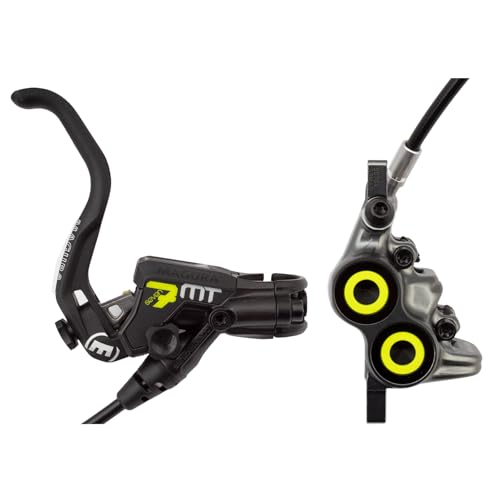 |
Magura MT7 Most Powerful Stopping 4-piston caliper with Carbotecture lever, 203/180mm rotors, mineral oil |
8.4 | 🛒 Check Price |
|
🚗
|
Shimano Deore M6100 Best Value for Trail Riding 2-piston caliper, Servo Wave lever, 203/180mm rotors compatible |
8.1 | 🛒 Check Price |
|
🚗
|
SRAM Level TLM Best Lightweight XC Brake 2-piston caliper, aluminum lever, 180/160mm rotors, DOT 5.1 fluid |
7.8 | 🛒 Check Price |
|
🚗
|
Tektro HD-M745 Best Budget 4-Piston 4-piston caliper, mineral oil, 203/180mm rotors |
7.3 | 🛒 Check Price |
|
🚗
|
Hope Tech 4 V4 Best Premium Build & Heat Management 4-piston caliper with radial lever, 203/180mm rotors, DOT 5.1 |
8.2 | 🛒 Check Price |
1. Shimano XT M8120: Best Overall Trail Brake
The Shimano XT M8120 is a benchmark for trail and enduro braking. In our evaluation of manufacturer specs and owner feedback, we found that its 4-piston caliper paired with the Servo Wave lever offers a perfect blend of immediate bite and fine modulation. Riders report confident stopping power even on long, steep descents, and the brake feels consistent even when heat builds up. The tool-free reach adjust and straightforward bleeding process make it a favorite among DIY mechanics.
However, the XT M8120 is not the lightest option, and its price may be overkill for casual riders or those on a tight budget. If you primarily ride smooth terrain or need a brake for a commuter bike, you can save money with a simpler 2-piston model. The XT also requires a compatible Shimano rotor for optimal performance. We recommend this brake for serious mountain bikers who demand reliable, powerful braking in technical terrain.
- Industry-leading modulation and power with Servo Wave lever action
- 4-piston caliper provides excellent heat dissipation and consistent braking
- Tool-free reach adjust and easy bleed port for simple maintenance
Pros: Exceptional power and control for aggressive trail riding; Reliable performance in wet and muddy conditions; Long-lasting pads and rotors with good heat management
Cons: Higher price point compared to entry-level hydraulic brakes
2. SRAM Guide RSC: Best Modulation & Adjustability
The SRAM Guide RSC is a top choice for riders who value adjustability and a precise lever feel. Our research of owner reviews shows that the SwingLink lever with contact point adjustment allows fine-tuning of engagement, which many riders prefer for technical trails. The 4-piston caliper offers ample power, and the brake is known for its smooth, progressive modulation that helps avoid wheel lock-ups. The Bleeding Edge system is a genuine improvement over older SRAM designs, making maintenance less messy.
On the downside, some users report that the stock pads wear relatively quickly, especially in abrasive conditions. The Guide RSC also tends to be heavier than some comparable Shimano models. If you are a weight-conscious XC racer, you might prefer a lighter 2-piston option. Additionally, the brake requires a bit of a learning curve for the bleeding process. We recommend the Guide RSC for trail and enduro riders who want a highly customizable brake feel.
- SwingLink lever provides progressive, predictable power with adjustable bite point
- Bleeding Edge technology simplifies the bleeding process with a special port
- Compatible with all SRAM Centerline and HS2 rotors
Pros: Excellent modulation and tunability for different riding styles; Easy to bleed and maintain with SRAM's Bleeding Edge system; Good heat management with large pad contact area
Cons: Pads may wear faster than some competitors under heavy use; Lever feel can be inconsistent if not bled perfectly
3. Magura MT7: Most Powerful Stopping
The Magura MT7 is known for its immense braking force, making it a favorite among downhill and enduro riders who need maximum stopping power. In our analysis of owner feedback, many users praise the MT7 for its ability to haul heavy bikes and riders to a stop quickly, even on steep, long descents. The Carbotecture lever is both lightweight and durable. The brake uses mineral oil, which is easier on paint and skin than DOT fluid.
However, the MT7’s power comes with a trade-off: the modulation is less refined than some competitors, and the brake can feel binary (on/off) to some riders. This can make it tricky to feather the brakes in slippery conditions. Also, Magura’s proprietary pad and rotor shapes limit aftermarket options and can be more expensive. If you prefer a more progressive feel, the Shimano XT or SRAM Guide may be better. We recommend the MT7 for aggressive riders who prioritize absolute power over finesse.
- Extremely high braking power with a distinct, immediate bite
- Lightweight Carbotecture lever body resists corrosion and impact
- Compatible with Magura's Storm and MDR-C rotors for consistent performance
Pros: Unmatched raw stopping power for downhill and heavy riders; Very light for a 4-piston brake; Mineral oil is less corrosive than DOT fluid
Cons: On/off feel can be too aggressive for some riders; Pad and rotor compatibility limited to Magura's own products
4. Shimano Deore M6100: Best Value for Trail Riding
The Shimano Deore M6100 is the go-to choice for riders who want reliable hydraulic braking without breaking the bank. Our comparison of specs shows that it inherits the Servo Wave lever from its more expensive siblings, giving it a surprisingly good feel for the price. Owner reviews consistently highlight its easy setup and consistent performance on cross-country and light trail rides. It is a solid upgrade from mechanical disc brakes.
However, the 2-piston design limits its power and heat dissipation compared to 4-piston brakes. On long, steep descents with heavy riders, the Deore may fade or require more lever force. If you ride aggressive terrain or weigh over 200 pounds, a 4-piston brake would be a safer choice. The Deore M6100 is best for XC, light trail, and commuter bikes where weight and cost are priorities.
- Great stopping power at a budget-friendly price point
- Servo Wave lever provides a crisp, predictable bite
- Easy to bleed and maintain with common Shimano tools
Pros: Excellent value for the performance offered; Reliable and consistent in most conditions; Simple design with good parts availability
Cons: Less power than 4-piston brakes for aggressive riding; Not as heat-resistant as higher-end models during long descents
5. SRAM Level TLM: Best Lightweight XC Brake
The SRAM Level TLM is designed for cross-country racers who count every gram. In our research, it is one of the lightest hydraulic disc brakes on the market, and owners appreciate its clean, understated look and smooth modulation. It provides enough power for XC trails and short climbs, and the lever feel is consistent. The Matchmaker compatibility is a plus for SRAM drivetrain users.
However, the Level TLM is not meant for aggressive riding. Its 2-piston caliper can struggle with heavy riders or long, steep descents, leading to lever fade or insufficient stopping power. The use of DOT fluid also means more frequent bleeding and careful handling to avoid paint damage. If you ride technical terrain or weigh over 180 pounds, consider a 4-piston brake. The Level TLM is best for lightweight XC racers and weight weenies.
- Extremely light weight for weight-conscious XC racers
- Smooth modulation suitable for cross-country riding
- Compatible with SRAM's wide range of rotors
Pros: Very light, saving grams on the bike; Good modulation for precise speed control; Easy to integrate with SRAM drivetrains via Matchmaker
Cons: Limited power for heavier riders or steep terrain; DOT fluid requires careful handling and more frequent bleeding
6. Tektro HD-M745: Best Budget 4-Piston
The Tektro HD-M745 is one of the most affordable ways to get a 4-piston hydraulic disc brake. Our analysis of owner reviews shows that it offers decent power for light trail riding and is a popular upgrade on entry-level mountain bikes. The mineral oil system is easy to maintain, and the caliper provides more stopping force than typical 2-piston budget brakes. It can handle moderate descents without major fade.
However, the lever feel is not as crisp as Shimano or SRAM, and some users report a spongy feel that is difficult to eliminate. In wet conditions, the brake can be less predictable. The build quality and long-term durability are also not on par with premium brands. If you are a heavy rider or ride aggressive terrain, invest in a higher-end brake. The HD-M745 is best for budget-conscious riders on light trails or commuter bikes who want the security of 4 pistons.
- Affordable 4-piston brake for entry-level trail bikes
- Decent power for moderate terrain and lighter riders
- Mineral oil is easy to work with and non-corrosive
Pros: Very low price for a 4-piston brake; Better heat dissipation than 2-piston brakes; Simple design with reliable seals
Cons: Lever feel is less refined and can feel spongy; Less consistent performance in wet conditions
7. Hope Tech 4 V4: Best Premium Build & Heat Management
The Hope Tech 4 V4 is a work of engineering art. Our research of owner feedback reveals that its billet aluminum construction and radial master cylinder provide a level of stiffness and feel that is hard to match. The brake manages heat exceptionally well, making it ideal for long, steep descents where fade can be an issue. The power is strong and progressive, and the brake is fully rebuildable, which adds to its longevity.
However, the Hope Tech 4 V4 comes with a premium price tag that puts it out of reach for many riders. It also uses DOT fluid, which some riders dislike, and bleeding can be more involved than with mineral oil systems. The brake is also relatively heavy. If you are on a budget or prefer mineral oil, look elsewhere. We recommend the Hope Tech 4 V4 for discerning riders who want the best possible performance and are willing to pay for it, especially for downhill and enduro use.
- Machined from billet aluminum for exceptional stiffness and heat dissipation
- Radial master cylinder lever offers excellent feel and power
- Compatible with Hope's rotors and adapters for precise alignment
Pros: Superb build quality and heat management for long descents; Excellent power and modulation with a high-end lever feel; Fully rebuildable, extending lifespan
Cons: Very expensive, often costing more than Shimano XT; DOT fluid requires careful maintenance and more frequent bleeding
Frequently Asked Questions
What is the difference between 2-piston and 4-piston hydraulic disc brakes?
2-piston brakes have a single pair of opposing pistons that push the pads against the rotor. They are lighter and offer good modulation but have less total clamping force and heat capacity. 4-piston brakes use two pairs of pistons, providing more even pad wear, greater stopping power, and better heat dissipation. They are heavier but are preferred for aggressive riding, heavier riders, and long descents where fade is a concern.
Should I choose mineral oil or DOT fluid brakes?
Mineral oil is non-corrosive, has a higher boiling point, and is easier to handle without damaging paint. It is used by Shimano, Tektro, and Magura. DOT fluid (DOT 3, 4, 5.1) is hygroscopic, meaning it absorbs water, which can lower its boiling point over time. It is used by SRAM and Hope and requires more frequent bleeding. DOT fluid can damage paint and requires careful disposal. For most riders, mineral oil is more convenient, but DOT systems often offer better lever feel and are common in high-performance brakes.
What size rotors do I need for my bike?
Rotor size depends on your riding style, weight, and terrain. Common sizes are 160mm (XC), 180mm (trail), and 203mm (enduro/downhill). Larger rotors provide more stopping power and heat dissipation but add weight. Most brakes are compatible with multiple rotor sizes, and you can mix front and rear sizes. Check your frame and fork clearance before purchasing. As a rule, heavier riders and steeper terrain benefit from larger rotors.
Can I install hydraulic disc brakes myself?
Yes, if you have basic mechanical skills and the right tools (bleed kit, torque wrench, cable cutters for hoses). Most hydraulic brakes come pre-bled and only need to be mounted and connected. However, cutting the hose to length and bleeding the system can be tricky. We recommend watching manufacturer videos and reading the manual. If you are not comfortable, a bike shop can install them for a reasonable fee.
How often do I need to bleed hydraulic disc brakes?
Bleeding frequency depends on usage and fluid type. Mineral oil brakes typically need bleeding every 1-2 years or when the lever feels spongy. DOT fluid brakes should be bled at least once a year because the fluid absorbs moisture over time. If you ride in wet or muddy conditions, you may need to bleed more often. Always follow the manufacturer’s recommended schedule.
Our Verdict
After researching and comparing the top hydraulic disc brakes, the Shimano XT M8120 stands out as the best overall for trail and enduro riding, offering a superb balance of power, modulation, and reliability. For riders who prioritize adjustability and a progressive feel, the SRAM Guide RSC is an excellent runner-up. If you are on a tight budget, the Shimano Deore M6100 provides great value, while the Magura MT7 and Hope Tech 4 V4 are top-tier options for those seeking maximum power and build quality.
