Trailer wheel bearings live a brutal life. They spin for hours under a loaded axle, heat up on the highway, and then plunge into cold water the moment you back a boat down the ramp. The wrong grease thins out, washes away, or pounds out of the cavity, and the result is a smoking hub on the side of the road. The right grease stays put, seals out water, and holds its film when the bearing gets hot. That is the whole job, and not every grease in the tube does it.
We focused on what actually matters for trailers, not towing trucks: water washout resistance for boat and utility trailers, a high dropping point so the grease does not run when disc-brake hubs get hot, and enough load-carrying additive to survive the constant pounding a small-diameter bearing takes. Below are seven greases we trust for trailer bearings, ranked best first, with honest notes on where each one falls short so you can match the tube to the way you actually tow.
| Photo | Product | Score | Buy |
|---|---|---|---|
 |
Lucas Oil X-tra Heavy Duty Grease Best Overall NLGI 2 lithium complex, tacky, very high water washout resistance |
9.5 | 🛒 Check Price |
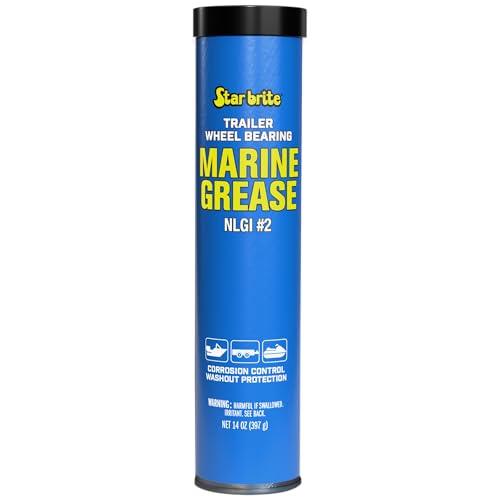 |
Star Brite Sea Safe Wheel Bearing Grease Best for Boat Trailers Marine-grade lithium grease, corrosion inhibitors, NLGI 2 |
9.3 | 🛒 Check Price |
 |
Mobil 1 Synthetic Grease Best Synthetic Full synthetic, lithium complex, dropping point around 280C |
9.1 | 🛒 Check Price |
 |
Valvoline Crimson Grease No. 2 Best Water Resistance Red lithium complex, NLGI 2, marine and automotive rated |
8.9 | 🛒 Check Price |
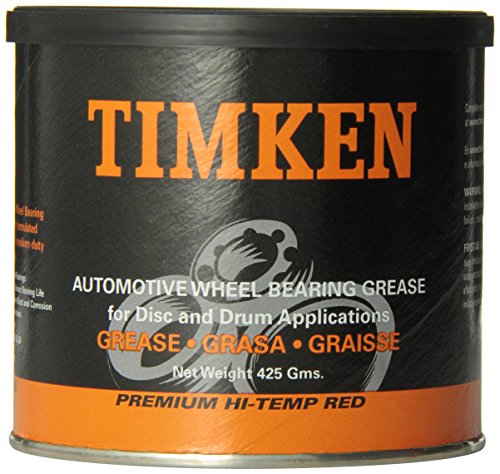 |
Timken GR222C High-Temperature Wheel Bearing Grease Best High-Temp Polyurea, NLGI 2, very high dropping point for disc brakes |
8.7 | 🛒 Check Price |
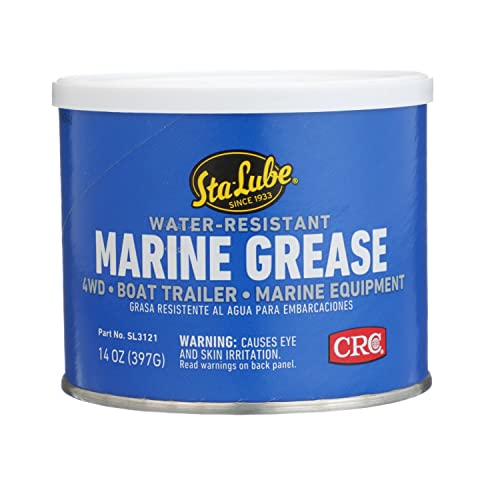 |
Sta-Lube Marine Wheel Bearing Grease Best Value Marine lithium grease, NLGI 2, corrosion protection |
8.4 | 🛒 Check Price |
 |
Red Line CV-2 Synthetic Grease Best for Heavy Loads Synthetic with moly, NLGI 2, very high film strength |
8.2 | 🛒 Check Price |
1. Lucas Oil X-tra Heavy Duty Grease: Best Overall
If you tow a mix of dry road miles and the occasional wet ramp, this is the grease we reach for first. Its standout trait is tackiness. Squeeze a little between two fingers and it strings out like taffy, which is exactly what you want in a trailer bearing that spins fast on a small roller. That cling is what keeps it from slinging off the rollers and pooling uselessly in the cap. Combined with genuinely strong water washout resistance, it covers the two failure modes that kill trailer bearings most often, heat and water.
The honest weakness is workability in the cold. That same thick, stringy body that makes it cling so well also makes it a chore to pump through a grease gun on a frosty morning, and hand packing takes patience. It is also tacky enough that any dirt near the hub will stick to it, so you need to keep the area clean during a repack. For most trailer owners those are minor trade-offs for a grease that simply refuses to leave the bearing.
- Extremely tacky formula that clings to bearing rollers and resists slinging out at speed
- Strong water washout resistance suited to boat and utility trailers
- High dropping point keeps the film stable in hot disc-brake hubs
Pros: Stays in the bearing cavity better than most thanks to the stringy, tacky body; Handles both wet launches and long, hot highway hauls; Widely available in tubes and tubs for cartridge guns or hand packing
Cons: The heavy, stringy texture can be messy and slow to pump in cold weather; So tacky that it grabs dirt quickly if you do not wipe the hub clean
2. Star Brite Sea Safe Wheel Bearing Grease: Best for Boat Trailers
Boat trailers ask something unusual of a grease. The bearing gets hot on the drive to the lake, then gets shoved into cold water within seconds of arriving. That thermal shock pulls water past the seal, and ordinary grease can emulsify and wash out. This marine-specific formula is built around that exact abuse, with corrosion inhibitors that protect the rollers and races during the long sits between trips, which is when a wet bearing quietly rusts.
The trade-off is that it is a specialist. On a flatbed or a dry box trailer that never sees water, you are paying for protection you will not use, and a general lithium complex would do the job fine. It can also be a little harder to source in larger tubs, so if you repack several boat trailers a season, buy ahead. For anyone backing a hull down a ramp, though, this is the grease we would put in the hubs.
- Formulated specifically for repeated saltwater and freshwater immersion
- Built-in corrosion inhibitors protect rollers and races between launches
- Holds its body after hot-to-cold thermal shock at the ramp
Pros: Purpose-built for the boat-trailer dunk-and-cool cycle; Good rust protection for trailers stored near salt water; Plays well with bearing buddy style spring-loaded hub protectors
Cons: Aimed at marine duty, so it is overkill for a dry-only utility trailer; Can be harder to find in big tubs than mainstream auto greases
3. Mobil 1 Synthetic Grease: Best Synthetic
When the enemy is heat rather than water, a full synthetic earns its place. This grease carries a very high dropping point, meaning the temperature at which it starts to flow out of the thickener is well above what most trailer hubs will ever reach. For heavy enclosed trailers, long mountain descents on disc brakes, or anyone who tows fast and far in summer, that thermal headroom is reassuring. The synthetic base also stays usable in the cold, so spring repacks are less of a fight than with stiff conventional grease.
Where it gives a little ground is deep water immersion. Its washout resistance is solid for road trailers and the odd wet ramp, but for a boat trailer dunked in salt water several times a week we would still favor a dedicated marine grease. Think of this as the high-heat road-trailer choice rather than the launch-ramp choice, and it is hard to fault.
- Synthetic base oil holds film strength at high hub temperatures
- Very high dropping point resists running in hot disc-brake setups
- Wide operating temperature range for hot summers and cold storage
Pros: Excellent heat resistance for heavy or fast highway towing; Stays pumpable in cold weather better than thick conventional greases; Long service life between repacks under normal use
Cons: Water washout resistance is good but not class-leading for deep immersion; Premium synthetic, so you pay for performance you may not need on light trailers
4. Valvoline Crimson Grease No. 2: Best Water Resistance
This red grease has a loyal following among trailer owners for one practical reason: you can see it work. When you pump fresh grease into a hub or a bearing buddy, the bright crimson color makes it obvious when clean new grease has fully purged the old, water-contaminated stuff out the other side. Beyond the visual cue, it resists water washout well and holds together when a wet bearing tries to emulsify it, which is the failure that turns grease into a milkshake.
The honest limitation is at the very top of the temperature range. Its dropping point is good but not the highest in this group, so for a heavy trailer riding hot disc brakes down a long grade, a synthetic with more thermal margin pulls ahead. The red dye is also messy and stains everything it touches. For most water-prone trailers, though, the visibility and washout resistance make it a smart, confidence-building pick.
- Calcium sulfonate style toughness with strong washout resistance
- Bright red color makes purge and repack progress easy to see
- Rated for both wheel bearings and chassis points
Pros: Stands up well to water and resists emulsifying; Visible red tint helps you confirm fresh grease has purged through; Versatile enough to cover the whole trailer, not just the hubs
Cons: Not the highest dropping point if your hubs run extremely hot; Red dye can stain hands, rags, and concrete
5. Timken GR222C High-Temperature Wheel Bearing Grease: Best High-Temp
It is hard to argue with grease from a company whose name is stamped on half the bearings in the country. This polyurea formula is built for sustained high heat, the condition that breaks down lesser greases on long highway hauls and hard braking. The polyurea thickener also brings excellent oxidation stability, so the grease resists turning hard and crusty during the months a trailer sits between uses. For a heavy trailer on disc brakes, that thermal and aging performance is exactly what you want protecting the rollers.
The catch you must respect is compatibility. Polyurea and lithium greases do not always play nicely together, and mixing them can break down the thickener and cause the grease to soften or separate. If your hubs currently hold lithium grease, do a full clean-and-repack rather than just pumping this on top. Its water washout resistance is also a step behind the marine specialists, so this is a high-heat road pick first and a wet-ramp pick second.
- Polyurea thickener engineered for sustained high-temperature service
- From a bearing manufacturer, so it is designed around bearing life
- Strong oxidation stability for long intervals between repacks
Pros: Outstanding heat tolerance for hot disc-brake trailer hubs; Made by a company that actually builds bearings; Resists hardening and oxidation over long storage
Cons: Polyurea can be incompatible with lithium grease, so do not mix without a full purge; Washout resistance trails dedicated marine formulas
6. Sta-Lube Marine Wheel Bearing Grease: Best Value
Not every trailer needs the most advanced grease ever made, and this dependable marine lithium proves the point. It delivers the things a boat or utility trailer actually needs, real water washout resistance and rust protection, without a premium price attached. The familiar lithium chemistry is also forgiving, mixing safely with most other common greases, so it is a low-stress choice if you are not certain what is already in the hubs. For weekend boaters and light haulers, it covers the essentials cleanly.
Where it shows its positioning is at the extremes. Push it with a very hot disc-brake hub or constant salt immersion and a dedicated premium marine grease or a high-heat synthetic will hold its film longer. The dropping point is fine for typical drum-brake trailers but not exceptional. Treat this as the smart, sensible default for normal trailer duty, and step up only if your towing is unusually hot or unusually wet.
- Marine-rated protection at a sensible, no-frills positioning
- Resists saltwater washout and protects against rust
- Familiar lithium chemistry that mixes safely with most greases
Pros: Solid water and corrosion protection without paying for premium branding; Easy to find on shelves and simple to work with; Lithium base is compatible with most other common greases
Cons: Performance ceiling is lower than top-tier marine or synthetic options; Dropping point is adequate rather than exceptional for very hot hubs
7. Red Line CV-2 Synthetic Grease: Best for Heavy Loads
For a heavily loaded trailer, the bearing is fighting crushing load as much as heat. This synthetic grease answers that with a molybdenum disulfide additive that builds a tough boundary film for extreme-pressure and shock-load conditions, exactly the punishment a fully loaded tandem-axle trailer dishes out over rough roads. The synthetic base brings a high dropping point and good adhesion on top, so it stays in the bearing and keeps its film when the axle is working hardest. If you tow near your trailer’s rating, this load focus is a genuine advantage.
The nuance is that moly grease is a tool for the right job. In fast-spinning, lightly loaded bearings, some technicians prefer a non-moly grease, so this shines on heavy, hard-working trailers more than on a light single-axle utility hauler. It is also a premium synthetic, so on a lightly loaded trailer you are buying capability you will not tap. Pick it when load, not water, is your main concern.
- Moly-fortified for extreme pressure and shock-load protection
- Synthetic base gives a high dropping point and wide temp range
- Strong adhesion keeps it in the bearing under heavy axle loads
Pros: Exceptional load-carrying ability for heavy and tandem-axle trailers; Holds up to both high heat and heavy pounding; Stays put under sustained load thanks to good adhesion
Cons: Moly is debated for fast, lightly loaded bearings, so match it to heavy duty; Premium synthetic that is more grease than a light trailer needs
Frequently Asked Questions
What kind of grease is best for trailer wheel bearings?
For most trailers, an NLGI 2 grease with a high dropping point and strong water washout resistance is the right choice. Look for either a marine-rated lithium or calcium sulfonate grease if your trailer ever touches water, or a high-temperature synthetic or polyurea grease if your concern is heat from disc brakes and long highway hauls. NLGI 2 is the standard consistency for wheel bearings, firm enough to stay in the cavity but soft enough to flow into the rollers. Avoid thin general-purpose chassis grease, which can sling out and wash away quickly under trailer conditions.
Can I use regular automotive wheel bearing grease on a boat trailer?
You can, but it is not the smart choice for a boat trailer. The dunk-and-cool cycle at the launch ramp pulls water past the seals, and ordinary grease can emulsify into a useless milkshake and wash out. A marine-rated grease is formulated to resist that washout and includes corrosion inhibitors to protect the rollers and races during the long periods a boat trailer sits between uses, which is when rust quietly forms. For a trailer that genuinely sees water, the marine formula is worth it.
Is it safe to mix two different greases in my trailer hubs?
Mixing greases is risky because different thickeners can be incompatible. The most important rule is that polyurea grease often does not mix well with lithium grease, and combining them can break down the thickener so the grease softens, separates, or loses its protective body. Lithium and lithium complex greases are generally more forgiving with each other. The safe practice is to fully clean the old grease out of the bearing and hub and repack with fresh grease rather than pumping a new type on top of an unknown old one.
How often should I repack trailer wheel bearings?
A common guideline is to repack trailer wheel bearings once a year or about every 12,000 miles, whichever comes first, though heavy use shortens that. Boat trailers that get submerged should be inspected and often repacked more frequently because water intrusion accelerates wear and corrosion. If you use spring-loaded hub protectors, top them off as recommended and watch for the grease purging clean. Any sign of a hot hub, a growling bearing, or grease that looks milky means you should pull it apart and repack right away regardless of the calendar.
What does the dropping point of a grease mean for my trailer?
The dropping point is the temperature at which a grease softens enough to flow out of its thickener, and it tells you how much heat the grease can take before it stops staying put. Trailer hubs, especially those with disc brakes or under heavy braking on long downgrades, can get surprisingly hot. A grease with a higher dropping point, often well above 250 degrees Celsius for synthetics and polyureas, gives you more margin before the film breaks down and runs out of the bearing. For hot, fast, or heavy towing, prioritize a high dropping point.
Our Verdict
Our top pick is the Lucas Oil X-tra Heavy Duty Grease, because its tacky, cling-to-the-roller body and strong resistance to both heat and water cover the two failure modes that actually kill trailer bearings, and it suits the widest range of towing. For boat-trailer owners who launch in salt or fresh water week after week, our runner up is the Star Brite Sea Safe Wheel Bearing Grease, a marine-built formula with the corrosion protection that wet hubs need between trips. Match the tube to your towing, keep the hubs clean, and repack on schedule, and your bearings will outlast the trailer.
