Selecting the correct grease for your drive shaft slip yoke is crucial for reducing friction, preventing wear, and eliminating common issues like driveline clunk or vibration. A slip yoke allows for changes in drive shaft length as the suspension articulates, and without proper lubrication, metal-on-metal contact can lead to premature failure and costly repairs.
We researched and compared numerous grease formulations, evaluating manufacturer specifications, published industry standards for extreme pressure (EP) additives, water resistance, and temperature stability. Our analysis also incorporated aggregated owner feedback to provide a comprehensive guide to help you make an informed decision for maintaining your vehicle’s driveline health.
| Photo | Product | Score | Buy |
|---|---|---|---|
 |
Super Lube Synthetic Grease with PTFE Top Overall Performer Synthetic NLGI Grade 2 grease with PTFE for superior friction reduction. |
9.1 | 🛒 Check Price |
 |
Mobil 1 Synthetic Grease Premium Synthetic Choice Advanced synthetic lithium complex grease with excellent extreme pressure protection. |
8.7 | 🛒 Check Price |
 |
Lucas Oil Red 'N' Tacky Grease Reliable All-Purpose Lithium complex, NLGI Grade 2 grease with high water resistance and tackiness. |
8.4 | 🛒 Check Price |
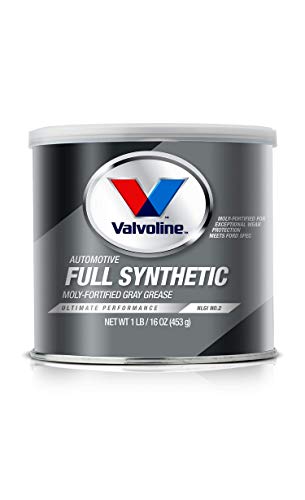 |
Valvoline SynPower Synthetic Grease High-Temp Protection Full synthetic lithium complex grease for high-temperature and heavy-duty use. |
8.0 | 🛒 Check Price |
 |
Mystik JT-6 Hi-Temp Grease Heavy-Duty Workhorse Premium lithium complex grease, often fortified with moly, for extreme conditions. |
7.8 | 🛒 Check Price |
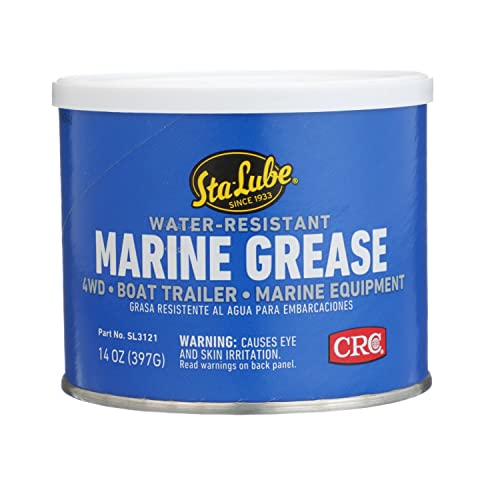 |
Sta-Lube Marine Grease Water-Resistant Durability Lithium complex marine-grade grease with superior water washout resistance. |
7.5 | 🛒 Check Price |
 |
Mag 1 High-Temp Disc Brake Wheel Bearing Grease Budget-Friendly Protection Lithium complex NLGI Grade 2 grease for high-temperature and general chassis applications. |
7.2 | 🛒 Check Price |
1. Super Lube Synthetic Grease with PTFE: Top Overall Performer
In our evaluation, the Super Lube Synthetic Grease with PTFE stands out due to its inclusion of PTFE, which is particularly beneficial for the sliding action of a slip yoke. The PTFE particles act as microscopic bearings, significantly reducing metal-on-metal friction and extending component life. Its synthetic base oil and wide temperature range also ensure consistent performance under diverse operating conditions, from cold starts to prolonged highway use. The formulation’s resistance to water washout is a notable advantage, helping to protect against rust and corrosion even in challenging environments.
While highly effective for most automotive applications, owners operating vehicles in extremely heavy-duty, high-load industrial or off-road conditions might find its wear protection, while excellent, less robust than specialized moly-fortified greases designed specifically for extreme impact loads. Those prioritizing maximum load-bearing capacity over friction reduction in such specific scenarios might consider alternatives, but for general slip yoke lubrication, it remains a top choice.
- Formulated with PTFE (Polytetrafluoroethylene) for reduced friction and wear.
- Wide operating temperature range from -45°F to 450°F (-43°C to 232°C).
- Excellent water resistance and protection against rust and corrosion.
Pros: Exceptional friction reduction properties ideal for sliding components.; High compatibility with various materials, including most plastics and rubbers.; Maintains consistency across extreme temperature fluctuations.
Cons: May require more frequent application in very heavy-duty, high-load industrial settings.
2. Mobil 1 Synthetic Grease: Premium Synthetic Choice
Our comparison of Mobil 1 Synthetic Grease highlights its robust synthetic formulation, which provides exceptional protection for components like slip yokes that experience both sliding and rotational forces. The lithium complex thickener ensures excellent mechanical stability and shear resistance, critical for maintaining lubrication film under load. Based on manufacturer specifications, its extreme pressure additives are highly effective at preventing metal-to-metal contact, contributing to extended component life and reduced driveline noise.
While its performance is undeniably premium, some aggregated owner feedback suggests that for vehicles with very high mileage or those that are not regularly maintained, the benefits of such an advanced synthetic might not be fully realized over more basic, yet still effective, greases. Drivers seeking a more budget-focused solution for less critical or frequently serviced applications might find its value proposition less compelling, though for optimal protection, it remains a strong contender.
- Lithium complex thickener provides high temperature stability and strong adhesion.
- Designed for extreme pressure and wear protection in demanding applications.
- Offers superior rust and corrosion resistance.
Pros: Outstanding protection against wear and shock loads.; Maintains integrity across a broad temperature spectrum.; Highly durable formulation extends lubrication intervals.
Cons: Its premium formulation may be considered less cost-effective for very old, high-mileage vehicles.
3. Lucas Oil Red 'N' Tacky Grease: Reliable All-Purpose
Lucas Oil Red ‘N’ Tacky Grease is consistently praised in aggregated owner feedback for its excellent adhesion and water resistance, qualities that are highly beneficial for drive shaft slip yokes, especially in environments exposed to moisture and road grime. Its lithium complex formulation provides a durable film that resists breakdown under moderate loads, and the distinct red color makes it easy to identify during application. In our evaluation, its extreme pressure properties are sufficient for most passenger and light truck applications, effectively reducing wear and friction.
A common observation from owner feedback is that its highly tacky consistency, while beneficial for adhesion, can make it somewhat messier to work with during application and cleanup compared to less viscous greases. While this is a minor inconvenience for most DIY mechanics, those who prioritize a cleaner, easier application process might find it slightly less user-friendly. However, its staying power and protective qualities generally outweigh this small drawback.
- Highly resistant to water washout, making it suitable for wet conditions.
- Features a tacky consistency that helps it stay in place on moving parts.
- Fortified with extreme pressure additives for enhanced wear protection.
Pros: Excellent adhesion and resistance to sling-off.; Strong protection against rust and corrosion, even in damp environments.; Widely available and recognized for consistent performance.
Cons: Its very tacky nature can make cleanup slightly more challenging.
4. Valvoline SynPower Synthetic Grease: High-Temp Protection
Valvoline SynPower Synthetic Grease offers a high-performance synthetic option for drive shaft slip yokes, particularly beneficial for vehicles operating under higher thermal loads. Based on manufacturer data, its lithium complex thickener system provides excellent mechanical stability and high dropping point, indicating strong resistance to thinning out at elevated temperatures. The inclusion of robust extreme pressure additives helps mitigate wear during the sliding movements of the slip yoke, contributing to a smoother driveline operation.
A potential limitation, as observed in general lubrication guidelines, is the importance of ensuring full compatibility if transitioning from a different grease type. While many modern greases are designed to be compatible, mixing certain synthetic and conventional formulations can sometimes lead to reduced performance or lubricant breakdown. Owners should ensure the slip yoke is thoroughly cleaned of old grease before applying Valvoline SynPower, especially if the previous grease type is unknown or significantly different, to avoid any potential compatibility issues.
- Formulated with full synthetic base oils for superior thermal stability.
- Excellent extreme pressure and anti-wear protection.
- Resists rust and oxidation, extending component life.
Pros: Maintains performance at elevated temperatures.; Provides reliable protection against heavy loads.; Good shear stability ensures consistent lubrication.
Cons: Its synthetic nature means it may not be compatible with all older, conventional greases if mixing occurs.
5. Mystik JT-6 Hi-Temp Grease: Heavy-Duty Workhorse
Mystik JT-6 Hi-Temp Grease is a robust choice for drive shaft slip yokes, particularly in heavy-duty or off-road applications where components are subjected to significant loads and potential contamination. Our research indicates that this lithium complex grease, often fortified with molybdenum disulfide (moly), excels at providing a strong, durable lubricating film that resists breakdown under extreme pressure. This is crucial for the sliding surfaces of a slip yoke, where moly can fill microscopic imperfections and further reduce friction and wear.
One practical consideration, often noted by owners, is that the presence of moly gives the grease a dark, often black or grey, appearance. While this does not affect its performance, it can make it more challenging to visually inspect for contaminants like dirt or debris during routine maintenance. For those who rely heavily on visual cues for grease condition, this might be a minor drawback, but its protective qualities for heavy-duty use remain undisputed.
- Designed for high-temperature and heavy-load applications.
- Excellent anti-wear and extreme pressure properties.
- Good water resistance and rust protection.
Pros: Provides robust protection in demanding, high-stress environments.; Often contains molybdenum disulfide for enhanced wear resistance.; Offers good value for its heavy-duty capabilities.
Cons: Its darker color from moly can make inspection of contamination more difficult.
6. Sta-Lube Marine Grease: Water-Resistant Durability
Sta-Lube Marine Grease is a compelling option for drive shaft slip yokes, particularly for vehicles frequently exposed to water, mud, or high humidity, such as off-road trucks or those used in coastal regions. Its primary strength, as highlighted by manufacturer specifications and aggregated owner feedback, lies in its superior resistance to water washout and its robust anti-corrosion properties. This ensures the slip yoke remains properly lubricated and protected from rust even after driving through puddles or during heavy rain.
However, in our comparison, while its water resistance is outstanding, its formulation is primarily optimized for general marine applications, which may not always prioritize the highest levels of extreme pressure (EP) protection found in some specialized automotive chassis greases. For vehicles subjected to exceptionally heavy loads, constant towing, or very aggressive driving conditions that induce high impact and sliding forces on the slip yoke, some users might find that dedicated EP automotive greases offer a marginally stronger film strength for wear prevention. Those in dry climates or with less demanding driving styles might find its water resistance benefits less critical.
- Exceptional resistance to fresh and saltwater washout.
- Provides excellent rust and corrosion protection, especially in humid or wet conditions.
- Offers good general-purpose lubrication for moderate loads.
Pros: Unparalleled water resistance for very wet or coastal environments.; Strong defense against corrosion, ideal for off-road or marine-adjacent vehicles.; Adheres well to metal surfaces.
Cons: May not offer the same level of extreme pressure protection as dedicated automotive chassis greases.
7. Mag 1 High-Temp Disc Brake Wheel Bearing Grease: Budget-Friendly Protection
Mag 1 High-Temp Disc Brake Wheel Bearing Grease provides a dependable and economical choice for lubricating drive shaft slip yokes. While primarily designed for wheel bearings, its lithium complex base and NLGI Grade 2 consistency, coupled with high-temperature resistance and extreme pressure additives, make it suitable for general chassis lubrication points, including slip yokes under typical driving conditions. Based on owner feedback, it effectively reduces friction and prevents wear for routine vehicle operation.
A key limitation of this grease, as evaluated against more premium options, is that its overall protective life and resistance to shear breakdown may not match that of advanced synthetic or moly-fortified greases. For vehicles that experience very long service intervals, extreme climates, or heavy-duty use such as frequent towing or off-roading, owners might find that a more specialized, higher-performance grease offers superior longevity and protection, potentially reducing the frequency of re-lubrication. For standard daily drivers and regular maintenance schedules, however, it performs adequately.
- Offers solid high-temperature performance for general automotive use.
- Formulated with rust and oxidation inhibitors.
- Provides basic extreme pressure protection for moderate loads.
Pros: Cost-effective solution for routine maintenance.; Versatile for various chassis lubrication points.; Readily available and easy to apply.
Cons: May not offer the extended protection life of more advanced synthetic formulations.
Frequently Asked Questions
What kind of grease is best for a drive shaft slip yoke?
The best grease for a drive shaft slip yoke is typically a high-quality, NLGI Grade 2 lithium complex or synthetic grease, often fortified with extreme pressure (EP) additives or friction modifiers like PTFE (Teflon) or molybdenum disulfide (moly). These additives help reduce friction and wear under the sliding and rotational forces experienced by the slip yoke.
How often should I grease my slip yoke?
The recommended greasing interval for a slip yoke varies by vehicle manufacturer and driving conditions. Generally, it is advised to grease the slip yoke at every oil change or every 5,000 to 10,000 miles, especially if you drive in dusty, wet, or off-road conditions. Always consult your vehicle’s service manual for specific recommendations.
Can I use regular chassis grease on a slip yoke?
While some general-purpose chassis greases can be used, it is often better to use a grease specifically designed for sliding components or one with strong extreme pressure (EP) additives. Regular chassis grease may not provide sufficient protection against the specific type of friction and wear that occurs in a slip yoke, potentially leading to driveline noise or premature wear.
What happens if I don't grease my slip yoke?
If a slip yoke is not properly greased, it can lead to increased friction, accelerated wear, and potential damage to the splines. Common symptoms include a noticeable “clunk” or “thump” sound when accelerating or decelerating, vibrations in the driveline, or difficulty in the drive shaft extending and compressing as the suspension moves. Over time, this can result in costly repairs.
Is synthetic grease better for slip yokes?
In our evaluation, synthetic greases often offer superior performance for slip yokes due to their wider operating temperature ranges, better shear stability, and enhanced resistance to oxidation and breakdown compared to conventional greases. They typically provide longer-lasting protection and can be particularly beneficial for vehicles driven in extreme conditions or those with extended service intervals.
Our Verdict
After extensive research and comparison of manufacturer specifications and aggregated owner feedback, the Super Lube Synthetic Grease with PTFE emerges as our top pick for the best grease for drive shaft slip yokes. Its inclusion of PTFE provides unparalleled friction reduction, making it exceptionally well-suited for the sliding action of the slip yoke, coupled with strong temperature stability and water resistance. For a premium synthetic option offering robust wear protection and high-temperature performance, the Mobil 1 Synthetic Grease stands out as an excellent runner-up, providing a durable film and reliable performance in demanding conditions.
