Mobile detailing lives and dies by the generator strapped in your trailer or van. Your pressure washer, hot water box, dual-motor vacuum, rotary polisher, and steamer all pull from the same plug, and a weak or noisy unit will stall a wash bay job before you finish the first panel. We looked at portable generators specifically through a detailer’s eyes, judging clean sine wave power for sensitive electronics, real running wattage under load, runtime on a single tank, and whether a unit is quiet enough to run in a customer’s driveway without complaints.
The seven generators below cover everything from a single-bay solo operator running an electric pressure washer and a vacuum, up to a two-tech crew pulling air compressors and multiple high-draw tools at once. Every pick here is a real, widely available model. We focused on inverter cleanliness, parallel capability, fuel flexibility, and the small things that matter on a long day, like fuel gauges, low-oil shutoff, and how easy a unit is to wheel up a curb.
| Photo | Product | Score | Buy |
|---|---|---|---|
 |
Honda EU2200i Companion Best Overall 2200 starting / 1800 running watts, true inverter, 121cc, ~47-57 dB |
9.5 | 🛒 Check Price |
 |
Westinghouse iGen4500DF Dual Fuel Best for Heavy Loads 4500 peak / 3700 running watts gas, dual fuel, electric start, ~52 dB |
9.3 | 🛒 Check Price |
 |
Honda EU3000iS Most Reliable Workhorse 3000 peak / 2800 running watts, true inverter, electric start, ~50-57 dB |
9.2 | 🛒 Check Price |
 |
Champion 4500-Watt Inverter Dual Fuel Best Value Power 4500 peak / 3650 running watts, dual fuel, electric start, ~61 dB |
9.0 | 🛒 Check Price |
 |
Jackery Explorer 2000 Plus Best Silent / Indoor Use 2042Wh capacity, 3000W output (6000W surge), pure sine wave, zero emissions |
8.8 | 🛒 Check Price |
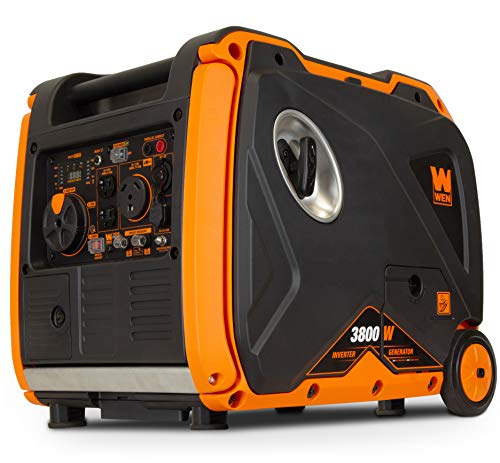 |
WEN 56380i Super Quiet 3800-Watt Inverter Best Budget Inverter 3800 peak / 3400 running watts, inverter, electric start, ~57 dB |
8.5 | 🛒 Check Price |
 |
DuroMax XP4850EH Dual Fuel Best Open-Frame Capacity 4850 peak / 3850 running watts, dual fuel, electric start, open frame |
8.2 | 🛒 Check Price |
1. Honda EU2200i Companion: Best Overall
The Honda EU2200i Companion earns the top spot because it does the one thing a detailing generator must do without drama: it starts every single time and runs clean. The inverter delivers true sine wave power that variable-speed polishers, battery chargers, and electronic pressure washers will not flinch at, and the Eco-Throttle mode keeps it whisper quiet between tasks so you are not the loud van on the street. The Companion variant is the one to buy because it adds the 30-amp outlet and parallel port, letting you bolt on a second EU2200i when a job demands more.
The honest weakness is raw output. At 1800 running watts, a single unit will not simultaneously power a heated water system and a dual-motor vacuum, so solo detailers running heavy gear will eventually want a second one in parallel. It is also gasoline only, with no propane option for long days off the grid. For most one-bay operators who manage their loads, though, this is the most trustworthy generator you can put in a rig.
- True sine wave inverter power safe for variable-speed polishers and chargers
- Companion model adds a 30-amp outlet plus parallel port for stacking a second unit
- Eco-Throttle drops engine speed at idle for quiet, fuel-sipping running
Pros: Class-leading reliability and resale that pays back over years of daily use; Genuinely quiet enough to run beside a customer at a residential job; Parallel two units for heavy washer plus vacuum loads
Cons: Lower running wattage means one unit alone cannot run a hot water box and a vacuum together; Gasoline only, no propane fallback
2. Westinghouse iGen4500DF Dual Fuel: Best for Heavy Loads
When a single 2200 unit runs out of headroom, the Westinghouse iGen4500DF is the natural step up. With 3700 running watts of clean inverter power, it comfortably runs an electric pressure washer and a vacuum together, or a hot water box on its own, which is exactly the load profile a busy solo detailer or small crew faces. The dual fuel design is the standout feature for mobile work: when you are parked at a fleet account all day, switching to a propane tank keeps you going without a fuel station detour, and the included remote fob start means you can fire it up from the wash bay.
The trade-off is size and weight. This is a noticeably heavier unit than the small companion-class inverters, and getting it in and out of a trailer or up a curb is a two-hand job. It also gets louder than the quietest picks once it is under sustained load, so it is not the unit you want idling under a customer’s bedroom window at 7am. For sheer capability per rig, though, it is hard to beat.
- Dual fuel runs on gasoline or propane so you can swap to a tank on long jobs
- Remote key fob and push-button electric start for fast morning setup
- LED data display shows fuel, wattage, and runtime at a glance
Pros: Enough running wattage to power a washer and a vacuum at the same time; Dual fuel flexibility extends your working day without a gas run; Push-button and remote start save time across a full schedule
Cons: Heavier and bulkier than a 2200 class unit to load and unload; Louder than the quietest inverters once it is working hard
3. Honda EU3000iS: Most Reliable Workhorse
If your priority is a generator that will still be running flawlessly after years of daily abuse, the Honda EU3000iS is the workhorse to buy. It splits the difference between the tiny EU2200i and the big dual-fuel units, giving you 2800 running watts of true inverter power and a large fuel tank that comfortably covers a full day of jobs on a single fill. For detailers who hate the interruption of refueling mid-wash, that runtime is a genuine productivity gain. The Honda GX engine and electric start mean it just works, morning after morning.
The catch is weight. This is a dense, heavy machine for its wattage, and while it has wheels, loading it solo into a high trailer is awkward and you will feel it. It is also gasoline only, so there is no propane fallback for marathon off-grid days. But for a detailer who values uptime and longevity over portability, the EU3000iS is one of the smartest long-term buys on this list.
- Large fuel tank delivers long runtime for a full detailing day on one fill
- True inverter power clean enough for chargers, polishers, and electronics
- Electric start with a proven long-life Honda GX engine
Pros: Outstanding long-term durability for daily commercial use; Long single-tank runtime reduces refueling interruptions; Clean, stable power across the whole detailing tool list
Cons: Heavy for its wattage class and not the easiest to lift solo; Gasoline only with no propane option
4. Champion 4500-Watt Inverter Dual Fuel: Best Value Power
The Champion 4500-Watt Inverter Dual Fuel is the value play for detailers who want serious wattage and fuel flexibility without paying premium-brand money. With 3650 running watts and clean inverter output, it powers the same washer-plus-vacuum loads as the Westinghouse, and the dual fuel design lets you run propane on long jobs. Electric start, a real handle, and a wheel kit make it manageable for a single person to load and roll into position, which matters when you are setting up alone three times a day.
Where it gives ground is refinement. It is audibly louder under load than the Honda or Westinghouse inverters, so it is not the unit for noise-sensitive residential work, and the overall build quality and support experience do not quite match the top tier. None of that stops it from doing the job well. For a detailer building out a first serious rig who wants maximum capability for the outlay, this is the pick.
- Dual fuel design runs on gasoline or propane for flexible long days
- Quiet Technology and inverter output for cleaner, safer tool power
- Electric start and built-in handle and wheels for one-person moving
Pros: Strong running wattage handles washer plus vacuum loads; Dual fuel and electric start at a genuinely accessible value; Easy to move solo thanks to the integrated wheel kit
Cons: Runs louder than the premium Honda and Westinghouse inverters; Customer support and fit-and-finish trail the top brands
5. Jackery Explorer 2000 Plus: Best Silent / Indoor Use
Not every mobile detailing job belongs to a gas generator. For indoor bays, parking garages, HOA neighborhoods with noise rules, and any situation where fumes are a problem, the Jackery Explorer 2000 Plus is the answer. It is a battery power station that delivers 3000 watts of pure sine wave output silently and with zero emissions, which means you can run a steamer, a vacuum, lighting, and chargers in an enclosed space without ventilation worries or a single decibel of engine noise. The expandable battery and solar recharging make it a real off-grid tool, not just a backup.
The honest limitation is energy capacity. A high-draw electric pressure washer will drain even a 2042Wh pack faster than you would like, so this is best for lighter tool loads or as a quiet complement to a gas unit rather than the sole power source for a heavy wash. Building out extra battery packs to extend runtime also adds meaningfully to the total investment. Within its lane, though, nothing else here can run silently inside a customer’s garage.
- Completely silent battery power with no fumes for indoor or enclosed bays
- Pure sine wave output is safe for sensitive chargers and electronics
- Expandable battery and solar recharge for off-grid detailing days
Pros: Zero noise and zero emissions, ideal for garages and HOA neighborhoods; Clean power perfect for steamers, vacuums, and chargers; Solar and wall recharge for a quiet, fuel-free workflow
Cons: Battery capacity limits long sessions with high-draw pressure washers; Recharge time and added battery packs raise the overall investment
6. WEN 56380i Super Quiet 3800-Watt Inverter: Best Budget Inverter
The WEN 56380i is the inverter to consider when budget is tight but you still need clean, real wattage. At 3400 running watts it has enough headroom to run an electric pressure washer alongside a vacuum, and the inverter output is clean enough for chargers and variable-speed tools, which is not something every value generator can claim. Electric start, a fuel shutoff for tidy storage, and an integrated wheel kit round it out into a practical daily unit that one person can manage.
The weakness is the long game. WEN builds capable generators, but they are not proven over years of hard commercial detailing duty the way the Honda units are, so if you are running this five or six days a week, plan for it to have a shorter service life. It is also gasoline only, with no propane fallback. For a new detailer who needs honest power now and cannot justify the premium-brand spend, the 56380i is a smart, capable starting point.
- Clean inverter power at a budget-friendly running wattage of 3400
- Electric start and a fuel shutoff for cleaner storage between jobs
- Built-in wheels and handle for easy solo loading and positioning
Pros: Strong running wattage for the money handles real detailing loads; Quieter than most generators in its output and value class; Easy to move and start for fast daily setup
Cons: Gasoline only with no propane flexibility; Long-term durability under daily commercial use is unproven versus Honda
7. DuroMax XP4850EH Dual Fuel: Best Open-Frame Capacity
The DuroMax XP4850EH is the muscle option for detailers who run the heaviest gear and care more about raw capacity than refinement. With 3850 running watts, dual fuel capability, and a 240V outlet on tap, it powers demanding combinations of pressure washers, vacuums, and even a small air compressor without breaking a sweat, and the propane option keeps you working through a long fleet day. The rugged open-frame design is built to take knocks in a trailer and delivers a lot of generator for the money.
The reason it sits at the bottom of this list, despite its power, is the type of power. This is a conventional generator, not an inverter, so its output is not as clean as the others here. That is a real concern for sensitive battery chargers and variable-speed electronics, where you would want to add a surge protector or stick to rugged tools. It is also considerably louder than every inverter on this list, ruling it out for quiet residential work. For a detailer who needs maximum rugged wattage and runs hardy equipment, though, it delivers.
- Dual fuel runs gasoline or propane with high running wattage to spare
- Open-frame design with a powerful engine for demanding tool loads
- Multiple outlets including a 240V option for larger equipment
Pros: High running wattage powers the heaviest detailing tool combinations; Dual fuel flexibility for long jobs away from a station; Rugged open-frame build at strong value
Cons: Conventional generator, not an inverter, so power is less clean for sensitive electronics; Noticeably louder than every inverter on this list
Frequently Asked Questions
How many watts do I need for a mobile detailing generator?
It depends on your tool list, but most solo detailers should target at least 2800 to 3700 running watts so they can power an electric pressure washer and a vacuum at the same time without tripping. A washer typically pulls the most, often 1200 to 2000 running watts with a much higher startup surge, and a dual-motor vacuum can add another 1000 to 1400. Add a buffer for chargers, lights, and a steamer, and you can see why running multiple high-draw tools at once on a single 1800-watt unit is not realistic. Either size up to a 3700-watt class unit or buy a parallel-capable pair and stagger your loads.
Do I need an inverter generator for detailing, or is a conventional one fine?
For mobile detailing, an inverter generator is strongly recommended. Variable-speed polishers, battery maintainers, smart chargers, and modern electronic pressure washers are sensitive to dirty power, and a conventional generator’s output can shorten their life or cause faults. Inverters produce clean, stable sine wave electricity that mimics a wall outlet, so your electronics are safe. Inverters are also far quieter, which matters enormously when you work in driveways and residential streets. A conventional open-frame unit like the DuroMax can work for rugged tools if you add surge protection, but the clean power and low noise of an inverter make it the better detailing choice.
How loud is too loud for detailing in a customer's driveway?
Aim for a unit rated around 50 to 57 dB at typical load, which is roughly the volume of normal conversation, so you can work residential jobs without complaints. The quiet inverters here, like the Honda EU2200i and EU3000iS, hit that target and can run beside a customer comfortably. Conventional open-frame generators often run well above 65 dB and will draw irritation in quiet neighborhoods or anywhere with HOA noise rules. If you frequently work noise-sensitive locations or indoor bays, a silent battery station like the Jackery Explorer 2000 Plus removes the problem entirely since it makes no sound at all.
Is dual fuel worth it for a mobile detailing rig?
For many mobile detailers, yes. Dual fuel lets you run on gasoline or propane, which is genuinely useful on long fleet days when a fuel station detour would cost you a job slot. Propane also stores cleanly, runs without going stale like gasoline, and can be swapped in seconds from a standard tank. The trade-off is slightly lower wattage on propane and a little more complexity. If you do mostly short local jobs near fuel, single-fuel inverters like the Honda units are perfectly fine. If you work long days away from stations or want fuel redundancy, a dual fuel unit like the Westinghouse iGen4500DF or Champion 4500 is well worth it.
Can I run my generator while it is inside my trailer or van?
You should never run a gasoline or propane generator inside an enclosed trailer or van. These engines produce carbon monoxide, which is odorless and deadly, and even cracked doors do not make it safe. Always run gas generators outside in open air, downwind of where you and the customer are working. If you genuinely need power inside an enclosed space, the only safe option is a battery power station like the Jackery Explorer 2000 Plus, which produces zero emissions and can be used indoors. Many modern gas inverters now include CO sensors that shut the unit down automatically, and that is a feature worth prioritizing for safety.
Our Verdict
For most mobile detailers, the Honda EU2200i Companion is the best overall generator thanks to its bulletproof reliability, genuinely quiet running, clean inverter power, and the ability to parallel a second unit when a job needs more, making it the safest long-term investment in your rig. If you need more raw capacity to run a pressure washer and vacuum together out of one machine, the Westinghouse iGen4500DF Dual Fuel is the runner up, pairing strong wattage with the fuel flexibility and remote start that make long fleet days easier. Match the unit to your real tool loads and your noise environment, and either will keep your wash bay running all day.
