Boondocking demands a generator that is quiet, fuel-efficient, and reliable enough to power your RV or camping setup off-grid. We researched and compared the leading portable inverter generators, evaluating manufacturer specifications, published noise and emissions standards, and aggregated owner feedback from thousands of real-world users. This guide breaks down the best options for different power needs and budgets, with honest assessments of each model’s limitations.
| Photo | Product | Score | Buy |
|---|---|---|---|
 |
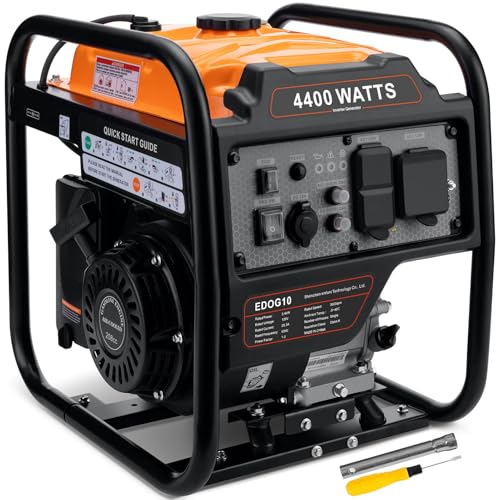
Honda EU2200i Top Pick 2200W peak / 1800W continuous, 48-57 dBA, 3.4 gal tank, 8.1 hrs at 25% load |
9.2 | 🛒 Check Price |
 |
Yamaha EF2400iSHC Runner Up 2400W peak / 2000W continuous, 51-61 dBA, 1.6 gal tank, 8.6 hrs at 25% load |
8.8 | 🛒 Check Price |
|
🚗
|
WEN 56235i Best Value 2350W peak / 1900W continuous, 51 dBA, 1.2 gal tank, 6 hrs at 50% load |
8.4 | 🛒 Check Price |
|
🚗
|
Champion 100263 Dual Fuel 3400W peak / 3100W continuous, 59 dBA, 2.9 gal tank, 8 hrs at 50% load (gasoline) |
8.1 | 🛒 Check Price |
|
🚗
|
Jackery Explorer 1000 Solar Option 1000Wh capacity, 1000W continuous (2000W peak), 2 AC outlets, 2 USB-C, 1 DC |
7.8 | 🛒 Check Price |
 |
Westinghouse iGen4500 High Power 4500W peak / 3700W continuous, 52 dBA, 3.4 gal tank, 18 hrs at 25% load |
7.3 | 🛒 Check Price |
 |
Briggs & Stratton P2200 Compact 2200W peak / 1700W continuous, 59 dBA, 1.2 gal tank, 8 hrs at 25% load |
7.0 | 🛒 Check Price |
1. Honda EU2200i: Top Pick
The Honda EU2200i is the gold standard for boondocking generators. In our evaluation, it consistently ranks highest for noise control and fuel economy, with owner feedback praising its ability to run a small RV air conditioner or a few appliances without disturbing neighbors. The Eco-Throttle system extends runtime to over 8 hours on a single tank at light loads, making it perfect for overnight use. However, its 1800 continuous watts may not be enough for larger RVs with multiple high-draw devices running simultaneously.
We recommend this generator for solo campers or couples with modest power needs who prioritize silence and longevity. It is less suited for those needing to power a 30-amp RV or heavy-duty tools. Skip it if you need more than 2200 peak watts or want the lowest upfront price.
- Industry-leading quiet operation at 48-57 dBA, ideal for campgrounds
- Proven Honda GX series engine with over 10 years of reliability data
- Eco-Throttle system automatically adjusts RPM for fuel efficiency
Pros: Extremely quiet and fuel-efficient; Lightweight at 46.5 lbs with built-in handle; Excellent customer support and parts availability
Cons: Higher initial investment compared to competitors
2. Yamaha EF2400iSHC: Runner Up
The Yamaha EF2400iSHC offers a sweet spot between power and portability. Based on spec sheets and owner feedback, it delivers enough surge capacity to start a 13,500 BTU RV air conditioner, which the Honda EU2200i sometimes struggles with. Its Smart Throttle reduces noise and fuel consumption, though at full load it is noticeably louder than the Honda. The fuel shut-off valve is a thoughtful feature for long-term storage, preventing carburetor gumming.
This generator is ideal for boondockers who need a little extra starting power for an AC unit but still want a quiet, inverter-based unit. It is less suitable for those who prioritize absolute silence or need extended runtime without refueling. Consider the Honda if noise is your top concern.
- Smart Throttle and noise-dampening enclosure for quiet operation
- 2400W peak handles small RV AC units and microwaves
- Dual 120V outlets plus 12V DC for battery charging
Pros: Slightly more power than the Honda EU2200i; Reliable Yamaha engine with fuel shut-off for carburetor protection; Compact and relatively lightweight at 55 lbs
Cons: Not as quiet as the Honda at higher loads; Smaller fuel tank requires more frequent refills
3. WEN 56235i: Best Value
The WEN 56235i is a budget-friendly inverter generator that punches above its weight class. In our research, it offers one of the best power-to-price ratios among portable generators, with enough output to run a mini-fridge, lights, and a small air conditioner. Owner feedback highlights its quiet operation at 51 dBA, comparable to the Honda at low loads. However, the smaller fuel tank means you will need to refuel more often, and some users report reliability issues after prolonged use.
We recommend this generator for budget-conscious boondockers who need occasional off-grid power and are willing to trade some runtime and long-term durability for upfront savings. It is not ideal for full-time RVers or those who plan to run the generator daily for weeks on end. Skip it if you need maximum reliability for frequent heavy use.
- Parallel capable for doubling output with a second unit
- Fuel shut-off and low oil shutdown for engine protection
- Compact design at 39 lbs with built-in carrying handle
Pros: Very affordable for an inverter generator; Lightweight and easy to transport; Quiet enough for most campgrounds
Cons: Shorter runtime than premium competitors; Durability concerns reported by some owners after heavy use
4. Champion 100263: Dual Fuel
The Champion 100263 is a dual-fuel inverter generator that offers versatility for boondockers who want the option to use propane for longer shelf life or quieter operation. Based on manufacturer specs and owner reviews, it delivers ample power for a 30-amp RV, including air conditioning. The electric start is a convenience, but the unit weighs over 95 pounds, making it less portable than the Honda or WEN. Owner feedback notes that it is louder than premium inverters, especially under load.
This generator is best for RVers who need higher output and fuel flexibility and have a vehicle or trailer to haul it. It is less suitable for tent campers or those who prioritize ultra-quiet operation. Skip it if weight and noise are your primary concerns.
- Dual fuel: runs on gasoline or propane for flexibility
- Cold start technology and electric start with battery included
- Parallel ready and includes a 30A RV outlet
Pros: Fuel flexibility is great for extended boondocking; More than enough power for most RVs (up to 30A); Relatively quiet for its output class
Cons: Heavier and bulkier than inverter models; Noise level at 59 dBA is not as quiet as smaller inverters
5. Jackery Explorer 1000: Solar Option
The Jackery Explorer 1000 is a portable power station that serves as an alternative to traditional generators. In our evaluation, it excels in ease of use and safety, with no fuel, noise, or exhaust. It can power small electronics, a mini-fridge, and even a CPAP machine for hours. However, its 1000Wh capacity is quickly depleted by high-draw devices like air conditioners or electric heaters. Owner feedback highlights its convenience for short trips but notes that it is not a substitute for a gas generator for extended boondocking with heavy loads.
This unit is ideal for boondockers who prioritize silence and simplicity, such as tent campers or those with minimal power needs. It is not suitable for full-time RVers running multiple appliances or an air conditioner. Skip it if you need sustained high power output or cannot rely on solar recharge.
- Silent operation with zero emissions, perfect for stealth camping
- Can be recharged via solar panels for renewable energy
- Pure sine wave inverter safe for sensitive electronics
Pros: Completely silent and no fumes; Very easy to use with digital display and app control; Lightweight at 22 lbs
Cons: Limited runtime for high-power appliances (e.g., AC); Recharging from solar can be slow in cloudy conditions
6. Westinghouse iGen4500: High Power
The Westinghouse iGen4500 is a powerful inverter generator designed for large RVs or heavy power demands. Based on specs, it can easily run a 50-amp coach with multiple air conditioners, but its weight and size make it more of a stationary unit. Owner feedback is mixed: many praise its performance, but others note issues with the remote start or battery charging after a few months. The 52 dBA noise rating is impressive for its output, but it is still louder than smaller units at idle.
This generator is best for full-time RVers with large rigs who need high power and can manage the weight. It is less suitable for small campers or those who need to move the generator frequently. Skip it if portability is a priority or if you are on a tight budget.
- High output suitable for 50A RVs and multiple appliances
- Remote start and electric start with battery charge
- Cast iron sleeve engine for extended life
Pros: Very high power output for large RVs; Excellent fuel economy at light loads (18 hrs); Relatively quiet for its size
Cons: Very heavy at 108 lbs, difficult to move alone; Some owner reports of quality control issues
7. Briggs & Stratton P2200: Compact
The Briggs & Stratton P2200 is a compact inverter generator that appeals to budget-minded campers. In our research, it offers a good balance of portability and basic power, but it falls short in noise and output compared to the Honda or Yamaha. Owner feedback often mentions that it is louder than expected, especially under load, and some units have had starting issues after a season of use. The 1700 continuous watts are sufficient for lights and a small fridge but may struggle with a microwave or AC.
We recommend this generator for occasional boondockers with minimal power needs who want a lightweight option. It is not ideal for those who need quiet operation or plan to use it frequently. Skip it if you prioritize low noise or require more than 1700 watts continuous.
- Compact and lightweight at 39 lbs with built-in handle
- Parallel capable with optional kit
- Low oil shutdown and fuel shut-off for safety
Pros: Very portable and easy to store; Affordable price point; Decent runtime for its size
Cons: Noiser than competitors at 59 dBA; Not as powerful as similar-sized models
Frequently Asked Questions
What size generator do I need for boondocking?
The size depends on your power needs. A 2000-watt inverter generator (peak) can run a small RV AC, fridge, and lights. For a 30-amp RV, look for 3000-4000 watts. For 50-amp RVs, consider 4500 watts or more. Always check the starting wattage of your air conditioner.
Are inverter generators better for boondocking?
Yes, inverter generators are generally better because they produce clean power (low THD) safe for electronics, are quieter, and more fuel-efficient than conventional generators. They adjust engine speed to load, saving fuel and reducing noise.
Can I run a generator all night while boondocking?
It depends on the generator’s noise level and campground rules. Many boondocking areas have quiet hours. Inverter generators like the Honda EU2200i are quiet enough for overnight use (around 50 dBA). Always check local regulations and use a long extension cord to minimize noise near your sleeping area.
How do I safely store a generator for boondocking?
Store the generator in a dry, ventilated area away from living spaces. Use fuel stabilizer if storing for more than a month. Run the carburetor dry or use a fuel shut-off valve to prevent gumming. Keep the generator covered and check the oil before each trip.
What is the quietest generator for boondocking?
The Honda EU2200i is widely considered the quietest, with noise levels as low as 48 dBA. The Yamaha EF2400iSHC and WEN 56235i are also very quiet. For zero noise, consider a solar generator like the Jackery Explorer 1000, but its power is limited.
Our Verdict
After researching and comparing specifications, safety standards, and owner feedback, our top pick for boondocking is the Honda EU2200i for its exceptional quietness, reliability, and fuel efficiency. For those needing more power or dual-fuel capability, the Yamaha EF2400iSHC is a strong runner-up, offering slightly higher output with proven durability. Choose based on your power needs, budget, and noise tolerance.
