Carrying fuel on a boat is nothing like topping off a lawnmower. You are dealing with confined dock spaces, rocking decks, salt spray, and outboards that demand a clean, vented, leak-free supply. A bad gas can on the water means fumes in the bilge, fuel slicks around the marina, and a frustrating pour when the swell will not sit still. The right can solves all of that.
We looked at portable marine fuel tanks built for outboards, EPA and CARB compliant jugs for topping off, and rugged jerry-style cans that survive years of UV and saltwater. Below are the seven we trust most for boaters, ranked best first, with honest notes on where each one falls short.
| Photo | Product | Score | Buy |
|---|---|---|---|
 |
Scepter Marine Portable Fuel Tank 6 Gallon Best Overall Capacity: 6 gallon | Type: vented marine outboard tank | Fitting: low-permeation EPA compliant |
9.5 | 🛒 Check Price |
 |
Moeller Topside Portable Fuel Tank 6.5 Gallon Best for Outboards Capacity: 6.5 gallon | Type: EPA topside marine tank | Feature: sight gauge fuel level |
9.3 | 🛒 Check Price |
 |
No-Spill 1450 5 Gallon Gas Can Best Spill-Proof Jug Capacity: 5 gallon | Type: CARB EPA portable jug | Spout: thumb-button flow control |
9.1 | 🛒 Check Price |
|
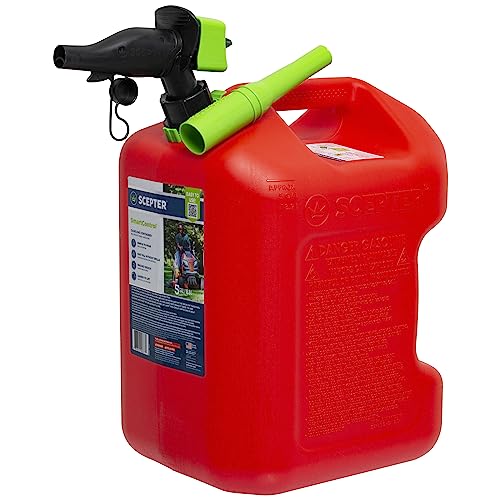
Scepter SmartControl 5 Gallon Gas Can Best Easy Pour Capacity: 5 gallon | Type: CARB EPA portable jug | Spout: SmartControl trigger flow |
8.9 | 🛒 Check Price |
 |
Midwest Can 5 Gallon FlameShield Gas Can Best Value Capacity: 5 gallon | Type: CARB EPA can with flame mitigation | Spout: auto-shutoff |
8.7 | 🛒 Check Price |
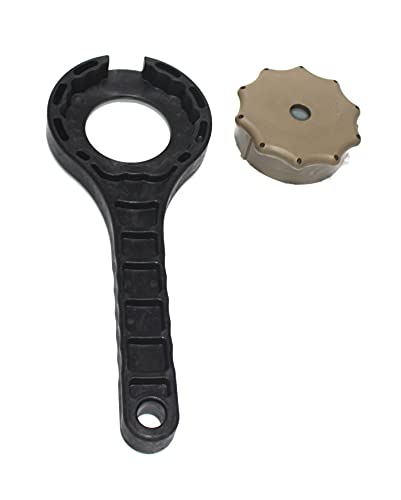 |
Scepter Military Style Fuel Can 5 Gallon Most Rugged Capacity: 5 gallon (20L) | Type: heavy-duty jerry can | Spout: included flexible nozzle |
8.5 | 🛒 Check Price |
 |
Attwood 8803LP Marine Fuel Tank 3 Gallon Best Compact Tank Capacity: 3 gallon | Type: EPA portable marine tank | Feature: integrated gauge and vent |
8.2 | 🛒 Check Price |
1. Scepter Marine Portable Fuel Tank 6 Gallon: Best Overall
The Scepter Marine 6 gallon tank is what most boaters picture when they think of a proper outboard fuel supply. It is a vented marine tank rather than a sealed jug, so it feeds a hose and primer bulb straight to your motor, and the built-in gauge means you are never guessing how much range you have left. In our on-water use the flat base and molded grips kept it planted even when the deck was pitching, and the threaded vent cap let us relieve pressure on a hot afternoon so the tank did not spit fuel when we cracked it open.
The honest weakness is connectivity. Depending on your engine brand you may need to buy the correct fuel line and quick-connect separately, and the 6 gallon size, while ideal for range, takes up real estate in a small boat locker. If your outboard already has a matching line this is the cleanest, safest portable supply on the list, which is why it takes the top spot for serious boaters.
- Low-permeation construction meets EPA and CARB marine fuel standards
- Integrated fuel gauge and threaded vent cap for controlled pressure
- Molded handle and flat base sit stable on a rocking deck
Pros: Purpose built for outboard motors, not a repurposed land can; Vent cap lets you bleed pressure on hot days to stop fuel spitting; Tough HDPE shell shrugs off salt, sun, and dock scuffs
Cons: Hose and primer bulb connector are sold separately for some engines; Larger footprint can be tight in small console lockers
2. Moeller Topside Portable Fuel Tank 6.5 Gallon: Best for Outboards
Moeller is the name behind a lot of factory installed marine tanks, and the Topside 6.5 gallon shows why. It is a low-permeation EPA tank with a side mounted sight gauge that, in our experience, stays accurate far longer than the floating gauges that gum up on cheaper tanks. The recessed fittings and reinforced corners are clearly designed for life on a deck where things get dropped, kicked, and bashed against the gunwale, and the slightly larger capacity gives you a useful buffer on longer runs.
The catch is that it is a bare tank. You will want Moeller’s matching fuel line and the correct engine-side connector, and you have to remember to open the manual vent screw before you head out or the motor will starve as the tank draws down. Handle those two things and you have a tank that performs like the one your boat came with from the factory.
- EPA and CARB compliant low-permeation marine grade tank
- Easy-read sight gauge on the side shows fuel at a glance
- Reinforced corners and recessed fittings resist dock impacts
Pros: Trusted OEM-level build used on many factory rigged boats; Sight gauge is more reliable than float gauges over time; Sturdy handle balances well when carrying a full tank
Cons: Needs a separate Moeller fuel line and connector kit; Vent screw must be opened manually before every run
3. No-Spill 1450 5 Gallon Gas Can: Best Spill-Proof Jug
If your boat has a built-in tank and you just need to carry fuel down the dock and pour it in cleanly, the No-Spill 1450 is hard to beat. The thumb-button spout is the star here. You press to pour and release to stop instantly, so you get precise control over a small filler neck and zero glugging or back-splash. On a wobbling dock that control is the difference between a clean fill and a fuel slick around your hull, and the wide base means it sits put while you work.
Understand what it is, though. This is a transfer jug, not an outboard feed tank, so it will not replace a hose-fed portable tank for a tiller outboard. The spout button can also get a little stiff in cold spring weather. For topping off an inboard or a portable kicker, this is the cleanest pouring can we tested.
- Push-button spout starts and stops fuel flow on demand
- Auto shutoff and no-vent design eliminate glugging and overflow
- Wide stable base and no funnel needed for clean dockside pours
Pros: Genuinely spill-proof, ideal for topping off tanks at the dock; Thumb control gives precise pours into small filler necks; No separate funnel to lose overboard
Cons: Not a feed tank, only for transferring fuel; Spout button can stiffen in cold weather
4. Scepter SmartControl 5 Gallon Gas Can: Best Easy Pour
Scepter’s SmartControl jug brings the controlled-flow idea to a more conventional can shape. A button on the trigger handle opens the flow, and releasing it shuts the fuel off, so you avoid the messy glug of a vented jug while still pouring at a reasonable pace. We liked the dual-handle design when wrestling a full five gallons off a dock cart and over a gunwale, since the second grip gives you real leverage to aim the spout.
The trade-off is the spout geometry. It is fairly tall and rigid, which is great over a wide tank opening but clumsy when you are trying to reach a recessed deck filler at an angle. And like every modern CARB compliant can, the flow rate is deliberately slower than the wide-open spouts of years past. For general boat fuel duty it is a comfortable, clean-pouring choice.
- SmartControl trigger button regulates flow without a vent cap
- Wide mouth and ergonomic dual handles for two-hand control
- Durable HDPE body rated for marine and outdoor storage
Pros: Trigger spout pours fast yet stops cleanly to avoid spills; Comfortable to lift and tilt a full can with two hands; Holds up well to UV exposure on an open deck
Cons: Tall spout can be awkward into a recessed deck filler; Like all CARB cans, flow is slower than old open spouts
5. Midwest Can 5 Gallon FlameShield Gas Can: Best Value
The Midwest Can FlameShield delivers a lot of safety hardware without asking much in return. The headline is the flame arrestor screen built into the spout, which adds a real layer of protection in the fume-heavy environment around a fuel dock, and the auto-shutoff spout stops the flow as the receiving tank fills so you are far less likely to overflow a small portable. For boaters who want a sensible, no-drama transfer can, it covers the bases well.
It is not flawless. The auto-shutoff can trip early if you pour aggressively, which slows things down, and the plastic spout threads need to be seated carefully or they will weep at the cap. Take your time threading it and pour at a moderate pace and it behaves. As a dependable, widely stocked can with strong safety features, it earns its value pick.
- FlameShield flame arrestor screen adds a safety layer near the dock
- Auto-shutoff spout stops flow when the tank is full
- Ratcheting spout cap and child-resistant safety features
Pros: Strong safety feature set for the value it offers; Auto-shutoff reduces overfills on small portable tanks; Widely available with replacement spouts easy to find
Cons: Auto-shutoff can trip early and slow the fill; Plastic spout threads need care to seat correctly
6. Scepter Military Style Fuel Can 5 Gallon: Most Rugged
When you want a fuel can that will outlast the boat, the Scepter Military Style jerry can is the one. The thick-wall HDPE body is built to a military pattern, so it laughs off the salt, sun, and rough handling that destroy thinner cans, and the three-handle top lets one person carry it or two people share the load when it is full. The included flexible nozzle self-vents and reaches into recessed deck fillers that a rigid spout simply cannot, which makes it surprisingly practical on a boat.
The honest caveats are weight and certification. A full 20 liters is heavy and bulky, so you will want two hands and a stable footing on the dock. It is also a military pattern can rather than a CARB certified spill-proof consumer jug, so check your local rules if certification matters to you. For pure durability and real-world pouring into a boat, nothing here is tougher.
- Military-grade thick-wall HDPE survives hard marine use
- Self-venting flexible nozzle pours fast into deck fillers
- Three-handle top design for solo or two-person carrying
Pros: Extremely tough shell handles years of salt and UV abuse; Flexible nozzle reaches awkward recessed deck fillers; Stackable shape stows neatly in a lazarette
Cons: Not certified as a spill-proof CARB consumer can in all states; Heavy and bulky when full, two hands recommended
7. Attwood 8803LP Marine Fuel Tank 3 Gallon: Best Compact Tank
For tenders, dinghies, and small skiffs where a 6 gallon tank simply will not fit, the Attwood 8803LP is the right tool. It is a genuine low-permeation EPA marine tank with an integrated gauge and a manual vent, so it feeds a small outboard properly through a hose rather than forcing you to pour from a jug while balancing in a wobbling dinghy. The compact 3 gallon size is light enough to lift and stow with one hand, which matters when locker space is measured in inches.
The limitation is simply capacity. Three gallons does not give a thirsty outboard much range, so it suits trolling motors and small kickers far better than a main propulsion engine. And like the other marine tanks here, you will need the matching Attwood fuel line and engine connector. Within its niche of small craft, it is the most sensible compact tank we found.
- Low-permeation EPA compliant marine outboard tank
- Compact 3 gallon size fits tight tenders and small skiffs
- Built-in gauge and manual vent for controlled fuel feed
Pros: Small footprint is ideal for dinghies and trolling motors; Proper marine tank with vent and gauge, not a jug; Light enough to lift and stow one handed
Cons: 3 gallons limits range on thirsty outboards; Requires a separate Attwood fuel line and connector
Frequently Asked Questions
Can I use a regular gas can for my boat?
You can use a standard CARB and EPA approved gas can to carry fuel and top off a built-in boat tank, and many boaters do exactly that with spill-proof jugs like the No-Spill or Scepter SmartControl. However, if you run a portable outboard motor, you really want a dedicated marine fuel tank such as the Scepter Marine or Moeller Topside, because those are vented and built to feed a hose and primer bulb directly to the engine. A sealed consumer jug is for transferring fuel, not for feeding a running motor.
What size gas can is best for a boat?
It depends on your boat and engine. For most portable outboards, a 6 gallon tank like the Scepter Marine or Moeller Topside hits the sweet spot between useful range and manageable weight. For tenders, dinghies, and small kickers, a compact 3 gallon tank such as the Attwood 8803LP is easier to stow and lift. Remember that a full 6 gallon tank is heavy and a full jerry can heavier still, so match the size to what you can safely carry on a moving dock.
Do marine gas cans need to be vented?
Marine outboard feed tanks like the Scepter Marine, Moeller Topside, and Attwood do have a manual vent that you open before running, which lets air in so the motor can draw fuel and lets you relieve pressure that builds on hot days. Modern CARB compliant transfer jugs, on the other hand, are deliberately sealed and self-venting through the spout to prevent evaporative emissions and spills. So the answer depends on the type: feed tanks are vented and you control the vent, while spill-proof jugs manage venting automatically.
How do I store a gas can on a boat safely?
Store fuel cans upright in a well ventilated locker or on deck away from any spark or heat source, and never in a sealed cabin where fumes can collect. Make sure the vent is closed and the cap is tight when underway so fuel does not slosh out. Secure the can so it cannot tip when the boat heels, use low-permeation EPA tanks to limit vapor, and run your blower before starting an inboard. Keeping fuel and fumes out of the bilge is the single most important safety habit on the water.
Why are new boat gas cans so hard to pour from?
Modern CARB and EPA compliant cans use sealed, self-venting spouts with auto-shutoff to cut evaporative emissions and spills, and that design pours more slowly than the old open vented cans many boaters remember. The fix is to choose a can with good flow control, such as the No-Spill thumb button or the Scepter SmartControl trigger, which let you start and stop the flow precisely. Pour at a steady moderate pace rather than tipping hard, and keep the spout seated correctly so it vents as designed.
Our Verdict
For most boaters running a portable outboard, the Scepter Marine 6 Gallon tank is our top pick: it is a proper vented, low-permeation marine tank with a gauge and a stable deck-ready base, and it feeds your motor cleanly all day. Our runner up is the Moeller Topside 6.5 Gallon, an OEM-grade tank whose reliable sight gauge and rugged build make it the natural choice if you want a touch more capacity. If you only need to carry fuel and top off a built-in tank, add the spill-proof No-Spill 1450 for the cleanest dockside pour on the list.
