No bottle of fuel additive turns a stock four cylinder into a race car, and anyone who promises that is selling hype. What a good additive actually does is restore the power your engine already has by cleaning gummed injectors, scrubbing carbon off intake valves, and stabilizing the fuel so every drop burns clean. On a neglected engine, that recovered horsepower can feel dramatic, and on a tuned engine running higher boost, a proper octane booster can unlock timing the ECU was holding back.
We focused on additives that produce measurable, repeatable results: octane boosters that genuinely raise the burn threshold, detergent treatments that free up clogged injectors, and combustion modifiers that clean valves while you drive. Below are the seven we trust most for chasing real horsepower, ranked best first, with honest notes on where each one falls short.
| Photo | Product | Score | Buy |
|---|---|---|---|
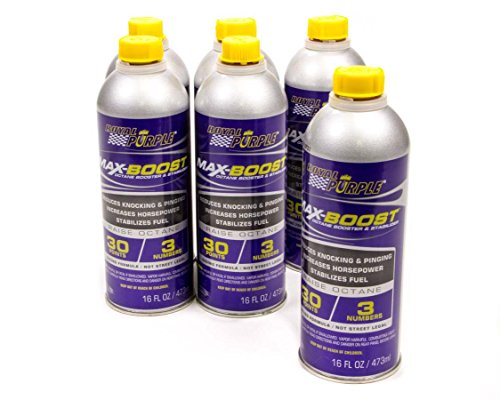 |
Royal Purple Max-Boost Octane Booster and Stabilizer Best Overall Octane booster plus stabilizer, treats up to 25 gallons, raises up to 30 octane points in racing use |
9.5 | 🛒 Check Price |
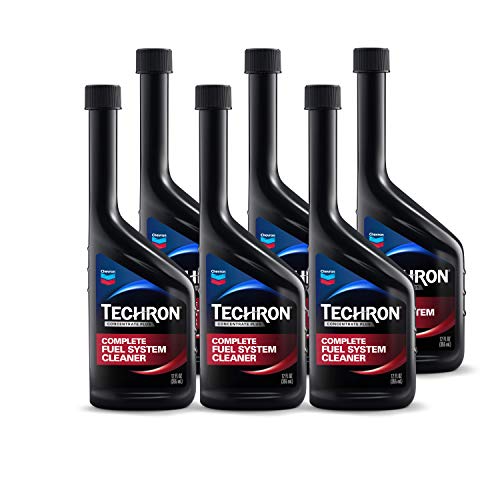 |
Chevron Techron Concentrate Plus Fuel System Cleaner Best Injector Cleaner PEA based detergent, one bottle treats up to 20 gallons, full system clean recommended every 3,000 miles |
9.3 | 🛒 Check Price |
 |
Liqui Moly Speed Tec Gasoline Additive Best for Throttle Response Combustion improver plus cleaner, one bottle treats up to 18 gallons, German engineered formula |
9.1 | 🛒 Check Price |
 |
Lucas Oil Upper Cylinder Lubricant and Injector Cleaner Best All Around Value Fuel treatment and injector cleaner, treats up to 100 gallons per bottle, gas or diesel |
8.9 | 🛒 Check Price |
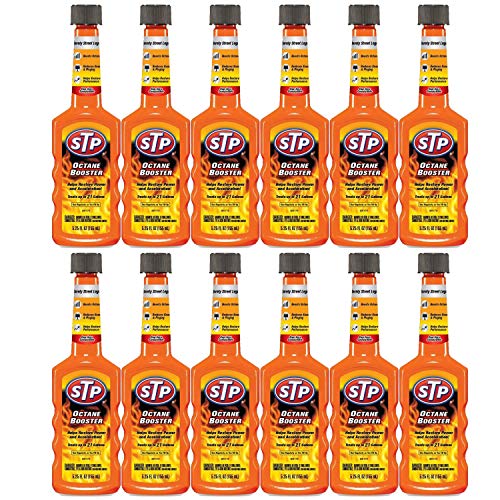 |
STP Octane Booster Best Budget Octane Boost Octane improver, one bottle treats up to 18 gallons, reduces knock and pinging |
8.6 | 🛒 Check Price |
 |
Sea Foam Motor Treatment Best Carbon Cleaner Petroleum based treatment, one can treats up to 16 gallons of fuel, works in fuel or oil |
8.4 | 🛒 Check Price |
 |
Gumout Regane High Mileage Fuel System Cleaner Best for High Mileage Engines PEA fuel system cleaner, one bottle treats up to 21 gallons, designed for engines over 75,000 miles |
8.1 | 🛒 Check Price |
1. Royal Purple Max-Boost Octane Booster and Stabilizer: Best Overall
Royal Purple Max-Boost earns the top spot because it does the one thing most additives only claim to do, which is meaningfully raise octane. On a knock limited engine, whether that is a turbocharged hatchback or a high compression V8, higher octane lets the ECU stop pulling timing and run the curve it was designed for. That recovered timing is where the horsepower lives, and Max-Boost delivers it more convincingly than any pour in product we tried. It also folds in detergents and an upper cylinder lubricant, so you get valve and injector cleaning as a bonus rather than buying a second bottle.
The honest weakness is expectation management. If your car is naturally aspirated, stock, and never pinging on regular fuel, you will not feel a dyno shaking gain because there was no knock to cure in the first place. Max-Boost shines on engines that are actually fighting detonation, modified, towing, running cheap fuel, or tuned. Used at the full racing concentration it is also not safe for your catalytic converter, so save the strong dose for track days and keep the lighter ratio for the street.
- Boosts octane to suppress knock and let the ECU run more aggressive timing
- Doubles as a fuel stabilizer and upper cylinder lubricant
- Safe for both pump and race fuel, works in turbo and supercharged engines
Pros: Largest real octane gain of anything we tested, ideal for boosted or high compression engines; Cleans and lubricates injectors and valves alongside the octane lift; Noticeable throttle response improvement on knock limited setups
Cons: Octane gains on stock daily drivers are subtle since the ECU is not knock limited; Not catalytic converter friendly at full racing dosage, so the heavy ratio is track only
2. Chevron Techron Concentrate Plus Fuel System Cleaner: Best Injector Cleaner
If your horsepower loss comes from dirty injectors and carboned up valves, and on most engines past 60,000 miles it does, Techron is the most effective fix you can pour from a bottle. The active ingredient is PEA, the same aggressive detergent chemistry that professional shops rely on, and it genuinely strips deposits rather than masking them. A clogged injector that sprays a lazy stream instead of a fine mist robs power and fuel economy at the same time, and a single tank with Techron usually brings that spray pattern back. The result is a smoother idle, crisper throttle, and the horsepower the engine made when it was new.
What Techron cannot do is create power that was never there. It is a cleaner, full stop, with no octane component, so a healthy engine with clean injectors will feel almost no change. Think of it as maintenance that protects and restores rather than a performance upgrade. The gains also arrive gradually as the detergent works through a full tank, so do not judge it after the first ten miles. Run it, drive the tank down, and the difference shows up by the time you refuel.
- Polyether amine (PEA) chemistry dissolves the toughest injector and valve deposits
- Restores lost horsepower by returning injectors to factory spray pattern
- Cleans the entire fuel path from tank to combustion chamber
Pros: The PEA formula is the gold standard for actually removing deposits, not just coating them; Smooths idle and restores throttle response on high mileage engines; Safe to run regularly with no risk to sensors or the catalytic converter
Cons: Pure cleaner with no octane boost, so it recovers power but cannot add timing headroom; Results build over a full tank rather than appearing instantly
3. Liqui Moly Speed Tec Gasoline Additive: Best for Throttle Response
Liqui Moly Speed Tec is the additive enthusiasts reach for when they want the car to feel more eager rather than chase a peak dyno number. It blends a combustion improver with a friction modifier and a cleaning package, and the most repeatable effect is sharper throttle response. Roll into the pedal after a treatment and the engine answers a beat quicker, with a slightly cleaner pull through the midrange. On engines that have gone a little lazy, it also helps cold starts and smooths out the power delivery. Liqui Moly’s German engineering reputation is well earned and the product quality is consistent bottle to bottle.
The fair criticism is that Speed Tec is a feel good additive more than a horsepower hammer. The seat of the pants improvement is real, but strap the car to a dyno and the numbers move only a little. It also rewards consistent use across several tanks rather than a single dose, so treat it as part of a routine. If you want maximum measurable power for a boosted build, an octane booster does more, but for everyday sharpness in a healthy engine, Speed Tec is a satisfying choice.
- Friction modifier and combustion improver designed to sharpen acceleration
- Cleans the intake and injection system as it works
- Improves cold start behavior and smooths power delivery
Pros: Genuinely noticeable improvement in throttle sharpness and pull; German formulated to a high standard with consistent batch quality; Combines cleaning and a combustion boost in one pour
Cons: Effect is felt more than it is measured, gains are modest on a dyno; Best results need consistent use rather than a one time treatment
4. Lucas Oil Upper Cylinder Lubricant and Injector Cleaner: Best All Around Value
Lucas Oil built its name on lubrication, and that is exactly the angle this fuel treatment takes on horsepower. By lubricating injectors, valves, and the upper cylinder area, it reduces internal friction and protects the precise components that control how efficiently fuel is delivered and burned. Less friction and cleaner injectors mean the engine recovers small power losses and runs smoother, and the cleaning package keeps the whole fuel system from gumming up over time. One bottle treats a large volume of fuel and it works in both gas and diesel, which makes it a practical pick for someone running more than one vehicle.
Like the dedicated cleaners on this list, it does not raise octane, so it cannot unlock timing the way a booster can. Its contribution to horsepower is about prevention and recovery, keeping injectors spraying correctly and components moving freely, rather than adding a burst of peak power. The benefits also build with regular use across many tanks, so it suits the owner who wants steady long term engine health and modest power recovery more than the person chasing a single dramatic dyno run.
- Lubricates injectors, valves and the upper cylinder to reduce friction losses
- Cleans the fuel system and helps restore lost compression and power
- Works in both gasoline and diesel engines, including high mileage motors
Pros: One bottle treats a huge amount of fuel, so it goes a long way; Lubrication reduces friction and helps recover small horsepower losses; Trusted, widely available brand that works in nearly any engine
Cons: No octane boost, so it cleans and lubricates rather than adds power headroom; Gains are gradual and tied to long term, regular use
5. STP Octane Booster: Best Budget Octane Boost
STP Octane Booster is the accessible way to get into octane boosting, and for a lot of drivers it is exactly enough. If your engine pings or knocks on lower grade pump fuel, this raises the octane enough to quiet that detonation and let the ignition timing settle into a cleaner, more efficient curve. That alone recovers power that knock was costing you, and the formula also includes cleaning agents to keep the fuel system tidy. It is sold nearly everywhere, which matters when you want to grab a bottle on the way to a long drive or a hot day of towing.
The trade off for that accessibility is a more modest octane lift than the premium boosters aimed at the track. STP will calm a knocking engine and give you a small bump, but it is not going to deliver the big timing unlock that a serious tuned and boosted build can extract from a stronger product like Royal Purple. View it as a smart knock fix and light power recovery tool rather than a race grade additive. Within that honest scope, it does its job reliably and is hard to fault for the value.
- Raises octane to reduce knock and let the engine run cleaner timing
- Helps eliminate engine ping and pre ignition on lower grade fuel
- Includes fuel system cleaning agents in the formula
Pros: Effective entry point into octane boosting for knock prone engines; Widely stocked and easy to find at almost any parts store; Quiets pinging quickly on engines running cheaper fuel
Cons: Octane gain is smaller than premium track focused boosters; More of a knock fix than a serious performance unlock
6. Sea Foam Motor Treatment: Best Carbon Cleaner
Sea Foam has been in mechanics’ toolboxes for generations, and its strength for horsepower is carbon removal. Carbon and varnish build up on valves, in injectors, and on the chamber surfaces, and that buildup quietly strangles airflow and compression until the engine feels tired. Sea Foam dissolves that gum and helps free sticking rings, which can restore lost compression and the power that came with it. The versatility is a real selling point too, since the same can cleans through the fuel tank, the crankcase, or the intake, giving you several ways to attack deposits depending on the problem.
The honest limitation is the chemistry. Sea Foam is petroleum based, which makes it gentler and more general purpose than a concentrated PEA cleaner like Techron when it comes to the most stubborn injector and valve deposits. For routine carbon control it is excellent, but for a badly clogged direct injection valvetrain a dedicated PEA product digs deeper. Be aware too that running it through the intake for a deep clean produces dramatic smoke and demands a careful, ventilated approach. Used sensibly, it is a proven way to keep carbon from robbing your power.
- Dissolves carbon, gum and varnish from injectors, valves and chambers
- Frees stuck rings and cleans deposits that sap compression and power
- Versatile, usable in the fuel tank, crankcase or intake
Pros: Excellent at clearing carbon buildup that quietly steals horsepower; Extremely versatile across fuel, oil and intake cleaning uses; Long standing reputation among mechanics and engine builders
Cons: Petroleum based chemistry is less aggressive on deposits than PEA cleaners; Heavy intake cleaning can produce a lot of smoke and needs care
7. Gumout Regane High Mileage Fuel System Cleaner: Best for High Mileage Engines
Gumout Regane High Mileage is built for the exact situation where pour in additives help the most, an older engine with a lot of accumulated deposits. It uses PEA detergent chemistry, the genuinely effective kind, and tunes the formula toward the gum and carbon that pile up after 75,000 miles. On a tired high mileage engine, dirty injectors and carboned valves are usually the real reason power and fuel economy have slipped, and clearing them often produces the most satisfying before and after of any product here. Owners typically notice a smoother idle, less hesitation, and a return of throttle response that had faded so gradually they stopped noticing.
The flip side of that focus is that the benefit is narrow. On a newer engine with clean internals there is little for it to do, and you would be better served by a maintenance cleaner or, if chasing measurable power, an octane booster. Regane is also purely a cleaner with no octane component, so it recovers the horsepower deposits were stealing but cannot raise the engine’s ceiling. For its intended audience, the high mileage daily driver that has never been treated, it is a strong and sensible pick.
- PEA detergent formula targeted at high mileage deposit buildup
- Cleans injectors and valves to restore lost power and economy
- Reduces rough idle and hesitation common in older engines
Pros: Uses effective PEA chemistry tuned for worn, high mileage motors; Helps recover horsepower and smoothness on aging engines; Reduces hesitation and rough idle that high mileage cars develop
Cons: Benefits are concentrated on neglected, high mileage engines specifically; No octane boost, so it restores rather than adds power ceiling
Frequently Asked Questions
Can a fuel additive really add horsepower?
Yes, but it is important to understand how. No additive manufactures power out of thin air. What the best ones do is recover horsepower the engine has lost to dirty injectors, carboned valves, and knock, or unlock timing the ECU was holding back. An octane booster lets a knock limited or boosted engine run more aggressive ignition timing, which is real power. A detergent cleaner restores injectors to their factory spray pattern, returning the horsepower the engine made when new. On a perfectly clean, naturally aspirated stock engine that never knocks, the gain is minimal because there was nothing to fix.
Should I use an octane booster or a fuel system cleaner for more power?
It depends on why you are losing power. If your engine pings, knocks, or is tuned and boosted, an octane booster like Royal Purple Max-Boost is the right tool because it suppresses detonation and lets the engine run better timing. If your power loss comes from age, mileage, and dirty injectors, a PEA based cleaner like Chevron Techron will do far more by removing the deposits choking your fuel system. Many enthusiasts run a cleaner periodically for maintenance and reach for an octane booster only when they need knock protection for track days, towing, or cheaper fuel.
How often should I use a horsepower fuel additive?
For detergent cleaners, treating the fuel system every 3,000 to 5,000 miles, or roughly every few oil changes, keeps injectors and valves clean without overdoing it. Lubricating treatments like Lucas can be added at every fill or as the label directs since they are gentle and meant for continuous use. Octane boosters are different, you add them only when you actually need the higher octane, such as before a track session, a heavy tow, or when running lower grade fuel. Always follow the dosage on the bottle, because more is not better and overdosing some products can affect your catalytic converter.
Are fuel additives safe for my catalytic converter and oxygen sensors?
Most quality detergent and combustion additives, including Techron, Liqui Moly, and Lucas, are formulated to be safe for catalytic converters and oxygen sensors when used at the recommended dose. The main caution is with octane boosters used at their strongest racing concentration. Products like Royal Purple Max-Boost are safe for the catalytic converter at street ratios but warn against the full racing dose for cat equipped street cars. The simple rule is to read the label, use the street dosage for daily driving, and save heavy concentrations for off road or track use only.
Will a fuel additive fix a rough idle or hesitation?
Often, yes, if the cause is deposits. A rough idle and throttle hesitation on a higher mileage engine are frequently the result of clogged injectors and carbon on the intake valves disrupting the air and fuel mixture. A strong PEA cleaner such as Chevron Techron or Gumout Regane High Mileage can dissolve those deposits and bring back a smooth idle and crisp response, usually within a tank or two. That said, additives only fix fuel related causes. If the rough running comes from a failing ignition coil, a vacuum leak, or a bad sensor, no additive will help and you need a proper diagnosis.
Our Verdict
For genuine, measurable horsepower our top pick is the Royal Purple Max-Boost Octane Booster and Stabilizer, because raising octane on a knock limited or boosted engine is the one pour in change that reliably unlocks real timing and power, and it cleans and lubricates while it does it. Our runner up is the Chevron Techron Concentrate Plus, the most effective PEA cleaner for restoring the horsepower that dirty injectors and carboned valves quietly steal. Match the tool to your engine: reach for the octane booster when you are fighting knock or chasing power on a tuned setup, and run Techron when it is time to clean house and bring a tired engine back to its factory output.
