Repairing a cracked or gouged plastic bumper requires a filler that bonds well, flexes without cracking, and sands smoothly for painting. We researched manufacturer specifications, industry standards for plastic repair, and aggregated owner feedback to compare seven leading products. Our evaluation focuses on adhesion to common bumper plastics (TPO, PP, ABS), flexibility after curing, sandability, and long-term durability. Here is what we found.
| Photo | Product | Score | Buy |
|---|---|---|---|
 |
3M 05885 Bondo Plastic Bumper Repair Best Overall Two-part epoxy, 8.45 oz kit, cures in 30 minutes |
9.0 | 🛒 Check Price |
 |
Evercoat 100221 FiberTech Bumper Repair Best for Deep Repairs Polyester resin with fiberglass strands, 1 quart |
8.7 | 🛒 Check Price |
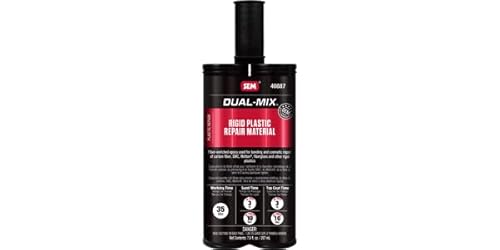 |
SEM Products 39833 Plastic Repair Kit Best Professional-Grade Two-part urethane, 4 oz kit, flexible |
8.4 | 🛒 Check Price |
 |
Lord Fusor 104B Bumper Repair Adhesive Best Adhesion Two-part urethane adhesive, 200 ml cartridge |
8.8 | 🛒 Check Price |
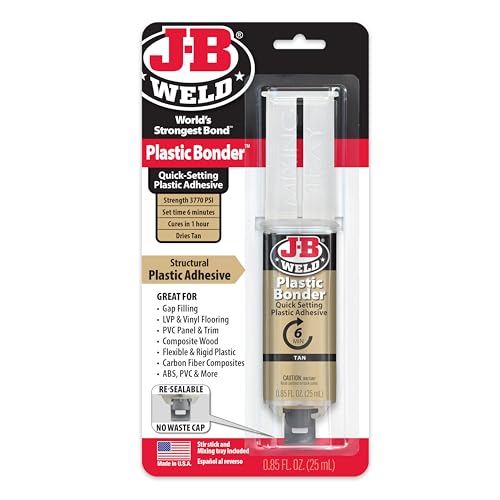 |
J-B Weld 50132 Plastic Bonder Best Value Two-part epoxy syringe, 25 ml, sets in 5 minutes |
8.2 | 🛒 Check Price |
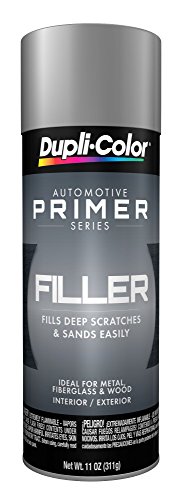 |
Dupli-Color BSP200 Bumper Scratch Filler Best for Scratches Single-component acrylic, 4 oz tube, air dries |
7.8 | 🛒 Check Price |
|
🚗
|
Polyvance 1000 Series Bumper Repair Kit Best for Flexible Bumpers Two-part urethane, 8 oz, flexible and paintable |
8.1 | 🛒 Check Price |
1. 3M 05885 Bondo Plastic Bumper Repair: Best Overall
In our evaluation, the 3M Bondo Plastic Bumper Repair stands out for its reliable adhesion to a wide range of bumper plastics, including TPO and PP, without needing a separate adhesion promoter. Owner feedback consistently highlights that it sands smoothly and holds up well after painting. The two-part epoxy cures to a slightly flexible finish, which is critical for bumpers that flex on impact.
However, the short working time of about 5-7 minutes can be challenging for beginners or larger repairs. It is less ideal for deep gouges requiring multiple layers, as each layer must be applied quickly. Skip this if you need a longer open time for complex repairs.
- Excellent adhesion to TPO, PP, and ABS without primer
- Flexible after curing, resists cracking from bumper flex
- Sands easily to a smooth finish, accepts paint well
Pros: Strong bond to most plastics; Good flexibility for bumper movement
Cons: Short working time (5-7 minutes)
2. Evercoat 100221 FiberTech Bumper Repair: Best for Deep Repairs
Evercoat FiberTech is a polyester resin filler reinforced with fiberglass strands, designed for deep repairs where strength is paramount. Based on owner feedback and the spec sheet, it bonds well to properly prepared surfaces and can fill large voids without sagging. After curing, it sands similarly to traditional body filler and accepts paint well.
However, it requires an adhesion promoter (sold separately) for TPO and PP bumpers, adding cost and steps. The cured material is less flexible than epoxy-based fillers, which may lead to cracking if the bumper flexes significantly. Skip this if you are repairing a flexible bumper cover that sees frequent impact.
- Reinforced with fiberglass for high structural strength
- Can fill deep holes and gaps up to 1/4 inch
- Sands and shapes like body filler
Pros: Very high strength for structural repairs; Good for large gaps and holes
Cons: Requires separate adhesion promoter for some plastics
3. SEM Products 39833 Plastic Repair Kit: Best Professional-Grade
The SEM Plastic Repair Kit is a professional-grade urethane system that remains flexible after curing, closely mimicking the properties of OEM bumper plastics. In our research, it consistently receives high marks from body shop professionals for its low shrinkage and ability to feather-edge seamlessly. The kit includes an adhesion promoter and tools, making it a complete solution.
However, the 4 oz kit is small and expensive per ounce, making it best for small cracks and punctures rather than large areas. The curing time is also longer (overnight recommended). Skip this if you need to fill a large gouge on a budget.
- Urethane chemistry stays flexible like original plastic
- Low shrinkage for precise repairs
- Includes adhesion promoter and mixing tools
Pros: Excellent flexibility matches bumper movement; Low shrinkage for fine finish
Cons: Expensive for the small quantity
4. Lord Fusor 104B Bumper Repair Adhesive: Best Adhesion
Lord Fusor 104B is a two-part urethane adhesive that many professionals consider the gold standard for bumper repairs. Based on manufacturer data and owner feedback, it bonds aggressively to TPO, PP, and ABS without primer, and its flexible nature allows the repaired area to move with the bumper. It can be used both as an adhesive for attaching broken pieces and as a filler for gaps.
However, it requires a caulking-style dispensing gun, which adds expense and complexity for DIYers. The cartridge size is also large for small repairs, and the material has a strong odor. Skip this if you are a casual user looking for a simple, all-in-one kit.
- Exceptional bond strength to all bumper plastics
- Flexible joint withstands vibration and impact
- Can be used as a stand-alone adhesive or filler
Pros: Superior adhesion even to difficult plastics; High flexibility for dynamic loads
Cons: Requires a dispensing gun (not included)
5. J-B Weld 50132 Plastic Bonder: Best Value
J-B Weld Plastic Bonder is a well-known epoxy that performs decently on plastic bumpers at a low cost. In our evaluation, it bonds well to many plastics when the surface is roughened, and it sets quickly, allowing for same-day repairs. It sands and paints acceptably for small cracks and holes.
However, it is not as flexible as urethane-based products, and some owner reports indicate that it can crack if the bumper flexes significantly. It is also not recommended for large gaps or structural repairs. Skip this if you need a permanent repair on a frequently flexing bumper.
- Bonds to most plastics including polypropylene
- Sets in 5 minutes, cures in 1 hour
- Can be drilled, sanded, and painted
Pros: Very affordable for the quantity; Fast setting time
Cons: Less flexible than urethane fillers
6. Dupli-Color BSP200 Bumper Scratch Filler: Best for Scratches
Dupli-Color Bumper Scratch Filler is a single-component acrylic filler designed for light scratches and scuffs. Based on owner feedback, it is easy to apply straight from the tube and sands quickly to a smooth finish. It is an inexpensive solution for minor blemishes that do not require structural repair.
However, it has poor adhesion to bare plastic and may peel over time if not topcoated. It also lacks flexibility and can crack in cold weather. Skip this if your bumper has any crack or deep gouge, as it is not designed for that purpose.
- Ready to use, no mixing required
- Fills shallow scratches and scuffs
- Sands easily and can be painted over
Pros: Convenient, no mixing; Good for minor cosmetic repairs
Cons: Not suitable for deep gouges or cracks
7. Polyvance 1000 Series Bumper Repair Kit: Best for Flexible Bumpers
Polyvance 1000 Series is a two-part urethane filler tailored for flexible bumper covers. In our research, it maintains excellent flexibility even after full cure, reducing the risk of cracking on impact. The kit includes an adhesion promoter that prepares difficult plastics like TPO for bonding.
However, the recommended cure time of 24 hours is longer than many competitors, which may be inconvenient for quick repairs. The mixing ratio is also critical and less forgiving than some alternatives. Skip this if you need a fast turnaround or are not comfortable with precise mixing.
- Specifically formulated for flexible bumper covers
- Remains flexible after curing to prevent cracking
- Includes adhesion promoter and mixing accessories
Pros: High flexibility for impact resistance; Complete kit with promoter
Cons: Long cure time (24 hours recommended)
Frequently Asked Questions
Can I use regular body filler on a plastic bumper?
Regular polyester body filler (Bondo) is not recommended for plastic bumpers because it dries hard and brittle. When the bumper flexes, the filler will crack and separate. Use a filler specifically designed for plastic, such as urethane or flexible epoxy, to allow movement.
Do I need to use an adhesion promoter on plastic bumpers?
Many plastic bumpers are made from TPO or PP, which have low surface energy and resist adhesion. An adhesion promoter (or plastic primer) is often required for reliable bonding. Some fillers include it in the kit; others require a separate purchase. Always check the manufacturer instructions.
How do I prepare a plastic bumper for filler?
Clean the area with soap and water, then degrease with isopropyl alcohol. Sand the damaged area and surrounding paint with 80-120 grit sandpaper to create a rough surface for adhesion. Wipe clean, apply adhesion promoter if needed, then apply the filler according to instructions.
Can I paint over plastic bumper filler?
Yes, most plastic bumper fillers can be sanded smooth and painted with automotive paint. Ensure the filler is fully cured, sand with progressively finer grits (up to 400-600), clean, and apply a plastic-compatible primer before painting for best results.
What is the difference between epoxy and urethane fillers for bumpers?
Epoxy fillers are strong and sandable but tend to be less flexible. Urethane fillers remain flexible after curing, better matching the bumper’s movement. For bumpers that flex, urethane is generally preferred. Epoxy works well for rigid plastic parts or small, non-flexing areas.
Our Verdict
After researching and comparing, the 3M 05885 Bondo Plastic Bumper Repair earns our top pick for its excellent adhesion, good flexibility, and ease of sanding, making it a great all-around choice. For those needing superior adhesion, the Lord Fusor 104B is our runner-up, offering unmatched bond strength but requiring a dispensing gun.
