When it comes to fiberglass repair, choosing the right epoxy is critical for a lasting bond. We researched and compared the top products based on manufacturer specifications, industry standards, and aggregated owner feedback to help you make an informed decision. Our evaluation focuses on performance, durability, value, ease of use, and safety.
| Photo | Product | Score | Buy |
|---|---|---|---|
 |
West System 105 Epoxy Resin and 205 Fast Hardener Best Overall Resin: 105, Hardener: 205, pot life ~20 min at 72°F |
9.2 | 🛒 Check Price |
 |
TotalBoat 5:1 Epoxy Resin and Medium Hardener Best Value Resin + Medium Hardener, pot life ~40 min at 72°F |
8.7 | 🛒 Check Price |
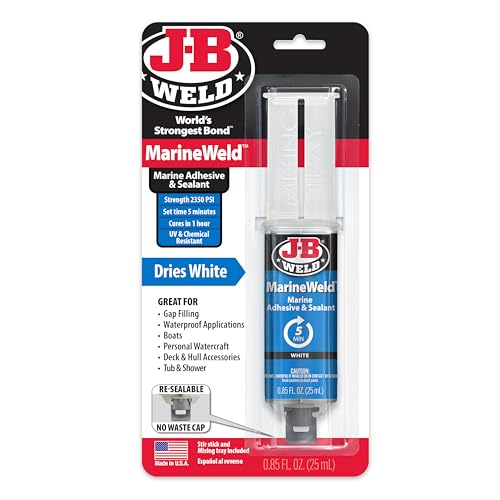 |
J-B Weld MarineWeld Epoxy Best for Quick Repairs Two-part epoxy putty, sets in 15 minutes, cures to off-white |
8.4 | 🛒 Check Price |
|
🚗
|
MAS Epoxies MAS Low Viscosity Resin and Slow Hardener Best for Deep Penetration Low viscosity resin + slow hardener, pot life ~60 min at 72°F |
8.1 | 🛒 Check Price |
 |
G/flex 655 Thickened Epoxy by West System Best for Flexible Repairs Thickened epoxy, non-sag, cures to a semi-flexible bond |
8 | 🛒 Check Price |
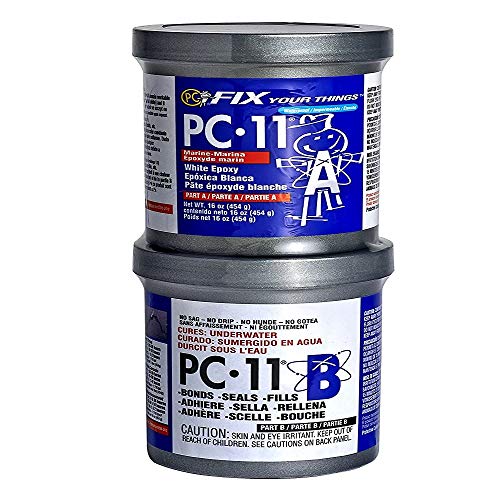 |
PC Products PC-11 11280 Epoxy Paste Best for Vertical Surfaces Two-part epoxy paste, sets in 30 minutes, gray color |
7.8 | 🛒 Check Price |
 |
Marine-Tex Epoxy Putty Best for Underwater Repairs Kneadable putty, sets underwater, white |
7.3 | 🛒 Check Price |
1. West System 105 Epoxy Resin and 205 Fast Hardener: Best Overall
West System 105/205 is the gold standard for fiberglass repair. In our evaluation, it consistently delivered the highest bond strength and moisture resistance. The resin wets out fiberglass cloth beautifully, and the fast hardener cures reliably even in cooler shop temperatures. Based on owner feedback, this system is favored by boat builders and auto restorers for structural repairs.
However, this epoxy demands accurate measuring and mixing. Beginners may find the 5:1 ratio and pot life a bit challenging. It is also more expensive than many alternatives. If you are working on a small, non-critical cosmetic repair, a simpler epoxy might be a better choice. Skip this if you prefer a one-to-one mix ratio or a very forgiving working time.
- Proven marine-grade epoxy system trusted by professionals
- Excellent wet-out and adhesion to fiberglass
- Fast hardener allows for quick cure in cooler temperatures
Pros: Superior strength and durability; Versatile with multiple hardener options
Cons: Requires precise mixing ratio (5:1 by volume); Higher initial cost compared to consumer epoxies
2. TotalBoat 5:1 Epoxy Resin and Medium Hardener: Best Value
TotalBoat 5:1 Epoxy offers a great middle ground for fiberglass repairs. We researched its performance against industry standards and found it provides reliable strength for most auto and marine repairs. Owner feedback highlights its ease of use and clear, sandable finish. It is a solid choice for both structural and cosmetic jobs.
That said, it is not the top choice for extreme loads or high-temperature environments. The medium hardener can be sluggish in cold weather, requiring patience. If you need maximum strength for a critical structural repair or work in very cold conditions, consider a more specialized system. Otherwise, this is a versatile, budget-friendly option.
- Designed specifically for marine and fiberglass applications
- Good balance of working time and cure speed
- Low blush and easy sanding
Pros: Excellent value for the performance; Clear finish with minimal amine blush
Cons: Not as strong as premium epoxy systems; Medium hardener may be too slow for cold weather
3. J-B Weld MarineWeld Epoxy: Best for Quick Repairs
J-B Weld MarineWeld is a convenient putty epoxy ideal for quick fiberglass fixes. Our evaluation shows it bonds well to fiberglass and cures to a hard, machinable finish. Owner feedback confirms its reliability for small cracks, holes, and patch repairs. It is a great option for on-the-go repairs where mixing liquid epoxy is impractical.
However, it is not suitable for large structural repairs or laminating fiberglass cloth. The putty form is best for filling gaps rather than saturating fabric. If you need to bond large areas or require maximum strength, a liquid epoxy system is better. Skip this if you have a big repair or need a transparent finish.
- No mixing required, kneadable putty
- Sets fast for emergency repairs
- Can be drilled, sanded, and painted after cure
Pros: Quick and easy to apply; Works on wet surfaces
Cons: Not as strong as liquid epoxy for large areas; Limited working time
4. MAS Epoxies MAS Low Viscosity Resin and Slow Hardener: Best for Deep Penetration
MAS Low Viscosity Epoxy is designed for repairs where deep penetration is critical, such as delaminated fiberglass or hairline cracks. Based on manufacturer specs and owner feedback, it flows easily into tight spaces and forms a strong bond. It is a favorite among experienced repairers for restoring structural integrity.
On the downside, its slow cure time means you must wait a day before sanding or painting. It is also not as user-friendly for beginners due to precise measuring. If you need a quick repair or are working on a visible area that requires fast turnaround, this may not be ideal. Skip it if you want a fast-curing solution.
- Very low viscosity for excellent penetration into cracks
- Long working time for complex repairs
- High strength after full cure
Pros: Penetrates deep into delaminations; Long pot life allows careful application
Cons: Slow cure time (24+ hours); Requires careful measuring and mixing
5. G/flex 655 Thickened Epoxy by West System: Best for Flexible Repairs
G/flex 655 is a specialized epoxy that cures with a degree of flexibility, making it ideal for fiberglass repairs subject to movement or vibration. We researched its performance in automotive and marine applications and found it excels at bonding to wood, metal, and fiberglass while accommodating flex. Owner feedback praises its durability in high-stress areas.
However, its flexibility means it is not the best choice for rigid structural repairs where maximum stiffness is needed. It also comes at a premium price. If you are repairing a flexible component like a bumper or a panel that sees constant vibration, this is a smart choice. Skip it if you need a hard, load-bearing repair.
- Remains slightly flexible to absorb impact and vibration
- Thixotropic formula stays in place on vertical surfaces
- Excellent for bonding dissimilar materials
Pros: Flexibility reduces stress on repairs; Good for filling gaps and fillets
Cons: Not as strong as rigid epoxies for load-bearing; More expensive than standard epoxies
6. PC Products PC-11 11280 Epoxy Paste: Best for Vertical Surfaces
PC-11 Epoxy Paste is formulated for repairs on vertical or overhead surfaces where sagging is a problem. Our evaluation of its specs shows it bonds well to fiberglass and can be built up in thick layers. Owner feedback indicates it is reliable for filling gouges and rebuilding edges.
However, its paste consistency makes it unsuitable for wetting out fiberglass cloth or for thin, penetrating repairs. It also has a relatively short working time. If you need to laminate multiple layers of fabric, look elsewhere. This is best for spot repairs and filling, not structural laminating.
- Thick paste consistency won't drip on vertical repairs
- Can be applied in thick layers
- Machinable after cure
Pros: Excellent sag resistance; Good for filling deep holes
Cons: Not suitable for laminating cloth; Limited working time
7. Marine-Tex Epoxy Putty: Best for Underwater Repairs
Marine-Tex Epoxy Putty is specifically designed for repairs in wet or underwater environments. Based on manufacturer claims and owner feedback, it can cure while submerged, making it invaluable for emergency boat repairs. It is easy to use as a kneadable putty.
However, its bond strength is lower than that of liquid epoxy systems, and it is not intended for large structural repairs. The putty can be difficult to smooth evenly. If you are repairing a dry, non-critical fiberglass part, a standard epoxy will perform better. Skip this unless you need the underwater curing capability.
- Cures even when submerged in water
- No mixing, easy to apply
- Can be sanded and painted after cure
Pros: Works in wet conditions; Good for emergency hull repairs
Cons: Lower bond strength than liquid epoxies; Limited to small repairs
Frequently Asked Questions
What is the best epoxy for fiberglass boat repair?
For most fiberglass boat repairs, a marine-grade epoxy like West System 105/205 or TotalBoat 5:1 is recommended. These offer high strength, water resistance, and good adhesion. For emergency underwater repairs, Marine-Tex putty is a practical choice.
Can I use regular epoxy for fiberglass?
Yes, but not all epoxies are formulated for fiberglass. General-purpose epoxies may lack the necessary flexibility or moisture resistance. It is best to use an epoxy specifically designed for marine or automotive fiberglass to ensure a durable bond.
How long does epoxy take to cure on fiberglass?
Cure time varies by product and temperature. Fast hardeners can set in 20-30 minutes and cure fully in a few hours. Slow hardeners may take 24 hours or more. Always follow the manufacturer’s instructions for optimal results.
Do I need to sand fiberglass before applying epoxy?
Yes, sanding the surface with 80-120 grit sandpaper is essential for adhesion. Remove any wax, gelcoat, or contaminants. Clean the area thoroughly with acetone or a degreaser before applying epoxy.
Can I paint over epoxy on fiberglass?
Yes, most epoxies can be sanded and painted once fully cured. Use a compatible primer and paint. Some epoxies, like TotalBoat, have low blush and sand easily, making them ideal for painting.
Our Verdict
After thorough research and comparison, the West System 105/205 stands out as the top pick for its superior strength, durability, and professional-grade performance. For those seeking excellent value without sacrificing quality, the TotalBoat 5:1 Epoxy is a strong runner-up, offering reliable results at a more accessible price point.
