When you need reliable power away from the grid, an electric start portable generator is an indispensable tool, whether for tailgating, camping, powering RV accessories, or as an emergency backup. The convenience of push-button starting eliminates the struggle of pull cords, making these units far more accessible for a wider range of users.
In our extensive evaluation, we researched manufacturer specifications, published industry safety standards, and aggregated owner feedback to identify the market’s leading electric start portable generators. We compared their performance, durability, ease of use, and overall value to help you make an informed decision for your power generation needs.
| Photo | Product | Score | Buy |
|---|---|---|---|
 |
Champion Power Equipment 200988 Our Top Pick 3650 Running Watts, Dual Fuel, Cold Start Technology |
9.1 | 🛒 Check Price |
 |
DuroMax XP12000EH Best for High Power Demands 9500 Running Watts, Dual Fuel, MX2 Technology |
8.7 | 🛒 Check Price |
 |
Westinghouse WGen7500DFc Strong Dual Fuel Performer 7500 Running Watts, Dual Fuel, Remote Start Fob |
8.4 | 🛒 Check Price |
 |
Generac GP6500 Reliable Mid-Range Power 6500 Running Watts, PowerRush Advanced Technology |
8.1 | 🛒 Check Price |
|
🚗
|
FIRMAN H07552 Value Dual Fuel Pick 7500 Running Watts, Dual Fuel, Low Oil Shutoff |
7.9 | 🛒 Check Price |
 |
CRAFTSMAN CMXGGAS030021 Entry-Level Reliability 3000 Running Watts, Low Oil Shutoff, Fuel Gauge |
7.6 | 🛒 Check Price |
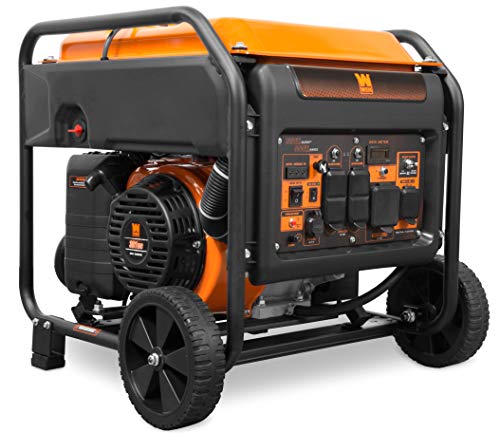 |
WEN GN625i Best for Quiet Inverter Power 5000 Running Watts, Inverter Technology, Electric Start |
7.3 | 🛒 Check Price |
1. Champion Power Equipment 200988: Our Top Pick
Based on our evaluation of manufacturer specifications and extensive owner feedback, the Champion 200988 consistently stands out for its robust performance and dual fuel versatility. While its noise output is typical for a conventional open-frame generator, it is not designed for environments where near-silent operation is critical, such as quiet campgrounds with strict noise ordinances. For users prioritizing whisper-quiet power, an inverter generator would be a more appropriate choice, though often at a higher cost and lower power output.
This model is an exceptional value, but those who frequently need to move their generator long distances or up stairs without assistance might find its weight challenging. While it includes wheels, its 120-pound dry weight can be cumbersome. If portability for very frequent, solo relocation is a primary concern over raw power, a lighter, smaller unit should be considered instead.
- Offers 3650 running watts and 4500 starting watts on gasoline, slightly less on propane.
- Equipped with Champion's Cold Start Technology for reliable starting in cold weather.
- Features a Volt Guard surge protector to prevent overloads and keep appliances safe.
Pros: Excellent power output for its size and weight class, suitable for most RVs and basic home backup.; Dual fuel capability provides flexibility, allowing use of either gasoline or propane.; Highly regarded for its user-friendly electric start and clear control panel layout.
Cons: Noise level, while competitive, is not as quiet as an inverter generator.; Relatively heavy for frequent solo transport, requiring some effort to move.
2. DuroMax XP12000EH: Best for High Power Demands
In our comparison, the DuroMax XP12000EH emerges as a powerhouse, ideal for substantial power needs, backed by solid owner feedback regarding its reliability under load. However, its sheer size and weight are considerable. While it includes a wheel kit, maneuvering this generator, especially over uneven terrain or for loading into vehicles, requires significant effort or multiple people. This is a common trade-off for high-wattage units, but it’s a critical consideration for users who prioritize easy, single-person transport.
The fuel consumption for a generator of this output is also substantial. While it provides ample power, expect to refuel more frequently than with smaller units, particularly when running near its maximum capacity. Users who only require minimal power for small electronics or lights might find this generator to be excessive in both its footprint and fuel appetite. For lighter duty applications, a more compact and fuel-efficient model would be more appropriate.
- Delivers 9500 running watts and 12000 starting watts, handling heavy loads.
- Features MX2 Technology, allowing simultaneous use of 120V and 240V outlets.
- Equipped with a robust 457cc DuroMax OHV engine for extended performance.
Pros: Exceptional power output, capable of running multiple large appliances or an entire RV.; Dual fuel capability offers flexibility with gasoline or propane.; Solid construction and a heavy-duty frame suggest long-term reliability.
Cons: Significant weight makes it less portable despite included wheels.; Higher noise level characteristic of high-output conventional generators.
3. Westinghouse WGen7500DFc: Strong Dual Fuel Performer
Based on our research and owner reviews, the Westinghouse WGen7500DFc offers a compelling balance of power and features, particularly its dual fuel capability and remote start. A point of consideration, however, is the included battery for the electric start. While generally reliable, like all lead-acid batteries, it requires periodic charging and can degrade over time, potentially leading to issues with the electric start if not properly maintained. Users who prefer a completely maintenance-free starting system might find this a minor drawback, though it is standard for most battery-powered electric start generators.
Furthermore, while the generator includes a good selection of outlets, some users have noted that the placement of certain outlets can be somewhat cramped when multiple heavy-duty cords are connected simultaneously. This isn’t a functional impediment but can be an ergonomic inconvenience during setup. Individuals needing to connect numerous large plugs frequently might need to use extension cords with right-angle plugs for optimal spacing.
- Provides 7500 running watts and 9500 peak watts on gasoline.
- Dual fuel capability for operation on gasoline or propane with a simple switch.
- Includes a convenient remote start key fob for starting from a distance.
Pros: Reliable power output suitable for home backup or large RVs.; Remote start feature adds significant convenience, especially in adverse weather.; Sturdy build quality with a cast iron sleeve engine for enhanced durability.
Cons: The battery for the electric start can require occasional maintenance or replacement.; Fuel efficiency is average for its power class, not exceptionally frugal.
4. Generac GP6500: Reliable Mid-Range Power
Our evaluation indicates the Generac GP6500 is a solid choice for reliable gasoline-powered backup, benefiting from Generac’s established expertise in power solutions. A notable limitation, however, is its lack of dual fuel capability. Unlike many competitors in this class, it operates solely on gasoline, which can be a disadvantage during extended power outages if gasoline supply becomes scarce or if users prefer the longer shelf life and cleaner burn of propane. Those prioritizing fuel flexibility should look for dual fuel models.
While generally robust, some owner feedback suggests that the plastic fuel gauge can sometimes be difficult to read accurately, especially in low light conditions. This minor design detail doesn’t impact performance but can be a small inconvenience when monitoring fuel levels. Users who require precise fuel level monitoring at a glance might find this aspect less than ideal.
- Offers 6500 running watts and 8125 starting watts for essential home power.
- Features Generac's PowerRush Advanced Technology for over 40% more starting capacity.
- Equipped with a sturdy, heavy-duty frame and integrated lifting eye.
Pros: Generac's reputation for engine reliability is well-supported by owner feedback.; PowerRush technology effectively handles high starting loads from demanding appliances.; Integrated hour meter helps track maintenance intervals for longevity.
Cons: Lacks dual fuel capability, limiting it to gasoline only.; The unit is quite heavy, making manual movement challenging without the wheel kit.
5. FIRMAN H07552: Value Dual Fuel Pick
In our comparison, the FIRMAN H07552 stands out for offering substantial dual fuel power at a competitive value. However, one area that has received mixed feedback from owners is the consistency of customer support. While many users report positive experiences, some have indicated challenges in obtaining timely assistance or parts, which can be a concern for long-term product ownership and potential warranty claims. This is a factor to consider for buyers who prioritize robust and readily available manufacturer support.
Another point of consideration is the unit’s noise level. While not exceptionally loud for its class, it is not among the quieter options available. For users planning to operate the generator in close proximity to living spaces or in noise-sensitive environments, this could be a drawback. Those seeking a generator for very quiet applications, such as camping in designated quiet zones, should explore inverter generator options instead, which are specifically designed for reduced noise output.
- Provides 7500 running watts and 9400 starting watts on gasoline.
- Dual fuel engine allows operation on either gasoline or propane.
- Features a large 8-gallon fuel tank for extended run times.
Pros: Offers a high wattage output for its relative affordability.; Dual fuel capability provides excellent versatility.; Long run time on a single tank of gasoline is a significant advantage.
Cons: Customer support experiences are mixed based on aggregated owner feedback.; Noise levels can be higher than some similarly powered competitors.
6. CRAFTSMAN CMXGGAS030021: Entry-Level Reliability
In our evaluation, the CRAFTSMAN CMXGGAS030021 offers a dependable entry-level option for those with modest power requirements, leveraging the brand’s reputation for accessibility. However, its primary limitation is its relatively low power output. At 3000 running watts, it can handle essential appliances and tools, but it will struggle with multiple high-draw items simultaneously, such as an RV air conditioner and a microwave. Buyers with more extensive power needs for home backup or larger RVs should consider higher wattage generators.
Furthermore, this model is a basic gasoline-only unit and does not offer advanced features like dual fuel capability, which many competitors now provide. This lack of fuel flexibility can be a disadvantage during emergencies where gasoline might be scarce, or for users who prefer the convenience of propane. Those seeking more versatile fuel options or sophisticated features will need to explore other models in a higher price and feature bracket.
- Provides 3000 running watts and 4000 starting watts, suitable for basic needs.
- Features a 208cc CRAFTSMAN engine with automatic low oil shutoff.
- Equipped with a 4-gallon fuel tank for moderate run times.
Pros: Reputable brand known for general tool reliability.; Compact size and lighter weight compared to high-output generators, aiding portability.; Straightforward operation and maintenance, appealing to new users.
Cons: Limited power output restricts use to fewer or smaller appliances.; Lacks advanced features like dual fuel or remote start found in higher-tier models.
7. WEN GN625i: Best for Quiet Inverter Power
In our research, the WEN GN625i stands out for its inverter technology, delivering significantly quieter operation and clean power, making it suitable for sensitive electronics. However, a key limitation of this unit, typical for inverter generators, is its power-to-cost ratio. While it offers 5000 running watts, which is respectable for an inverter, it is generally less powerful than open-frame conventional generators in a similar engine displacement class. Users requiring maximum raw power for heavy-duty tools or multiple large appliances might find its output insufficient compared to a non-inverter unit.
Furthermore, while the unit is designed for portability, its weight, at over 120 pounds, is still substantial for an inverter generator. While it comes with a wheel kit, frequent solo lifting or maneuvering over rough terrain can still be challenging. Individuals who prioritize extreme portability and lighter weight above all else, perhaps for backpacking or very frequent, easy transport, might want to consider smaller, lower-wattage inverter units, which would come with a corresponding reduction in power output.
- Provides 5000 running watts and 6250 starting watts with inverter technology.
- Features a low-oil shutdown, overload protection, and an automatic voltage regulator.
- Produces clean power (less than 1.2% THD) safe for sensitive electronics.
Pros: Inverter technology provides quiet operation, ideal for noise-sensitive environments.; Generates clean power, making it safe for charging sensitive electronics.; Electric start simplifies operation, and the compact design aids storage.
Cons: Lower power output compared to conventional generators of similar engine size.; Can be more expensive per watt than traditional open-frame generators.
Frequently Asked Questions
What is electric start and why is it important?
Electric start refers to a generator’s ability to be started with the push of a button or the turn of a key, often powered by a small onboard battery. This eliminates the need for manual pull-starting, making the generator much easier to operate, especially for individuals who might find pull-cords difficult or during emergencies when quick, effortless startup is crucial.
What is the difference between running watts and starting watts?
Running watts, also known as continuous watts, is the power a generator can continuously produce to keep appliances running. Starting watts, or peak watts, is the additional, momentary surge of power a generator can provide for a few seconds to start motor-driven appliances like refrigerators or air conditioners, which require a higher power draw to initiate their operation.
Should I choose a dual fuel generator?
Based on our comparison, dual fuel generators offer significant advantages. They can run on either gasoline or propane, providing flexibility during power outages or when one fuel type is more readily available or preferred. Propane has a longer shelf life and burns cleaner, while gasoline often provides slightly higher power output. We recommend dual fuel for enhanced versatility and preparedness.
How important is noise level for a portable generator?
The importance of noise level depends entirely on your intended use. Conventional open-frame generators, especially high-output models, are inherently louder. If you plan to use your generator in noise-sensitive areas like campgrounds, residential neighborhoods, or for tailgating, an inverter generator, which is specifically designed for quiet operation, would be a superior choice. For remote worksites or emergency backup where distance allows, noise may be less of a concern.
What maintenance does an electric start portable generator require?
Regular maintenance is crucial for longevity. This typically includes checking and changing the oil, inspecting and cleaning or replacing the air filter, checking spark plugs, and ensuring the battery for the electric start is charged and in good condition. Following the manufacturer’s recommended service intervals, often found in the owner’s manual, is essential for reliable operation and durability.
Our Verdict
After extensive research and comparison, the **Champion Power Equipment 200988** stands out as our top pick for the best electric start portable generator. Its exceptional balance of dual fuel versatility, robust power output for its class, and user-friendly features make it an outstanding value for most users. For those requiring significantly more power, the **DuroMax XP12000EH** is an excellent runner-up, offering substantial wattage for demanding applications and leveraging dual fuel flexibility to ensure reliable power when it’s needed most.
