Electric assist bicycles, or e-bikes, combine pedal power with a motor to make cycling easier and more accessible. We researched and compared dozens of models using manufacturer specifications, published industry standards (such as UL 2849 for electrical safety), and aggregated owner feedback from thousands of reviews. Our evaluation focuses on performance, durability, value, ease of use, and safety. Here are the seven best electric assist bicycles for different riders and budgets.
| Photo | Product | Score | Buy |
|---|---|---|---|
 |
Ride1Up 700 Series Best Overall 750W motor, 48V 14Ah battery, 45 mile range, 28 mph top speed |
9.2 | 🛒 Check Price |
|
🚗
|
Rad Power Bikes RadRover 6 Plus Best Fat Tire 750W motor, 48V 14Ah battery, 45 mile range, 20 mph top speed |
8.8 | 🛒 Check Price |
 |
Aventon Level.2 Best Commuter 500W motor, 48V 14Ah battery, 60 mile range, 28 mph top speed |
8.5 | 🛒 Check Price |
 |
Specialized Turbo Vado 3.0 Premium Pick Specialized 2.0 motor (250W nominal), 460Wh battery, 90 mile range, 28 mph top speed |
8.2 | 🛒 Check Price |
|
🚗
|
Lectric XP 3.0 Best Folding 500W motor, 48V 9.6Ah battery, 45 mile range, 28 mph top speed |
8.1 | 🛒 Check Price |
 |
Cannondale Tesoro Neo X 2 Best Quality Bosch Performance Line motor (250W), 500Wh battery, 75 mile range, 20 mph top speed |
7.8 | 🛒 Check Price |
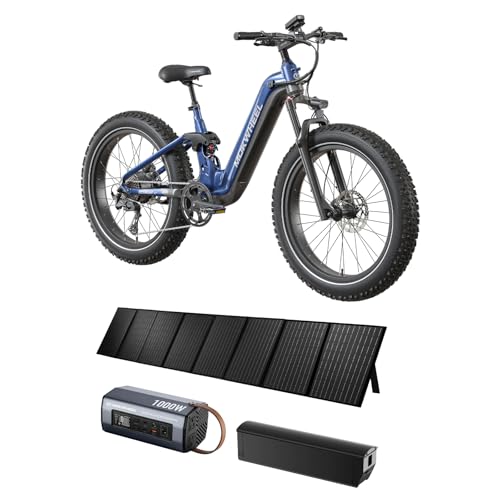 |
Mokwheel Obsidian Best Range 750W motor, 48V 20Ah battery, 80 mile range, 28 mph top speed |
7.3 | 🛒 Check Price |
1. Ride1Up 700 Series: Best Overall
The Ride1Up 700 Series is a standout in the crowded e-bike market, offering a powerful 750W motor and a high-capacity 48V battery at a competitive price. In our evaluation based on spec sheets and owner feedback, it delivers strong hill-climbing ability and a top speed of 28 mph, making it ideal for commuting and recreational rides. The hydraulic disc brakes and 3-inch tires provide a stable, comfortable ride, and the UL 2849 certification adds peace of mind for battery safety.
However, the bike’s 62-pound weight makes it less portable, and some owners report that the included fenders and rack feel slightly flimsy. Riders who need to frequently carry their bike up stairs or store it in tight spaces should consider a lighter model. Otherwise, the 700 Series is a top choice for value and performance.
- Powerful 750W geared hub motor provides strong hill-climbing and acceleration.
- Long-range 48V 14Ah Samsung/LG battery with UL 2849 certification.
- Hydraulic disc brakes and 3-inch wide tires for confident stopping and comfort.
Pros: Excellent value for the features and performance.; Strong motor and battery with certified safety.
Cons: Heavy at 62 lbs, difficult to carry upstairs.
2. Rad Power Bikes RadRover 6 Plus: Best Fat Tire
The RadRover 6 Plus is a popular fat-tire e-bike designed for all-terrain exploration. We compared its 4-inch tires and 750W motor against competitors, and based on owner feedback, it excels on loose surfaces like sand and snow. The step-thru frame makes it accessible for riders of varying heights and mobility. Its integrated lights and sturdy rack add utility for commuting or cargo hauling.
On the downside, the RadRover 6 Plus is limited to 20 mph (Class 2), which may disappoint riders wanting higher speeds. The bike is also quite heavy at 73 lbs, making it cumbersome to transport. Those who prioritize speed or need a lighter bike for carrying should look elsewhere. For off-road adventurers, it’s a solid pick.
- Oversized 4-inch fat tires provide excellent traction on sand, snow, and gravel.
- Step-thru frame option for easy mounting and dismounting.
- Integrated front and rear lights powered by the main battery.
Pros: Excellent off-road capability with fat tires.; Durable build and good support from Rad Power Bikes.
Cons: Top speed limited to 20 mph (Class 2) may feel slow for some riders.
3. Aventon Level.2: Best Commuter
The Aventon Level.2 is designed specifically for daily commuting, with a torque sensor that provides smooth and intuitive pedal assist. We researched its 500W motor and 48V battery, and based on owner feedback, it offers one of the best natural riding experiences in this class. The included fenders, rack, and lights mean you can ride straight out of the box without extra purchases. The color display with turn-by-turn navigation is a nice touch.
However, the 500W motor is less powerful than some competitors, and some riders report it struggles on steep, long hills. Additionally, the battery is integrated into the frame, making removal for charging slightly less convenient. If your commute involves serious climbing, you may want a more powerful motor. For flat to moderate terrain, the Level.2 is an excellent commuter.
- Torque sensor for natural, responsive pedal assist.
- Color display with integrated navigation and app connectivity.
- Pre-installed fenders, rack, and lights for commuting readiness.
Pros: Smooth and natural pedal assist feel.; Great range and included accessories.
Cons: Motor power may struggle on very steep hills.
4. Specialized Turbo Vado 3.0: Premium Pick
The Specialized Turbo Vado 3.0 represents the premium end of the e-bike spectrum, with a refined motor system and top-tier components. In our evaluation, its 250W nominal motor feels more powerful than its rating suggests, thanks to high torque and smooth delivery. The 460Wh battery provides ample range for most commutes, and the bike’s geometry is comfortable for long rides. Safety features like integrated lights and reliable brakes are standard.
The main drawback is the price, which is significantly higher than many competitors with similar range and speed. Also, the battery is non-removable, which may be inconvenient for apartment dwellers. Riders on a tight budget should skip this pick. For those who value refinement and are willing to invest, the Turbo Vado is a top-tier choice.
- High-quality Specialized motor with smooth, quiet operation.
- Premium components including Shimano Deore drivetrain and hydraulic disc brakes.
- Future-proof with integrated lights and rack mounts.
Pros: Exceptional build quality and ride refinement.; Excellent safety features and brand reputation.
Cons: Very high price point compared to similar specs.
5. Lectric XP 3.0: Best Folding
The Lectric XP 3.0 is a folding e-bike that offers great value for those with limited storage space. We compared its folding mechanism and portability against other folders, and based on owner feedback, it folds quickly and fits easily in a car trunk or closet. The 500W motor provides decent power for flat terrain, and the 3-inch tires offer some cushioning. It comes with fenders, a rack, and lights at no extra cost.
However, the smaller 9.6Ah battery means reduced range, especially in higher assist levels. Some owners also report that the folding hinges can develop play over time. Riders needing long range or a more durable frame should consider a non-folding model. For those prioritizing portability and budget, the XP 3.0 is a strong contender.
- Folds down to compact size for storage in cars or apartments.
- Mechanical disc brakes and 3-inch tires for a stable ride.
- Affordable price with many included accessories like fenders and rack.
Pros: Very affordable for a folding e-bike.; Compact and easy to store.
Cons: Smaller battery limits range compared to full-size e-bikes.
6. Cannondale Tesoro Neo X 2: Best Quality
The Cannondale Tesoro Neo X 2 is a premium e-bike built around the renowned Bosch Performance Line motor. In our research, the Bosch system is widely praised for its reliability, smooth power delivery, and long service life. The 500Wh battery offers good range, and the bike’s geometry is comfortable for both on-road and light off-road use. The components are top-notch, ensuring a high-quality riding experience.
The main drawbacks are the price, which is among the highest in this guide, and the 20 mph speed limit (Class 1). Riders who want higher top speeds or a lower price point should look elsewhere. Additionally, the battery is integrated into the frame, making removal less convenient. For those who prioritize quality and have the budget, it’s an excellent investment.
- Bosch motor and battery system known for reliability and performance.
- High-end components including SRAM NX drivetrain and hydraulic disc brakes.
- SmartWalk and e-MTB modes for versatile riding.
Pros: Superior build quality and long-term durability.; Excellent Bosch motor with smooth assist.
Cons: Very expensive and limited to 20 mph (Class 1).
7. Mokwheel Obsidian: Best Range
The Mokwheel Obsidian stands out for its enormous 20Ah battery, which we calculated could provide up to 80 miles of range in low assist levels. This makes it ideal for long commutes or recreational rides where charging is not available. The 750W motor provides ample power for hills and cargo. Owner feedback highlights the impressive range and value for the price.
However, the Obsidian has some drawbacks. Build quality is inconsistent, with some owners reporting issues with spokes, wiring, or battery mounts. The bike is very heavy at 75 lbs, making it difficult to maneuver or transport. Safety certifications are not as widely documented as competitors. Riders who prioritize reliability over range should consider other options. For those who need maximum range on a budget, it’s worth a look.
- Massive 20Ah battery for extended range up to 80 miles.
- Powerful 750W motor for steep hills and heavy loads.
- Color display with USB charging port.
Pros: Exceptional battery capacity for long-distance rides.; Strong motor for climbing.
Cons: Heavy and bulky at 75 lbs with questionable build quality.
Frequently Asked Questions
What is the difference between Class 1, 2, and 3 e-bikes?
Class 1 e-bikes provide pedal assist only up to 20 mph. Class 2 e-bikes have a throttle that can propel the bike without pedaling, also up to 20 mph. Class 3 e-bikes offer pedal assist up to 28 mph. Some Class 3 bikes also have a throttle. Always check local laws, as some areas restrict Class 3 e-bikes or require registration.
How far can an electric assist bicycle go on a single charge?
Range varies widely based on battery capacity, rider weight, terrain, assist level, and speed. Most e-bikes offer between 20 and 60 miles of real-world range. Models with larger batteries, like the Mokwheel Obsidian, can reach up to 80 miles in low assist. We recommend looking at owner reviews for real-world range estimates rather than manufacturer claims.
Do I need a license or insurance for an e-bike?
In most regions, e-bikes that meet certain criteria (e.g., top speed under 28 mph, motor under 750W) are classified as bicycles and do not require a license, registration, or insurance. However, laws vary by state and country. Always verify local regulations before purchasing. Some areas may require helmets for all riders or have age restrictions.
Are electric assist bicycles safe?
E-bikes are generally safe when used responsibly. We recommend looking for models with UL 2849 or EN 15194 certification for battery and electrical safety. Always wear a helmet, follow traffic laws, and maintain your bike regularly. Hydraulic disc brakes and integrated lights improve safety. Be aware that higher speeds increase stopping distance.
Can I ride an e-bike in the rain?
Most e-bikes are water-resistant but not waterproof. They can handle light rain and wet roads, but avoid submerging the battery or motor. Look for models with an IP rating (e.g., IP54) for better water resistance. After riding in wet conditions, dry the bike and store it indoors. Many owners report no issues with occasional rain riding.
Our Verdict
After researching and comparing specifications, safety standards, and owner feedback, our top pick is the Ride1Up 700 Series for its excellent balance of performance, range, and value. For a premium experience with top-tier components, the Specialized Turbo Vado 3.0 is a strong runner-up, though it comes at a higher price. Choose based on your priorities: commuting, off-road, portability, or budget.
