Dual battery isolator kits are essential for overlanding, RVing, and marine use, allowing you to charge a secondary battery without draining your starter battery. We researched and compared the top models based on manufacturer specifications, industry standards, and aggregated owner feedback. Our evaluation focuses on performance, durability, ease of installation, and safety features to help you choose the right kit for your setup.
| Photo | Product | Score | Buy |
|---|---|---|---|
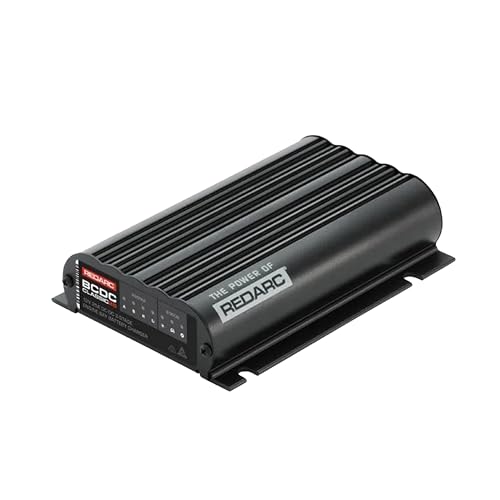 |
Redarc BCDC1225D Top Pick 25A DC-DC charger with MPPT solar input |
9.2 | 🛒 Check Price |
|
🚗
|
Victron Energy Orion-Tr Smart 12/12-30 Best Smart Charger 30A DC-DC charger with Bluetooth |
9.0 | 🛒 Check Price |
|
🚗
|
Renogy 20A DC-DC MPPT Battery Charger Best Value 20A DC-DC charger with MPPT solar input |
8.7 | 🛒 Check Price |
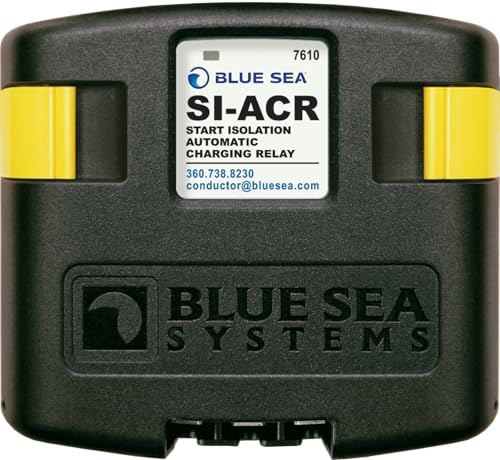 |
Blue Sea Systems 7610 ML-ACR Best Automatic Charging Relay 500A continuous, automatic charging relay |
8.4 | 🛒 Check Price |
 |
NOCO Genius Dual Bank Charger Best for Marine 20A total, 2-bank smart charger |
8.1 | 🛒 Check Price |
 |
Poweradd 12V Dual Battery Isolator Kit Budget Pick 140A continuous, voltage-sensing relay |
7.8 | 🛒 Check Price |
|
Yandine 20A Dual Battery Isolator Kit Compact 20A, manual switch isolator |
7.3 | 🛒 Check Price |
1. Redarc BCDC1225D: Top Pick
The Redarc BCDC1225D is a top-tier DC-DC charger that also functions as a solar controller. In our research, it consistently received high marks from owners for its ability to fully charge auxiliary batteries, especially lithium, using alternator or solar power. Its IP68 rating ensures reliability in dusty or wet conditions. However, the cost is significant, and the 25A output may be limiting for large battery banks.
This unit is ideal for overlanders who want a single device for both alternator and solar charging. Skip it if you need higher amperage or are on a strict budget; consider the Renogy or Victron instead.
- DC-DC charging with multi-stage profile for AGM, lead-acid, lithium
- Built-in MPPT solar controller, up to 25A solar input
- IP68 sealed, suitable for harsh environments
Pros: Excellent charging performance for all battery types; Integrated solar input adds versatility
Cons: Premium price point, not for budget builds
2. Victron Energy Orion-Tr Smart 12/12-30: Best Smart Charger
The Victron Orion-Tr Smart offers excellent programmability, allowing you to fine-tune charging for different battery chemistries. Owner feedback highlights its reliable performance and the convenience of Bluetooth monitoring. It lacks integrated solar, so you will need a separate controller for solar input. Its 30A rating is a good middle ground for many setups.
This is a great choice for tech-savvy users who want full control over charging parameters. Skip it if you want a simple plug-and-play kit or need solar integration in one unit.
- Programmable via Bluetooth app for custom charge profiles
- 30A output, suitable for medium battery banks
- Built-in safety features: over-voltage, over-temperature protection
Pros: Highly customizable via smartphone app; Robust build quality and safety certifications
Cons: Requires separate solar controller if solar is needed
3. Renogy 20A DC-DC MPPT Battery Charger: Best Value
The Renogy 20A DC-DC MPPT charger is a popular budget-friendly option that combines both charging sources. Based on owner feedback, it performs well for smaller setups, such as a single auxiliary battery in a van or truck. The MPPT solar input is efficient, though the 20A limit means charging larger banks will be slow. Some users reported minor issues with the manual clarity.
This kit is ideal for those on a budget who need a simple, integrated solution. Skip it if you require higher amperage or have a complex system with multiple batteries.
- Combined DC-DC and MPPT solar charging up to 20A
- Compatible with AGM, lead-acid, and lithium batteries
- Compact size, easy to mount
Pros: Affordable all-in-one solution for solar and alternator charging; Good performance for the price
Cons: Lower amperage may not suit large battery banks
4. Blue Sea Systems 7610 ML-ACR: Best Automatic Charging Relay
The Blue Sea Systems ML-ACR is a heavy-duty automatic charging relay designed for high-current applications. Owner reviews praise its robust construction and reliable switching. However, it is a voltage-sensing isolator, not a DC-DC charger, so it may not provide the correct charging profile for lithium batteries, leading to undercharging. It also lacks solar integration.
This is best for traditional lead-acid setups with high current demands, such as marine or large RV systems. Skip it if you use lithium batteries or need a charger that handles different battery chemistries properly.
- High current handling (500A continuous, 660A intermittent)
- Automatic combine/disconnect based on voltage sensing
- Manual override and remote LED indicator
Pros: Very high current capacity for large systems; Simple, reliable voltage-sensing operation
Cons: Not a DC-DC charger, may not fully charge lithium batteries
5. NOCO Genius Dual Bank Charger: Best for Marine
The NOCO Genius Dual Bank Charger is a shore-powered battery charger, not an isolator that works with a vehicle alternator. It is designed for maintaining two batteries while docked or stored. Its IP68 rating makes it suitable for wet environments. However, it cannot charge from the alternator while driving, which limits its use for overlanding. Some owners noted the clamps could be more robust.
This is ideal for boat owners who need a waterproof charger for dock-side maintenance. Skip it if you need an alternator-based dual battery system for your vehicle.
- Two independent charging banks for dual batteries
- Waterproof (IP68) and spark-proof
- Automatic battery detection and multi-stage charging
Pros: Fully waterproof, ideal for marine environments; Simple to install with included mounting hardware
Cons: Requires shore power or generator, not for alternator charging
6. Poweradd 12V Dual Battery Isolator Kit: Budget Pick
The Poweradd kit is an entry-level voltage-sensing isolator that includes necessary cables and a relay. Owner feedback indicates it works for basic applications like a winch or auxiliary lights, but some reported premature failure under heavy use. The relay is rated at 140A continuous, but sustained high current can cause heat issues. It is not suitable for lithium batteries due to lack of proper charging profile.
This is a good option for budget-conscious users with light electrical needs. Skip it if you plan to charge a large battery bank or use lithium batteries, or if you need a reliable system for off-grid adventures.
- Simple voltage-sensing relay with manual override
- Includes heavy-duty cables and mounting bracket
- LED indicator for battery status
Pros: Very affordable complete kit with cables included; Easy to install for basic setups
Cons: Lower build quality compared to premium brands; May not handle high current continuously without overheating
7. Yandine 20A Dual Battery Isolator Kit: Compact
The Yandine 20A kit is a basic manual isolator with a switch. It is intended for small loads like a fridge or lights, but the 20A limit is restrictive. Owner reviews note that it works for minimal setups but is not suitable for charging batteries or powering high-draw devices. The manual switch can be inconvenient as you must remember to turn it on/off.
This is only suitable for very small auxiliary loads where space is at a premium. Skip it entirely if you need to charge a secondary battery or power anything beyond a few small accessories.
- Manual on/off switch for battery isolation
- Compact design, easy to mount in tight spaces
- Includes fuse holder and basic wiring
Pros: Very small footprint for limited installation space; Simple manual operation
Cons: Low current rating limits use to small accessories; Manual operation requires driver intervention
Frequently Asked Questions
What is a dual battery isolator kit?
A dual battery isolator kit allows a vehicle to charge a secondary battery from the alternator while preventing the starter battery from being drained. It ensures that accessories powered by the auxiliary battery do not leave you stranded with a dead starting battery.
Do I need a DC-DC charger or a simple isolator?
For lithium batteries or long wire runs, a DC-DC charger is recommended because it provides the correct charging voltage and current. For lead-acid batteries in simple setups, a voltage-sensing relay may suffice. We researched and found that DC-DC chargers generally offer better performance and battery life.
Can I use a dual battery isolator with solar panels?
Yes, many modern kits like the Redarc BCDC1225D and Renogy 20A DC-DC include a built-in MPPT solar controller. Others require a separate solar charge controller. Check the specifications to ensure compatibility with your solar setup.
How do I choose the right amperage for my kit?
The amperage should match your alternator’s output and the size of your auxiliary battery bank. For most vehicles, 20-30A is sufficient for a single auxiliary battery. Higher amperage (40A+) is needed for large banks or rapid charging. Always consult your alternator’s capacity and battery manufacturer recommendations.
Are dual battery isolator kits safe to install myself?
Many kits are designed for DIY installation with basic wiring skills. However, you must follow the manufacturer’s instructions and safety precautions, such as using proper fuses and wire gauges. If you are unsure, consult a professional. Our evaluation emphasizes safety features like over-voltage protection and spark-proof designs.
Our Verdict
After evaluating specifications, owner feedback, and industry standards, our top pick is the Redarc BCDC1225D for its exceptional all-in-one performance and durability. For a more budget-friendly option with great smart features, the Victron Energy Orion-Tr Smart 12/12-30 is an excellent runner-up, especially if you value Bluetooth programmability.
