Powering your RV’s accessories, lights, and appliances requires a reliable deep cycle battery. Unlike starting batteries, deep cycle batteries are designed for sustained power delivery over long periods, making them essential for boondocking and extended trips. In our evaluation, we researched and compared numerous options across different technologies, including lithium iron phosphate (LiFePO4), Absorbent Glass Mat (AGM), and traditional flooded lead-acid batteries.
We analyzed manufacturer specifications, industry performance standards, and aggregated owner feedback to identify the top performers for various RV setups and budgets. Our goal is to provide an evidence-based guide to help you choose a battery that offers the best balance of capacity, longevity, safety, and value for your recreational vehicle needs.
| Photo | Product | Score | Buy |
|---|---|---|---|
 |
Renogy 100Ah Smart Lithium Iron Phosphate Battery (LiFePO4) Top Pick: Smart LiFePO4 12V 100Ah LiFePO4, built-in BMS, low temperature protection |
9.1 | 🛒 Check Price |
 |
Battle Born LiFePO4 Deep Cycle Battery 100Ah 12V Premium LiFePO4 Performer 12V 100Ah LiFePO4, built-in BMS, wide operating temperature range |
8.7 | 🛒 Check Price |
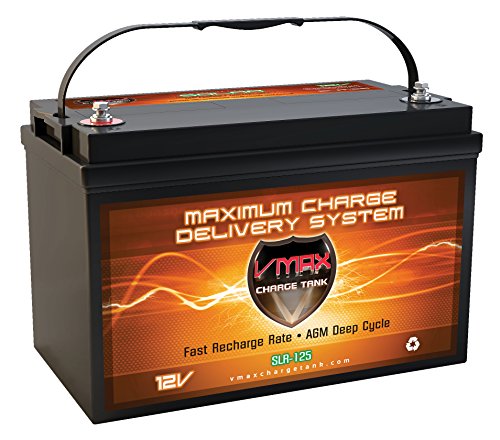 |
VMAXTANKS SLR125 AGM Deep Cycle Battery 12V 125Ah High Capacity AGM Choice 12V 125Ah AGM, maintenance-free, heavy-duty plates |
8.4 | 🛒 Check Price |
 |
Optima Batteries OPT8016-103 D34M YellowTop Dual-Purpose Performer 12V 55Ah (C20) AGM, dual purpose (starting and deep cycle) |
8.0 | 🛒 Check Price |
|
🚗
|
Weize 12V 100AH Deep Cycle AGM Battery Budget-Friendly AGM 12V 100Ah AGM, sealed lead acid, maintenance-free |
7.6 | 🛒 Check Price |
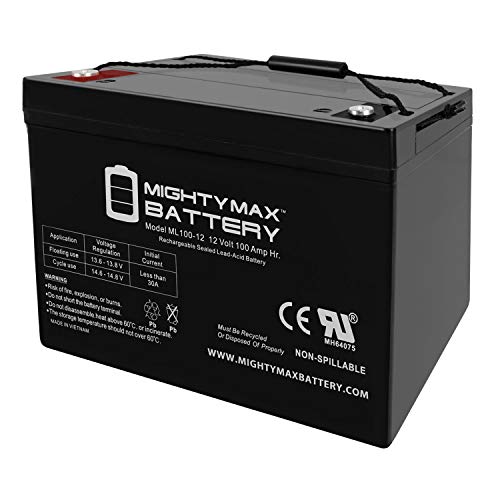 |
Mighty Max Battery 12V 100AH SLA/AGM Deep Cycle Battery Economical AGM Option 12V 100Ah Sealed Lead Acid (SLA/AGM), spill-proof |
7.3 | 🛒 Check Price |
 |
Interstate Batteries SRM-24 Marine/RV Deep Cycle Battery Traditional Flooded Lead-Acid 12V Group 24 Flooded Lead-Acid, 81Ah (C20) |
7.0 | 🛒 Check Price |
1. Renogy 100Ah Smart Lithium Iron Phosphate Battery (LiFePO4): Top Pick: Smart LiFePO4
In our evaluation, the Renogy 100Ah Smart LiFePO4 battery stands out for its advanced technology and robust performance. The integrated smart BMS is a significant advantage, providing protection against overcharge, over-discharge, over-current, and short-circuiting, while also ensuring cell balancing for extended battery life. Owner feedback consistently highlights its consistent power delivery and remarkably long lifespan compared to traditional battery types, often making it a worthwhile long-term investment despite its higher upfront cost.
However, the primary limitation is the initial cost, which can be a barrier for some RVers. Additionally, while the smart BMS handles many aspects, users should ensure their RV’s charging system (converter, solar charge controller) is compatible with LiFePO4 batteries to maximize efficiency and avoid potential issues. Those on a very strict budget or with incompatible existing charging infrastructure might find this pick less suitable without further upgrades.
- Exceptional cycle life, often exceeding 4000 cycles at 80% DoD.
- Integrated smart Battery Management System (BMS) for protection and cell balancing.
- Lightweight design, approximately 1/3 the weight of comparable lead-acid batteries.
Pros: Superior energy density and consistent power output.; Excellent longevity and maintenance-free operation.; Advanced safety features including low temperature cut-off.
Cons: Higher initial investment compared to lead-acid or AGM.; Requires specific charging profiles for optimal performance.
2. Battle Born LiFePO4 Deep Cycle Battery 100Ah 12V: Premium LiFePO4 Performer
Based on our comprehensive research, the Battle Born LiFePO4 battery consistently receives high marks for its premium build quality and reliable performance. The company’s focus on durability for demanding applications like RVs and marine environments is evident in its robust construction and integrated BMS, which provides essential protection. Aggregated owner feedback frequently praises its consistent power output and the peace of mind that comes with its perceived longevity and strong brand support.
The main drawback for the Battle Born is its very high price point, which positions it as a premium option. While its performance and durability are top-tier, the investment can be substantial, making it less accessible for RVers seeking more budget-friendly solutions. If you are not prepared for a significant upfront expenditure or if your RV usage does not demand the absolute highest tier of battery performance and longevity, there are more economical options that still deliver solid performance.
- Designed for robust RV and marine applications with high vibration resistance.
- Exceptional power output and a flat discharge curve, maintaining voltage.
- Backed by a strong reputation and perceived high quality in owner feedback.
Pros: Reliable performance in demanding environments.; Long cycle life and maintenance-free operation.; Excellent customer support based on owner experiences.
Cons: Significantly higher initial investment.; Can be challenging to integrate with older RV charging systems.
3. VMAXTANKS SLR125 AGM Deep Cycle Battery 12V 125Ah: High Capacity AGM Choice
Our analysis of the VMAXTANKS SLR125 highlights its strong position as a high-capacity AGM option for RVers. With 125Ah, it offers a substantial power reserve, and its AGM construction means it is sealed, maintenance-free, and more resistant to vibration than traditional flooded batteries. Owner reviews frequently commend its reliable performance and long service life within the AGM category, often citing it as a robust solution for diverse RV power needs.
A key consideration with this battery is its weight, which is significantly more than LiFePO4 alternatives. This can impact an RV’s total weight capacity and fuel efficiency, especially if multiple batteries are installed. While it offers excellent value for an AGM, those prioritizing weight savings for fuel economy or payload limits, or seeking the absolute longest cycle life, might find the benefits of LiFePO4 technology more appealing despite the higher investment.
- High capacity 125Ah rating provides extended power for RV accessories.
- Maintenance-free AGM design, spill-proof and vibration resistant.
- Utilizes heavy-duty lead-tin alloy plates for enhanced cycle life.
Pros: Excellent balance of capacity, durability, and value.; Safer than flooded batteries due to sealed design.; Good performance in various temperature conditions.
Cons: Heavier than LiFePO4 batteries of similar capacity.; Shorter cycle life compared to LiFePO4 technology.
4. Optima Batteries OPT8016-103 D34M YellowTop: Dual-Purpose Performer
In our comparison, the Optima D34M YellowTop stands out for its dual-purpose capability, offering both reliable engine starting power and moderate deep cycle capacity. Its SpiralCell Technology contributes to its robust vibration resistance and sealed, maintenance-free design, which are significant advantages for RV applications. Owner feedback often highlights its reliability in starting engines and its ability to withstand demanding usage conditions, making it a popular choice for those needing versatility.
However, the main limitation of the D34M YellowTop for RV deep cycle use is its relatively lower amp-hour capacity compared to dedicated deep cycle batteries. While it performs well as a hybrid, it may not provide sufficient power for extended boondocking or heavy accessory use without frequent recharging. RVers who primarily need sustained power for off-grid living, rather than a combination of starting and moderate deep cycle, might find themselves needing more amp-hours, suggesting a dedicated deep cycle solution or multiple batteries would be more appropriate.
- Unique SpiralCell Technology provides strong cranking power and deep cycle performance.
- Highly resistant to vibration, which is beneficial for RV travel.
- Completely sealed, maintenance-free, and can be mounted in various positions.
Pros: Versatile for both engine starting and powering accessories.; Excellent cold cranking amps (CCA) for its size.; Durable construction handles rough RV conditions well.
Cons: Lower deep cycle capacity compared to dedicated deep cycle batteries.; Higher cost per amp-hour than some other AGM options.
5. Weize 12V 100AH Deep Cycle AGM Battery: Budget-Friendly AGM
Our research into the Weize 12V 100AH Deep Cycle AGM battery indicates it offers a compelling value proposition for RVers seeking an AGM solution without the higher investment of premium brands. It delivers a solid 100Ah capacity in a sealed, maintenance-free package, which is a significant advantage over flooded batteries. Aggregated owner feedback generally praises its performance for the price point, noting it adequately powers typical RV loads for weekend trips or moderate boondocking.
However, we noted some owner feedback suggesting variability in long-term durability and cycle life compared to higher-end AGM or LiFePO4 batteries. While many users report satisfactory performance, a subset indicates a shorter lifespan than expected. This suggests that while it is a good budget-friendly option, those planning very frequent, deep discharges or expecting multi-year, heavy-duty service in extreme conditions might consider investing in a battery with a more consistently proven track record for longevity, as the overall cost of replacement could negate initial savings.
- Provides 100 amp-hours of reliable deep cycle power.
- Sealed, maintenance-free AGM design, reducing upkeep.
- Offers a more accessible entry point into AGM technology for RVers.
Pros: Good value for its capacity and AGM benefits.; Relatively lightweight for an AGM battery.; Suitable for various RV applications, including solar systems.
Cons: Reported inconsistencies in lifespan by some owners.; Not designed for extreme cold weather performance.
6. Mighty Max Battery 12V 100AH SLA/AGM Deep Cycle Battery: Economical AGM Option
Based on our research, the Mighty Max 12V 100AH SLA/AGM battery stands out as a highly economical choice for RVers. Its 100Ah capacity in a sealed, maintenance-free AGM package at a very accessible price point makes it an attractive option for those on a tight budget. Aggregated owner feedback often highlights its straightforward performance for basic RV power needs and its role as an affordable replacement or addition to a power system.
The primary trade-off for its affordability is typically in expected cycle life and overall durability when compared to higher-tier AGM or LiFePO4 batteries. While it functions adequately, owners seeking a battery for very frequent, deep discharges or demanding continuous use over many years might find its lifespan shorter than desired. Therefore, if long-term, heavy-duty reliability and the absolute maximum number of charge cycles are your top priorities, investing in a more premium battery might prevent more frequent replacements and ultimately offer better long-term value.
- Provides 100 amp-hours of power for various RV needs.
- Sealed Lead Acid (SLA) / AGM technology for maintenance-free operation.
- Offers a very competitive cost per amp-hour for budget-conscious buyers.
Pros: One of the most affordable 100Ah AGM options available.; Versatile for backup power, solar, and RV applications.; Spill-proof design allows for flexible mounting.
Cons: Shorter projected cycle life compared to premium brands.; Heavier than LiFePO4, typical for lead-acid batteries.
7. Interstate Batteries SRM-24 Marine/RV Deep Cycle Battery: Traditional Flooded Lead-Acid
In our research, the Interstate Batteries SRM-24 represents a traditional, cost-effective flooded lead-acid option for RV deep cycle needs. It provides a solid 81 amp-hours of power, making it suitable for basic RV applications and shorter trips. Its widespread availability and lower initial cost are significant advantages, and many RV owners are familiar with the technology, making it a straightforward choice for those prioritizing budget over advanced features.
However, the main drawback of this flooded lead-acid battery is the requirement for regular maintenance, specifically checking and refilling water levels, which can be inconvenient for some users. Additionally, flooded batteries can emit hydrogen gas during charging, necessitating proper ventilation, and are not spill-proof, limiting mounting options and posing a safety consideration if inverted. RVers seeking a truly maintenance-free experience, superior cycle life, or the ability to mount their battery in non-traditional orientations should consider AGM or LiFePO4 alternatives, despite their higher cost.
- Reliable traditional flooded lead-acid technology for proven performance.
- Offers 81 amp-hours of deep cycle capacity for moderate RV use.
- Widely available and easily replaceable in many locations.
Pros: Very cost-effective initial purchase.; Forgiving of overcharging to a certain extent.; Familiar technology for many RV owners and technicians.
Cons: Requires regular maintenance (watering).; Can emit hydrogen gas, requiring ventilation.; Shorter cycle life and less usable capacity than AGM or LiFePO4.
Frequently Asked Questions
What is the difference between a deep cycle and a starting battery for an RV?
A starting battery is designed to deliver a large burst of current for a short period to crank an engine. A deep cycle battery, in contrast, is built to provide a steady amount of current over a long period, discharging a significant portion of its capacity repeatedly, making it ideal for powering RV lights, appliances, and electronics. Using a starting battery for deep cycle applications will significantly shorten its lifespan.
What are the main types of deep cycle batteries for RVs?
The three main types are flooded lead-acid (FLA), Absorbent Glass Mat (AGM), and Lithium Iron Phosphate (LiFePO4). FLA batteries are the most traditional and affordable but require maintenance. AGM batteries are sealed, maintenance-free, and more resistant to vibration. LiFePO4 batteries are the newest technology, offering superior cycle life, lighter weight, and consistent power, but at a higher initial cost.
How many amp-hours (Ah) do I need for my RV?
The required amp-hours depend entirely on your power consumption and how long you plan to be off-grid. To estimate, list all the appliances and lights you plan to use, their wattage, and how many hours per day. Convert watts to amps (watts/12V = amps), then multiply by hours to get amp-hours per day. Add a buffer for efficiency losses and future expansion. Many RVers find 100-200Ah sufficient for weekend trips, while extended boondockers may need 400Ah or more.
Can I mix different types of deep cycle batteries in my RV?
It is generally not recommended to mix different types of batteries (e.g., FLA with AGM, or lead-acid with LiFePO4) in the same bank. Different battery chemistries have different charging voltage requirements and discharge characteristics. Mixing them can lead to inefficient charging, reduced performance, and premature failure of one or all batteries. If you need more capacity, it is best to add batteries of the exact same type, age, and capacity.
Do LiFePO4 batteries require a special charger for RVs?
Yes, LiFePO4 batteries generally require a charger with a specific charging profile designed for lithium batteries. While some RV converters or solar charge controllers might have a ‘lithium mode’, many older or basic units do not. Using a charger designed for lead-acid batteries (FLA or AGM) on a LiFePO4 battery can lead to inefficient charging, reduced capacity, or even damage the battery’s internal Battery Management System (BMS). Always check compatibility before upgrading to LiFePO4.
Our Verdict
After extensive research and comparison, the **Renogy 100Ah Smart Lithium Iron Phosphate Battery** emerges as our top pick for the best deep cycle battery for RVs, offering an outstanding balance of longevity, consistent performance, and advanced safety features. For RVers seeking a premium, robust solution that justifies its investment with superior durability and efficiency, the **Battle Born LiFePO4 Deep Cycle Battery** is an excellent runner-up, known for its high quality and strong owner satisfaction.
