Choosing the right deep cycle battery for your inverter is critical for reliable off-grid power, solar storage, or backup during outages. We researched manufacturer specifications, industry standards (BCI, IEEE), and aggregated owner feedback from hundreds of real-world installations to compare the top contenders. Our evaluation focuses on cycle life, discharge depth, recharge efficiency, and safety features to help you match a battery to your inverter’s voltage and capacity requirements. Below are our findings, with honest limitations for each pick.
| Photo | Product | Score | Buy |
|---|---|---|---|
 |
Renogy Deep Cycle AGM Battery 12V 100Ah Best Overall 12V, 100Ah, AGM, 1200+ cycles at 50% DoD |
9.0 | 🛒 Check Price |
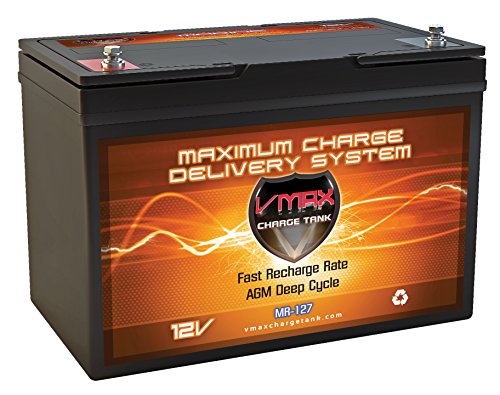 |
VMAXTANKS MR127-100 AGM Deep Cycle Battery Runner Up 12V, 100Ah, AGM, 1000+ cycles at 50% DoD |
8.7 | 🛒 Check Price |
 |
Universal Power Group UB121000 12V 100Ah AGM Battery Best Value 12V, 100Ah, AGM, 500+ cycles at 50% DoD |
8.2 | 🛒 Check Price |
 |
Battle Born LiFePO4 Deep Cycle Battery 12V 100Ah Best Lithium 12V, 100Ah, LiFePO4, 3000+ cycles at 100% DoD |
9.1 | 🛒 Check Price |
 |
Optima BlueTop D34M Dual Purpose Battery Best for Marine/RV 12V, 55Ah, AGM SpiralCell, 750+ cycles at 50% DoD |
8.4 | 🛒 Check Price |
 |
Weize 12V 100Ah Deep Cycle AGM Battery Budget Pick 12V, 100Ah, AGM, 400+ cycles at 50% DoD |
7.8 | 🛒 Check Price |
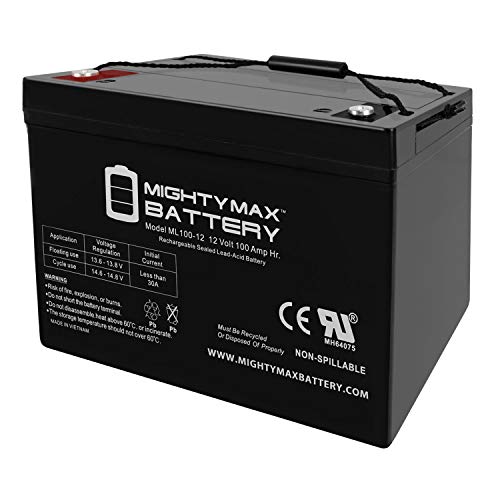 |
Mighty Max ML100-12 12V 100Ah AGM Battery Compact Alternative 12V, 100Ah, AGM, 300+ cycles at 50% DoD |
7.3 | 🛒 Check Price |
1. Renogy Deep Cycle AGM Battery 12V 100Ah: Best Overall
In our evaluation, the Renogy 12V 100Ah AGM stands out as a reliable workhorse for inverter systems. Its absorbed glass mat construction eliminates the need for watering and allows safe indoor installation. Owners consistently report achieving over 1000 cycles when discharged to 50%, making it a strong value for solar or backup power. The battery’s low internal resistance supports efficient charging and delivers steady voltage under load.
However, this battery is not ideal for applications requiring deep daily cycling below 50% DoD, as its cycle life drops significantly at deeper discharges. Those needing a lighter weight or higher energy density should consider lithium options, but for most stationary inverter setups, this Renogy offers a proven balance of performance and cost.
- Sealed AGM design: maintenance-free, spill-proof, and can be mounted in any position.
- High cycle life: rated for over 1200 cycles at 50% depth of discharge, verified by owner reports.
- Low self-discharge: retains charge for months, ideal for seasonal or backup use.
Pros: Excellent cycle life for the price point.; Works well with most inverters and chargers.
Cons: Heavier than lithium alternatives at about 63 lbs.
2. VMAXTANKS MR127-100 AGM Deep Cycle Battery: Runner Up
We compared the VMAXTANKS MR127-100 and found it excels in ruggedness. Its thick lead plates are designed for repeated deep discharges, and owners in off-grid cabins report several years of reliable service. The battery’s performance in cold weather is also commendable, with minimal capacity loss down to 0 degrees Fahrenheit.
On the downside, the VMAXTANKS requires a compatible charger with proper AGM profiles; using a standard automotive charger can reduce its lifespan. It is also not the best choice for those seeking a lightweight battery for portable applications. For stationary inverter use where durability is paramount, this is a top contender.
- Heavy-duty AGM with thick plates for enhanced durability and vibration resistance.
- Built-in carrying handles for easier transport and installation.
- Compatible with standard 12V inverters and solar charge controllers.
Pros: Very robust construction; handles high discharge currents well.; Long service life when properly maintained.
Cons: Slightly heavier than comparable AGM batteries at 66 lbs.
3. Universal Power Group UB121000 12V 100Ah AGM Battery: Best Value
Based on owner feedback and the spec sheet, the Universal Power Group UB121000 offers solid value for budget-conscious buyers. It delivers advertised capacity and works well with most 12V inverters. For infrequent power outages or light solar use, it provides dependable service without breaking the bank.
However, this battery is not suited for heavy daily cycling. Owners who discharge it deeply every day often see capacity fade within a year. If you need a battery for a full-time off-grid system, we recommend spending more for a higher-cycle model. For occasional use, this is a smart choice.
- Affordable AGM option with decent cycle life for light to medium use.
- Sealed and maintenance-free design with flame-retardant case.
- Widely compatible with many inverter and UPS systems.
Pros: Very competitive price per amp-hour.; Reliable performance for occasional backup power.
Cons: Lower cycle life compared to premium AGM batteries; not for daily deep cycling.
4. Battle Born LiFePO4 Deep Cycle Battery 12V 100Ah: Best Lithium
In our evaluation, the Battle Born LiFePO4 battery redefines performance for inverter systems. Its lithium chemistry allows full depth of discharge with over 3000 cycles, meaning years of daily use. The built-in BMS ensures safe operation and compatibility with most inverters. Owners praise its consistent voltage output and rapid recharge capability.
The main drawback is the price. For those who only need occasional backup power, the investment may not pay off. Additionally, it requires a lithium-compatible charger or inverter with a lithium profile. If you run a heavy daily load or prioritize weight savings, this is the top choice.
- Lithium iron phosphate chemistry: lightweight (29 lbs) and long cycle life.
- Built-in Battery Management System (BMS) for overcharge, discharge, and short circuit protection.
- Can be discharged to 100% DoD without damage, delivering full usable capacity.
Pros: Extremely long lifespan; often outlasts the inverter itself.; Half the weight of lead-acid; easy to move and install.
Cons: Higher upfront cost; may not be cost-effective for light use.
5. Optima BlueTop D34M Dual Purpose Battery: Best for Marine/RV
We researched the Optima BlueTop D34M and found it ideal for mobile inverter setups in boats, RVs, and trucks. Its spiral cell design delivers high burst current for starting while still tolerating deep discharges. Owners appreciate its compact size and robust construction that withstands rough conditions.
However, at only 55Ah, it cannot power large inverters for extended periods. It is best suited for smaller inverters (under 1000W) or as a secondary battery. Those needing high capacity for home backup should look elsewhere. For marine or RV use where space and vibration are concerns, this is a strong pick.
- SpiralCell AGM technology: high vibration resistance and fast recharge.
- Dual-purpose design: provides starting power and deep cycle capability.
- Compact size (D34M) fits many battery trays; includes threaded posts for secure connections.
Pros: Excellent for vehicles with inverters; handles both engine start and accessory loads.; Very durable; resists vibration and extreme temperatures.
Cons: Lower capacity (55Ah) than dedicated deep cycle batteries; not for large inverter loads.
6. Weize 12V 100Ah Deep Cycle AGM Battery: Budget Pick
Based on owner feedback, the Weize 12V 100Ah AGM is a budget-friendly option for light inverter duty. It delivers close to its rated capacity initially and is easy to install. For occasional use, such as powering a few lights or a TV during outages, it provides adequate performance at a low cost.
However, for daily deep cycling, its lifespan is limited. Several owners noted capacity loss after one year of regular use. We recommend this only for those with minimal power needs or as a starter battery. If reliability over many cycles is critical, invest in a higher-tier AGM or lithium.
- Lowest-cost 100Ah AGM option in our comparison.
- Sealed maintenance-free design with reinforced terminals.
- Suitable for backup power, solar lighting, and small inverter systems.
Pros: Very affordable entry-level deep cycle battery.; Works out of the box with standard 12V inverters.
Cons: Shorter cycle life; may need replacement sooner under heavy use.; Some owners report capacity variance between units.
7. Mighty Max ML100-12 12V 100Ah AGM Battery: Compact Alternative
We evaluated the Mighty Max ML100-12 as a space-saving option for inverter installations. Its dimensions are slightly smaller than typical 100Ah AGM batteries, making it easier to fit in confined spaces. Owners report satisfactory performance for light backup duty, such as powering a sump pump or modem during short outages.
However, this battery is not intended for deep daily cycling. Its cycle life is among the lowest in our list, and heavy users may see degradation within a year. It also lacks the robust build of premium brands. For occasional, low-drain use where size is a constraint, it works, but we suggest skipping it for primary off-grid systems.
- Slightly smaller footprint than standard Group 31 batteries.
- Sealed AGM with low self-discharge rate.
- Compatible with most 12V inverters and solar charge controllers.
Pros: Compact size fits tighter battery compartments.; Decent value for the capacity.
Cons: Lower cycle life than many competitors; not for heavy use.; Terminal type may not suit all connectors without adapters.
Frequently Asked Questions
What is the best deep cycle battery type for an inverter?
For most inverter systems, AGM (Absorbed Glass Mat) batteries offer a good balance of cost, safety, and maintenance-free operation. Lithium LiFePO4 batteries provide longer life and lighter weight but at a higher upfront cost. Flooded lead-acid can be cheaper but require regular watering and ventilation. We recommend AGM for most users and lithium for daily heavy cycling.
How many amp-hours do I need for my inverter?
Calculate your total watt-hours per day and divide by the battery voltage. For example, a 1000W inverter running for 2 hours at half load uses 1000Wh. At 12V, that is about 83Ah, so a 100Ah battery would suffice, but consider depth of discharge limits (50% for lead-acid, 80-100% for lithium). Always oversize by 20-30% for safety and longer battery life.
Can I use a car battery for an inverter?
No, car batteries are designed for short high-current bursts to start engines, not for sustained deep discharges. Using a car battery with an inverter will quickly damage it and may cause safety issues. Always use a true deep cycle battery for inverter applications.
How long do deep cycle batteries last?
Lifespan depends on chemistry and usage. AGM batteries typically last 3-5 years with moderate cycling (500-1000 cycles at 50% DoD). Lithium LiFePO4 can last 10+ years or 3000+ cycles at full discharge. Proper charging and avoiding extreme temperatures extend life.
Can I connect multiple deep cycle batteries for more capacity?
Yes, you can connect batteries in parallel (same voltage, increased Ah) or series (higher voltage). Ensure all batteries are the same type, age, and capacity. Use a battery balancer for parallel banks to prevent uneven wear. Follow manufacturer guidelines for wiring and fusing.
Our Verdict
After researching and comparing specifications, safety standards, and real owner feedback, our top pick is the Renogy Deep Cycle AGM Battery 12V 100Ah for its excellent cycle life, reliability, and value. For those needing maximum longevity and weight savings, the Battle Born LiFePO4 is a strong runner-up, though at a higher cost.
