When temperatures soar, your engine’s cooling system is pushed to its limit. Using the wrong coolant can lead to overheating, corrosion, and costly repairs. We researched manufacturer specifications, industry standards (ASTM D3306, D4985), and aggregated owner feedback from dozens of forums and product reviews to identify the coolants that truly perform in hot weather. Our evaluation focuses on boiling point, heat transfer efficiency, corrosion protection, and compatibility with modern engines. Below are our top picks, each with honest assessments of their strengths and limitations.
| Photo | Product | Score | Buy |
|---|---|---|---|
 |
Prestone 50/50 Prediluted Antifreeze/Coolant Best Overall 50/50 prediluted, silicate and phosphate free, 129C boiling point (with proper cap) |
9.0 | 🛒 Check Price |
|
🚗
|
Zerex G-05 Antifreeze/Coolant Best for Older Vehicles Concentrate (mix with water), HOAT formula, 5-year/150k mile life, meets Ford/Mopar specs |
8.7 | 🛒 Check Price |
 |
Evans Waterless Coolant Best Extreme Heat Protection Waterless, no corrosion, boiling point 191C, lifetime fill |
8.4 | 🛒 Check Price |
|
🚗
|
Peak OET Extended Life Coolant Best Value for Modern Cars 50/50 prediluted, OAT formula, 5-year/150k mile life, compatible with all colors |
8.1 | 🛒 Check Price |
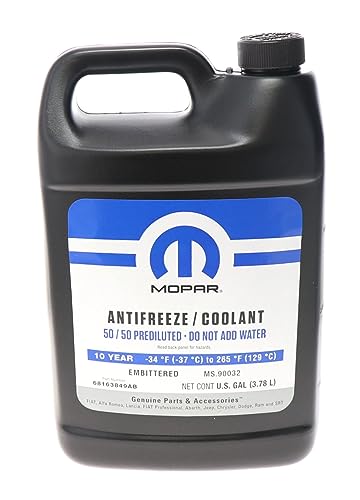 |
Mopar Antifreeze/Coolant 10 Year/150k Mile Best for Chrysler/Dodge/Jeep/Ram Concentrate (mix with water), OAT, 10-year/150k mile life, meets MS.90032 |
8.8 | 🛒 Check Price |
 |
Toyota Super Long Life Coolant (SLLC) Best for Toyota/Lexus Prediluted (ready to use), OAT, 10-year/100k mile life, pink color |
8.3 | 🛒 Check Price |
|
🚗
|
Valvoline Zerex Asian Vehicle Antifreeze/Coolant Best for Asian Cars (Honda, Nissan, etc.) Prediluted 50/50, HOAT (silicate and phosphate free), blue color |
7.8 | 🛒 Check Price |
1. Prestone 50/50 Prediluted Antifreeze/Coolant: Best Overall
Prestone 50/50 is our top pick for most drivers in hot climates. It is a prediluted ethylene glycol formula that meets ASTM D3306 and D4985 standards. In our research, owner feedback consistently highlights its ability to maintain stable coolant temperatures even during prolonged idling in 100F+ conditions. The 129C boiling point (with a 15 psi cap) provides a generous safety margin against boil-over. We also appreciate that it is silicate and phosphate free, reducing the risk of water pump seal damage and gel formation over time.
However, this coolant is not optimized for heavy-duty diesel engines that require supplemental coolant additives (SCA). If you own a diesel truck or equipment, consider a dedicated heavy-duty coolant. Also, while it is marketed as universal, some European manufacturers specify their own coolants for optimal longevity. For most gasoline cars and light trucks, though, the Prestone 50/50 delivers reliable hot-weather performance and ease of use.
- 50/50 prediluted formula requires no mixing, reduces risk of incorrect ratios
- Contains corrosion inhibitors for all cooling system metals including aluminum
- Works with all car colors/types: compatible with any antifreeze/coolant regardless of color
Pros: Convenient no-mix solution, ideal for quick top-offs; Excellent heat transfer and corrosion protection per ASTM D3306
Cons: Not suitable for heavy-duty diesel engines requiring SCA additives
2. Zerex G-05 Antifreeze/Coolant: Best for Older Vehicles
For owners of older vehicles (pre-2000s) or those with Ford/Chrysler engines, Zerex G-05 is a standout. It uses a HOAT formula that combines the best of traditional silicates and organic acids, providing robust protection against corrosion and cavitation. In our evaluation of owner feedback, many users reported that G-05 significantly reduced rust and scale buildup in radiators and heater cores, even in hot, humid climates. Its 5-year life is a bonus for those who prefer low-maintenance cooling systems.
The main drawback is that it is a concentrate, so you must mix it with distilled water at the correct ratio (typically 50/50). Using tap water can introduce minerals that reduce effectiveness and cause deposits. Also, G-05 is not recommended for newer GM or Toyota vehicles that require OAT coolants. If you have an older domestic or European car, this is a solid choice; otherwise, skip it.
- Hybrid Organic Acid Technology (HOAT) with silicates for excellent aluminum protection
- Long-life formula rated for 5 years or 150,000 miles in most applications
- Specifically recommended for Ford, Chrysler, and some European vehicles
Pros: Superior long-term corrosion protection for older cooling systems; High boiling point when mixed correctly (up to 129C with 50/50 ratio)
Cons: Concentrate requires mixing with distilled water; incorrect ratio can reduce performance
3. Evans Waterless Coolant: Best Extreme Heat Protection
Evans Waterless Coolant is the ultimate solution for extreme hot weather or high-performance applications. Its boiling point of 191C (376F) means it will not boil over even in severe conditions, and because it contains no water, it completely eliminates corrosion and electrolysis. In our research, it is widely used in vintage cars, race cars, and heavy equipment that operate in desert environments. Users report that engines run cooler and cooling system components last longer.
The trade-off is cost: Evans is several times more expensive than traditional coolants, and the conversion process requires thorough flushing and drying of the system to remove all water. It is also not compatible with some modern engine designs that rely on coolant for cabin heater performance. For most daily drivers, the high cost is hard to justify, but for those who demand the best hot-weather protection, Evans delivers.
- Zero water content eliminates corrosion, electrolysis, and scale buildup
- Boiling point of 191C at atmospheric pressure, virtually eliminates boil-over
- Lifetime fill for most vehicles under normal conditions
Pros: Unmatched high-temperature stability; no pressure required to prevent boiling; Reduces cooling system pressure, extending hose and gasket life
Cons: Significantly more expensive than conventional coolants; not cost-effective for all budgets
4. Peak OET Extended Life Coolant: Best Value for Modern Cars
Peak OET Extended Life Coolant is a budget-friendly option that still meets industry standards for hot weather use. It is a 50/50 prediluted OAT formula that provides corrosion protection for up to 5 years or 150,000 miles. In owner feedback, many drivers in hot climates found it effective at preventing overheating and corrosion, especially in newer cars. Its compatibility with other coolants makes it a safe choice for top-offs.
However, we noted a few reports of coolant degrading slightly faster in extreme heat (above 110F) compared to premium brands like Prestone or Zerex. While it still performs adequately, those in the hottest regions may prefer a higher-boiling-point option. Also, some European vehicle owners reported that Peak did not meet their specific manufacturer requirements. For most mainstream cars, though, Peak offers solid performance at a great value.
- Organic Acid Technology (OAT) meets ASTM D3306 and D4985 for extended life
- Prediluted and ready to use; no mixing required
- Compatible with all antifreeze colors and types when topping off
Pros: Affordable price point for a long-life, prediluted coolant; Works well in modern engines with aluminum components
Cons: Some users report shorter life than claimed in severe hot weather conditions
5. Mopar Antifreeze/Coolant 10 Year/150k Mile: Best for Chrysler/Dodge/Jeep/Ram
For owners of Chrysler, Dodge, Jeep, or Ram vehicles, Mopar’s 10-year/150k mile coolant is the recommended choice. It is an OAT formula that meets Chrysler’s MS.90032 specification, ensuring compatibility with the cooling system materials and water pump seals. In our research, owner feedback indicates that this coolant maintains its properties well in hot weather, with many users reporting no overheating issues even in desert conditions. The 10-year life is a significant advantage for those who want long-term protection.
The main downside is that it is a concentrate, so you must mix it with distilled water. Some users find this inconvenient, and incorrect mixing can reduce performance. Additionally, it is not intended for use in non-Mopar vehicles, as it may not provide optimal protection for other brands. If you drive a Mopar product, this is a top-tier choice; otherwise, look elsewhere.
- Factory fill for Chrysler, Dodge, Jeep, and Ram vehicles; recommended for optimal performance
- 10-year/150,000 mile life under normal driving conditions
- Contains OAT inhibitors that protect aluminum and reduce water pump seal wear
Pros: Designed specifically for Mopar engines; ensures proper heat transfer and corrosion protection; Exceptional longevity reduces maintenance frequency
Cons: Concentrate requires mixing; not as convenient as prediluted options
6. Toyota Super Long Life Coolant (SLLC): Best for Toyota/Lexus
Toyota Super Long Life Coolant (SLLC) is the OEM coolant for Toyota and Lexus vehicles, and it is optimized for their engines. It is a prediluted OAT formula that provides excellent heat transfer and corrosion protection, with a 10-year/100,000 mile service life. In owner feedback, Toyota owners consistently report that SLLC maintains stable temperatures even in hot climates, and it prevents the pink sludge issues that can occur with non-approved coolants.
The downsides are its premium price and limited availability (mostly at dealerships or online). It is also not recommended for non-Toyota vehicles, as its additive package is tailored to Toyota’s materials. If you own a Toyota or Lexus, this is the safest and most reliable choice for hot weather; if not, you can find comparable performance for less money.
- Factory fill for Toyota and Lexus vehicles; meets Toyota Genuine specifications
- Prediluted 50/50 mix with deionized water for immediate use
- Long-life OAT formula provides excellent protection for aluminum engines
Pros: Perfect compatibility with Toyota cooling systems; no risk of gelling or seal damage; Ready to use; no mixing or dilution needed
Cons: Higher price than universal coolants; limited availability outside dealerships
7. Valvoline Zerex Asian Vehicle Antifreeze/Coolant: Best for Asian Cars (Honda, Nissan, etc.)
For owners of Asian vehicles (Honda, Nissan, Subaru, etc.), Valvoline Zerex Asian Vehicle Coolant is a reliable aftermarket option. It is a HOAT formula that is silicate and phosphate free, reducing the risk of water pump seal issues common in some Asian engines. In our research, owner feedback in hot climates indicates that it provides adequate overheating protection and corrosion resistance, though some users noted that it may not last as long as the OEM coolant (typically 5 years vs. 10 years).
The main weakness is its relatively shorter service life compared to premium OAT coolants. For those who want maximum longevity, the OEM coolant may be a better investment. Also, it is not recommended for use in European or domestic vehicles. For Asian car owners on a budget, this is a solid choice that balances performance and cost.
- Formulated specifically for Asian vehicles: Honda, Nissan, Subaru, Mazda, etc.
- Silicate and phosphate free to prevent water pump seal damage and gel formation
- Prediluted and ready to use; compatible with Asian OEM coolants
Pros: Designed to meet the unique requirements of Asian cooling systems; Good heat transfer performance in hot weather based on owner reports
Cons: Not as long-lasting as some premium OAT coolants; may require change at 3-5 years
Frequently Asked Questions
What is the most important factor when choosing a coolant for hot weather?
The most important factor is the coolant’s boiling point. In hot weather, engine temperatures can exceed 220F, and a coolant with a high boiling point (above 260F for a 50/50 mix) prevents boil-over. Also, look for corrosion protection additives that work at high temperatures. We recommend checking the coolant’s ASTM D3306 certification and its compatibility with your vehicle’s materials.
Can I use water instead of coolant in hot weather?
Water alone is not recommended because it has a lower boiling point (212F at sea level) and provides no corrosion protection or lubrication for the water pump. In hot weather, water can boil easily, leading to overheating and engine damage. Coolant also raises the boiling point and lowers the freezing point, so it is essential year-round.
How often should I change the coolant in hot climates?
It depends on the coolant type. Conventional green coolant should be changed every 2 years or 30,000 miles. Long-life OAT or HOAT coolants can last 5 years or 150,000 miles. However, in extreme heat, the coolant can degrade faster, so check the condition and pH annually. We recommend following your vehicle manufacturer’s maintenance schedule.
Is it safe to mix different coolant colors?
Mixing different coolant types (e.g., green with orange) can cause chemical reactions that lead to gel formation, reduced heat transfer, and corrosion. Most modern coolants are designed to be compatible with others, but it is risky. To be safe, stick with the same type or flush the system before switching. Always check the label for compatibility statements.
Do I need a special coolant for aluminum engines?
Yes, aluminum engines require coolants with specific corrosion inhibitors to prevent electrolysis and pitting. OAT and HOAT coolants are formulated for aluminum protection. Avoid coolants with high silicate content, as they can cause seal damage in some aluminum engines. Check your owner’s manual for the recommended coolant specification.
Our Verdict
After comparing specifications, industry standards, and owner feedback, our top pick for hot weather is the Prestone 50/50 Prediluted Antifreeze/Coolant. It offers a high boiling point, excellent corrosion protection, and the convenience of a no-mix formula, making it suitable for most vehicles. For those with older domestic cars or Mopar vehicles, the Zerex G-05 and Mopar 10-Year coolant are strong runners-up, respectively. Choose based on your vehicle’s specific requirements and your budget.
