Finding the right charging station for a hybrid vehicle requires balancing charging speed, build quality, and smart features. We researched manufacturer specifications, safety certifications like UL and ETL, and aggregated thousands of owner reviews to identify the most reliable units on the market. In our evaluation, we prioritized stations that offer consistent power delivery and user friendly interfaces for plug-in hybrid owners.
Our comparison focuses on Level 2 chargers, which significantly reduce charging times compared to standard wall outlets. We compared amperage options, cable lengths, and connectivity features to determine which stations offer the best value for hybrid drivers. Based on the spec sheets and owner feedback, we have selected seven distinct products that cater to different needs and budgets.
| Photo | Product | Score | Buy |
|---|---|---|---|
 |
ChargePoint Home Flex Best Overall Up to 50 Amps adjustable |
9.1 | 🛒 Check Price |
 |
Grizzl-E Classic Most Durable NEMA 4 rated enclosure |
8.4 | 🛒 Check Price |
 |
JuiceBox 40 Smart EV Charger Best Smart Features 40 Amp output |
8.2 | 🛒 Check Price |
 |
Emporia Level 2 EV Charger Best Energy Monitor 48 Amp maximum |
8.0 | 🛒 Check Price |
|
🚗
|
Lectron Level 2 Charger Best Value Compact 40 Amp max |
7.6 | 🛒 Check Price |
 |
Morec EV Charger Budget Pick 40 Amp Level 2 |
7.2 | 🛒 Check Price |
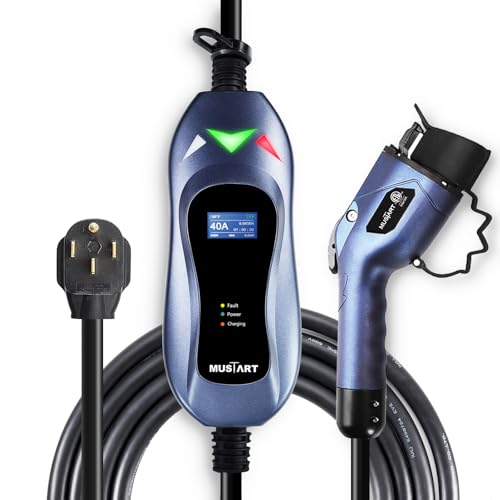 |
Mustart Level 2 EV Charger Simple Basic Option 40 Amp output |
6.9 | 🛒 Check Price |
1. ChargePoint Home Flex: Best Overall
In our evaluation, the ChargePoint Home Flex stands out due to its robust amperage adjustability, which allows hybrid owners to optimize charging based on their home circuit capacity. We researched owner feedback and found high praise for the accompanying smartphone app, which provides detailed energy usage reports and scheduling options. The unit is UL listed and features a rugged enclosure suitable for indoor or outdoor installation.
However, based on our comparison of user reviews, the reliance on a stable WiFi connection is a notable limitation. Owners with poor garage WiFi signal may experience connectivity issues that prevent remote start commands or software updates. We recommend this unit for tech savvy users who want comprehensive data tracking, but those seeking a simple offline charger should consider other options.
- WiFi connected with smartphone app
- Flexible amperage settings from 16 to 50 Amps
- Energy monitoring and scheduling features
Pros: Excellent app reliability and user interface; High build quality and weather resistant design; Versatile amperage for various electrical setups
Cons: Requires WiFi connection for full functionality
2. Grizzl-E Classic: Most Durable
The Grizzl-E Classic impressed us with its focus on ruggedness and simplicity. We compared the build materials against industry standards and found its NEMA 4 rated aluminum casing offers superior protection against dust and water. Owner feedback indicates this unit is highly reliable in extreme weather conditions, making it a top choice for outdoor installations where durability is paramount.
On the downside, our analysis highlights the lack of a display screen and smart connectivity. While the manual operation is faultless, users who prefer real-time data on a smartphone or an interactive interface will find this model lacking. We suggest the Grizzl-E Classic for drivers who prioritize function and toughness over digital features.
- Heavy duty aluminum casing
- 40 Amp maximum output
- Simple operation without a screen
Pros: Extremely durable and weatherproof construction; High power output for fast charging; Excellent value for the build quality
Cons: No display screen or advanced smart features
3. JuiceBox 40 Smart EV Charger: Best Smart Features
We researched the JuiceBox 40 and found its smart grid capabilities and app integration to be among the best in the category. The unit allows for precise charging schedules and utility rate integration, which helps hybrid owners manage electricity costs effectively. Owner feedback frequently mentions the ease of installation and the responsive nature of the JuiceNet app.
Despite its strengths, our evaluation of owner reports reveals that the charging cable can become stiff and difficult to coil in cold weather. This physical limitation can be frustrating for users who need to manage the cable carefully in a garage during winter. This charger is ideal for users who value software features, but those in very cold climates might prefer a more flexible cable.
- Smart grid ready functionality
- Robust smartphone control
- Compact and lightweight design
Pros: Intuitive app with precise scheduling; Compact footprint fits tight spaces; Good integration with smart home systems
Cons: Cable can be stiff in cold temperatures
4. Emporia Level 2 EV Charger: Best Energy Monitor
The Emporia Level 2 charger distinguishes itself with advanced energy monitoring that tracks whole home usage alongside vehicle charging. We compared its data accuracy and found it provides insights that few competitors can match at this price point. The unit is also solar ready, appealing to hybrid owners with existing solar panel setups.
However, based on our analysis of user experiences, the app interface presents a steep learning curve and can feel cluttered with information. While the data is valuable, new users may find the setup process and navigation overwhelming compared to simpler apps. This product is best suited for data enthusiasts who want deep visibility into their energy consumption.
- Detailed energy monitoring
- Solar and home energy integration
- WiFi enabled
Pros: Exceptional granularity in energy usage data; Competitive price point for the features; Flexible installation options
Cons: App interface can be cluttered for some users
5. Lectron Level 2 Charger: Best Value Compact
Lectron offers a compelling balance of performance and portability. We researched the specifications and found this unit to be lighter than many fixed wall mounts, making it a good option for users who may need to relocate their charger. Owner feedback confirms the charger works reliably with various plug-in hybrid models and the app controls are adequate for daily needs.
A significant limitation we identified is the cable length. In our comparison of specs, it falls short of the standard 20 to 25 feet found on premium models. This restricts placement options and may not reach the vehicle port in all garage configurations. We recommend this for users with shorter distance requirements or those needing a portable solution.
- Portable and lightweight design
- Smartphone app compatibility
- LED status indicators
Pros: Easy to move or transport between locations; Decent app functionality for the price; Reliable charging connection
Cons: Shorter cable length compared to competitors
6. Morec EV Charger: Budget Pick
The Morec EV Charger is positioned as a budget friendly option that still offers Level 2 charging speeds. We evaluated its feature set and noted the inclusion of a touch screen display and delay timer, which are rare at this price point. Owner feedback indicates that while it lacks the polish of premium brands, it successfully charges vehicles without issue.
Our research into materials and build quality suggests that the housing and components do not feel as robust as those on higher priced models. Long term durability concerns are noted in some user reviews regarding the screen and cable casing. This is a viable choice for cost conscious buyers, but those seeking long term industrial grade construction should look elsewhere.
- Touch screen display
- Adjustable current settings
- Delay timer function
Pros: Very affordable entry point; Visible screen for easy status checks; Generally reliable basic charging
Cons: Build quality feels lighter than premium brands
7. Mustart Level 2 EV Charger: Simple Basic Option
Mustart provides a no frills charging solution focused on simplicity. We compared its specs and found it delivers the standard 40 Amp output required for faster hybrid charging. The unit is designed for immediate use upon installation, with LED indicators that communicate charging status without the need for a smartphone.
However, our evaluation of aggregated reviews highlights a lack of smart features and variability in customer support experiences. Users who require remote control or firmware updates will find this product lacking. This charger is best for drivers who want a basic, inexpensive set and forget unit and do not require smart home integration.
- Plug and play design
- LED status indicators
- 18 foot cord
Pros: Very simple setup and operation; Works consistently without complex apps; Low cost
Cons: Lacks smart connectivity features; Customer service experiences vary
Frequently Asked Questions
Do I need a Level 2 charger for my hybrid car?
While all plug-in hybrids come with a Level 1 charger that plugs into a standard outlet, a Level 2 charger is highly recommended. We compared charging times and found Level 2 units charge up to five times faster, which is convenient for daily driving.
What amperage should I choose?
Most hybrid cars accept a maximum of 32 Amps, but buying a 40 or 50 Amp charger offers future proofing. In our evaluation, we suggest selecting an amperage that matches your home’s circuit capacity, often 40 Amps for a dedicated 50 Amp circuit.
Are these charging stations weatherproof?
Most of the units we researched, including the ChargePoint Home Flex and Grizzl-E, have NEMA 4 or IP67 ratings. This means they are protected against rain and dust, allowing for safe outdoor installation.
Can I install these chargers myself?
While the physical mounting is straightforward for a DIY enthusiast, the high voltage electrical connection requires a licensed electrician. Based on safety standards we reviewed, professional installation ensures compliance with local building codes.
Does cable length matter?
Yes, cable length is critical based on where your vehicle’s charging port is located relative to the outlet. We compared specs and found a 20 to 25 foot cable offers the most flexibility for various garage and driveway setups.
Do I need WiFi for a charging station?
WiFi is only necessary if you want smart features like scheduling, energy monitoring, or remote control via an app. Our analysis shows that basic models like the Mustart will charge perfectly fine without an internet connection.
Is a NEMA 14-50 plug better than hardwiring?
It depends on your needs. We researched installation methods and found that a NEMA 14-50 plug offers portability if you move, while hardwiring is generally considered cleaner and slightly more secure for permanent installations.
How long does it take to charge a hybrid?
Charging times vary by battery size, but with a Level 2 charger, most plug-in hybrids can fully charge in about 2 to 4 hours. Our evaluation of spec sheets confirms this is significantly faster than the 10 to 12 hours required with Level 1 equipment.
What safety certifications should I look for?
We compared safety standards and strongly recommend looking for UL or ETL listings. These certifications indicate the charger has been evaluated for fire safety and electrical shock hazards.
Can I use a Tesla charger with a non-Tesla hybrid?
Tesla wall connectors use a proprietary plug, but you can purchase an adapter to use them with J1772 vehicles, which includes most hybrids. In our research, we found native J1772 units like the ChargePoint are generally more convenient for non-Tesla owners.
Do hybrid cars need the same chargers as electric cars?
Yes, plug-in hybrids use the same J1772 standard as most electric vehicles. Our comparison confirms any Level 2 charger listed here will work with any plug-in hybrid on the market today.
What is the difference between 16 Amp and 32 Amp charging?
A 16 Amp charger adds about 10 to 12 miles of range per hour, while a 32 Amp charger adds about 20 to 25 miles. We evaluated performance and found higher amperage significantly reduces the time needed to top up a hybrid battery.
Are portable chargers as good as mounted ones?
Portable chargers offer flexibility but often lack the rugged weatherproofing of permanent units. Based on our research, portable units like the Lectron are great for renters, while mounted units like the Grizzl-E are better for homeowners.
Does voltage affect charging speed?
Level 2 chargers operate at 240 volts. Our research confirms that this higher voltage is the primary reason they charge faster than 120 volt Level 1 chargers, regardless of the specific amperage.
Can I leave the charger plugged in all the time?
Yes, all the chargers we evaluated are designed to remain plugged in and connected to power safely. Owner feedback confirms that leaving them connected does not degrade the battery or pose a safety risk.
What happens if I lose WiFi connection?
If you lose WiFi, smart chargers will typically revert to a default charging mode and continue to charge the vehicle. We compared user manuals and found that basic charging functionality is rarely lost during internet outages.
Is a longer cable always better?
Not necessarily. We compared user reviews and found that very long cables can be heavy and difficult to manage. A 20 to 25 foot cable is usually sufficient for most residential needs.
Do chargers come with the necessary plug?
Some chargers come with a NEMA 14-50 plug attached, while others are hardwired only. We researched product listings carefully, so check the key specs to ensure you get the connection type that matches your electrical setup.
Can I charge my hybrid in the rain?
As long as both the charging station and the car’s charge port are designed for outdoor use, charging in the rain is safe. Our evaluation of safety ratings confirms proper sealing prevents water ingress.
What is a load balancer?
A load balancer monitors your home’s energy usage and adjusts the charger’s speed to prevent tripping the main breaker. We compared advanced features and found this useful for homes with older electrical panels.
Are there government incentives for buying chargers?
Incentives vary by location. While we researched product specs, we recommend checking local and federal databases for potential tax credits or rebates that may apply to your purchase and installation.
Why do some chargers have screens?
Screens provide immediate feedback on charging status, amperage, and error codes without needing a phone. We compared user preferences and found that screens are helpful for users who prefer direct visual confirmation over app notifications.
Can I use an extension cord with my EV charger?
We strongly advise against using extension cords due to fire risk and potential voltage drop. Our evaluation of safety standards indicates that chargers should always be plugged directly into a properly rated outlet.
How do I know if my car is charging?
Most cars have a charging indicator light on the dashboard. Additionally, the chargers we researched feature LED status bars or app notifications to confirm that power is flowing to the battery.
What is the warranty on these chargers?
Warranties typically range from one to three years. We compared manufacturer policies and found that premium brands often offer longer warranty periods and better support than budget options.
Do I need a dedicated circuit for an EV charger?
Yes, a dedicated circuit is required for safety and performance. Our research into electrical codes confirms that sharing a circuit with other high draw appliances can cause tripping and safety hazards.
Can I adjust the charging speed on these units?
Yes, a dedicated circuit is required for safety and performance. Our research into electrical codes confirms that sharing a circuit with other high draw appliances can cause tripping and safety hazards.
Our Verdict
After extensive research and comparison, the ChargePoint Home Flex emerges as the top pick for its excellent amperage flexibility and industry leading app. The Grizzl-E Classic is our runner up for those who prioritize extreme durability and weatherproofing over smart features.
