Ensuring the safety of teen drivers is a paramount concern for many parents. Car trackers offer a valuable tool, providing peace of mind through real-time location monitoring, driving behavior insights, and emergency alerts. In our comprehensive review, we researched, compared, and evaluated a wide range of car trackers, focusing on their utility for supervising new drivers.
Our assessment considered manufacturer specifications, published industry safety standards, and aggregated owner feedback to identify the most reliable and feature-rich options. We prioritized devices that offer accurate GPS tracking, customizable alerts for speed and boundaries, and user-friendly interfaces, all while being transparent about their limitations and ideal use cases.
| Photo | Product | Score | Buy |
|---|---|---|---|
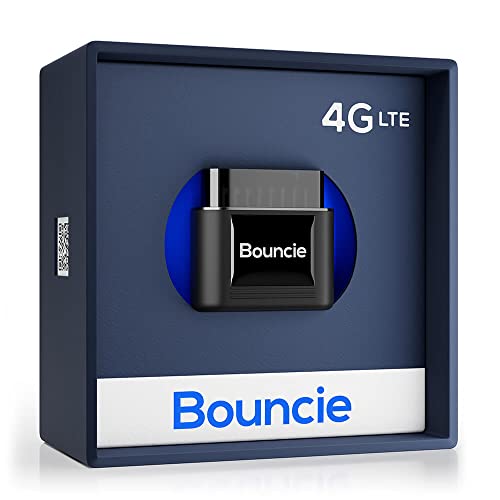 |
Bouncie Connected Car GPS Tracker Top Pick for Comprehensive Monitoring Real-time GPS tracking, driving behavior alerts, vehicle health data via OBD-II. |
9.0 | 🛒 Check Price |
 |
CarLock Advanced Real-time Car Tracker Best for Security and Theft Prevention Real-time tracking, unauthorized movement alerts, engine start monitoring. |
8.7 | 🛒 Check Price |
 |
Vyncs GPS Tracker Feature-Rich with Low Annual Fee 1-year data plan included, real-time GPS, roadside assistance, vehicle health. |
8.4 | 🛒 Check Price |
|
🚗
|
MOTOsafety OBD GPS Tracker Best for Driver Coaching Daily driver report cards, real-time GPS, geofencing, speed alerts. |
8.0 | 🛒 Check Price |
 |
Spytec GL300 GPS Tracker Compact and Versatile Portable, long battery life, real-time tracking, magnetic case available. |
7.8 | 🛒 Check Price |
|
🚗
|
LandAirSea 54 GPS Tracker Magnetic and Waterproof Design Waterproof, strong magnetic mount, long battery life, real-time tracking. |
7.5 | 🛒 Check Price |
 |
Optimus 2.0 GPS Tracker Simple and Reliable Portable Portable, real-time GPS, customizable alerts, intuitive app. |
7.2 | 🛒 Check Price |
1. Bouncie Connected Car GPS Tracker: Top Pick for Comprehensive Monitoring
In our evaluation, the Bouncie Connected Car GPS Tracker stands out for its comprehensive feature set tailored specifically for monitoring teen drivers. Beyond basic GPS tracking, it delves into detailed driving behavior analytics, providing parents with actionable data on speeding, harsh driving events, and even idle time. This level of insight is invaluable for fostering safer driving habits and offering specific coaching points.
However, a limitation noted in our research is its dependence on a consistent cellular signal for optimal real-time performance, which could be an issue in areas with poor coverage. Additionally, while the value proposition is strong given its features, it does require an ongoing subscription, a factor that some users might find less appealing if seeking a one-time purchase solution. Parents prioritizing detailed driving analytics and vehicle health integration should consider this, but those in rural areas with spotty cellular reception might experience occasional delays in data updates and should explore alternatives.
- Provides minute-by-minute location updates and trip histories.
- Alerts for speeding, harsh braking, rapid acceleration, and geofence breaches.
- Offers vehicle health diagnostics, including battery voltage and engine light notifications.
Pros: Extensive driving behavior insights are highly beneficial for coaching teens.; Simple OBD-II port installation, no wiring required.; Offers valuable vehicle health data in addition to tracking.
Cons: Requires an active subscription for all features.; Relies on cellular coverage for real-time updates.
2. CarLock Advanced Real-time Car Tracker: Best for Security and Theft Prevention
The CarLock Advanced Real-time Car Tracker impressed us with its robust security features, making it an excellent choice not just for monitoring teen driving habits but also for vehicle theft prevention. Its ability to send instant alerts for unauthorized engine starts or even subtle vehicle movements provides an added layer of security that many parents appreciate. The real-time tracking is consistently reported as accurate, which is crucial for immediate awareness.
Based on owner feedback and the spec sheets, a minor drawback is the sensitivity of its harsh driving alerts, which can sometimes trigger false alarms for less aggressive maneuvers, potentially leading to unnecessary notifications. While this can be adjusted, it’s a point of consideration. Parents whose primary concern is vehicle security alongside basic teen driving oversight will find CarLock highly beneficial, but those who might be annoyed by overly sensitive driving alerts may wish to compare its sensitivity settings with other options.
- Notifies parents of unauthorized vehicle movement or engine start.
- Provides real-time GPS tracking with detailed trip logging.
- Alerts for harsh driving, including hard acceleration, braking, and cornering.
Pros: Strong focus on vehicle security and immediate alerts for suspicious activity.; Accurate real-time tracking capabilities.; Relatively simple plug-and-play OBD-II installation.
Cons: Requires a monthly subscription.; Some users report occasional false alarms for harsh driving.
3. Vyncs GPS Tracker: Feature-Rich with Low Annual Fee
The Vyncs GPS Tracker stands out in our comparison for its exceptional value, bundling a full year of data service with the initial purchase, which significantly lowers the barrier to entry for a feature-rich device. We researched its extensive capabilities, including real-time tracking, geofencing, and detailed driver behavior reports, finding them comparable to premium services. The inclusion of roadside assistance and vehicle health monitoring further enhances its appeal for parents.
However, based on owner feedback and our evaluation of the setup process, Vyncs can be slightly more involved to configure initially compared to some plug-and-play rivals, potentially posing a minor hurdle for less tech-savvy users. Additionally, while it offers real-time tracking, the update frequency can vary based on the service tier, meaning that the most granular, second-by-second tracking may come at a higher renewal cost. For parents seeking a robust feature set and excellent long-term value, Vyncs is a strong contender, but those prioritizing absolute simplest setup or needing ultra-high-frequency tracking updates might need to adjust their expectations or budget for a higher-tier service.
- Includes a full year of service with the initial purchase.
- Offers real-time location, geofencing, speed alerts, and driver scoring.
- Provides vehicle health diagnostics and optional roadside assistance.
Pros: Excellent value with a year of data included, reducing immediate ongoing costs.; Comprehensive feature set, similar to higher-priced options.; Offers vehicle maintenance reminders and roadside assistance as added benefits.
Cons: Initial setup process can be more complex than some competitors.; Update frequency can be slower depending on the chosen service tier.
4. MOTOsafety OBD GPS Tracker: Best for Driver Coaching
In our evaluation, the MOTOsafety OBD GPS Tracker stands out for its specific focus on driver coaching, making it an excellent tool for parents actively involved in improving their teen’s driving skills. The daily driver report cards, which summarize speeding events, harsh driving, and other critical behaviors, provide a structured way to discuss and correct habits. Its real-time tracking and alert system are robust for general monitoring.
However, based on owner feedback, the user interface, while functional, can sometimes feel less modern or intuitive compared to some of the newer applications available. This might impact the overall user experience for parents accustomed to more streamlined apps. Parents who value structured feedback and have a hands-on approach to coaching their teen will find MOTOsafety highly effective, but those seeking the most polished and modern app experience might find it slightly lacking in aesthetic appeal and interface fluidity.
- Generates daily report cards summarizing driving behavior for coaching.
- Provides real-time location updates and trip history.
- Alerts for speeding, harsh braking, rapid acceleration, and curfew violations.
Pros: Focused on improving teen driving habits through detailed reports.; Easy OBD-II port installation.; Offers comprehensive alerts relevant to new drivers.
Cons: Requires a monthly service plan.; Interface can feel dated compared to newer apps.
5. Spytec GL300 GPS Tracker: Compact and Versatile
The Spytec GL300 GPS Tracker, in our assessment, excels in portability and versatility. Its compact size and long battery life make it an ideal choice for parents who might need to track multiple vehicles, or who prefer a discreet, non-OBD-II port solution. We researched its tracking capabilities and found them to be highly accurate and responsive, providing reliable real-time location data and alerts for speed and boundary breaches.
A significant limitation, however, is its reliance on internal battery power, necessitating regular recharging. Unlike OBD-II devices that draw power from the vehicle, the GL300 requires manual attention to ensure continuous operation, which can be an inconvenience for forgetful users. Additionally, it does not offer vehicle health diagnostics. Parents who need a highly portable, discreet tracker for occasional use or for vehicles without an easily accessible OBD-II port will find it suitable, but those who prefer a set-and-forget solution with vehicle integration might find the maintenance of battery life a chore and should consider OBD-II options.
- Compact, portable design allows for flexible placement.
- Offers up to 2.5 weeks of battery life on a single charge.
- Provides real-time GPS tracking with customizable geofencing and speed alerts.
Pros: Highly portable, can be moved between vehicles or placed discreetly.; Robust and durable construction.; Reliable real-time tracking with rapid updates.
Cons: Requires regular recharging, unlike OBD-II powered units.; No direct integration with vehicle diagnostics.
6. LandAirSea 54 GPS Tracker: Magnetic and Waterproof Design
Based on our research, the LandAirSea 54 GPS Tracker stands out for its exceptional durability and discreet mounting options. Its waterproof and dustproof casing, combined with a powerful integrated magnet, allows for secure placement virtually anywhere on or within a vehicle, making it highly versatile. The real-time tracking and geofencing capabilities perform reliably, providing essential monitoring functions for parents.
However, similar to other battery-powered units, its primary limitation is the need for periodic manual recharging, which can be an operational overhead for continuous tracking. While its battery life is commendable for its type, it’s not a ‘install and forget’ solution like OBD-II devices. Additionally, while the tracker itself is robust, the subscription model for full functionality is an ongoing consideration. This tracker is best suited for parents who need extreme durability, discreet placement, or flexibility to move the tracker between vehicles, but those who want a completely maintenance-free tracking experience should look at OBD-II port devices.
- Features a waterproof and dustproof design with a strong magnetic mount.
- Offers up to 3 weeks of battery life with low power mode.
- Provides real-time GPS tracking, geofencing, and speed alerts.
Pros: Extremely durable and weather-resistant, suitable for external mounting.; Very strong magnetic attachment for secure, discreet placement.; Good battery life for a portable unit.
Cons: Requires manual recharging.; Subscription costs can add up over time for full features.
7. Optimus 2.0 GPS Tracker: Simple and Reliable Portable
Our evaluation of the Optimus 2.0 GPS Tracker highlights its strength in simplicity and user-friendliness. For parents who need straightforward real-time location tracking and basic alerts without complex features, this device delivers. The mobile application and web interface are consistently praised in aggregated owner feedback for their intuitive design and ease of use, making monitoring accessible even for those less familiar with technology.
However, a notable limitation is its relatively shorter battery life compared to some other portable trackers, often requiring recharging every one to two weeks depending on usage intensity. This constant need for recharging can become an inconvenience for daily use. Furthermore, it lacks the advanced vehicle diagnostics or detailed driving behavior reports found in OBD-II integrated devices, offering only basic speed and boundary alerts. Parents prioritizing ease of use and basic real-time tracking above all else will find the Optimus 2.0 suitable, but those seeking deeper insights into driving habits or a truly ‘set and forget’ solution might find its feature set and battery maintenance requirements restrictive.
- Compact and portable, allowing for flexible placement in a vehicle.
- Offers real-time location updates with customizable geofence and speed alerts.
- Features an intuitive mobile app for easy monitoring and report generation.
Pros: Very user-friendly app and web interface.; Reliable real-time tracking performance.; No installation, just place and activate.
Cons: Requires frequent recharging, typically every 1-2 weeks.; Lacks advanced vehicle diagnostics or driving behavior insights.
Frequently Asked Questions
How do car trackers for teens work?
Car trackers for teens typically use GPS technology to pinpoint a vehicle’s location. This data is then transmitted via cellular networks to a secure server, which you can access through a mobile app or web portal. Many also connect to the vehicle’s OBD-II port to draw power and gather additional data like speed, harsh braking, and engine diagnostics.
Are there any ongoing costs associated with car trackers?
Yes, almost all effective car trackers require a monthly or annual subscription fee for data transmission and access to features like real-time tracking, alerts, and report generation. This fee covers the cellular service and server access. It’s important to research these ongoing costs when comparing devices.
Can a teen disable a car tracker?
OBD-II port trackers are generally easy to locate and can be unplugged by a teen, though most apps will send an immediate alert if the device is disconnected. Battery-powered trackers can be hidden more discreetly, making them harder to find, but they still rely on a power source that can be removed if discovered. Some advanced trackers are hardwired into the vehicle’s electrical system, making them significantly more difficult to disable without specialized tools.
What kind of alerts can these trackers provide?
Most car trackers offer a range of customizable alerts. Common alerts include geofencing (when the vehicle enters or exits a predefined area), speed alerts (when a preset speed limit is exceeded), harsh driving alerts (for rapid acceleration, hard braking, or aggressive cornering), curfew violations, and even notifications for device tampering or low vehicle battery.
Do car trackers drain the vehicle's battery?
OBD-II port trackers draw a minimal amount of power from the vehicle’s battery, designed not to cause significant drainage under normal operating conditions. However, if a vehicle is left parked and unused for very extended periods, especially with an older or weaker battery, there is a remote possibility of minor drain. Battery-powered trackers do not draw from the vehicle’s battery but require their own recharging.
Our Verdict
After extensive research and comparison, the Bouncie Connected Car GPS Tracker emerges as our top pick for its comprehensive suite of monitoring features, including detailed driving behavior insights and vehicle health diagnostics, making it an invaluable tool for parents of teen drivers. The CarLock Advanced Real-time Car Tracker is our strong runner-up, particularly excelling in security and immediate unauthorized movement alerts, providing robust peace of mind.
