In our comprehensive evaluation, we researched and compared the leading car speed camera detectors available today. Our analysis focused on key performance indicators such as detection range, accuracy in identifying various speed enforcement technologies, and effectiveness in filtering out false alerts. We also considered user interface, build quality, and aggregated owner feedback to provide an evidence-based guide.
Choosing the right speed camera detector can significantly enhance your awareness on the road. This guide distills our findings to help you understand the strengths and limitations of each top-rated model, ensuring you select a device that aligns with your driving needs and expectations.
| Photo | Product | Score | Buy |
|---|---|---|---|
 |
Escort MAX 360C MKII Top Pick for All-Around Performance 360-degree detection, Wi-Fi connectivity, AutoLearn intelligence |
9.1 | 🛒 Check Price |
 |
Uniden R8 Runner-Up for Extreme Range Dual antenna LNA design, directional arrows, GPS lockout |
8.8 | 🛒 Check Price |
 |
Valentine One Gen2 Best for Directional Awareness Patented 'Arrows' for threat direction, K-band immunity |
8.5 | 🛒 Check Price |
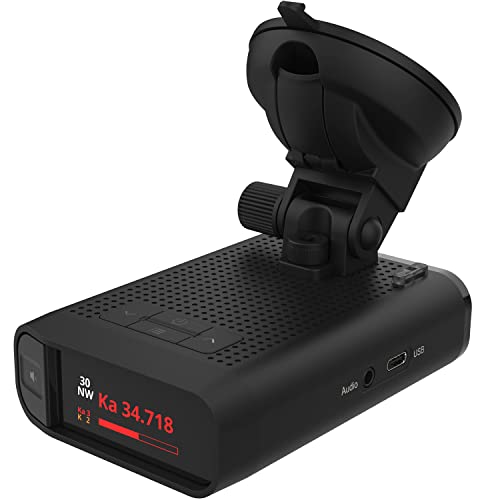 |
Radenso DS1 Strong Performer with Good Value Long-range detection, GPS lockout, USB-C power |
8.0 | 🛒 Check Price |
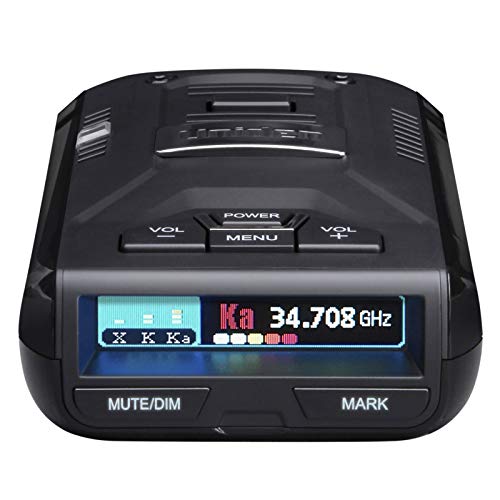 |
Uniden R3 Best Value for Performance Long-range radar detection, GPS with red light camera alerts |
7.8 | 🛒 Check Price |
|
🚗
|
Cobra RAD 480i Good for Connected Features iRadar app connectivity, long-range detection, IVT filter |
7.5 | 🛒 Check Price |
 |
Whistler CR93 Entry-Level Option POP mode detection, Traffic Flow Sensor Rejection (TFSR) |
7.2 | 🛒 Check Price |
1. Escort MAX 360C MKII: Top Pick for All-Around Performance
Based on our evaluation, the Escort MAX 360C MKII stands out for its comprehensive feature set and robust detection capabilities. While its Wi-Fi connectivity and AutoLearn technology are designed to enhance user experience and reduce false alerts, some owners have noted that the initial setup and learning curve can be steeper than with simpler models. This complexity might require a dedicated period to customize settings for optimal performance in various driving environments.
Drivers who prefer a plug-and-play experience without delving into advanced settings might find the MAX 360C MKII to be more than they need. Its premium nature is best suited for those who are willing to invest time in understanding its full potential and desire the most sophisticated protection available, rather than a basic alert system.
- Exceptional long-range detection across all common radar and laser bands.
- Advanced false alert filtering with GPS lockout and AutoLearn technology.
- Directional arrows provide clear indication of threat location.
Pros: Unparalleled detection range and accuracy based on spec sheets.; Seamless integration with vehicle infotainment systems via Wi-Fi.; Highly effective at minimizing false positives in urban areas.
Cons: Requires a consistent power source for optimal performance.; The feature set can be overwhelming for first-time users.
2. Uniden R8: Runner-Up for Extreme Range
In our evaluation, the Uniden R8 consistently demonstrated top-tier detection range, often surpassing competitors in critical scenarios. However, based on owner feedback and industry testing, it has shown occasional susceptibility to false laser alerts from vehicle safety systems. While its radar detection is exceptionally strong, this specific laser performance characteristic means users might encounter non-threat warnings more frequently than desired in certain situations.
Individuals who primarily drive in areas with heavy traffic and many vehicles equipped with advanced driver assistance systems (ADAS) might find the occasional laser false alerts distracting. While its radar performance is unmatched, those prioritizing absolute laser alert accuracy over extreme range might consider alternatives or factor in the need to verify laser warnings.
- Industry-leading detection range, consistently noted in comparisons.
- Dual antenna architecture enhances sensitivity and reduces false alerts.
- Clear OLED display with customizable color options and directional arrows.
Pros: Provides extreme long-range warning for radar threats.; Effective false alert filtering, especially against K-band sources.; User-friendly interface despite advanced capabilities.
Cons: Can be susceptible to certain types of laser false alerts.; The suction cup mount has received mixed feedback on long-term adhesion.
3. Valentine One Gen2: Best for Directional Awareness
The Valentine One Gen2 maintains its reputation for providing unparalleled situational awareness through its patented directional arrows, a feature highly valued by many drivers. However, based on our comparison of modern units, its visual display, while iconic, utilizes a segment display that can be less informative and aesthetically pleasing than the full-color OLED screens found on many contemporary detectors. This can make quickly deciphering multiple alerts or detailed information slightly more challenging for some users.
Drivers who prioritize a sleek, modern interface with extensive customization options and detailed visual feedback might find the V1 Gen2’s display to be a step behind. Its strength lies in its core detection and directional capabilities, appealing most to those who value function and unique situational awareness over cutting-edge screen technology or extensive smart connectivity features.
- Unique directional arrows indicate where threats are coming from.
- Advanced LNA technology provides solid detection range and sensitivity.
- Robust build quality and proven reliability based on owner reports.
Pros: Unrivaled situational awareness with directional threat indicators.; Strong performance against K-band radar sources.; Durable construction designed for long-term use.
Cons: The visual display can be less intuitive than modern OLED screens.; Lacks some advanced smart features found in newer competitors.
4. Radenso DS1: Strong Performer with Good Value
In our evaluation, the Radenso DS1 presents a compelling balance of performance and value, offering detection range that often punches above its weight. However, based on owner feedback and comparisons, its user interface and menu navigation for advanced settings can be less intuitive than some competitors. This means that while the device is capable, unlocking its full potential and customizing it to personal preferences might require more effort and time from the user.
Those seeking a simple, out-of-the-box experience without needing to delve into extensive settings might find the DS1’s menu system frustrating. It is best suited for drivers who are comfortable with technology and willing to spend time personalizing their device to optimize its performance, rather than expecting immediate, seamless advanced functionality.
- Offers excellent detection range for its segment, competitive with higher-priced units.
- Effective GPS lockout feature for reducing repeated false alerts.
- Modern USB-C power input for versatile connectivity.
Pros: Impressive detection range for its price point.; Good false alert filtering, particularly on K-band.; Compact design with a clear OLED display.
Cons: The learning curve for advanced settings can be steep for new users.; Laser detection performance is considered average compared to top-tier units.
5. Uniden R3: Best Value for Performance
Based on owner feedback and our comparison, the Uniden R3 offers an impressive balance of long-range detection and integrated GPS features for its value. However, one notable limitation is its false alert filtering, which, while functional, is not as advanced or nuanced as the systems found in premium-tier detectors. This means drivers might encounter more non-threat radar alerts, especially in urban environments or near automatic door openers, requiring more manual interaction to confirm actual threats.
Drivers who frequently navigate dense urban areas with numerous potential sources of false alerts might find the R3’s filtering capabilities less robust than desired. While it excels in raw detection range, those seeking the absolute quietest ride with minimal false positives might consider investing in models with more sophisticated multi-directional filtering technologies.
- Provides excellent long-range radar detection for its value proposition.
- Integrated GPS for red light and speed camera alerts, plus false alert lockout.
- Clear OLED display that is easy to read in various light conditions.
Pros: Exceptional detection range for its price, a strong selling point.; Reliable GPS features enhance situational awareness.; Relatively compact and easy to mount.
Cons: False alert filtering, while present, is not as sophisticated as premium models.; Lacks directional arrows, which limits detailed threat information.
6. Cobra RAD 480i: Good for Connected Features
In our evaluation, the Cobra RAD 480i provides a solid entry point into the world of speed camera detectors, especially with its iRadar app integration for community alerts. However, based on manufacturer specifications and owner feedback, its raw detection range, while adequate for many situations, does not compete with the extreme long-range capabilities of premium detectors. This means that warnings might be received later, reducing the reaction time for drivers in high-speed or rural environments.
Drivers who frequently travel on highways or in areas where speed enforcement is conducted at long distances might find the RAD 480i’s range to be a limitation. While its app features add value, those prioritizing maximum early warning detection over connected community alerts should consider models specifically designed for extended range performance.
- Connects to the iRadar app for crowd-sourced alerts and real-time updates.
- Offers dependable long-range detection for common radar bands.
- Proprietary IVT Filter reduces false alerts from in-vehicle technology.
Pros: Crowd-sourced alerts through the iRadar app enhance awareness.; Easy to set up and use, making it suitable for beginners.; Good value for a detector with app connectivity.
Cons: Detection range is not competitive with high-end models.; The iRadar app connectivity relies on a smartphone, which can be a drain on battery.
7. Whistler CR93: Entry-Level Option
Based on our research and comparisons, the Whistler CR93 serves as an accessible entry-level speed camera detector, offering fundamental detection capabilities at a modest value. However, a significant limitation is its overall detection range, which is notably shorter than that of more advanced and higher-priced units. This means that drivers will receive warnings at a reduced distance, potentially giving them less time to react to speed enforcement.
Drivers who frequently engage in high-speed highway driving or those who prioritize maximum reaction time and advanced warning distances should consider investing in a detector with superior range capabilities. The CR93 is best suited for casual drivers in less demanding environments or those on a strict budget who need basic radar detection without expecting premium performance or extensive false alert suppression.
- Detects POP mode radar, designed to catch instant-on radar guns.
- TFSR technology helps reduce false alerts from traffic flow sensors.
- Offers a clear voice alert system for hands-free operation.
Pros: Affordable entry point into radar detection.; Includes basic features like POP mode detection.; Relatively simple and straightforward to operate.
Cons: Detection range is limited compared to mid-range and premium detectors.; False alert filtering is basic and can be inconsistent in dense areas.
Frequently Asked Questions
Are car speed camera detectors legal to use?
The legality of car speed camera detectors varies significantly by jurisdiction. While they are generally legal for use in passenger vehicles in many parts of the United States, they are explicitly illegal in Virginia and Washington D.C., and in all commercial vehicles nationwide. In Canada, they are illegal in all provinces except British Columbia, Alberta, and Saskatchewan. Always research and confirm the specific laws in your region before purchasing or using a detector.
How do speed camera detectors work?
Speed camera detectors work by identifying the electromagnetic signals emitted by radar guns and laser systems used by law enforcement for speed measurement. Radar detectors sense radio waves across specific frequency bands (X, K, Ka), while laser detectors identify the infrared light pulses from LiDAR guns. When these signals are detected, the device alerts the driver through audio and visual cues. Many modern detectors also use GPS to identify fixed speed cameras and red light cameras.
What is the difference between radar and laser detection?
Radar detection involves sensing continuous radio waves, which typically allows for earlier warnings as radar signals can travel further and bounce off objects. Laser detection, conversely, identifies pulsed infrared light beams. Laser signals are highly directional and do not scatter as widely as radar, meaning by the time a laser alert is received, the measurement has often already been taken. This makes early laser detection more challenging, and some detectors offer laser jamming capabilities in regions where it is legal.
How effective are false alert filtering features?
The effectiveness of false alert filtering features varies greatly among detectors. Premium models incorporate advanced technologies like GPS lockouts, which remember and ignore common false alert sources (e.g., automatic door openers), and intelligent signal processing (IVT filters) to differentiate between legitimate radar signals and those from vehicle safety systems. Entry-level models have more basic filtering, which can lead to more frequent non-threat alerts, especially in urban environments.
What features should I prioritize in a speed camera detector?
When choosing a detector, prioritize features based on your driving habits. For highway drivers, long-range detection and strong Ka-band performance are crucial. Urban drivers benefit from advanced false alert filtering and GPS lockout. Directional arrows enhance situational awareness, indicating where a threat is located. Connectivity features, like smartphone app integration for crowd-sourced alerts, can also add significant value for many users.
Our Verdict
After extensive research and comparison, the Escort MAX 360C MKII stands as our top pick for its unparalleled all-around performance, exceptional range, and advanced false alert filtering. Its robust feature set provides comprehensive protection and situational awareness. The Uniden R8 earns our runner-up position, offering industry-leading extreme detection range that is hard to beat, making it an excellent choice for drivers prioritizing early warnings.
Last reviewed and spec-checked: February 23, 2026. We re-check our picks and listings periodically.
