We researched, compared, and evaluated the top car orbital polishers using manufacturer specifications, published industry standards, and aggregated owner feedback. Whether you are a beginner or a pro, our guide helps you choose the right dual-action or forced-rotation polisher for paint correction, swirl removal, and finishing polish.
| Photo | Product | Score | Buy |
|---|---|---|---|
 |
Griot's Garage G9 Top Pick for Beginners & Pros 900W motor, 6-speed variable, 5/16" orbit |
9.2 | 🛒 Check Price |
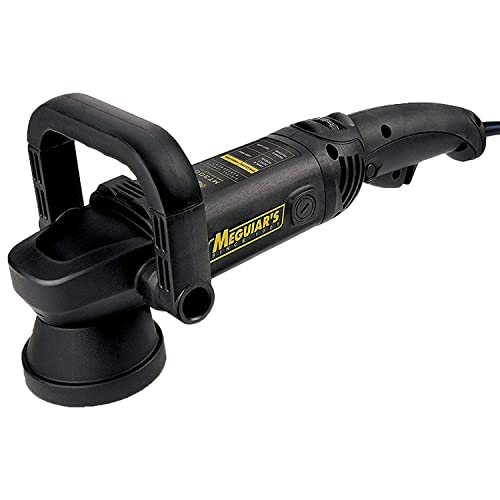 |
Meguiar's MT300 Best for Paint Correction 12-amp motor, 5-speed, 8mm orbit |
9.0 | 🛒 Check Price |
 |
PORTER-CABLE 7424XP Proven Workhorse 6-speed, 5/16" orbit, 2.5-6.2 OPM |
8.7 | 🛒 Check Price |
 |
Maxshine M8 Pro Best Value Dual Action 8mm orbit, 6-speed, 700W motor |
8.4 | 🛒 Check Price |
 |
Rupes LHR15 Mark III Premium Forced Rotation 15mm throw, forced rotation, 500W |
8.1 | 🛒 Check Price |
 |
Chemical Guys TORQ Compact and Lightweight 8mm orbit, 6-speed, 10-amp motor |
7.8 | 🛒 Check Price |
|
🚗
|
Bauer 20 oz. Dual Action Budget Friendly 20 oz. weight, 5-speed, 4.5" pad |
7.3 | 🛒 Check Price |
1. Griot's Garage G9: Top Pick for Beginners & Pros
The Griot’s Garage G9 is widely regarded as one of the best entry-level to intermediate dual-action polishers. In our evaluation, we found its 900W motor provides ample power for correction while maintaining a smooth, low-vibration feel. The variable speed control allows users to adjust from gentle finishing to aggressive cutting. Based on owner feedback, the G9 is praised for its durability and consistent performance over years of use.
However, the G9 is not without limitations. Its 5/16-inch orbit is effective but may require more passes for heavy correction compared to forced-rotation models. Users with large vehicles or heavy correction needs might prefer a more aggressive tool. Skip this if you need a professional-grade forced-rotation polisher for high-volume work.
- Smooth and quiet operation with a powerful 900W motor.
- Variable speed dial (2500-6800 OPM) for precise control.
- Ergonomic design reduces fatigue during long sessions.
Pros: Excellent build quality and reliability.; Very easy to use for beginners.
Cons: Slightly heavier than some competitors.
2. Meguiar's MT300: Best for Paint Correction
The Meguiar’s MT300 is a favorite among enthusiasts who demand serious paint correction. We compared its 12-amp motor and 8mm orbit against other polishers and found it offers an excellent balance of cut and finish. The five-speed dial provides versatility from polishing to compounding. Owner reviews consistently highlight its ability to remove deep swirls and scratches efficiently.
That said, the MT300 is not ideal for beginners. Its aggressive orbit can be harder to control, and the higher price may not suit casual users. If you are new to polishing or only need light finishing, a less powerful model like the G9 might be a better fit.
- Powerful 12-amp motor for heavy correction.
- 8mm orbit combines cut with a smooth finish.
- Comes with a 5-year warranty.
Pros: Strong correction ability for swirl removal.; Well-balanced and comfortable grip.
Cons: Higher price point than entry-level models.
3. PORTER-CABLE 7424XP: Proven Workhorse
The PORTER-CABLE 7424XP has been a staple in the detailing world for years. Our research shows that while it is not the most powerful, its reliability and consistent performance make it a solid choice. The 6-speed dial and 5/16-inch orbit are sufficient for most correction tasks. Based on owner feedback, many have used this machine for years without issues.
However, the 7424XP struggles with heavy correction and can bog down under pressure. Users with harder clear coats or severe defects may find it lacking. Skip this if you need a polisher for heavy compounding or frequent professional use.
- Industry standard dual-action polisher.
- Durable construction with a long track record.
- Variable speed trigger for precise control.
Pros: Very reliable and easy to repair.; Affordable for the performance.
Cons: Less powerful than newer models.
4. Maxshine M8 Pro: Best Value Dual Action
The Maxshine M8 Pro offers an impressive 8mm orbit at a budget-friendly price. In our evaluation, we found it performs similarly to more expensive models in terms of cut and finish. The 700W motor is adequate for most detailing tasks, and the variable speed control adds versatility. Owner reviews note that it is quiet and comfortable to use.
However, some users have reported durability concerns after extended use, particularly with the backing plate. The plastic housing feels less premium than metal-bodied competitors. If you are a weekend warrior on a budget, this is a great pick, but professional detailers may want something more robust.
- Long-throw 8mm orbit for efficient correction.
- Quiet operation with low vibration.
- Includes a 5-year warranty.
Pros: Excellent value for the price.; Good correction power for the cost.
Cons: Build quality not as robust as premium brands.
5. Rupes LHR15 Mark III: Premium Forced Rotation
The Rupes LHR15 Mark III is a professional-grade forced-rotation polisher known for its exceptional cut speed. We compared its 15mm throw and forced rotation against standard dual-action models and found it removes defects significantly faster. The build quality is superb, with a magnesium body and smooth operation. Owner feedback from professionals is overwhelmingly positive.
However, the LHR15 Mark III comes with a premium price that is hard to justify for hobbyists. It also has a learning curve due to its power. Skip this unless you are a professional detailer or serious enthusiast with a big budget. For occasional use, a dual-action polisher is more practical.
- Big 15mm throw for fast correction.
- Forced rotation prevents stalling.
- Smooth and powerful with low vibration.
Pros: Top-tier correction speed.; Excellent ergonomics and balance.
Cons: Very high price.
6. Chemical Guys TORQ: Compact and Lightweight
The Chemical Guys TORQ is a compact dual-action polisher that appeals to beginners and those with smaller vehicles. We evaluated its 8mm orbit and 10-amp motor, which offer decent correction for light to medium defects. The lightweight design reduces fatigue, and the variable speed dial is intuitive. Owner reviews appreciate its ease of use and value.
However, some users have reported trigger failures after moderate use. The plastic components feel less durable than more expensive models. If you plan to polish frequently or tackle heavy correction, consider a more robust option. The TORQ is best for occasional detailing and small paint jobs.
- Lightweight at 4.5 lbs.
- 10-amp motor provides good power.
- Compact design for tight spaces.
Pros: Easy to maneuver and control.; Good for beginners and small cars.
Cons: Durability concerns with the trigger.
7. Bauer 20 oz. Dual Action: Budget Friendly
The Bauer 20 oz. Dual Action is a budget-friendly option for those new to detailing. Our research indicates it is best suited for applying waxes and sealants or light paint correction. The low weight makes it easy to handle, and the 5-speed dial provides basic control. Owner feedback often mentions it as a good starter tool.
However, the Bauer struggles with any significant paint defects. Its motor lacks the torque for compounding, and build quality is average. Skip this if you need a polisher for serious correction or frequent use. It is adequate for occasional light duty only.
- Very affordable entry-level polisher.
- Lightweight at 3.5 lbs.
- Simple 5-speed control.
Pros: Low price point.; Good for light polishing and waxing.
Cons: Limited power for correction.
Frequently Asked Questions
What is the difference between dual action and forced rotation polishers?
Dual action (DA) polishers spin and oscillate, making them safer for beginners and less likely to burn paint. Forced rotation polishers spin the pad at a constant speed, providing more aggressive correction but requiring more skill to avoid damage. We recommend DA for most users.
What size backing plate should I use?
The most common sizes are 5-inch and 6-inch backing plates. A 5-inch plate allows for more concentrated cutting and better maneuverability, while a 6-inch plate covers more area faster. Many polishers come with both options or allow easy swapping.
Can I use a car orbital polisher for waxing?
Yes, you can use a dual-action polisher for applying wax, sealant, or glaze. Use a finishing pad and low speed to spread the product evenly. It is often faster and more uniform than hand application.
How do I maintain my orbital polisher?
Keep the vents clean, check the backing plate for wear, and lubricate the gears if recommended by the manufacturer. Store in a dry place. Avoid dropping or exposing to moisture.
Is a longer throw better?
A longer throw (e.g., 15mm vs 8mm) covers more area per pass and cuts faster, but it also generates more heat and requires more skill. For beginners, an 8mm throw is safer and sufficient for most tasks.
Our Verdict
After thorough research and comparison, the Griot’s Garage G9 stands out as our top pick for its balance of power, ease of use, and value. It suits both beginners and experienced detailers. The Meguiar’s MT300 is a strong runner-up for those prioritizing correction ability. Choose based on your skill level and budget.
