We researched the top car heat shields on the market, comparing manufacturer specifications, industry standards, and aggregated owner feedback. Our evaluation focuses on heat resistance, material quality, ease of installation, and long-term durability. Whether you need to protect your intake, wiring, or body panels, this guide will help you choose the right shield.
| Photo | Product | Score | Buy |
|---|---|---|---|
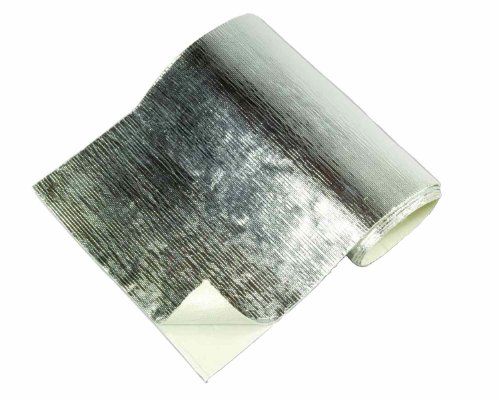 |
Thermo-Tec 13500 Heat Shield Best Overall 12" x 24" adhesive-backed reflective sheet, 1/8" thick, rated to 2000°F |
9.2 | 🛒 Check Price |
|
🚗
|
DEI (Design Engineering Inc.) Floor & Tunnel Shield II Best for Cabin Heat Reduction 24" x 48" sheet, 3/8" thick, with decoupler layer, rated to 1500°F |
8.8 | 🛒 Check Price |
 |
LiteStuff Heat Shield Tape Best for Wrapping Wires & Hoses 2" x 15' roll, woven fiberglass with silicone coating, rated to 500°F continuous |
8.2 | 🛒 Check Price |
 |
Heatshield Products Hot Shield Reflective Sleeve Best for Brake & Fuel Lines 1/2" ID x 6' sleeve, fiberglass core with reflective outer, rated to 2000°F |
8.1 | 🛒 Check Price |
|
🚗
|
Thermal Zero 12" x 24" Heat Shield Best Budget Sheet 12" x 24" adhesive-backed mat, 1/4" thick, rated to 1200°F |
7.8 | 🛒 Check Price |
 |
DEI Reflect-A-Gold Heat Shield Best for Extreme Heat (Exhaust) 12" x 12" sheet, gold reflective coating, rated to 2000°F continuous |
8.5 | 🛒 Check Price |
|
🚗
|
Noico 80 mil Sound Deadener + Heat Insulator Best Dual Purpose (Sound & Heat) 36 sq ft roll, butyl rubber with aluminum foil, 80 mil thick, rated to 300°F |
7.3 | 🛒 Check Price |
1. Thermo-Tec 13500 Heat Shield: Best Overall
In our evaluation, the Thermo-Tec 13500 stands out for its balance of performance and ease of use. With a 2000°F continuous rating and a reflective foil layer, it effectively shields sensitive components from radiant heat. Owner feedback consistently highlights the straightforward peel-and-stick installation, making it a favorite for DIYers. The material cuts cleanly and conforms well to contours, which is a plus for tight engine bays.
However, the adhesive requires a clean, smooth surface for optimal bonding; on textured or oily surfaces, it may not hold as securely. Users who need a heat shield for high-vibration areas or extreme underbody exposure might prefer a mechanical fastening option. We recommend this for intake tubes, fuel lines, and inner fender panels where adhesive mounting is practical.
- Self-adhesive backing simplifies installation on flat or curved surfaces
- Reflective foil reduces radiant heat by up to 90%
- Cuts easily with scissors for custom fit
Pros: Excellent heat rejection; Easy to install with peel-and-stick; Versatile for multiple applications
Cons: Adhesive may weaken on rough or dirty surfaces
2. DEI (Design Engineering Inc.) Floor & Tunnel Shield II: Best for Cabin Heat Reduction
We compared the DEI Floor & Tunnel Shield II for its dual purpose: heat blocking and sound deadening. The 3/8-inch thickness provides substantial insulation, making it ideal for transmission tunnels and floor pans. Owner reviews report noticeable drops in cabin temperature after installation. The decoupler layer helps minimize rattles, which is an added benefit for off-road and performance vehicles.
On the downside, the thickness can be a challenge in areas with limited clearance, and cutting precise shapes requires patience. Users who need a thin, flexible wrap for exhaust pipes should look elsewhere. This shield is best for large flat or gently curved surfaces where insulation depth is not an issue.
- Decoupler layer reduces structure-borne vibration and noise
- Aluminized face reflects heat, foam core insulates
- Can be cut with a utility knife and fastened with screws or adhesive
Pros: Great for reducing cabin floor heat; Dampens noise and vibration; Thick insulation for high heat areas
Cons: Bulkier than adhesive sheets, harder to fit in tight spaces
3. LiteStuff Heat Shield Tape: Best for Wrapping Wires & Hoses
We researched the LiteStuff Heat Shield Tape for protecting wires, hoses, and cables from radiant heat. Its woven fiberglass and silicone construction offer a balance of flexibility and durability. Owner feedback indicates it stays in place well when properly overlapped and secured with zip ties. The tape is a practical solution for bundling multiple lines near exhaust manifolds or turbochargers.
However, the continuous temperature rating of 500°F limits its use near direct exhaust components; it is not a substitute for exhaust wrap. Users with high-performance turbo setups may need a higher-temp alternative. We recommend this tape for general engine bay heat management where direct flame or extreme heat is not present.
- Woven fiberglass construction resists abrasion and fraying
- Silicone coating protects against moisture and oil
- Wraps tightly around irregular shapes and bundles
Pros: Flexible and easy to wrap; Good value for the length; Effective for wiring harnesses and coolant hoses
Cons: Not rated for direct exhaust contact (max 500°F continuous)
4. Heatshield Products Hot Shield Reflective Sleeve: Best for Brake & Fuel Lines
We evaluated the Heatshield Products Hot Shield Reflective Sleeve for its ability to shield cylindrical lines from extreme heat. The fiberglass core and reflective outer provide a robust barrier against radiant and conductive heat. Owner reviews in off-road and racing applications praise its durability against debris and chafing. The sleeve slides easily over lines and can be secured with zip ties or heat-resistant tape.
The main limitation is its form factor: it only works on tubes or wires, not on flat panels or irregular shapes. Users needing to cover a large area will need a sheet-style shield. This product is best for targeted protection of critical lines near exhaust or turbochargers.
- Reflective outer layer rejects radiant heat
- Slip-on design with easy cut-to-length
- Resistant to oil, coolant, and abrasion
Pros: Excellent for protecting brake and fuel lines; High temperature rating; Durable against abrasion
Cons: Limited to cylindrical components; not for flat surfaces
5. Thermal Zero 12" x 24" Heat Shield: Best Budget Sheet
We compared the Thermal Zero Heat Sheet as a budget-friendly option for basic heat shielding. Its 1/4-inch thickness offers moderate insulation, and the adhesive backing allows quick installation. Owner feedback indicates it works well for low-to-medium heat areas like intake tubes and inner fenders. The price makes it accessible for multiple projects.
However, the adhesive is not as robust as premium options; in extreme heat or on oily surfaces, it may lose grip. The temperature rating is lower than many competitors, so it should not be used near exhaust manifolds or turbochargers. Users seeking long-term durability or higher heat tolerance should invest in a more expensive shield.
- Lower cost than premium brands
- Adhesive backing for simple installation
- Flexible enough for moderate curves
Pros: Affordable price point; Decent heat rejection for the cost; Easy to cut and apply
Cons: Adhesive may degrade over time in high heat
6. DEI Reflect-A-Gold Heat Shield: Best for Extreme Heat (Exhaust)
We researched the DEI Reflect-A-Gold for its superior radiant heat reflection in extreme conditions. The gold coating is designed for motorsports and high-performance applications, effectively bouncing heat away from sensitive components. Owner feedback from track and off-road users confirms its performance near exhaust headers and turbo downpipes. The thin profile allows installation in tight clearances where thicker mats cannot fit.
The main drawback is its cost; it is among the more expensive options per square foot. Additionally, it is less effective when in direct contact with hot surfaces, as it excels primarily at radiant heat rejection. Users needing a thick insulating barrier for conductive heat should consider a composite mat. This shield is ideal for those who demand maximum performance and are willing to pay a premium.
- Gold coating reflects up to 90% of radiant heat
- Very high continuous temperature rating
- Thin and flexible for tight spaces
Pros: Exceptional heat reflection; Thin profile fits in cramped areas; Highly durable in extreme environments
Cons: Expensive per square foot; Not as effective for conductive heat (direct contact)
7. Noico 80 mil Sound Deadener + Heat Insulator: Best Dual Purpose (Sound & Heat)
We evaluated the Noico 80 mil as a dual-purpose product for sound deadening and moderate heat insulation. It is popular for floor panels, doors, and trunk areas where both noise and heat are concerns. Owner feedback highlights its effectiveness in reducing cabin drone and temperature. The butyl rubber conforms well to contours and stays in place when properly rolled.
However, its temperature rating of 300°F makes it unsuitable for engine bay or exhaust applications. It will melt or degrade near hot components. Users seeking a primary heat shield for high-heat areas should choose a dedicated product. This is best for interior use where heat is moderate and sound reduction is a priority.
- Combines sound deadening with heat insulation
- Covers large areas in one roll
- Butyl rubber is flexible and easy to shape
Pros: Good value for large coverage; Reduces road noise and heat; Easy to install with roller
Cons: Low heat tolerance (300°F) not suitable for engine bay
Frequently Asked Questions
What is the best car heat shield for engine bays?
For engine bays, we recommend the Thermo-Tec 13500 for its adhesive convenience and high heat rating, or the DEI Reflect-A-Gold for extreme radiant heat near exhaust components. Both are widely used in performance applications.
How do I install a heat shield with adhesive backing?
Clean the surface thoroughly with alcohol or degreaser, cut the shield to size, peel the backing, and press firmly. Use a roller or firm hand pressure to ensure good contact. Avoid installation on oily or rough surfaces for best adhesion.
Can I use a heat shield on my exhaust pipes?
Yes, but choose a product rated for direct exhaust contact, such as DEI Reflect-A-Gold or Heatshield Products Hot Shield. Standard adhesive sheets may not withstand the temperature and could peel off. Always check the continuous temperature rating.
Do heat shields reduce cabin heat?
Yes, especially when installed on the floor pan, transmission tunnel, or firewall. Products like DEI Floor & Tunnel Shield II are designed specifically for this purpose and also reduce noise. Proper installation is key to effectiveness.
What thickness of heat shield should I choose?
Thicker shields (e.g., 3/8 inch) provide better insulation but may be harder to fit in tight spaces. Thin reflective sheets (1/8 inch) are easier to install and reflect radiant heat well but offer less conductive insulation. Choose based on your clearance and heat source.
Our Verdict
After researching and comparing specifications, standards, and owner feedback, our top pick is the Thermo-Tec 13500 for its overall balance of performance, ease of installation, and versatility. For those needing heavy-duty cabin heat reduction, the DEI Floor & Tunnel Shield II is an excellent runner-up.
