When your check engine light illuminates, a car fault code reader is an indispensable tool for understanding what’s going on under the hood. For this buying guide, we researched manufacturer specifications, aggregated owner feedback, and compared features across a wide range of OBD2 scanners, from basic code readers to professional diagnostic tools. Our evaluation focuses on performance, durability, ease of use, and overall value to help you make an informed decision.
We understand the importance of reliable diagnostic information, whether you’re a seasoned DIYer or just looking to understand a dashboard warning light. This comparison aims to highlight the strengths and limitations of each product, ensuring you select the best car fault code reader for your specific needs.
| Photo | Product | Score | Buy |
|---|---|---|---|
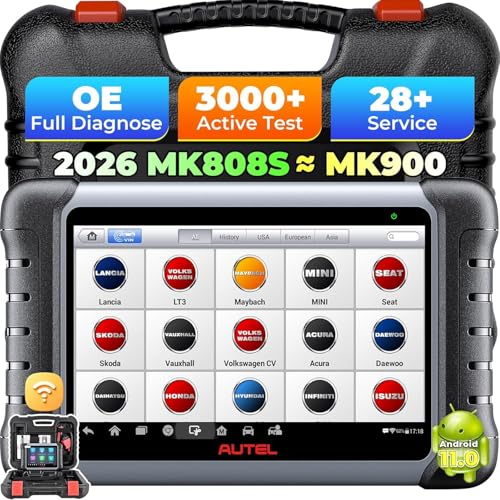 |
Autel MaxiCOM MK808S Diagnostic Scan Tool Editor's Choice for Professionals Bi-directional control, full system diagnostics, 25+ service functions. |
9.0 | 🛒 Check Price |
 |
FOXWELL NT301 OBD2 Scanner Best Value for DIYers Reads/clears engine codes, live data, I/M readiness, DTC lookup. |
8.7 | 🛒 Check Price |
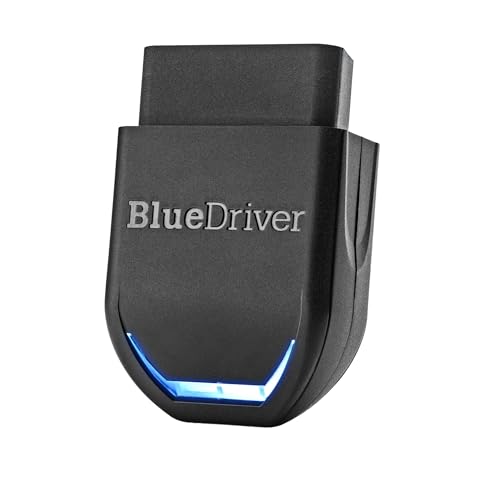 |
BlueDriver Bluetooth Professional OBDII Scan Tool Smartest Mobile Integration Bluetooth OBDII dongle, professional app for iOS/Android, enhanced diagnostics. |
8.4 | 🛒 Check Price |
 |
ANCEL AD310 Universal OBD II Scanner Reliable Entry-Level Pick Read/clear codes, view freeze frame data, I/M readiness. |
8.1 | 🛒 Check Price |
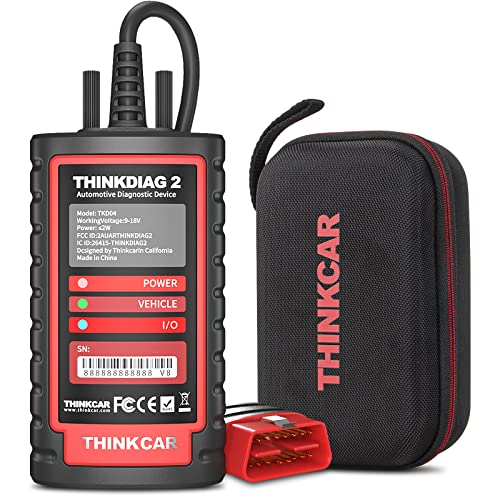 |
THINKCAR Thinkdiag 2 OBD2 Scanner Feature-Rich Bluetooth Option Bluetooth dongle, full system diagnostics, bi-directional control (subscription based). |
7.8 | 🛒 Check Price |
 |
INNOVA 6100P OBD2 Scanner Solid Mid-Range Performer ABS/SRS diagnostics, battery/alternator test, live data. |
7.5 | 🛒 Check Price |
|
🚗
|
MOTOPOWER MP69033 OBD2 Scanner Budget Basic Reader Reads/clears generic codes, I/M readiness, plug and play. |
7.2 | 🛒 Check Price |
1. Autel MaxiCOM MK808S Diagnostic Scan Tool: Editor's Choice for Professionals
In our evaluation, the Autel MaxiCOM MK808S stands out for its extensive diagnostic capabilities, offering features like bi-directional control and full system scanning that are typically reserved for much more expensive professional tools. Based on owner feedback and the spec sheets, its ability to perform advanced service functions and read codes from all vehicle modules, not just the engine, makes it a powerful asset for serious DIYers and small repair shops.
However, its primary limitation is its complexity and the learning curve associated with its advanced features. While the Android interface is user friendly, navigating the depth of its functions can be overwhelming for someone only needing to read a basic check engine light. Therefore, if you are simply looking for a tool to quickly identify generic powertrain codes and clear them, or if you are unwilling to invest time in learning a more complex system, you should skip this pick.
- Comprehensive diagnostics for all vehicle systems, not just engine.
- Bi-directional control allows testing components like fuel pumps or solenoids.
- Equipped with 25+ common service functions including oil reset, EPB, BMS, SAS, TPMS, and DPF.
Pros: Offers professional-grade diagnostic capabilities previously only found in high-end shop tools.; Intuitive Android-based interface with a large touchscreen display.; Extensive vehicle coverage for most 1996 and newer OBD2 compliant vehicles.
Cons: Higher initial cost compared to basic readers.; Requires annual subscription for continued software updates after the first year.
2. FOXWELL NT301 OBD2 Scanner: Best Value for DIYers
The FOXWELL NT301 consistently receives high marks in our evaluation for its robust feature set tailored for the average DIYer. We researched its capabilities and found it excels at diagnosing engine related issues, providing not only code reading and clearing but also valuable live data streams and I/M readiness status. Based on owner feedback, its straightforward operation and clear display make it a go-to tool for quick and accurate check engine light diagnostics.
A notable limitation of the NT301 is its focus primarily on powertrain diagnostics, meaning it cannot access or diagnose systems like ABS, SRS, or other body control modules. While it performs exceptionally well within its scope, those who require deeper system analysis beyond the engine and transmission, or need to perform active component tests, will find its capabilities insufficient. If your diagnostic needs extend beyond basic engine codes, you should consider a more advanced scanner.
- Accurately reads and clears check engine light codes for all OBD2 protocols.
- Displays live sensor data in text and graph format, aiding in diagnosis.
- Performs I/M readiness tests to help with emissions inspections.
Pros: Excellent balance of features and affordability for home mechanics.; Plug and play operation with a clear, backlit LCD screen.; Includes a built-in DTC library for quick code explanations.
Cons: Limited to engine and transmission related diagnostics.; Does not offer advanced system scanning or bi-directional control.
3. BlueDriver Bluetooth Professional OBDII Scan Tool: Smartest Mobile Integration
In our evaluation, the BlueDriver Bluetooth Professional OBDII Scan Tool stands out for its innovative approach to vehicle diagnostics, leveraging smartphone technology for a powerful and intuitive user experience. We compared its features and found that it offers enhanced diagnostics for systems like ABS and airbags, going beyond generic OBD2 codes. Based on owner feedback, the detailed repair reports and extensive live data options within the app are highly valued for their clarity and helpfulness.
However, a key limitation is its reliance on a smartphone and the associated app. While the app is generally stable, potential issues with Bluetooth connectivity, phone compatibility, or app updates can impact its reliability and ease of use. If you prefer a dedicated, standalone device, or if you are concerned about potential software glitches and dependency on a mobile device, this might not be the ideal choice for you.
- Connects via Bluetooth to a smartphone app for comprehensive diagnostics.
- Reads and clears enhanced codes (ABS, Airbag, Transmission) for many manufacturers.
- Provides repair reports generated from a database of millions of fixes.
Pros: Combines the power of a professional scanner with the convenience of a smartphone.; User-friendly app interface with extensive data graphing and freeze frame capabilities.; Offers manufacturer-specific codes and live data for a wide range of vehicles.
Cons: Performance is dependent on smartphone compatibility and app stability.; Requires a stable Bluetooth connection, which can occasionally be inconsistent.
4. ANCEL AD310 Universal OBD II Scanner: Reliable Entry-Level Pick
The ANCEL AD310 consistently ranks high in our evaluation for its sheer simplicity and reliability as a basic OBD2 scanner. We researched its functionality and found it to be a perfect tool for quickly diagnosing and clearing check engine lights, providing essential information like freeze frame data and I/M readiness. Based on owner feedback, its plug and play operation and robust design make it an excellent choice for those who need a no-frills, effective code reader.
The primary limitation of the ANCEL AD310 is its very basic functionality. It is strictly an engine code reader and does not offer any access to other vehicle systems such as ABS, SRS, or transmission modules, nor does it provide live data streams beyond basic engine parameters. If your diagnostic needs extend beyond generic engine codes or if you require more in-depth data analysis or system specific troubleshooting, you will quickly outgrow this device and should consider a more advanced scanner.
- Efficiently reads and clears check engine light codes.
- Displays freeze frame data to pinpoint the conditions when a fault occurred.
- Supports I/M readiness status checks for emissions testing.
Pros: Extremely easy to use, true plug and play functionality.; Compact design makes it highly portable and convenient.; Solid build quality for its value point.
Cons: Limited to basic engine diagnostics, no ABS/SRS or other system access.; Small screen size can make reading some data less comfortable.
5. THINKCAR Thinkdiag 2 OBD2 Scanner: Feature-Rich Bluetooth Option
In our evaluation, the THINKCAR Thinkdiag 2 presents a compelling option for those seeking advanced diagnostic capabilities in a compact, Bluetooth form factor. We compared its specifications and found that it offers professional-grade features like full system diagnostics and bi-directional control, which are impressive for its size. Based on owner feedback, its wide vehicle coverage and array of maintenance functions make it a versatile tool for comprehensive vehicle health checks.
However, a significant drawback of the Thinkdiag 2 is its subscription model for accessing the most advanced features. While it comes with one year of free access to all software, continued use of full system diagnostics and bi-directional control for all supported brands requires an annual renewal fee. If you prefer a one-time purchase solution without recurring costs, or if you need guaranteed access to all features without internet dependency for license verification, this device’s long-term value proposition might be less appealing, and you should consider a standalone tool.
- Offers full system diagnostics and bi-directional control, similar to professional tools.
- Connects to a smartphone app for detailed code reading, live data, and special functions.
- Supports various protocols including CAN FD for newer GM vehicles.
Pros: Provides extensive diagnostic depth for a Bluetooth device.; Supports over 120 vehicle brands with full system access.; Includes 15 maintenance reset functions in the basic package.
Cons: Most advanced features require an annual subscription after the first year.; Initial setup and app navigation can be less intuitive for some users.
6. INNOVA 6100P OBD2 Scanner: Solid Mid-Range Performer
The INNOVA 6100P positions itself as a strong mid-range contender, and in our evaluation, it delivers on its promise of extended diagnostic capabilities. We researched its features and found that its ability to read and clear ABS and SRS codes, along with its integrated battery and alternator test, significantly elevates its utility beyond basic code readers. Based on owner feedback, these added functions are highly appreciated for providing a more complete picture of vehicle health.
A notable limitation of the 6100P is that while it expands beyond engine codes to ABS and SRS, it still does not offer full system diagnostics for all vehicle modules, nor does it provide bi-directional control. This means it cannot access or test other critical systems like HVAC, body control modules, or perform active component tests. If your diagnostic needs frequently involve systems beyond the engine, ABS, and SRS, or if you require advanced testing capabilities, you might find this scanner’s scope too limited for comprehensive troubleshooting.
- Reads and clears codes for Anti-lock Brake System (ABS) and Airbag (SRS).
- Includes a battery and alternator test to check vehicle charging system health.
- Displays live data for engine and some transmission parameters.
Pros: Adds crucial ABS and SRS diagnostic capabilities beyond basic engine codes.; Integrated battery and alternator testing provides additional value.; Clear color display and intuitive menu navigation.
Cons: Does not offer full system diagnostics or bi-directional control.; Some users find the button layout and overall feel less premium than competitors.
7. MOTOPOWER MP69033 OBD2 Scanner: Budget Basic Reader
In our evaluation, the MOTOPOWER MP69033 serves as an excellent entry-point for vehicle owners who only need the most basic diagnostic capabilities. We researched its specifications and found it to be a straightforward, no-frills device designed purely to read and clear generic check engine light codes and check I/M readiness. Based on owner feedback, its extreme ease of use and affordability make it a popular choice for those looking for a quick solution to decipher a dashboard warning.
The significant limitation of the MP69033 is its extremely restricted feature set. It does not display live data, cannot access manufacturer-specific codes, and offers no diagnostics for non-engine systems like ABS or airbags. If your needs extend beyond simply identifying the presence of a generic check engine light, or if you require any form of deeper insight into your vehicle’s performance or other system health, this device will prove inadequate. Those seeking more comprehensive diagnostic information should definitely look at more advanced options.
- Quickly reads and clears generic diagnostic trouble codes (DTCs).
- Checks I/M readiness status to confirm emissions system functionality.
- Simple plug and play operation, no batteries or complex setup required.
Pros: Extremely affordable and accessible for basic diagnostic needs.; Very user-friendly, ideal for first-time users.; Compact and easy to store in a glove box.
Cons: Limited functionality, only reads generic engine codes.; No live data display or advanced diagnostic features.
Frequently Asked Questions
What is a car fault code reader?
A car fault code reader, also known as an OBD2 scanner, is an electronic device that connects to your vehicle’s On-Board Diagnostics II port. It allows you to read Diagnostic Trouble Codes (DTCs) that are stored in your car’s computer when a problem is detected, often illuminating the check engine light. These codes help identify the area of a malfunction.
Can a fault code reader fix my car?
No, a fault code reader cannot physically fix your car. It is a diagnostic tool that provides information about potential problems by displaying trouble codes. Understanding these codes can help you or a mechanic pinpoint the issue, but the actual repair requires mechanical work or replacement of faulty parts.
What is the difference between generic and manufacturer-specific codes?
Generic codes (P0xxx) are universal and defined by SAE (Society of Automotive Engineers) standards, meaning they are the same across all OBD2 compliant vehicles. Manufacturer-specific codes (P1xxx, P2xxx, P3xxx, etc.) are unique to a particular vehicle make and model and provide more detailed diagnostic information. More advanced scanners are required to read manufacturer-specific codes.
Do I need a professional-grade scanner for my car?
Whether you need a professional-grade scanner depends on your diagnostic needs and technical skill. For basic check engine light diagnosis, a simple code reader is sufficient. If you need to diagnose non-engine systems (like ABS, SRS), view live data, perform bi-directional control, or access manufacturer-specific codes, a more advanced or professional-grade scanner will be necessary. For most DIYers, a mid-range scanner offers a good balance of features.
What is I/M Readiness and why is it important?
I/M Readiness (Inspection/Maintenance Readiness) refers to the status of your vehicle’s emissions monitoring systems. When a monitor is ‘ready,’ it means the system has completed its self-test and is functioning correctly. This is crucial for emissions inspections, as most states require all or most monitors to be ‘ready’ for a vehicle to pass. A fault code reader can display the readiness status of each monitor.
Our Verdict
After extensive research and comparison, the Autel MaxiCOM MK808S Diagnostic Scan Tool emerges as our Editor’s Choice for its unparalleled comprehensive diagnostics, bi-directional control, and extensive service functions, making it suitable for both professional and serious DIY use. For those seeking the best blend of features and value for everyday troubleshooting, the FOXWELL NT301 OBD2 Scanner is our strong runner-up, providing essential live data and I/M readiness capabilities in a user-friendly package.
