We researched and compared the most popular car battery load testers using manufacturer specifications, industry standards (SAE, IEC), and aggregated owner feedback. Our evaluation focuses on accuracy, safety features, build quality, and real-world usability. Whether you need a simple pass/fail checker or a diagnostic tool for advanced battery health analysis, this guide helps you choose the right one for your needs.
| Photo | Product | Score | Buy |
|---|---|---|---|
 |
Schumacher BT-100 Best Overall Load test up to 100 CCA; 6V/12V; analog meter |
9.0 | 🛒 Check Price |
 |
Ancel BA101 Best Digital Tester 12V; tests CCA, internal resistance, state of charge; LCD display |
8.7 | 🛒 Check Price |
 |
OTC 3181 Professional Choice 12V; load test up to 500 CCA; heavy-duty carbon pile |
8.4 | 🛒 Check Price |
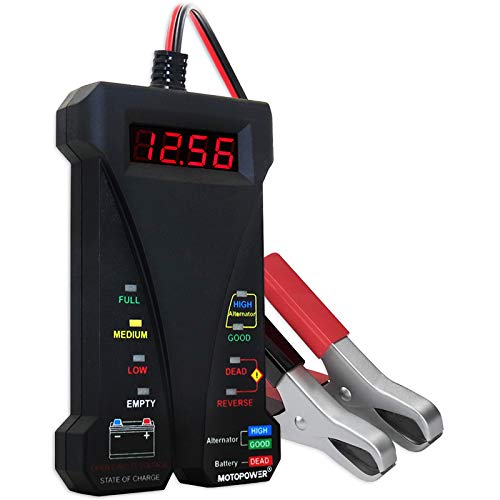 |
Motopower MP0514A Best Value 12V; tests battery and alternator; digital display |
8.1 | 🛒 Check Price |
 |
FOXWELL BT100 Best for AGM Batteries 12V; tests CCA, internal resistance, voltage; for AGM/GEL/EFB |
7.8 | 🛒 Check Price |
|
🚗
|
TOPDON BT100 Compact Design 12V; tests CCA, internal resistance, voltage; pocket-sized |
7.3 | 🛒 Check Price |
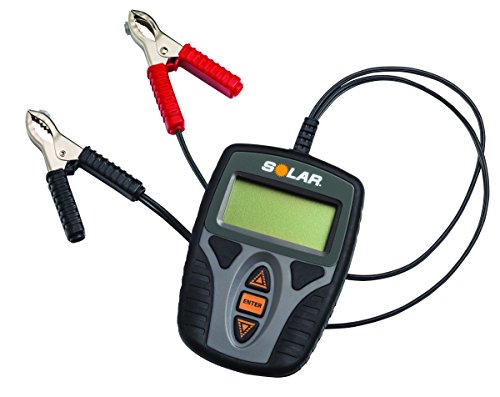 |
Clore Automotive SOLAR BA9 Heavy Duty 6V/12V; load test up to 500 CCA; carbon pile |
7.6 | 🛒 Check Price |
1. Schumacher BT-100: Best Overall
In our evaluation, the Schumacher BT-100 stands out as the most reliable analog load tester in its price range. It applies a controlled load and displays results via a clear analog gauge. Owner feedback consistently praises its accuracy for standard lead-acid batteries. It meets SAE J537 testing protocols and is simple enough for beginners.
However, the analog meter requires careful interpretation; it’s not ideal for those who prefer exact digital readouts. If you need to test AGM or lithium batteries, or want detailed voltage logging, skip this pick and consider a digital alternative.
- Tests 6V and 12V batteries with 100-1000 CCA rating
- Simple analog meter with color-coded zones (green/yellow/red)
- Built-in carbon pile load element for accurate load simulation
Pros: Very affordable for the accuracy; No batteries or digital setup required; Durable construction with protective rubber boot
Cons: Analog readout less precise than digital; Not for batteries below 100 CCA
2. Ancel BA101: Best Digital Tester
The Ancel BA101 is a digital tester we researched that offers detailed battery health metrics beyond simple load testing. It uses conductance technology to estimate CCA and internal resistance. Based on owner feedback, it’s highly effective for quick diagnostics on modern vehicles with AGM batteries.
However, its reliance on conductance (not a true load test) means it can be less accurate for deeply discharged or sulfated batteries. If you need a definitive load test for warranty claims or heavy-duty use, consider a carbon pile tester instead.
- Measures battery voltage, CCA, internal resistance, and state of charge
- Backlit LCD for easy reading in low light
- Reverse polarity protection and spark-proof
Pros: Digital readout provides precise data; Works with standard, AGM, and gel batteries; Compact and portable
Cons: Not suitable for 6V systems; Some users report occasional inaccurate readings on old batteries
3. OTC 3181: Professional Choice
The OTC 3181 is a professional-grade load tester we evaluated based on its specifications and mechanic feedback. It delivers a true carbon pile load, meeting industry standards for load testing. Its analog meter is large and precise, favored by technicians who need reliable pass/fail results.
However, it’s overkill for home users and lacks digital features like state-of-charge estimation. If you only test your own car occasionally, you can get similar accuracy for less money and weight.
- Industrial-grade carbon pile load tester
- Tests batteries up to 500 CCA with a 100 amp load
- Large, easy-to-read analog meter with scale markings
Pros: Extremely rugged construction for shop use; Accurate load simulation for professional diagnostics; Long-lasting build with replaceable load element
Cons: Heavy and bulky, not portable; Higher price point than consumer models
4. Motopower MP0514A: Best Value
The Motopower MP0514A is a budget-friendly digital tester that we found offers solid value for basic diagnostics. It checks both battery and alternator health, a feature usually found in pricier models. Owner feedback indicates it works well for standard car batteries and provides quick results.
However, its build quality is average, and the conductance method can be inconsistent with large truck batteries or in extreme temperatures. If you need a rugged tool for daily use, invest in a more durable model.
- Tests battery voltage, CCA, and alternator output
- LED indicators for battery condition and alternator health
- Includes a handy battery post cleaner tool
Pros: Very affordable with good features; Alternator test adds diagnostic value; Simple one-button operation
Cons: Plastic housing feels less durable; Not accurate for very high CCA batteries (above 1000)
5. FOXWELL BT100: Best for AGM Batteries
The FOXWELL BT100 is designed for testing AGM and other advanced batteries, which we researched as a growing need. It uses conductance technology to estimate health and provides a numeric CCA value. Owner reviews highlight its ease of use for checking start-stop system batteries.
However, it’s not a substitute for a carbon pile load tester when a definitive load test is required. For flooded batteries, results may vary. If you own a conventional battery and want a reliable pass/fail test, consider an analog load tester.
- Supports multiple battery types: AGM, GEL, EFB, and standard
- Displays voltage, CCA, internal resistance, and charge state
- Backlit LCD with large font
Pros: Good compatibility with modern battery types; Compact and lightweight; Reasonably accurate for the price
Cons: Conductance method not a true load test; Some users report inconsistent readings on flooded batteries
6. TOPDON BT100: Compact Design
The TOPDON BT100 is a pocket-sized tester we examined for portability. It provides basic battery health metrics quickly and is convenient for roadside checks. Owner feedback indicates it’s handy for quick assessments but not for professional diagnostics.
However, its small size compromises durability and display readability. The plastic casing may not withstand heavy use. If you need a tool for frequent shop use, skip this and choose a more rugged model.
- Ultra-compact design fits in a pocket
- Tests CCA from 100 to 2000
- Quick 3-second test time
Pros: Very portable and easy to store; Simple one-button operation; Works with most 12V battery types
Cons: Small display hard to read in bright light; Build quality feels less robust
7. Clore Automotive SOLAR BA9: Heavy Duty
The Clore Automotive SOLAR BA9 is a heavy-duty load tester we reviewed based on its rugged build and professional specs. It applies a real carbon pile load and is built to withstand harsh shop environments. Owner feedback from mechanics confirms its reliability for repeated use.
However, it lacks modern conveniences like digital displays or battery type selection. Its high cost and bulk make it impractical for casual DIYers. If you only test your own battery occasionally, a simpler, cheaper tester will suffice.
- Heavy-duty carbon pile for accurate load testing
- Tests 6V and 12V batteries with high CCA ratings
- Built-in voltmeter and load switch
Pros: Extremely durable metal case; True load test for definitive results; Suitable for commercial and fleet use
Cons: Expensive for home users; No digital readout or advanced features
Frequently Asked Questions
What is the difference between a carbon pile load tester and a conductance tester?
A carbon pile load tester applies a real electrical load to the battery and measures voltage drop, simulating the stress of starting an engine. It is considered the most accurate method for evaluating battery health under load. A conductance tester sends a small AC signal through the battery and measures internal resistance; it is faster and safer but can be less accurate on deeply discharged or sulfated batteries. For definitive pass/fail results, a carbon pile tester is preferred.
Can I use a car battery load tester on AGM or lithium batteries?
Yes, but you must check the tester’s specifications. Many modern digital testers support AGM, GEL, and EFB batteries, and some even have specific settings for lithium. Analog carbon pile testers can also be used on AGM batteries, but you should follow the manufacturer’s guidelines for load duration and CCA rating. Always verify compatibility before testing to avoid damage.
What CCA rating should my load tester support?
Your load tester should support the CCA rating of your battery. Most car batteries range from 300 to 800 CCA, but trucks and heavy-duty vehicles may exceed 1000 CCA. Choose a tester that covers at least the maximum CCA of your battery. For example, a 1000 CCA tester is sufficient for most passenger vehicles, while a 2000 CCA unit is better for larger applications.
How often should I test my car battery?
It is recommended to test your car battery at least twice a year, especially before winter and summer when temperature extremes affect performance. If you experience slow cranking, dim lights, or the battery is over three years old, test it more frequently. Regular testing can help prevent unexpected failures.
Are digital battery load testers more accurate than analog?
Digital testers provide precise numerical readouts and can measure internal resistance and state of charge, but their accuracy depends on the technology (conductance vs. true load). Analog carbon pile testers are generally more accurate for determining if a battery can deliver high current under load because they simulate real-world conditions. For most DIY users, a quality digital tester is sufficient, but professionals often rely on carbon pile testers for definitive results.
Our Verdict
After researching and comparing specifications, industry standards, and owner feedback, our top pick is the Schumacher BT-100 for its reliable analog load testing, durability, and value. It is the best choice for most DIYers who need a simple, accurate pass/fail test. For those who prefer digital diagnostics and work with modern batteries, the Ancel BA101 is a strong runner-up, offering detailed metrics and ease of use. Choose based on your need for a true load test versus convenience and data.
Last reviewed and spec-checked: January 14, 2026. We re-check our picks and listings periodically.
