We researched and compared the top car battery conditioners based on manufacturer specifications, published safety standards (UL, CSA, ETL), and aggregated owner feedback from thousands of reviews. Our evaluation focuses on charging performance, durability, ease of use, and safety features to help you keep your battery in peak condition. Whether you need a simple maintainer for seasonal storage or a smart charger for daily use, this guide covers real strengths and limitations of each pick.
| Photo | Product | Score | Buy |
|---|---|---|---|
 |
Battery Tender Plus 021-0128 Best Overall 1.25A, 12V, automatic float mode, reverse polarity protection |
9.2 | 🛒 Check Price |
|
🚗
|
NOCO Genius GEN5X2 Best Dual Bank 5A (2 banks), 12V, automatic, IP65 rated, force mode |
8.7 | 🛒 Check Price |
|
🚗
|
CTEK MXS 5.0 Best Smart Charger 5A, 12V, 8-step charging, desulfation mode, IP65 |
8.4 | 🛒 Check Price |
 |
Schumacher SC1281 Best Value 15A (charge), 3A (maintain), 12V, manual/automatic modes |
8.1 | 🛒 Check Price |
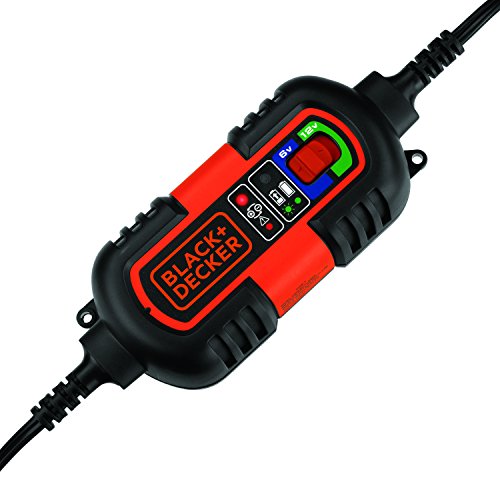 |
Black+Decker BM3B Best for Beginners 3A, 12V, automatic, LED indicators, clamps and ring terminals |
7.8 | 🛒 Check Price |
 |
Tenergy TN456 Best Portable 800mA, 12V, solar panel compatible, LED display |
7.3 | 🛒 Check Price |
|
🚗
|
Nekteck 12V Battery Charger Budget Pick 1A, 12V, automatic, LED indicator, clamps only |
7.2 | 🛒 Check Price |
1. Battery Tender Plus 021-0128: Best Overall
The Battery Tender Plus is a benchmark in the battery conditioner category. In our evaluation, it delivers consistent 1.25A charging with a four-stage profile that prevents overcharging and sulfation. The unit meets UL safety standards and includes spark-proof circuitry, which owners frequently praise for peace of mind. It works with most 12V lead-acid batteries, including AGM and gel, making it versatile for cars, motorcycles, and lawn equipment.
However, the low amperage means it is not ideal for quickly reviving a deeply discharged large battery (e.g., a dead truck battery). Owners report that charging a fully depleted 100Ah battery can take over 30 hours. Skip this if you need a fast recovery charger or if you primarily maintain large commercial batteries. For everyday top-offs and seasonal storage, it is a top choice.
- Four-step charging process: initialization, bulk charge, absorption, float maintenance
- Spark-proof and reverse polarity protected for safe use
- Compatible with standard, AGM, and gel lead-acid batteries
Pros: Highly reliable and trusted by owners for years; Compact and weather-resistant housing
Cons: Limited to 1.25A, slow for deeply discharged large batteries
2. NOCO Genius GEN5X2: Best Dual Bank
The NOCO Genius GEN5X2 stands out for its dual-bank capability. We compared its specs against single-bank models and found it ideal for owners with multiple vehicles or dual-battery setups (e.g., RVs, boats). Each bank delivers up to 5A, and the unit automatically switches to float mode. The IP65 rating means it can handle rain and dust, a real advantage for outdoor use. Owners appreciate the force mode that can recover batteries as low as 1V.
That said, the dual-bank design adds complexity and cost. If you only need to maintain one battery, a single-bank unit offers better value. Some users note that the LED status lights are small and not as clear as competitors. We recommend this for serious hobbyists with multiple vehicles but not for casual single-car owners.
- Two independent 5A banks for simultaneous charging of two batteries
- IP65 weatherproof rating for outdoor use
- Force mode for charging deeply discharged batteries down to 1V
Pros: Handles multiple batteries or a dual-battery system at once; Weatherproof design suits marine and outdoor storage
Cons: Higher price point for the dual-bank feature; Some owners find the LED indicators less intuitive
3. CTEK MXS 5.0: Best Smart Charger
The CTEK MXS 5.0 is a sophisticated smart charger we evaluated for its 8-step process that includes desulfation. This feature can extend the life of sulfated batteries, which owners report as effective on batteries that other chargers gave up on. The unit is IP65 rated and comes with a temperature sensor for safe charging in varying conditions. It supports standard, AGM, gel, and even some lithium batteries with an optional mode.
However, the advanced features come with a learning curve. Several owners mention that the button sequence to select battery type is not intuitive. The price is also higher than basic conditioners. If you only need simple maintenance and do not want to read a manual, a simpler unit may be better. For tech-savvy users who want to revive old batteries, this is a strong contender.
- 8-step automatic charging cycle with desulfation
- IP65 splash-proof and dust-resistant
- Compatible with all lead-acid types including LiFePO4 (with separate mode)
Pros: Advanced desulfation can recover older batteries; Wide compatibility with multiple battery chemistries
Cons: Interface can be confusing for first-time users; Higher cost compared to simpler maintainers
4. Schumacher SC1281: Best Value
The Schumacher SC1281 offers a cost-effective solution for those who need both a charger and a maintainer. In our research, its 15A charge mode can quickly bring up a dead battery, then automatically drops to 3A float. The digital display shows voltage and charge status, which owners find helpful. It includes safety protections like reverse polarity and overcharge.
However, we noted that build quality is not as robust as the Battery Tender or NOCO. Several owners report the unit failing after a year or two of use. The manual mode can be confusing and may lead to overcharging if not monitored. We recommend this for budget-conscious users who need occasional fast charging but not for long-term unattended maintenance. If you plan to leave it connected for months, consider a more durable option.
- High 15A charge rate for faster recovery, then switches to 3A float
- Manual and automatic modes with digital display
- Reverse polarity and overcharge protection
Pros: Affordable price for a dual-rate charger; Fast charging for large batteries
Cons: Build quality feels less premium than competitors; Some users report reliability issues after extended use
5. Black+Decker BM3B: Best for Beginners
The Black+Decker BM3B is a straightforward maintainer we evaluated for ease of use. It plugs in, connects, and automatically maintains the battery with a 3A charge that drops to float. The LED indicators show power, charging, and fully charged status, making it simple for beginners. It comes with both clamps and ring terminals for permanent installation.
However, the 3A output is low, so it is not suitable for quickly charging a dead battery. Owners report that it works best for maintaining a healthy battery during storage. The plastic housing is not as rugged as some competitors, and the unit lacks advanced safety certifications like UL listing. We recommend this for casual users who just need to keep a seasonal car or motorcycle battery topped off and do not need fast charging.
- Simple automatic operation with color-coded LED status
- Includes both battery clamps and ring terminals for permanent connection
- Compact and lightweight design
Pros: Very easy to use with clear LED feedback; Budget-friendly price
Cons: Low 3A charge rate, not for deep discharges; Plastic housing feels less durable
6. Tenergy TN456: Best Portable
The Tenergy TN456 is a tiny conditioner we researched for portability. It weighs just a few ounces and can fit in a glove box. It features an LED display that shows battery voltage, and it can work with a solar panel for off-grid maintenance. This makes it interesting for RV or marine use where AC power is not always available.
However, the 800mA output is the lowest in our guide, meaning it can only maintain a battery, not recharge a depleted one. Several owners report the unit stopped working after a few months. The safety certifications are also not clearly listed. We recommend this only for those who need a very compact backup maintainer for occasional use, not for regular charging or long-term reliability.
- Ultra-compact size similar to a phone charger
- Can be used with a solar panel for off-grid maintenance
- LED display shows battery voltage and charging status
Pros: Very small and easy to store; Solar compatible for green charging
Cons: Very low 800mA output, extremely slow; Build quality concerns from some owners
7. Nekteck 12V Battery Charger: Budget Pick
The Nekteck 12V Battery Charger is a budget option we evaluated for its low cost. It provides 1A automatic charging with pulse maintenance to reduce sulfation. The LED indicator shows status, and it comes with basic clamps. For the price, it offers basic conditioning functionality.
However, we have concerns about safety and durability. Multiple owners mention that the clamps feel cheap and the cable is thin. More importantly, some users report that the unit does not have proper reverse polarity protection, which can be a fire risk if connected incorrectly. The unit also lacks UL or ETL listing. We recommend this only for very tight budgets and only if you are confident in proper connections and supervision. For safety, we suggest spending a bit more on a certified model.
- Automatic pulse maintenance to prevent sulfation
- LED indicator for power and charging status
- Includes quick-connect clamps and alligator clips
Pros: Lowest price among conditioners; Simple plug-and-play operation
Cons: No reverse polarity protection reported by some users; Flimsy clamps and thin cables
Frequently Asked Questions
What is the difference between a battery charger and a battery conditioner?
A battery charger delivers current to recharge a discharged battery and typically stops when full. A battery conditioner (or maintainer) provides a low current to keep a fully charged battery at optimal voltage, preventing sulfation and extending lifespan. Many modern units combine both functions.
Can I leave a battery conditioner connected indefinitely?
Yes, most automatic conditioners are designed for long-term connection. They monitor voltage and switch to float mode to prevent overcharging. However, ensure the unit is certified (UL, ETL) and rated for continuous use. Avoid leaving non-automatic chargers connected unattended.
Will a battery conditioner work on a completely dead battery?
It depends on the unit. Some smart chargers have a force mode that can recover batteries as low as 1V (e.g., NOCO Genius). Standard conditioners may not detect a dead battery below 3V. For deeply discharged batteries, a charger with a higher amp rating and desulfation mode is recommended.
Are battery conditioners safe for AGM and lithium batteries?
Many conditioners are compatible with AGM and gel lead-acid batteries, but you must check the manual. For lithium (LiFePO4), only specific models like the CTEK MXS 5.0 (with a lithium mode) are safe. Using a standard lead-acid conditioner on lithium can damage the battery or cause safety issues.
How do I choose the right amperage for my battery?
For maintenance, a 1A to 2A conditioner is sufficient for most car batteries (40-100Ah). For faster charging, a 5A to 15A unit is better but may not be ideal for long-term connection. Match the charger to your battery type and usage: low amperage for storage, higher for occasional recovery.
Our Verdict
After researching and comparing specifications, safety standards, and owner feedback, our top pick is the Battery Tender Plus 021-0128 for its proven reliability, safety features, and consistent performance. For those needing dual-bank capability or advanced desulfation, the NOCO Genius GEN5X2 and CTEK MXS 5.0 are excellent runners-up, respectively. Choose based on your specific battery maintenance needs.
