A good buffing compound is the difference between a paint job that looks tired and one that snaps back to a deep, glossy reflection. The right compound cuts away swirl marks, light scratches, oxidation, and water spots, then refines the surface so it shines instead of hazing. The wrong one either does nothing or leaves you with fresh micro-marring to chase. We worked these compounds across single-stage paint, modern clearcoats, and faded older finishes to see which ones cut fast, finished clean, and stayed easy to control by hand and by machine.
Below are seven compounds that consistently earn their place in a detailer’s kit. We focused on real-world cutting power, how cleanly each one finishes down, dusting, and how forgiving they are if you are still learning to read paint. No matter your skill level, there is an option here that will pull your car’s gloss back without forcing you into a full multi-stage correction.
| Photo | Product | Score | Buy |
|---|---|---|---|
 |
Meguiar's Ultimate Compound Best Overall Clearcoat-safe cutting cream, 15.2 oz, hand or machine use |
9.5 | 🛒 Check Price |
 |
3D ONE Hybrid Correction Compound Best All-In-One True one-step compound and polish, 16 oz, body shop safe |
9.3 | 🛒 Check Price |
 |
Chemical Guys V32 Optical Grade Compound Best for Heavy Defects Extreme cut compound, 16 oz, optical-grade finish |
9.1 | 🛒 Check Price |
 |
Adam's Polishes Heavy Cut Compound Best Cut and Finish Balance Heavy cut with refined finish, 16 oz, DA and rotary safe |
9.0 | 🛒 Check Price |
 |
Griot's Garage Complete Compound Best for Beginners One-step correction cream, 16 oz, hand or machine |
8.8 | 🛒 Check Price |
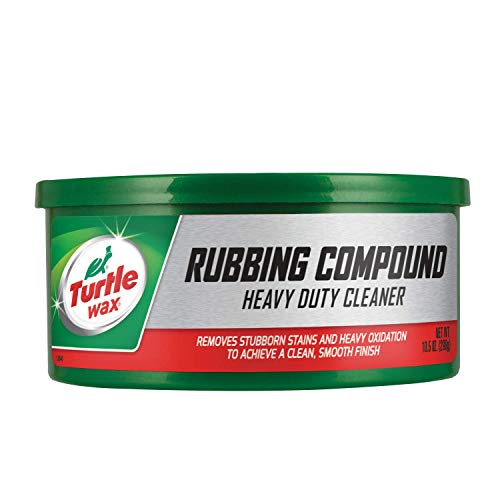 |
Turtle Wax Rubbing Compound Best Value Classic rubbing compound paste, 18 oz, hand or buffer |
8.4 | 🛒 Check Price |
 |
Mothers California Gold Scratch Remover Best for Light Scratches Micro-abrasive paste, 16 oz, spot and panel use |
8.2 | 🛒 Check Price |
1. Meguiar's Ultimate Compound: Best Overall
Meguiar’s Ultimate Compound is the one we reach for first because it balances real cutting power with a finish that does not leave you fighting haze. It pulls out swirl marks, light scratches, and oxidation faster than most clearcoat-safe products, yet it is mild enough that a careful beginner working by hand will not destroy their paint. On a dual-action polisher it really wakes up, knocking down moderate defects in one or two passes and leaving a surface that often looks finished without a dedicated polish step.
The honest weakness is that it is a compromise product. Because it is engineered to be safe for everyone, it will not match the raw cut of a dedicated heavy-cut compound on severe scratches or badly neglected single-stage paint. On those jobs you will be doing multiple passes where a stronger compound would clear it in one. For the vast majority of daily drivers, though, that trade is exactly what you want.
- Micro-abrasive technology removes light scratches and oxidation
- Safe on clearcoat and works by hand or dual-action polisher
- Restores color and clarity without harsh fillers
Pros: Strong cut for a clearcoat-safe compound; Finishes clean enough to skip a separate polish on many cars; Easy to find and forgiving for beginners
Cons: Heavy oxidation may need two passes; Can dust slightly if you let it dry out
2. 3D ONE Hybrid Correction Compound: Best All-In-One
3D ONE is the smartest pick if you hate juggling multiple bottles. Its diminishing abrasives let you start aggressive to knock down defects, then keep working the same product as it breaks down to refine the surface to a near-polish finish. That means on light to moderate paint you can correct and finish in a single step, which saves a huge amount of time on a full car. It is water based, body shop safe, and wipes off cleanly with very little dusting.
The catch is that this versatility leans on your technique. Because the cut changes as you work it, your speed, pressure, and how long you run the pad all affect the result, so two people can get different outcomes from the same bottle. New users sometimes stop too early and leave it acting like a heavy compound, or work it too long and lose cut. Once you learn its rhythm it is brilliant, but it rewards a bit of practice.
- Cuts heavy defects then finishes down to a polish in one product
- Diminishing abrasives adjust cut based on how you work it
- Body shop safe with no wax or silicone fillers
Pros: Genuine compound-to-polish in a single bottle; Long working time with very low dust; Water based and easy to wipe off
Cons: Technique matters more than with fixed-grit compounds; Severe defects still benefit from a true heavy cut first
3. Chemical Guys V32 Optical Grade Compound: Best for Heavy Defects
When the paint is genuinely rough, Chemical Guys V32 is the compound that gets you out of trouble. It is built for serious correction work, chewing through deep swirls, wet-sanding marks, and heavy oxidation that mild all-in-ones simply slide over. The optical-grade abrasives break down as you work them, so it cuts hard at first and refines toward the end of the pass, which keeps the finish more usable than a lot of old-school heavy compounds that leave you with a hazy mess.
That power is also its limitation. This is a machine compound aimed at correction, and using it casually by hand on already-decent paint is a fast way to introduce marring you did not need. It also still benefits from a dedicated polish afterward if you are chasing a flawless show finish, since the goal of a heavy cut is defect removal, not final clarity. Treat it as your first step in a two-stage process and it shines.
- Aggressive cut for deep swirls, sanding marks, and heavy oxidation
- Optical grade abrasives refine as they break down
- Designed for rotary and dual-action machine use
Pros: Excellent raw cutting power on serious defects; Finishes cleaner than most heavy-cut compounds; Great value in a detailing system
Cons: Too aggressive for casual hand use on good paint; Usually needs a follow-up polish for a show finish
4. Adam's Polishes Heavy Cut Compound: Best Cut and Finish Balance
Adam’s Heavy Cut Compound earns its spot by punching above its grit class on the finishing side. It has the muscle to remove deep swirls and sanding marks in the 1200 to 3000 grit range, but where it stands out is how cleanly it finishes down. Many heavy compounds leave a haze that forces a full second polishing stage, while this one often leaves a finish clear enough that a quick polish, rather than a full correction step, gets you to glass. It also dusts very little, which keeps your panels and the surrounding trim cleaner.
The trade-off is that it really wants the right pad to perform. Pair it with a soft finishing pad and you blunt its cut, while a worn cutting pad leaves you wondering why it is not biting. It is also simply more compound than gentle, well-kept paint needs, so on a newer car you might reach for something milder. Matched with a proper cutting pad on paint that actually has defects, it is one of the most satisfying compounds to use.
- Removes 1200 to 3000 grit sanding marks and deep swirls
- Cuts hard yet finishes down with surprising clarity
- Low dust formula for cleaner panels
Pros: Strong correction with an unusually clean finish; Low dusting keeps the work area tidy; Versatile across DA and rotary setups
Cons: Best results need a quality cutting pad; May be more aggressive than light paint requires
5. Griot's Garage Complete Compound: Best for Beginners
If you are new to paint correction, Griot’s Complete Compound is the gentlest landing. It is formulated to remove swirls, light scratches, and oxidation while leaving a glossy, ready-to-protect finish, all in a single step. The long working time is the real gift for beginners, because you are not racing the product as it flashes off. That extra working window gives you time to spread evenly, keep your pad moving, and read your results before wiping down, which is exactly what new users struggle with on faster compounds.
Its friendliness is also its ceiling. This is a one-step correction product, not a heavy cutter, so deep scratches and badly oxidized single-stage paint will outrun it. On those jobs you will spend a lot of effort for partial results that a true compound would handle quickly. For a well-kept daily driver that just needs its shine restored, though, it delivers a clean, glossy finish with very little risk of making things worse.
- Removes swirls and oxidation while restoring gloss in one step
- Forgiving formula with a long, easy working time
- Works by hand or with a dual-action polisher
Pros: Very forgiving and hard to go wrong with; Long working time suits slower, careful users; Leaves a noticeably glossy finish
Cons: Not aggressive enough for heavy correction; Best paired with a Griot's pad for full effect
6. Turtle Wax Rubbing Compound: Best Value
Turtle Wax Rubbing Compound is the old reliable that still earns a place for tough, weathered paint. It cuts hard into heavy oxidation, stains, and the kind of dull, chalky finish you find on a car that has lived outdoors for years. For bringing a faded panel back to life before you refine it, this paste does the heavy lifting and is about as accessible as a compound gets, so it is an easy one to keep around for rough jobs.
The honest caveat is that it is a true rubbing compound, so it leaves a coarser surface that almost always needs a polish or a finer compound afterward to remove its own hazing. It is also aggressive enough that you can burn through thin modern clearcoat if you lean on it, especially on edges. Use it as a first-stage cutter on genuinely rough paint, follow with something finer, and respect its bite, and it does exactly what it has done for decades.
- Removes scratches, stains, and heavy oxidation
- Restores faded and weathered paint surfaces
- Works by hand or with a power buffer
Pros: Strong cut for stubborn oxidation and stains; Widely available and easy to keep on the shelf; Effective on older, neglected finishes
Cons: Coarser finish that needs polishing afterward; Easy to be too aggressive on modern clearcoat
7. Mothers California Gold Scratch Remover: Best for Light Scratches
Mothers California Gold Scratch Remover is the one to keep in the garage for those annoying isolated marks rather than full-car jobs. It uses a micro-abrasive formula to lift light scratches, swirls, and surface blemishes, and because it is gentle and clearcoat safe, you can knock out a scuff on a door edge or a swirled headlight area by hand without dragging out a polisher. As a targeted spot-repair product it is genuinely handy and quick to use.
Where it falls short is exactly where you would expect from a spot remover. It is not designed to correct an entire oxidized car, and trying to use it that way is slow and frustrating compared to a dedicated compound. It also will not touch deep scratches that catch your fingernail, since those have cut through the clear and no compound can fill them. Keep your expectations to light, surface-level defects and it does that job cleanly and safely.
- Targets light scratches, swirls, and surface blemishes
- Micro-abrasive formula safe on clearcoat
- Works for quick spot fixes by hand
Pros: Great for localized scratch and swirl spot repair; Gentle and clearcoat safe for everyday paint; Simple to apply by hand without a machine
Cons: Not built for full-car heavy correction; Deeper scratches that catch a fingernail will remain
Frequently Asked Questions
What is the difference between buffing compound and polish?
Compound and polish do related but different jobs. A buffing compound uses larger, more aggressive abrasives to cut away defects like swirls, scratches, and oxidation, removing a tiny layer of clearcoat in the process. Polish uses much finer abrasives to refine the surface the compound left behind, removing any haze and bringing up deep gloss and clarity. The traditional order is compound first to correct, then polish to perfect. Many modern all-in-one products try to combine both stages, and they work well on lighter defects, but for serious correction you still get the cleanest results using a dedicated compound followed by a polish.
Can I apply buffing compound by hand or do I need a machine?
You can absolutely apply most compounds by hand, and several on this list are specifically formulated to work that way. Hand application is fine for spot repairs, smaller panels, and light to moderate defects, though it takes real effort and you will not generate the consistent cut a machine produces. A dual-action polisher does the work faster, more evenly, and with less fatigue, which is why it is the tool of choice for full-car correction. If you are tackling a whole oxidized car, a machine will save you hours, but for occasional touch-ups a microfiber or foam applicator and some elbow grease will get the job done.
Will buffing compound damage my car's clearcoat?
Used correctly, no, but compounds do work by removing a microscopically thin layer of clearcoat, so respect is required. The risk comes from being too aggressive: using a heavy-cut compound on paint that only needs a light polish, leaning hard on thin edges and body lines, or running a machine too long in one spot. Clearcoat is only so thick, and you can burn through it if you are careless, especially on edges where paint is thinnest. Start with the least aggressive product that will do the job, keep the pad moving, ease off on edges, and you can correct paint many times over the life of a car without trouble.
How often should I use buffing compound on my car?
Compounding is paint correction, not routine maintenance, so you should only do it when the paint actually needs it. For most well-kept cars that means once a year at most, or only when you notice swirls, scratches, or oxidation building up that a wash and wax cannot address. Because every compounding session removes a little clearcoat, doing it too often shortens the life of your paint. Between corrections, rely on proper wash technique, a quality wax or sealant, and the occasional light polish to keep the finish looking sharp without cutting into the clear unnecessarily.
What pad should I use with a buffing compound?
Pad choice matters almost as much as the compound itself. For heavy compounds and serious correction you want a cutting pad, typically a firmer foam or a microfiber cutting pad, which amplifies the compound’s bite. For one-step and lighter compounds, a polishing pad gives a good balance of cut and finish. As a rule, match aggression to aggression: pairing a heavy compound with a soft finishing pad wastes the compound’s cut, while pairing a mild polish with a stiff cutting pad can mar good paint. Keep your pads clean and swap them as they load up, because a saturated pad stops cutting and starts smearing.
Our Verdict
For most car owners, Meguiar’s Ultimate Compound is our top pick because it delivers strong, clearcoat-safe cutting power that handles the swirls and oxidation on a typical daily driver, yet finishes clean enough that beginners and pros alike get great results by hand or by machine. Our runner up is the 3D ONE Hybrid Correction Compound, which is the smarter choice if you want a genuine compound-and-polish in one bottle and do not mind learning its working rhythm. If your paint is genuinely rough, step up to Chemical Guys V32 for the raw cut, then refine. Match the compound to the actual condition of your paint and you will pull back gloss you forgot your car had.
