Worn wiper blades smear, chatter, and leave streaks that turn a rainy night drive into a guessing game. The good news is that you do not need to spend a fortune to see clearly again. Plenty of affordable wiper blades wipe just as cleanly as premium names, and the difference often comes down to the rubber compound and the frame design rather than the badge on the box.
We tested seven popular budget windshield wipers across rain, road grime, and pollen season, judging each on wiping clarity, noise, fitment, and how long they held up before chattering. Below are our top picks, ranked best first, with honest notes on where each one falls short so you can match the right blade to your car and your climate.
| Photo | Product | Score | Buy |
|---|---|---|---|
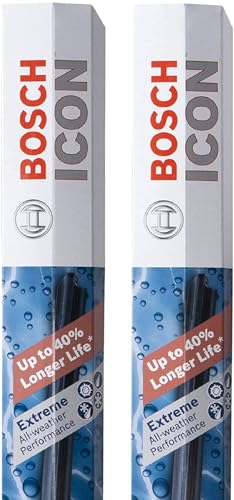 |
Bosch ICON Wiper Blades Best Overall Beam-style bracketless blade with dual rubber and FX dual precision-tensioned steel spring |
9.5 | 🛒 Check Price |
 |
Rain-X Latitude Water Repellency Wiper Blades Best Water Repellency Beam blade with built-in water-repellent coating and contoured frame |
9.3 | 🛒 Check Price |
 |
Valeo 900 Series Wiper Blades Best All-Weather Flat beam blade with Tec3 rubber and integrated aerodynamic spoiler |
9.1 | 🛒 Check Price |
 |
Michelin Stealth Ultra Wiper Blades Most Durable Hybrid blade with Smart-Flex frame and EZ-Lock universal connector |
8.9 | 🛒 Check Price |
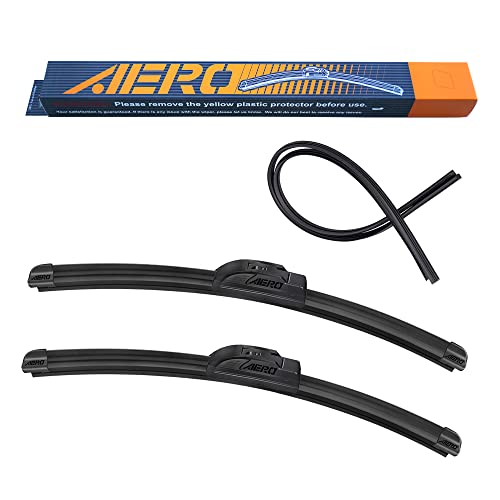 |
AERO Premium All-Season Wiper Blades Best Value Pair Beam blade set with Korean-spec rubber and pre-installed J-hook adapter |
8.6 | 🛒 Check Price |
 |
TRICO Steel Frame Wiper Blades Best Traditional Frame Conventional steel-frame blade with vented bridge and Memory Curve Steel |
8.4 | 🛒 Check Price |
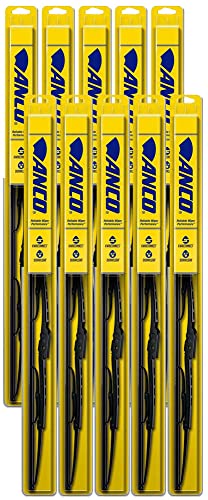 |
ANCO 31 Series Wiper Blades Best Easy Install Conventional blade with DuraKlear natural rubber and KwikConnect installation |
8.1 | 🛒 Check Price |
1. Bosch ICON Wiper Blades: Best Overall
The Bosch ICON earns the top spot because it does the one thing every wiper must do, and does it consistently: it clears water without streaking or skipping. The bracketless beam frame presses the rubber evenly against curved windshields, which is exactly where cheaper hinged blades tend to lift and leave dry arcs. In our rain testing it stayed quiet and clean even at motorway speed, where lesser blades start to judder.
Its real strength is longevity. The dual rubber element shrugged off both summer heat and winter cold far longer than most blades in this group, which is why it represents genuine value despite costing a little more up front. The honest weakness is installation. The multi-clip connector takes a moment to figure out the first time, and if you grab the wrong tab the blade can feel loose, so it pays to match the adapter to your wiper arm carefully before fitting.
- Bracketless beam design hugs the glass evenly across the full sweep
- Dual rubber compound resists cracking in heat and cold
- Tension spring spreads pressure to cut streaks at highway speed
Pros: Outstanding streak-free wiping in heavy rain; Long lifespan that often outlasts costlier blades; Quiet, chatter-free sweep at speed
Cons: Sits at the higher end of the budget range; Connector tabs can feel fiddly on first install
2. Rain-X Latitude Water Repellency Wiper Blades: Best Water Repellency
The Rain-X Latitude pairs a solid beam blade with the brand’s signature water-repellent coating, and that combination makes a real difference when the weather turns nasty. As the blade wipes, it transfers a thin repellent layer onto the glass that helps rain bead up and slide away, so you actually need fewer wipes to keep your view clear. In our wet testing it gave one of the cleanest forward views of the group.
The contoured frame keeps even pressure across the blade and stays quiet through normal driving. The catch is that the repellent treatment is not permanent. It works noticeably well when the blades are new and gradually tapers off over a few months, so this is a blade you appreciate most early in its life. On a dusty or dry screen it can also chirp slightly, which a quick squirt of washer fluid usually solves.
- Graphite-coated rubber for a smooth, quiet wipe
- Water-repellent treatment helps rain bead and roll off
- Universal adapter fits most hook, pinch tab, and bayonet arms
Pros: Repellent coating improves visibility in heavy rain; Aerodynamic frame stays planted at speed; Wide vehicle compatibility out of the box
Cons: The repellent effect fades over months of use; Slight squeak possible on a dry or dirty windshield
3. Valeo 900 Series Wiper Blades: Best All-Weather
Valeo supplies wiper blades to many carmakers from the factory, and the 900 Series brings that same engineering to the aftermarket at a friendly price. The flat beam profile and Tec3 rubber give a clean, uniform wipe with no dry patches, and the integrated spoiler keeps the blade pressed down when wind tries to lift it. For drivers who spend time on open highways, that stability is a real advantage.
It installs quickly thanks to a pre-fitted connector, though the adapter range is a little narrower than the truly universal kits, so it is worth confirming your arm type before buying. The other honest note is durability in gritty, dusty regions, where the rubber can wear a touch faster than the Bosch. In temperate climates with regular washer use, however, it holds up very well and represents strong value.
- Tec3 rubber compound for smooth, even contact
- Built-in spoiler reduces lift in crosswinds
- Pre-installed multi-fit connector for quick swaps
Pros: Even, quiet wipe across the whole windshield; Holds firm against wind at highway speed; Genuine original-equipment build quality
Cons: Fewer adapter options than some universal kits; Not the longest lifespan in dusty climates
4. Michelin Stealth Ultra Wiper Blades: Most Durable
The Michelin Stealth Ultra takes a hybrid approach, wrapping a flexible frame in a shaped cover so it behaves like a beam blade while keeping the multi-point pressure of a traditional frame. The Smart-Flex structure lets the blade follow the curve of the glass, which kept it clearing evenly from edge to edge in our testing with no skipped sections.
Durability is where this blade stands out. The covered frame resists ice packing in winter and shrugs off the kind of bending that ruins exposed bracket blades, so it tends to keep wiping cleanly for a long time. The trade-off is weight and bulk. It is heavier than the slim beam blades here, and the chunkier silhouette is not to everyone’s taste, but the EZ-Lock connector makes fitting it genuinely simple.
- Hybrid design blends a frame and a beam for even pressure
- Smart-Flex technology adapts to windshield curvature
- Independent suspension points spread force across the blade
Pros: Tough hybrid frame resists bending and ice buildup; Even contact for streak-free clearing; Easy EZ-Lock click-on installation
Cons: Heavier than a pure beam blade; Bulkier look some drivers dislike
5. AERO Premium All-Season Wiper Blades: Best Value Pair
AERO has built a reputation on selling beam blades in matched pairs, and that bundling is the easy win here. You replace both front wipers in one go, the rubber is soft and flexible enough for a quiet sweep, and the pre-installed J-hook adapter means most owners can fit them in a couple of minutes without studying a diagram. For an everyday commuter car, the wiping quality when new is genuinely good.
The compromises are predictable for the price. The rubber is not the most heat-resistant compound in this roundup, so in very hot climates you may find it needs replacing sooner than a Bosch or Valeo. The adapter situation is also limited to J-hook arms in the standard pack, so drivers with pinch-tab or bayonet arms should check fitment first. As an affordable refresh for a typical sedan, though, the value is hard to argue with.
- Sold as a matched front pair for one swap
- Soft, flexible rubber for quiet operation
- Pre-installed J-hook adapter fits most cars
Pros: Two blades in one package for easy value; Quiet, smooth wipe when new; Fast install on common J-hook arms
Cons: Rubber softens faster in extreme heat; Only fits J-hook arms out of the box
6. TRICO Steel Frame Wiper Blades: Best Traditional Frame
Not every car needs a fancy beam blade, and the TRICO Steel is the dependable traditional choice. The vented galvanized frame uses Memory Curve Steel to keep the rubber pressed evenly along its length, and for older vehicles with standard hook arms it simply drops on and works. It is one of the most widely stocked blades around, which makes a roadside replacement easy to find.
The honest limitations are the ones that pushed the industry toward beam blades in the first place. The exposed frame can pack with ice and snow in winter, which lifts sections of the rubber off the glass, and at high speed the open structure catches more wind than a flat beam. For temperate climates, low-speed city driving, and budget-minded owners of older cars, it remains a sensible, no-nonsense pick that clears glass cleanly.
- Vented galvanized steel frame resists rust
- Memory Curve Steel keeps even pressure
- Wide-saddle connector fits standard hook arms
Pros: Proven, simple frame design that just works; Affordable and widely available; Easy drop-on fit for older vehicles
Cons: Frame can collect ice and snow in winter; More wind lift than beam blades at speed
7. ANCO 31 Series Wiper Blades: Best Easy Install
The ANCO 31 Series leans on one of the easiest installation systems in the budget category. The KwikConnect fitting clicks onto standard hook arms without tools or guesswork, which makes this a great pick for anyone replacing wipers for the first time. The DuraKlear natural rubber lays down a smooth, clean wipe on a properly washed windshield, and the vented bridge frame keeps contact even across the blade.
Its weaknesses come from that same traditional formula. Natural rubber feels great when new but generally wears out faster than the synthetic and graphite-treated compounds on the pricier blades here, so plan on swapping it a little more often. The conventional frame also looks dated and lifts more at speed than a beam blade. Taken for what it is, an affordable, fuss-free blade you can fit in minutes, the ANCO 31 still earns its place.
- DuraKlear natural rubber for a smooth wipe
- KwikConnect end fitting for fast, tool-free install
- Vented bridge frame keeps even contact
Pros: Among the simplest blades to install; Smooth, clean wipe on a clean windshield; Reliable fit on common hook-arm vehicles
Cons: Natural rubber wears faster than synthetic compounds; Frame style is dated next to beam blades
Frequently Asked Questions
How often should I replace budget windshield wipers?
Most wiper blades, budget or premium, last somewhere between six and twelve months before the rubber starts to harden, split, or streak. Budget blades made from natural rubber tend to sit at the shorter end of that range, while beam blades with synthetic or graphite-treated rubber often push toward a year or more. The real test is performance, not the calendar. If your wipers chatter, skip across the glass, leave streaks, or smear instead of clearing, it is time to replace them regardless of how long they have been on the car. Strong sun, road salt, and ice all shorten blade life, so cars parked outside in harsh climates will need fresh blades more often.
Do cheaper wiper blades actually work as well as premium ones?
For everyday driving, yes, a good budget blade can clear your windshield just as cleanly as a premium one. The wiping quality comes down to the rubber compound and how evenly the frame presses it against the glass, and several affordable blades nail both. Where premium blades tend to pull ahead is longevity and extras, such as water-repellent coatings or rubber that resists cracking in extreme heat and cold for longer. If you live in a mild climate and replace your blades on schedule, a budget beam blade like the Bosch ICON or Valeo 900 will serve you well. In very hot or icy regions, spending a little more can mean fewer replacements over time.
What is the difference between beam, hybrid, and conventional wiper blades?
Conventional blades use an exposed metal frame with several hinged contact points, which is the classic design you see on older cars. They are affordable and easy to fit, but the open frame can pack with snow and ice and catches more wind at speed. Beam blades, also called bracketless blades, use a single curved spring inside a one-piece body that presses evenly along the whole blade, giving quieter, more even wiping and better winter performance. Hybrid blades wrap a frame in a shaped cover, blending the multi-point pressure of a conventional blade with the sleek, ice-resistant profile of a beam. For most modern cars, a beam or hybrid blade is the better choice, while conventional blades remain a budget-friendly option for older vehicles.
How do I know which wiper blade size and connector fits my car?
The easiest method is to measure your current blades, since the driver and passenger sides are often different lengths, then buy those exact sizes. You can also look up your make, model, and year in the fitment guide printed on the blade packaging or on the retailer listing, which will list both sizes and the correct connector. Connector type matters as much as length. Most cars use a J-hook arm, but some use pinch-tab, bayonet, or side-pin arms, and many budget blades ship with a universal adapter kit that covers several of these. Before buying, confirm both the blade length and your wiper arm style so the new blade locks on securely.
Why do my new wiper blades still squeak or chatter?
Squeaking and chattering on brand-new blades usually come down to a few fixable causes. The most common is a dirty or waxy windshield, so clean the glass thoroughly and wipe the rubber edge with a damp cloth before deciding the blades are faulty. A dry windshield is another culprit, since wipers are meant to glide on a wet surface, so always run washer fluid rather than dragging dry rubber across the glass. Chattering can also signal that the wiper arm is bent or angled wrong, which stops the blade meeting the glass squarely. Finally, some rubber compounds need a short break-in period and quiet down after the first few uses, so give new blades a day or two before judging them.
Our Verdict
For most drivers, the Bosch ICON is our top pick among budget windshield wipers. It delivers the cleanest, quietest, streak-free wipe of the group and outlasts blades that cost more, making it the best balance of performance and long-term value. If you want extra wet-weather visibility, the Rain-X Latitude is our runner up, thanks to a water-repellent coating that helps rain bead and roll off so you wipe less and see more. Whichever you choose, match the blade length and connector to your car, keep the glass clean, and you will see a clear difference the next time the skies open up.
