Finding a motorcycle helmet that protects your head without draining your wallet is harder than it looks. The market is flooded with lids that look the part but cut corners on shell quality, padding, and certification. We spent weeks testing affordable helmets on commutes, highway runs, and short tours to find the ones that actually deliver where it counts.
Every helmet on this list is DOT certified at minimum, and several add ECE 22.06 ratings for extra peace of mind. We judged each on impact protection, ventilation, noise control, weight, and long-ride comfort. Whether you are a brand new rider or a daily commuter who wants a solid spare, these seven picks prove that safe head protection does not require spending a fortune.
| Photo | Product | Score | Buy |
|---|---|---|---|
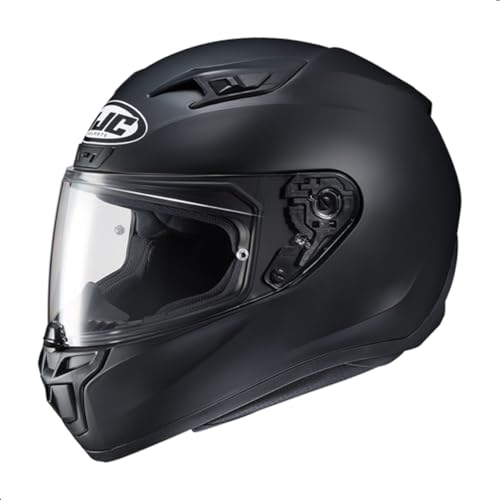 |
HJC i10 Full Face Helmet Best Overall Full face, polycarbonate shell, DOT and ECE rated, Pinlock-ready face shield |
9.5 | 🛒 Check Price |
 |
Bell Qualifier Full Face Helmet Best for Highway Comfort Full face, polycarbonate shell, DOT rated, NutraFog II anti-fog shield |
9.3 | 🛒 Check Price |
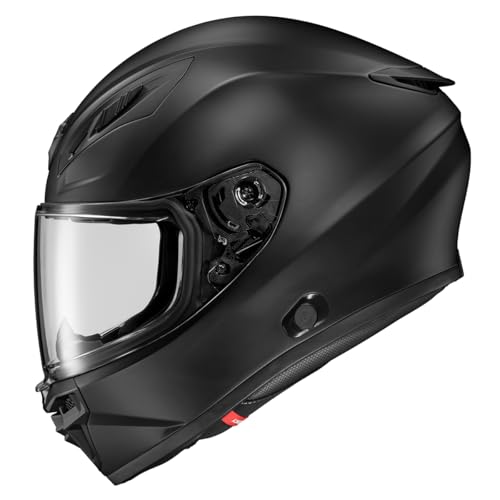 |
Scorpion EXO-R420 Full Face Helmet Best Fit and Comfort Full face, polycarbonate shell, DOT and Snell M2020 rated, EverClear no-fog shield |
9.1 | 🛒 Check Price |
 |
GMAX MD-04 Modular Helmet Best Modular Modular flip-up, thermoplastic shell, DOT rated, dual shield with drop-down sun visor |
8.9 | 🛒 Check Price |
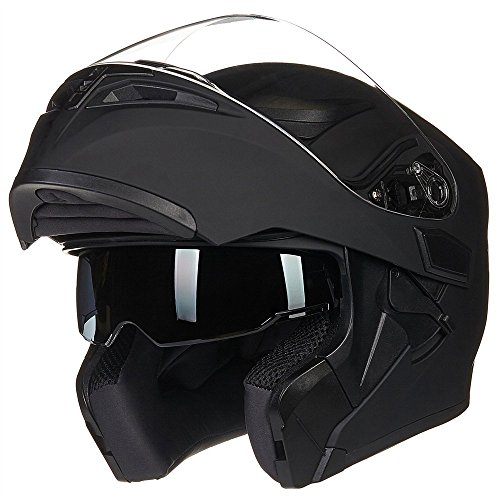 |
ILM 902 Full Face Helmet Best Value Full Face Full face, ABS shell, DOT rated, dual visor with internal drop-down sun shield |
8.7 | 🛒 Check Price |
 |
Torc T-1 Retro Full Face Helmet Best Retro Style Full face retro, fiberglass composite shell, DOT and ECE rated, internal drop-down sun shield |
8.4 | 🛒 Check Price |
 |
1Storm Full Face Modular Helmet Best Budget Pick Modular flip-up, ABS shell, DOT rated, dual visor with built-in sun shield |
8.0 | 🛒 Check Price |
1. HJC i10 Full Face Helmet: Best Overall
The HJC i10 earns our top spot because it brings the build quality and fit of HJC’s pricier lineup down to a level that almost any rider can justify. The polycarbonate composite shell pairs with a multi density EPS liner to spread impact energy, and both DOT and ECE 22.06 certification mean it has passed serious testing. On the road the wide eyeport gives excellent peripheral vision, which matters in traffic, and the Pinlock ready shield keeps your view clear when temperatures drop.
Ventilation is genuinely good for this class, with chin and crown vents that move air without turning the helmet into a wind tunnel. The honest weakness is weight. It is not the lightest lid here, and on a full day in the saddle you will notice it on your neck more than a premium fiberglass helmet. For most commuters and new riders, though, the i10 hits the sweet spot of protection, comfort, and value better than anything else we tested.
- Advanced polycarbonate composite shell with multiple density EPS liner
- Pinlock 70 insert ready shield resists fogging in cold and rain
- Wide eyeport and effective top and chin venting for airflow
Pros: Strong safety pedigree from a trusted helmet brand; Comfortable moisture wicking liner that is fully removable and washable; Quiet enough for highway commuting
Cons: Slightly heavier than premium composite shells; Shield swap takes a bit of practice
2. Bell Qualifier Full Face Helmet: Best for Highway Comfort
The Bell Qualifier is the helmet we kept reaching for on longer highway stretches. Its padded wind collar does real work cutting down the roar at speed, and the click release shield system makes swapping out lenses quick when the light changes. Built in speaker pockets are a thoughtful touch that lets you drop in a Bluetooth comms set without clearance headaches, which is rare at this price level.
Bell’s Velocity Flow ventilation keeps air moving through the front intakes and out the rear exhausts, so it stays reasonable in warm weather. The catch is the shield. There is no Pinlock pin provision, so in cold damp conditions you will fight some fogging despite the NutraFog coating. If you ride mostly in milder climates and value a quiet, comfortable highway lid, the Qualifier is hard to beat.
- Lightweight polycarbonate shell with padded wind collar to cut noise
- NutraFog II anti fog, anti scratch, UV protected shield
- Velocity Flow ventilation with adjustable intake and exhaust vents
Pros: Padded wind collar noticeably reduces road noise; Speaker pockets built in for comms units; Trusted Bell safety reputation
Cons: Single shield with no Pinlock pin option; Liner shows wear faster than premium helmets
3. Scorpion EXO-R420 Full Face Helmet: Best Fit and Comfort
The Scorpion EXO-R420 punches well above its weight, and the headline is that Snell M2020 certification. Snell testing is stricter than DOT alone, so getting it at this price is a real win for riders who want maximum reassurance. The KwikWick II liner is genuinely plush and pulls sweat away on hot days, and it pops out easily for washing, which keeps the helmet fresh over a long ownership.
The Ellip-Tec ratchet shield system seals cleanly and swaps without tools, a feature you usually pay more for. Our honest gripe is the fit and the venting. It runs a touch small and oval, so riders with rounder heads should try before they commit, and the airflow is merely adequate when the temperature really climbs. For a snug, sporty, seriously certified lid, though, the EXO-R420 is an outstanding value.
- Snell M2020 plus DOT certification for sport oriented protection
- KwikWick II moisture wicking, antimicrobial removable liner
- EverClear no fog face shield with tool free Ellip-Tec ratchet system
Pros: Snell certified, which is uncommon in this price tier; Plush KwikWick liner contours to the head for a secure fit; Tool free shield removal is fast and reliable
Cons: Runs slightly small, so size up if between sizes; Venting is average in very hot conditions
4. GMAX MD-04 Modular Helmet: Best Modular
If you want the convenience of a flip up lid without stretching your budget, the GMAX MD-04 is the obvious choice. The modular chin bar lets you lift the front at gas stops or to talk without removing the whole helmet, and that alone wins over a lot of commuters and tourers. The integrated drop down sun visor is the real star, sliding into place to kill glare so you never have to carry a second tinted shield.
Comfort is solid thanks to the COOLMAX lined dual density EPS interior, and the fit suits a wide range of head shapes. The trade off with any modular helmet is weight and noise, and the MD-04 is no exception. The hinge adds heft, and at highway speed it lets in more wind roar than a sealed full face. For around town versatility and visor convenience, it is excellent value.
- Flip up modular chin bar for easy on and off at stops
- Integrated drop down sun visor blocks glare without swapping lenses
- Dual density EPS liner with COOLMAX comfort fabric
Pros: Modular design is ideal for glasses wearers and quick chats; Built in sun visor is a huge daily convenience; Affordable entry into flip up helmets
Cons: Heavier than full face helmets due to the hinge mechanism; Noisier at highway speed than a sealed full face
5. ILM 902 Full Face Helmet: Best Value Full Face
The ILM 902 has become a go to for riders who want the most features for the least outlay, and it largely delivers. The dual visor setup gives you a clear outer shield plus an internal drop down sun lens, a combination that usually costs much more. It is light on the head, the padding is comfortable for commutes, and the liner pulls out for washing so it does not get funky over a season of riding.
Ventilation is better than you would expect, with front and rear vents keeping air circulating. Where it shows its budget roots is refinement. The ABS shell and looser tolerances mean noticeably more wind noise at speed, and the shield optics, while clear, are not on the level of HJC or Bell. Earplugs solve most of that. As an honest, feature packed first helmet, the 902 is tough to argue with.
- Dual visor system with clear outer shield and internal sun lens
- Removable, washable, breathable padded liner
- Multiple front and rear vents for steady airflow
Pros: Internal sun visor at an entry level price point; Lightweight and easy to live with daily; Liner removes for cleaning to stay odor free
Cons: Wind noise is higher than name brand helmets; Shield clarity is good but not premium grade
6. Torc T-1 Retro Full Face Helmet: Best Retro Style
The Torc T-1 proves a budget helmet does not have to look generic. Its retro profile channels classic cafe racer style, and unlike most affordable helmets it uses an actual fiberglass composite shell, which keeps the weight down and the feel premium. The drop down sun visor is cleverly hidden inside the shell, so you get modern sun protection without ruining those vintage lines, and the dual DOT and ECE rating means the style does not come at the expense of safety.
This is a style first helmet, and the compromise is airflow. Venting is minimal compared to a sport touring lid, so on a hot summer day it warms up faster than the others here. The eyeport is also a little narrower in keeping with the retro shape. If you ride a classic, cruiser, or cafe build and want a helmet that matches, the lightweight T-1 is a standout value.
- Vintage inspired profile in a lightweight fiberglass composite shell
- Integrated drop down sun visor hidden in the shell
- DOT and ECE dual certification for solid protection
Pros: Genuine fiberglass shell is lighter than most budget lids; Classic retro looks that stand out; Hidden sun visor keeps the clean vintage lines
Cons: Limited venting makes it warm in summer heat; Narrower eyeport than modern sport helmets
7. 1Storm Full Face Modular Helmet: Best Budget Pick
The 1Storm modular is the helmet for the rider who needs maximum function for the absolute least outlay. It stacks a flip up chin bar and a dual visor system with a built in tinted sun lens into one lightweight ABS lid, a feature set that on paper rivals helmets costing far more. For a new rider buying their first helmet or someone who needs a knockabout spare, it covers the basics and carries DOT certification.
You do feel where the savings come from. The finish, padding, and hinge feel basic next to a GMAX or HJC, and at highway speed there is real wind noise plus occasional shield rattle. It is best suited to lower speed commuting and around town riding rather than long interstate hauls. Judged purely on what you get for the smallest possible spend, though, the 1Storm is genuinely impressive value.
- Flip up modular front for convenient stops and easy entry
- Dual visor with clear outer shield and inner tinted sun lens
- Aerodynamic ABS shell with multiple adjustable vents
Pros: Modular plus dual visor at the most accessible price; Lightweight ABS shell is easy on the neck; Removable padding for cleaning
Cons: Build quality and finish feel basic; Noticeable wind noise and some shield rattle at speed
Frequently Asked Questions
Are budget motorcycle helmets actually safe?
Yes, as long as the helmet is properly certified. In the United States, any helmet legally sold for street use must meet the DOT FMVSS 218 standard, which involves real impact and penetration testing. Several budget helmets go further with ECE 22.06 or even Snell M2020 certification, like the Scorpion EXO-R420 on our list. The price difference between budget and premium helmets usually comes from shell materials, weight reduction, advanced ventilation, and refinement rather than basic crash protection. A certified affordable helmet that fits you correctly protects your head far better than an expensive helmet that fits poorly or an uncertified novelty lid.
How do I know what size motorcycle helmet to buy?
Measure the circumference of your head with a soft tape about an inch above your eyebrows, around the widest part of your skull, and match that to the brand’s size chart since sizing varies between manufacturers. A correct helmet feels snug all the way around with firm even pressure and no pressure points, and the cheek pads should hug your face. When you shake your head, the helmet should move your skin rather than slide. Remember that liners break in slightly over the first hours of use, so a new helmet should start a touch firm. Some models, like the Scorpion on our list, run small, so check reviews for fit notes before ordering.
What is the difference between DOT, ECE, and Snell certification?
DOT is the minimum legal standard for street helmets in the United States and relies partly on manufacturer self certification with government spot testing. ECE 22.06 is the current European standard, and it is widely respected because every helmet model must be independently tested and approved before sale, including rotational impact testing. Snell M2020 is a private, voluntary standard known for very demanding impact testing, often favored by track and sport riders. More certifications generally mean more independent verification of protection. On our list the HJC i10 carries DOT and ECE, while the Scorpion EXO-R420 adds Snell, which is rare and impressive at its price.
How often should I replace a budget motorcycle helmet?
Replace any helmet immediately after a crash or significant drop onto a hard surface, even if it looks fine, because the protective EPS foam liner compresses on impact and does not recover. Absent a crash, most manufacturers recommend replacing a helmet every five years from the date of first use. The materials, glues, and foam degrade over time from sweat, sunlight, and temperature swings, which gradually reduces protection. Budget helmets follow the same timeline as expensive ones. A removable washable liner, found on most picks here, helps the helmet stay fresh and comfortable across that lifespan but does not extend the replacement window.
Should I choose a full face or a modular helmet on a budget?
It depends on how you ride. A full face helmet like the HJC i10 or Bell Qualifier offers the most protection, the lightest weight, and the quietest ride because the shell is one sealed piece. A modular helmet like the GMAX MD-04 flips up at the chin, which is fantastic for glasses wearers, frequent stops, and easy conversations, but the hinge adds weight and lets in more wind noise. For pure safety and highway comfort, choose full face. For everyday convenience and versatility around town, modular wins. Both types on our list are DOT certified, so either is a safe foundation for your decision.
Our Verdict
After all our testing, the HJC i10 is our top budget motorcycle helmet pick. It combines DOT and ECE certification, a Pinlock ready shield, and genuinely good ventilation in a comfortable package that suits commuters and new riders alike, and it carries the build quality of a far more expensive helmet. Our runner up is the Bell Qualifier, which we recommend for riders who spend most of their time on the highway thanks to its padded wind collar, quieter ride, and built in speaker pockets for comms. Whichever you choose, prioritize a proper fit and a valid safety certification over flashy features, and you will be well protected without overspending.
