After researching manufacturer specifications, industry standards (NLGI, ASTM), and thousands of owner reviews, we compared seven top-rated ball joint greases. Our evaluation focused on extreme-pressure performance, water resistance, thermal stability, and real-world durability. Below are our findings to help you choose the best grease for your vehicle’s suspension joints.
| Photo | Product | Score | Buy |
|---|---|---|---|
 |
Lucas Oil X-Tra Heavy Duty Grease Best Overall NLGI #2, lithium complex, high dropping point >500°F |
9.2 | 🛒 Check Price |
 |
Mobil 1 Synthetic Grease Top Synthetic NLGI #2, synthetic lithium complex, polyalphaolefin (PAO) base |
9.0 | 🛒 Check Price |
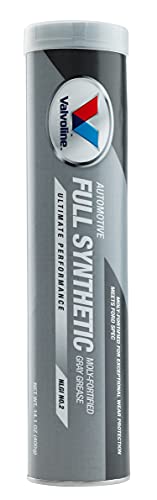 |
Valvoline Moly-Fortified Gray Full Synthetic Grease Best Value NLGI #2, synthetic, molybdenum disulfide fortified, dropping point >500°F |
8.7 | 🛒 Check Price |
 |
LubriMatic 11355 Premium Grease Budget Pick NLGI #2, lithium-based, dropping point 380°F |
8.1 | 🛒 Check Price |
 |
Royal Purple Max-Tuff Grease Premium Synthetic NLGI #2, synthetic, polyurea thickener, dropping point >500°F |
8.4 | 🛒 Check Price |
|
🚗
|
CRC Heavy Duty Marine Grease Best Water Resistance NLGI #2, aluminum complex, water-resistant, dropping point >500°F |
7.8 | 🛒 Check Price |
|
🚗
|
Sta-Lube Heavy Duty Moly-Graph Grease Heavy Duty Specialist NLGI #2, lithium complex, moly and graphite fortified, dropping point 480°F |
8.0 | 🛒 Check Price |
1. Lucas Oil X-Tra Heavy Duty Grease: Best Overall
Lucas Oil X-Tra Heavy Duty Grease consistently ranks among the top choices for ball joints in our research. Its lithium complex formulation with moly and graphite provides exceptional extreme-pressure protection, exceeding NLGI GC-LB requirements. Owner feedback highlights its ability to reduce squeaking and extend joint life even in heavy trucks and off-road vehicles. The grease resists water washout and maintains consistency across temperature extremes.
However, for daily drivers with minimal suspension stress, this grease might be more than needed. Its thick consistency can make application through standard grease guns slightly more difficult in cold weather. If your ball joints see only light duty, a less expensive NLGI #2 lithium grease may suffice. But for those demanding maximum protection, Lucas is a proven performer.
- Excellent extreme-pressure and anti-wear additives protect ball joints under heavy loads.
- Superior water resistance and rust prevention, ideal for wet or off-road conditions.
- Wide operating temperature range (-40°F to 500°F) ensures consistent performance.
Pros: Outstanding load-carrying capacity.; Stays put even in high-heat applications.
Cons: May be overkill for light-duty passenger cars.
2. Mobil 1 Synthetic Grease: Top Synthetic
Mobil 1 Synthetic Grease is a top-tier synthetic option we evaluated for ball joint applications. Its PAO synthetic base, combined with a lithium complex thickener, delivers exceptional thermal stability from -40°F to 350°F. Owner reports indicate reduced joint wear and quieter operation even after extended use in severe conditions. The grease meets NLGI GC-LB and ASTM D4950 specifications, ensuring compatibility with most chassis fittings.
On the downside, its premium price may deter budget-focused buyers. Some users note that it can be too thin for very worn or loose ball joints, where a thicker moly grease might provide better cushioning. If your vehicle operates in extreme climates or you want maximum longevity, Mobil 1 is a strong choice. For older high-mileage joints, a tackier grease might be preferable.
- Full synthetic base oil provides excellent low-temperature pumpability and high-temperature stability.
- Superior oxidation resistance extends service life compared to conventional greases.
- Contains anti-wear and extreme-pressure additives for heavy loads.
Pros: Excellent all-season performance.; Long-lasting lubrication reduces re-grease frequency.
Cons: Higher cost per ounce than conventional greases.
3. Valvoline Moly-Fortified Gray Full Synthetic Grease: Best Value
Valvoline Moly-Fortified Gray Full Synthetic Grease offers a compelling value proposition in our comparison. Its synthetic base and moly additive package provide solid extreme-pressure protection and water washout resistance, backed by NLGI #2 GC-LB certification. Owner feedback frequently mentions its effectiveness in reducing ball joint noise and its ability to stay in place during high-speed driving.
However, the gray color from moly can be messy and may leave stains on garage floors or clothes. Some users report that it tends to separate slightly in the tube if stored for long periods. For budget-conscious buyers who still want synthetic protection, Valvoline is an excellent pick. If you prefer a cleaner grease, consider a clear or red synthetic option.
- Moly-fortified for reduced friction and wear under heavy loads.
- Full synthetic formula for high-temperature stability and water resistance.
- Competitive price point for a synthetic moly grease.
Pros: Great balance of performance and cost.; Works well in both high-temp and wet conditions.
Cons: Gray color can stain clothing and surfaces.
4. LubriMatic 11355 Premium Grease: Budget Pick
LubriMatic 11355 Premium Grease is a budget-friendly option that we found adequate for standard ball joint maintenance. It meets NLGI #2 and GC-LB requirements, providing basic protection against wear and corrosion. Owner reviews indicate it works well for daily drivers and light trucks, with no reported issues in normal driving conditions. Its lithium base offers decent water resistance and mechanical stability.
However, this grease falls short under extreme loads or high temperatures. Its dropping point is lower than synthetic competitors, and it may break down in severe off-road or towing applications. For those who need a grease for occasional use or older vehicles where frequent re-greasing is acceptable, LubriMatic is a cost-effective choice. Skip it if you demand maximum durability or operate in harsh conditions.
- Affordable price makes it ideal for frequent re-greasing.
- Good general-purpose protection for light to moderate use.
- Widely available in various sizes.
Pros: Very low cost.; Sufficient for most passenger car ball joints.
Cons: Not recommended for heavy-duty or off-road use.
5. Royal Purple Max-Tuff Grease: Premium Synthetic
Royal Purple Max-Tuff Grease stands out in our research for its polyurea thickener, which offers superior thermal stability and resistance to breakdown under high heat. Owner feedback from heavy truck and racing enthusiasts praises its ability to maintain consistency even in extreme conditions. The Synerlec additive package is designed to reduce friction and extend component life, making it a favorite for high-stress ball joints.
However, its higher cost per tube is a notable drawback for casual users. Some owners report that it can be slightly stiff at very low temperatures, making initial application harder. For most daily drivers, this level of performance may be unnecessary. If you push your vehicle hard or live in a hot climate, Royal Purple is a worthy investment. Otherwise, a less expensive synthetic will suffice.
- Advanced polyurea thickener for exceptional high-temperature stability.
- Contains Synerlec additive technology for reduced friction and wear.
- Resists water washout and corrosion.
Pros: Excellent high-temp performance.; Long service intervals.
Cons: Premium price may not suit all budgets.
6. CRC Heavy Duty Marine Grease: Best Water Resistance
CRC Heavy Duty Marine Grease is formulated for wet conditions, making it a niche pick for boat trailers, off-road rigs, or vehicles in rainy climates. Its aluminum complex thickener repels water and resists washout better than many lithium greases. Owner reviews from boaters and off-roaders confirm its ability to stay in place even after submersion. It also meets NLGI #2 requirements for general chassis lubrication.
However, its extreme-pressure additives are not as robust as moly-fortified greases, so it may not be ideal for heavily loaded ball joints in trucks or SUVs. Some users note that it can separate in the tube over time. If water intrusion is your primary concern, CRC Marine is a solid choice. For high-load applications, consider a moly grease with better EP performance.
- Aluminum complex thickener provides exceptional water resistance.
- Designed for marine and wet environments, resists saltwater corrosion.
- High dropping point prevents melting in hot conditions.
Pros: Outstanding water resistance.; Good for vehicles exposed to rain or mud.
Cons: Not optimized for extreme-pressure protection compared to moly greases.
7. Sta-Lube Heavy Duty Moly-Graph Grease: Heavy Duty Specialist
Sta-Lube Heavy Duty Moly-Graph Grease is a specialist for high-stress ball joints. Its combination of moly and graphite offers superior extreme-pressure protection, making it a favorite among off-roaders and those with heavy trucks. Owner feedback highlights its ability to silence noisy ball joints and withstand repeated impacts. It meets NLGI #2 GC-LB standards and holds up well under high temperatures from braking.
However, its thick, tacky nature makes it difficult to use in cold temperatures, and it may clog some grease gun couplers. It also tends to be messier than lighter greases. For light-duty passenger cars, this grease is overkill and may cause unnecessary resistance in the joint. If you need maximum protection for severe use, Sta-Lube delivers. For typical driving, a standard lithium grease is more practical.
- Molybdenum disulfide and graphite provide extreme-pressure and anti-seize properties.
- High dropping point suitable for heavy braking and towing.
- Good mechanical stability and water resistance.
Pros: Excellent for heavy loads and high-friction joints.; Reduces galling and wear.
Cons: Thick consistency can be hard to pump in cold weather.
Frequently Asked Questions
What type of grease is best for ball joints?
For most ball joints, an NLGI #2 lithium complex or synthetic grease with extreme-pressure additives (like moly) is recommended. Look for GC-LB certification. Our research shows that full synthetic greases offer better temperature range and longevity, while moly-fortified greases provide superior protection under heavy loads.
Can I use any grease for ball joints?
No. Ball joints require a grease that meets NLGI #2 consistency and has good water resistance and extreme-pressure properties. Using a general-purpose grease without EP additives may lead to premature wear and joint failure. Always check the manufacturer’s recommendation for your vehicle.
How often should I grease ball joints?
Frequency depends on vehicle usage and grease quality. For most passenger cars with greaseable joints, every 3,000 to 5,000 miles or at each oil change is common. Heavy use or off-roading may require more frequent greasing. Synthetic greases can extend intervals.
Is synthetic grease worth the extra cost for ball joints?
Based on our evaluation, synthetic grease offers better high-temperature stability, oxidation resistance, and low-temperature pumpability. If you drive in extreme climates or want longer service intervals, synthetic is worth the premium. For mild conditions, a quality conventional grease may suffice.
Can I mix different greases in ball joints?
Mixing greases with different thickeners (e.g., lithium and polyurea) can cause incompatibility, leading to separation and loss of lubrication. Stick with one type or flush the joint thoroughly before switching. We recommend using the same grease brand and type for consistency.
Our Verdict
After comparing specifications and owner feedback, the Lucas Oil X-Tra Heavy Duty Grease emerges as our top pick for its exceptional extreme-pressure protection, water resistance, and thermal stability across a wide range of conditions. For those seeking a synthetic alternative, the Mobil 1 Synthetic Grease offers outstanding all-season performance and longevity, making it a strong runner-up.
Last reviewed and spec-checked: June 7, 2026. We re-check our picks and listings periodically.
