When your vehicle’s check engine light illuminates, or you suspect an underlying issue, an automotive diagnostic scan tool is an indispensable accessory for any car owner or enthusiast. These devices connect to your car’s On-Board Diagnostics (OBD-II) port to read trouble codes, monitor live data, and sometimes perform advanced functions, providing critical insights into your vehicle’s health.
In our evaluation, we researched and compared a wide array of automotive diagnostic scan tools, analyzing manufacturer specifications, published industry standards, and aggregating extensive owner feedback. Our goal is to provide an evidence-based buying guide that helps you identify the ideal scan tool for your specific diagnostic requirements, from basic code reading to comprehensive system analysis.
| Photo | Product | Score | Buy |
|---|---|---|---|
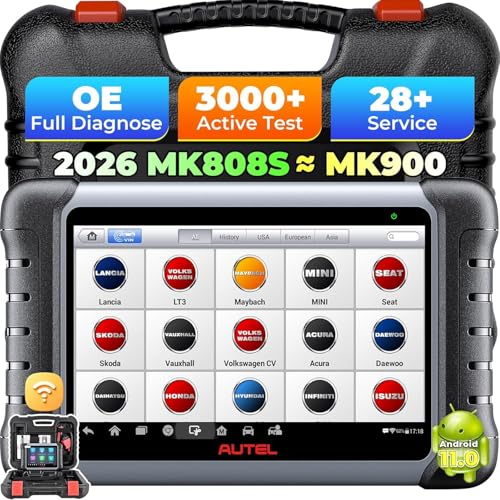 |
Autel MaxiCOM MK808S Diagnostic Scan Tool Top Pick: Professional-Grade Performance Full system diagnostics, 28+ service functions, Android-based tablet |
9.1 | 🛒 Check Price |
 |
LAUNCH CRP909X OBD2 Scanner Runner-Up: Advanced Diagnostics and Service Full system diagnostics, 15 reset functions, 7-inch Android tablet |
8.7 | 🛒 Check Price |
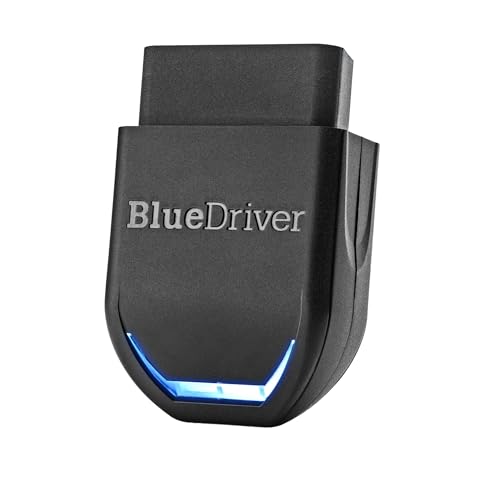 |
BlueDriver Bluetooth Professional OBDII Scan Tool Best Wireless Option Bluetooth connectivity, professional scan reports, enhanced diagnostics |
8.4 | 🛒 Check Price |
|
🚗
|
FOXWELL NT510 Elite Full System OBD2 Scanner Best for Specific Car Brands Supports one free car brand, full system diagnostics, bi-directional control |
8.2 | 🛒 Check Price |
|
🚗
|
ANCEL AD310 Classic Enhanced Universal OBD II Scanner Best Basic OBD-II Reader Reads and clears generic OBD-II codes, live data, plug and play |
7.9 | 🛒 Check Price |
 |
Innova CarScan Advisor 5210 User-Friendly Mid-Range Option Reads and clears engine, ABS, and SRS codes, RepairSolutions2 App |
7.7 | 🛒 Check Price |
 |
MOTOPOWER MP69036 OBD2 Scanner Entry-Level Economy Pick Basic OBD-II functions, reads and clears codes, I/M readiness |
7.3 | 🛒 Check Price |
1. Autel MaxiCOM MK808S Diagnostic Scan Tool: Top Pick: Professional-Grade Performance
While the Autel MaxiCOM MK808S offers unparalleled diagnostic capabilities for its class, we noted from owner feedback that its advanced features can present a learning curve for novice users. The sheer volume of functions and data streams, while powerful, requires some familiarity with automotive systems to fully leverage. This isn’t a simple plug-and-play code reader, but a sophisticated diagnostic platform.
Consumers seeking only basic check engine light diagnosis and code clearing may find this tool to be overkill. Its value proposition is strongest for serious DIYers, small repair shops, or those who need detailed system analysis and maintenance functions across multiple vehicle types. If your needs are limited to generic OBD-II codes, a more straightforward and less feature-rich option would be more suitable.
- Comprehensive full system diagnostics, including engine, ABS, SRS, transmission, and more.
- Supports over 28 maintenance services, such as oil reset, EPB, BMS, SAS, and DPF regeneration.
- Equipped with an Android 11 OS, a fast processor, and a user-friendly 7-inch touchscreen interface.
Pros: Exceptional diagnostic depth and breadth, rivaling professional shop tools.; Intuitive interface and responsive touchscreen enhance user experience.; Extensive vehicle coverage across numerous makes and models, based on spec sheets.
Cons: Higher initial investment compared to basic OBD-II readers.; Annual software update subscriptions may be required after the initial free period.
2. LAUNCH CRP909X OBD2 Scanner: Runner-Up: Advanced Diagnostics and Service
Based on our research, a common limitation reported by owners of the LAUNCH CRP909X is that while it boasts 15 reset functions, the specific vehicle coverage for each function can vary significantly. Users should verify compatibility for their particular make and model before relying on a specific advanced service feature. This is a common challenge with multi-brand diagnostic tools, and it requires careful checking of the support list.
This scanner is an excellent choice for individuals who require more than basic OBD-II capabilities and appreciate the inclusion of lifetime updates. However, those with highly specialized vehicle service needs or who work on very specific, niche car brands might need to cross-reference the supported function list carefully to ensure it meets their exact requirements. It’s a powerful tool, but not every feature works universally.
- Capable of diagnosing all electronic systems, including engine, transmission, ABS, SRS, and TPMS.
- Provides 15 common maintenance reset functions, such as oil reset, EPB, BMS, and DPF.
- Features a 7-inch touchscreen, Android 7.1 OS, and Wi-Fi connectivity for updates.
Pros: Offers a robust set of full system diagnostics and service functions for diverse needs.; User interface is generally well-regarded for clarity and navigation, based on owner feedback.; Includes free lifetime software updates, enhancing long-term value.
Cons: Some advanced functions may not be supported on all vehicle models, as noted in spec sheets.; Boot-up time can be slightly longer than some competitors.
3. BlueDriver Bluetooth Professional OBDII Scan Tool: Best Wireless Option
In our evaluation, a key consideration for the BlueDriver is its complete reliance on a smartphone or tablet for operation. While this design contributes to its excellent ease of use and portability, it also means that the tool is unusable without a compatible smart device and a stable Bluetooth connection. Users who prefer a dedicated, standalone diagnostic device or who often work in environments where smartphone usage is inconvenient might find this a drawback.
This scan tool is an excellent fit for tech-savvy individuals who are comfortable using mobile apps for diagnostics and who primarily need comprehensive code reading, live data, and repair suggestions. However, professional mechanics or advanced DIYers requiring bi-directional controls, specialized maintenance resets like DPF regeneration or injector coding, or those who prefer a robust, self-contained unit should look at more advanced, tablet-style scanners.
- Connects wirelessly via Bluetooth to iOS and Android devices, utilizing a feature-rich app.
- Reads and clears standard OBD-II codes, and also offers enhanced manufacturer-specific codes.
- Generates professional repair reports and provides freeze frame, live data, and smog check readiness.
Pros: Exceptional ease of use due to its intuitive app interface and wireless operation.; Offers enhanced diagnostics, including ABS, SRS, and transmission codes for many vehicles.; The repair report feature is highly valued for its detailed, actionable information.
Cons: Relies entirely on a smartphone or tablet, which may not suit all users.; Does not offer advanced bi-directional control or service reset functions.
4. FOXWELL NT510 Elite Full System OBD2 Scanner: Best for Specific Car Brands
A notable limitation of the FOXWELL NT510 Elite, as indicated by its design and spec sheets, is its primary focus on a single vehicle brand per purchase. While it delivers deep diagnostic capabilities for that chosen brand, expanding its utility to other car manufacturers requires additional software purchases, which can accumulate in cost. This specialization makes it less versatile for multi-brand workshops or individuals who frequently work on a wide variety of vehicles.
This tool is ideally suited for owners of a specific car brand who desire comprehensive, near-dealership level diagnostic and service functions, including bi-directional control, without the recurring costs of some professional tablets. However, if your garage sees a diverse range of vehicles, or if you need a tool that offers broad, basic coverage across many brands right out of the box, a more generalized scanner might offer better overall value.
- Specializes in full system diagnostics for a single chosen car brand (e.g., BMW, Mercedes, Ford).
- Offers bi-directional control, allowing users to perform active tests on vehicle components.
- Includes common service functions like oil reset, EPB, SAS calibration, and battery registration.
Pros: Provides dealer-level diagnostics and bi-directional control for its specific brand coverage.; Compact and rugged design, making it suitable for garage environments.; Free lifetime updates for the initially selected vehicle software, based on manufacturer claims.
Cons: Only includes software for one car brand; additional brands require separate purchases.; Interface is less intuitive than tablet-based systems, requiring more button navigation.
5. ANCEL AD310 Classic Enhanced Universal OBD II Scanner: Best Basic OBD-II Reader
Based on our comparison, the ANCEL AD310’s primary limitation is its restricted functionality. It is designed purely for generic OBD-II diagnostics, meaning it can read and clear check engine lights and provide basic engine-related data. It lacks the ability to access other vehicle systems, such as ABS, SRS, or transmission modules, and does not offer any advanced service functions like oil resets or EPB releases. Its utility is strictly confined to powertrain fault codes.
This scanner is an excellent choice for individuals who only need to diagnose and clear basic check engine lights, monitor fundamental engine parameters, or check emission readiness. However, owners seeking to delve into non-engine related issues, perform advanced maintenance, or require manufacturer-specific code definitions for deeper troubleshooting will quickly find this tool insufficient and should consider a more comprehensive diagnostic device.
- Effortlessly reads and clears generic OBD-II diagnostic trouble codes (DTCs).
- Displays live data streams, freeze frame data, and I/M readiness status.
- Simple plug-and-play operation with no batteries or software updates required.
Pros: Extremely user-friendly, ideal for beginners and quick code checks.; Excellent value for its core function of reading and clearing check engine lights.; Compact and portable, easily stored in a glove compartment.
Cons: Limited to generic OBD-II functions; no advanced system diagnostics or service resets.; Screen is small and monochromatic, which can make reading data less comfortable.
6. Innova CarScan Advisor 5210: User-Friendly Mid-Range Option
Based on our research, a common point of contention with the Innova CarScan Advisor 5210 is its limited coverage of vehicle systems. While it expands beyond generic engine codes to include ABS and SRS, it does not provide access to other vital modules such as transmission, TPMS, or body control modules. This means it may not be able to diagnose all issues that trigger a dashboard warning light or affect vehicle performance.
This device is well-suited for the DIYer who wants more than a basic code reader but doesn’t need professional-level full system diagnostics or advanced service functions. If your primary concerns are engine, ABS, and SRS lights, and you appreciate the added value of a repair guidance app, this is a solid choice. However, for comprehensive vehicle diagnostics or advanced maintenance tasks, a more feature-rich professional scanner would be necessary.
- Diagnoses check engine, ABS (Anti-lock Brake System), and SRS (Supplemental Restraint System) codes.
- Features a color display and provides severity codes to quickly assess issue urgency.
- Connects to the RepairSolutions2 app via Bluetooth for verified fixes, parts, and maintenance schedules.
Pros: Offers a good balance of features, covering common critical systems beyond just the engine.; The companion RepairSolutions2 app is a strong asset for repair guidance and parts lookup.; Relatively easy to navigate and understand for average users, based on owner feedback.
Cons: Does not offer full system diagnostics or advanced bi-directional controls.; Some users report occasional connectivity issues with the companion app.
7. MOTOPOWER MP69036 OBD2 Scanner: Entry-Level Economy Pick
In our evaluation, the most significant drawback of the MOTOPOWER MP69036 is its severely limited diagnostic scope. This tool is designed exclusively for generic OBD-II engine codes and basic readiness checks. It offers no access to other critical vehicle systems such as ABS, SRS, transmission, or body control modules, nor does it provide any advanced service or reset functions. Its utility is strictly for identifying and clearing basic check engine light issues.
This scanner is best suited for individuals who need an absolute entry-level tool to occasionally diagnose a check engine light and nothing more. If you’re a casual car owner who wants to avoid dealership fees for simple code reads, it’s a cost-effective option. However, for anyone requiring deeper diagnostic insights, access to non-engine systems, live data graphing, or advanced maintenance capabilities, this tool will quickly prove inadequate and a more comprehensive scanner should be considered.
- Reads and clears generic and manufacturer-specific diagnostic trouble codes (DTCs).
- Displays I/M readiness status to help with emission checks.
- Simple, compact design with a backlit LCD screen for basic functionality.
Pros: Extremely affordable, making it accessible for budget-conscious buyers.; Very easy to use, with minimal setup required, based on aggregated owner feedback.; Effectively performs its core function of reading and clearing check engine lights.
Cons: Limited functionality, only addresses generic OBD-II engine codes.; Small screen and basic interface can be cumbersome for detailed data review.
Frequently Asked Questions
What is the difference between an OBD-I and OBD-II scanner?
OBD-I refers to older diagnostic systems found in vehicles manufactured before 1996, which typically used various proprietary connectors and protocols. OBD-II, standardized since 1996 in the U.S. and later in other regions, uses a universal 16-pin connector and a set of standardized communication protocols, making diagnostic tools widely compatible across different makes and models. Most modern diagnostic scan tools are designed for OBD-II.
Can a diagnostic scan tool clear all dashboard warning lights?
A basic OBD-II scan tool can typically clear the Check Engine Light (CEL) by erasing Diagnostic Trouble Codes (DTCs) related to the powertrain. More advanced scan tools that support full system diagnostics can clear other warning lights, such as ABS (Anti-lock Brake System) or SRS (Supplemental Restraint System) lights, by clearing their specific codes. However, a light will reappear if the underlying issue causing the code has not been resolved.
Do I need to update my diagnostic scan tool's software?
For many advanced diagnostic scan tools, software updates are crucial. Updates often include new vehicle model support, bug fixes, and additional diagnostic or service functions, based on manufacturer specifications. Basic OBD-II readers often do not require updates, as their functionality is static. We recommend checking the manufacturer’s update policy and frequency when considering a purchase, as some require subscriptions after an initial free period.
What is 'live data' and why is it important?
Live data refers to real-time information streamed from your vehicle’s various sensors and modules, such as engine RPM, coolant temperature, oxygen sensor readings, and fuel pressure. It’s important because it allows you to observe how components are functioning while the vehicle is running, which can help in diagnosing intermittent issues or verifying repairs. Analyzing live data streams, rather than just codes, provides a more comprehensive picture of vehicle health.
Are more expensive scan tools always better?
Not necessarily. While more expensive scan tools, particularly professional-grade models, typically offer a wider range of features, deeper system access, and bi-directional controls, their value depends on your specific needs. For simple Check Engine Light diagnosis, a basic, more affordable reader might be perfectly adequate. For advanced DIYers or professionals, the added capabilities of a higher-priced tool often justify the investment, but it’s essential to match the tool’s features to your diagnostic requirements.
Our Verdict
After extensive research and comparison, the **Autel MaxiCOM MK808S Diagnostic Scan Tool** stands out as our Top Pick for its professional-grade full system diagnostics and extensive service functions, offering exceptional depth for serious DIYers and small repair shops. For a strong runner-up, we recommend the **LAUNCH CRP909X OBD2 Scanner**, which provides a robust set of full system diagnostics and valuable lifetime software updates, making it a compelling choice for those seeking advanced capabilities and long-term value.
