A good topcoat is only as strong as the primer underneath it, and on a car body panel or a set of wheels that foundation matters even more. Spray can primer is the fastest way to seal bare metal, block flash rust, and give your color coat something to grip, all without dragging out a spray gun and compressor. The trouble is that not every aerosol primer is built for automotive abuse. Some sand to a chalky mess, some fight your basecoat, and some flash off so fast they spider into the topcoat.
We sprayed, sanded, and topcoated the most popular aerosol automotive primers people actually buy on Amazon, paying special attention to how they behave on steel and aluminum wheels, where flex, brake heat, and road grit punish a weak prep job. Below are the seven that earned their place, ranked best first, with honest notes on where each one falls short so you can match the right can to your project.
| Photo | Product | Score | Buy |
|---|---|---|---|
 |
Rust-Oleum Automotive Self Etching Primer Best Overall Self-etching gray primer, bare metal and aluminum, sands in about 1 hour |
9.5 | 🛒 Check Price |
 |
Dupli-Color Sandable Primer Best High-Build Filler High-build gray sandable primer, fills 320 to 400 grit scratches, EHP formula |
9.3 | 🛒 Check Price |
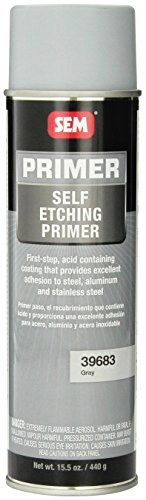 |
SEM Self Etching Primer Best Pro-Grade Adhesion Professional self etching primer, bare metal and fiberglass, fast flash |
9.1 | 🛒 Check Price |
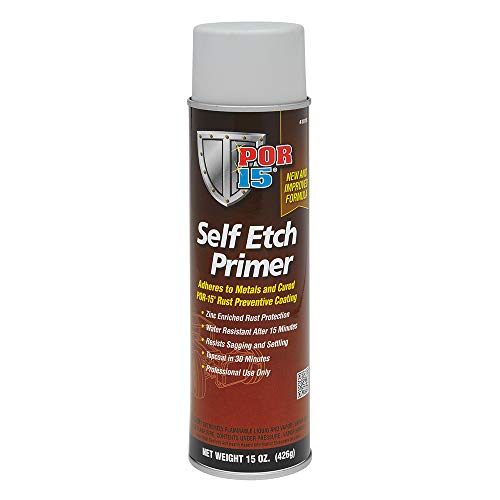 |
POR-15 Self Etch Primer Best for Rust-Prone Metal Self etch primer aerosol, corrosion barrier, bonds to bare and treated metal |
8.9 | 🛒 Check Price |
 |
Rust-Oleum Automotive Filler Primer Best Value Filler Sandable filler primer, fills minor imperfections, gray, 1 hour to sand |
8.7 | 🛒 Check Price |
 |
Dupli-Color Self Etching Primer Best for Beginners Self etching primer, bare metal adhesion, dark gray, fast dry |
8.4 | 🛒 Check Price |
 |
VHT Self Etching Primer Best Heat Tolerant Self etching primer, heat-capable base coat, light gray, bare metal |
8.1 | 🛒 Check Price |
1. Rust-Oleum Automotive Self Etching Primer: Best Overall
If you are priming bare metal, and especially bare aluminum on a wheel, a self etching primer should be your first coat, and this Rust-Oleum can is the one we reached for most. The acid in the formula actually micro-etches the surface as it dries, so the primer keys into the metal instead of just sitting on top of it. On a media-blasted steel wheel and on a curb-rashed aluminum rim that we sanded back, the topcoat held through tape pulls and a hard thumbnail test that lifted other primers. That adhesion is the whole reason this sits at the top of the list.
The honest weakness is that an etching primer is thin by design. It seals and grips, but it does not fill. If your panel or wheel has deep scratches or pitting, you will want to follow this with a high-build filler primer to level things out, then sand. Treat it as the bonding layer rather than the body layer and it is close to flawless. Just give it real ventilation, because the acidic solvent smell is sharper than a standard primer.
- Acid-based self etching formula bites directly into bare steel and aluminum for a mechanical bond
- Builds a corrosion-resistant base that blocks flash rust before topcoating
- Dries to sand in roughly an hour and accepts most enamel and lacquer color coats
Pros: Outstanding adhesion on bare metal and aluminum wheels without a separate etch step; Sands smooth and even, leaving a tight surface for color; Widely compatible with both rattle can and gun-applied topcoats
Cons: Etching primers are not a high-build filler, so deep scratches still need glaze; Strong solvent odor means you really need ventilation
2. Dupli-Color Sandable Primer: Best High-Build Filler
When the job is about leveling a surface rather than just bonding to metal, Dupli-Color Sandable Primer is the can we trust to do the filling. It lays down noticeably thicker than an etching primer, so two or three medium coats erase the kind of fine sand scratches and minor low spots that would otherwise telegraph through a glossy topcoat. On a wheel face that we had blocked back, it built quickly and then sanded to a flat, even gray that the color sat on beautifully. Color hold-out is genuinely good, which means your topcoat reads true instead of dulling out.
Its limitation is the flip side of that high build. Because it lays on thick, it is easy to get a run or a sag if you pull the trigger too long or hold the can too close, so light passes and patience pay off. It is also not self etching, so on bare aluminum you should lay an etch coat under it. Used as the body layer over a bonding primer, though, it is the smoothest foundation here for a show-quality finish.
- High-build formula fills sand scratches and minor surface imperfections in fewer coats
- Sands easily to a smooth, level base without clogging paper quickly
- Lacquer-based EHP chemistry is compatible with enamel and lacquer topcoats
Pros: Excellent build that levels out 320 to 400 grit scratches fast; Sands clean and feathers nicely at panel edges; Reliable color hold-out so your topcoat shade stays true
Cons: Not self etching, so bare aluminum still wants an etch coat first; Heavy build can run if you spray it too wet
3. SEM Self Etching Primer: Best Pro-Grade Adhesion
SEM is a name you see on professional refinishers’ benches, and their self etching primer brings that body-shop pedigree to a rattle can. The spray pattern is finer and more controllable than most hardware-store aerosols, which makes it easier to get an even etch coat on a curved wheel spoke or a contoured panel without blotching. Adhesion is the headline: on bare steel and on fiberglass repair sections it gripped hard, and the topcoat that followed survived our tape and gouge tests with no lifting at the edges.
The trade-off is the same as any etching primer, namely that it is a bonding layer rather than a builder, so you will still want a filler primer on top if the surface needs leveling. We also found stock a little less predictable than the mass-market brands, so it is worth buying enough for the whole job in one go. For adhesion alone, though, this is as confident as a spray can gets.
- Body-shop grade etching primer engineered for tough adhesion on bare metal
- Works on steel, aluminum, and fiberglass for mixed-material repairs
- Fast flash time lets you recoat and move to topcoat sooner
Pros: Trusted by professional refinishers for stubborn adhesion; Handles fiberglass and metal, useful for kits and trim; Even, fine spray pattern from the can
Cons: Lower build than a dedicated filler primer; Availability and stock can be inconsistent
4. POR-15 Self Etch Primer: Best for Rust-Prone Metal
POR-15 made its name on stopping rust dead, so it makes sense their self etch primer aerosol leans hard into corrosion protection. If you are spraying anything that lives in the splash zone, like inner wheel surfaces, brackets, or a panel that has already seen surface rust, this is the can that gave us the most peace of mind. It etches into clean metal for grip and then leaves a tough film that genuinely resists the flash rust that creeps back on bare steel within hours.
The catch is that POR-15 is really designed as a system, and you get the best out of it when you follow their prep and rust-treatment steps rather than treating this as a standalone can. It also is not a high-build primer, so leveling still calls for a filler coat afterward. Used in the right spot, on metal that needs to fight corrosion, it is one of the most protective spray primers you can buy.
- Etching chemistry paired with strong corrosion resistance for rust-prone areas
- Bonds tightly to bare steel and works in the POR-15 rust-repair system
- Smooth gray finish that sands and topcoats cleanly
Pros: Strong rust and corrosion protection on vulnerable metal; Integrates with the wider POR-15 rust treatment lineup; Tough, durable film once cured
Cons: Best results come from following the full POR-15 system steps; Less of a high-build than dedicated filler primers
5. Rust-Oleum Automotive Filler Primer: Best Value Filler
For everyday body and wheel work where you want a dependable filler primer without fuss, Rust-Oleum’s Automotive Filler Primer is the easy recommendation. It builds well enough to bury 400 grit scratches and small chips in a couple of coats, then it is ready to sand in about an hour, which keeps a weekend project on schedule. The gray sands evenly and gives a clean, uniform base that takes color predictably. Can-to-can consistency is good too, which matters when a job needs more than one.
It is not a self etching primer, so on bare aluminum or shiny steel you should put down an etch coat first or you risk adhesion problems down the road. Its build is strong but sits just a step below a dedicated EHP filler when you are chasing a flawless show finish. For the vast majority of repaints and refreshes, though, it hits the sweet spot of build, speed, and reliability.
- High-build sandable formula fills scratches, chips, and minor surface flaws
- Ready to sand in about an hour for quick project turnaround
- Compatible with most automotive enamel and lacquer topcoats
Pros: Solid build and easy sanding for a smooth base; Fast recoat and sand window keeps projects moving; Easy to find and consistent can-to-can
Cons: Not self etching, so bare aluminum needs an etch coat first; Build is good but a touch below dedicated EHP fillers
6. Dupli-Color Self Etching Primer: Best for Beginners
If this is your first time spraying primer on bare metal, Dupli-Color’s Self Etching Primer is the most forgiving way to get it right. It combines etching and priming in a single step, so you skip the separate acid wash and still get real adhesion on steel and aluminum. The spray pattern is gentle and even, which makes it tough to lay on too heavy or get runs, and it dries quickly so you are not standing around between coats. On bare wheel metal it gripped well and gave the topcoat a stable footing.
The honest limitation is that it is a thin bonding coat with low build, so it will not hide scratches or level a rough surface. You will want a filler primer over it for that. The dark gray shade can also pull down lighter topcoat colors, meaning you may need an extra color coat or a lighter sealer if you are going for white or yellow. As a confidence-building first primer, though, it is hard to beat.
- Etching and priming in one step for straightforward bare-metal prep
- Adheres to steel and aluminum without a separate acid wash
- Quick dry time and forgiving spray pattern for new users
Pros: Simple one-step etch and prime that is hard to mess up; Forgiving, even spray that resists runs; Good adhesion for the effort involved
Cons: Low build, strictly a bonding coat; Dark gray can need more topcoat to cover on light colors
7. VHT Self Etching Primer: Best Heat Tolerant
VHT is best known for high-heat and wheel coatings, so their self etching primer is the natural base when you are refinishing wheels or anything that sees brake or engine heat. It etches into bare steel and aluminum for grip, then plays nicely as the foundation under VHT’s wheel paint and high-temperature topcoats, which is exactly where we used it. The lighter gray base is a quiet bonus, because it holds out brighter topcoat colors better than the darker etching primers, so reds and silvers pop with fewer coats.
The thing to know is that it performs best inside the VHT system. You get the cleanest results pairing it with VHT topcoats rather than mixing it under an unrelated brand of wheel paint, since the heat tolerance is meant to work as a stack. Like every etching primer here it is low build, so leveling still needs a filler coat. For wheel projects that get hot, though, it is the smartest base in this roundup.
- Etching base coat designed to pair with high-heat and wheel finishes
- Bonds to bare steel and aluminum for a durable foundation
- Light gray base that holds out lighter topcoat colors well
Pros: Pairs well with VHT wheel and high-heat topcoats; Light base shade is friendly to bright topcoat colors; Strong adhesion on bare metal
Cons: Best matched within the VHT coating system; Low build like other etching primers
Frequently Asked Questions
Do I need a self etching primer or a filler primer for my project?
They do two different jobs, and a serious paint project often uses both. A self etching primer chemically bites into bare metal, especially aluminum, to create adhesion, so it goes down first on raw steel or rims. A filler primer, sometimes called sandable or high-build primer, lays on thick to bury sand scratches and small imperfections so the surface levels out before color. The ideal stack on bare metal is an etch coat for grip, then a filler coat for build, then sand and topcoat. If your metal is already in good shape and just needs leveling, a filler primer alone is fine, but never put a filler primer straight onto bare aluminum without etching first.
Can I use spray can primer on aluminum wheels?
Yes, and it is one of the most common uses, but aluminum is fussy about adhesion so you have to prep it right. Bare aluminum forms an oxide layer almost instantly, and ordinary primer struggles to grip it, which is why a self etching primer matters here. Clean the wheel thoroughly, scuff or media-blast the surface, wipe with a wax and grease remover, then lay an etch coat to bond, followed by a filler primer if you need to smooth out curb rash. Because wheels flex and take road grit and brake heat, that etched foundation is what keeps the finish from peeling later.
How long should primer dry before I sand and paint it?
Most automotive aerosol primers are ready to sand in about an hour at normal room temperature, but the can label always wins because formulas differ. Etching primers usually want to be topcoated within a recoat window, often within a day, or scuffed before color if you wait longer. Filler primers benefit from a little extra cure time before block sanding so they do not gum up the paper. Humidity and cold both slow drying, so give it more time in a damp garage. When in doubt, let it sit longer, because painting over primer that has not fully flashed off is a leading cause of solvent pop and wrinkling.
How many coats of spray primer do I need?
For an etching primer, one to two light, even coats is plenty, since its job is adhesion, not build, and piling it on does not help. For a filler or high-build primer, two to three medium coats is the usual range, enough to bury sand scratches so you can block them flat without sanding through to metal. Always let each coat flash off for the time on the can before adding the next, and keep your passes light to avoid runs. More important than coat count is even coverage, so overlap each pass by about half and keep the can moving at a steady distance.
Do I have to sand between primer and topcoat?
For the best finish, yes. Block or wet sanding the filler primer with around 400 to 600 grit knocks down any texture and gives the topcoat a dead-flat, scratch-free surface to sit on, which is what separates a smooth result from an orange-peel one. With etching primers, you generally topcoat within the recoat window without sanding, since sanding can cut through the thin etch layer to bare metal. If you miss that window, scuff lightly with fine paper to restore adhesion. So the rule of thumb is sand your filler primer for smoothness, and respect the recoat window on your etch primer instead of sanding it.
Our Verdict
Our top pick is the Rust-Oleum Automotive Self Etching Primer, because adhesion is the foundation every other coat depends on, and nothing in this group grips bare steel and aluminum more reliably or sands more cleanly for the effort. For the runner up, the Dupli-Color Sandable Primer is the one to pair it with when you want a show-smooth surface, thanks to its high build and excellent color hold-out. Run the etch coat first for bond, the Dupli-Color filler over it for level, and you have a spray-can foundation that rivals gun-applied work on both panels and wheels.
