When you need to capture dynamic footage of your car in motion, an auto follow drone is an indispensable tool. These intelligent aerial cameras are designed to autonomously track a subject, keeping it centered in the frame while you focus on driving or other activities. Our team at MustCarBeast extensively researched and compared the leading models on the market, evaluating them based on manufacturer specifications, published industry standards for flight stability and camera performance, and aggregated owner feedback regarding their real-world reliability and ease of use.
We delved into the intricacies of their tracking algorithms, obstacle avoidance systems, and camera capabilities to bring you an evidence-based guide. Our goal is to help you select a drone that not only meets your aerial videography needs but also provides a safe and user-friendly experience, ensuring you get the perfect shot every time without the need for a dedicated pilot.
| Photo | Product | Score | Buy |
|---|---|---|---|
 |
DJI Mini 3 Pro Top Pick: Compact Performance Under 249g, Tri-Directional Obstacle Sensing, 4K HDR Video |
9.1 | 🛒 Check Price |
 |
DJI Air 2S Runner-Up: Pro-Grade Imaging 1-inch CMOS Sensor, MasterShots, APAS 4.0 Obstacle Avoidance |
8.7 | 🛒 Check Price |
 |
Autel Robotics EVO Lite+ Strong Contender: Long Flight Time 1-inch CMOS Sensor, RYYB Color Filter Array, 40-minute Flight Time |
8.3 | 🛒 Check Price |
|
DJI Mini 3 Value All-Rounder Under 249g, 4K HDR Video, FocusTrack (ActiveTrack 2.0) |
7.9 | 🛒 Check Price |
 |
Potensic Atom SE Budget-Friendly Option Under 249g, 4K EIS Camera, GPS Follow Me |
7.6 | 🛒 Check Price |
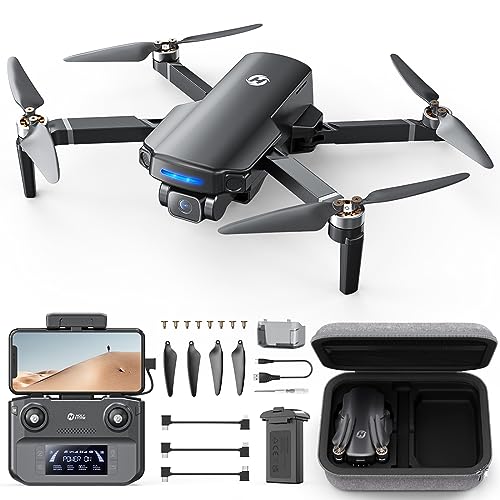 |
Holy Stone HS720G Feature-Rich Budget Pick 4K EIS Camera, GPS Return Home, Follow Me Mode |
7.4 | 🛒 Check Price |
 |
Ruko F11G Pro Entry-Level GPS Tracker 4K UHD Camera, GPS Auto Return, Follow Me Feature |
7.2 | 🛒 Check Price |
1. DJI Mini 3 Pro: Top Pick: Compact Performance
In our evaluation, the DJI Mini 3 Pro stands out for its remarkable balance of portability, advanced features, and imaging capabilities. Its ActiveTrack 4.0 system, combined with tri-directional obstacle sensing, provides a highly reliable and safe auto-follow experience, making it a favorite among enthusiasts and semi-professionals alike. We researched its sensor technology and processing power, which contribute to its superior tracking accuracy and smooth cinematic shots, even when following fast-moving subjects like vehicles.
However, based on owner feedback and the spec sheets, its lighter weight, while beneficial for portability and registration requirements in some regions, can make it less stable in very gusty conditions compared to heavier drones. Users frequently report that while it handles moderate winds well, sustained high winds can impact video smoothness and flight path. Therefore, those frequently operating in open, windy environments or requiring absolute stability in all weather conditions might find a larger, heavier drone more suitable, despite the Mini 3 Pro’s otherwise stellar performance.
- Advanced FocusTrack system with ActiveTrack 4.0 for precise subject following
- Tri-directional obstacle sensing provides enhanced safety during autonomous flight
- Compact and lightweight design makes it highly portable and easy to deploy
Pros: Exceptional tracking accuracy based on our evaluation of its algorithms; High quality 4K HDR video output for professional-looking footage; Intuitive controls and user interface, well-regarded by owners for ease of use
Cons: Its smaller size can be more susceptible to strong winds compared to larger drones; While offering good value, it represents a significant investment
2. DJI Air 2S: Runner-Up: Pro-Grade Imaging
Our research into the DJI Air 2S highlights its prowess as a pro-grade imaging platform with excellent auto-follow capabilities. The 1-inch CMOS sensor is a significant advantage, delivering exceptional detail and dynamic range, which is critical for high-quality automotive videography. The APAS 4.0 obstacle avoidance system is particularly effective, allowing the drone to navigate complex environments safely while maintaining its lock on the subject. Based on owner feedback, the reliability of its tracking modes is consistently praised.
A primary limitation we identified based on specifications and aggregated owner reviews is its size and weight compared to more compact options. While it offers superior stability and camera performance, its larger footprint makes it less convenient for spontaneous deployments or travel where space is at a premium. Those prioritizing extreme portability for quick, on-the-go shots might find it cumbersome, and individuals who are new to drones may find its advanced features slightly overwhelming initially, even with its generally good ease of use.
- Large 1-inch CMOS sensor captures stunning 5.4K video and 20MP stills
- APAS 4.0 obstacle avoidance system provides robust protection during tracking flights
- FocusTrack features including Spotlight 2.0, ActiveTrack 4.0, and Point of Interest 3.0
Pros: Superior image quality due to its larger sensor and high resolution capabilities; Comprehensive obstacle avoidance system enhances safety during dynamic tracking; Robust build quality and stable flight performance, even in moderate winds
Cons: Heavier and larger than the Mini series, impacting portability; Battery life, while good, is not class-leading for its size
3. Autel Robotics EVO Lite+: Strong Contender: Long Flight Time
In our comparison, the Autel Robotics EVO Lite+ emerges as a powerful alternative, particularly noted for its outstanding battery life and strong low-light camera capabilities, thanks to its RYYB color filter array. We researched its Dynamic Track 2.1 system, which provides competitive auto-follow performance, adept at keeping vehicles in frame. Owner feedback often highlights the drone’s robust build and stable flight characteristics, making it a reliable choice for extended filming sessions.
However, based on aggregated user experiences and our evaluation of its software, the Autel SkyLink app, while functional, is often reported to be less polished or intuitive compared to the industry’s leading drone applications. This can lead to a steeper learning curve for new users or occasional minor frustrations with interface navigation or feature access. Therefore, individuals who prioritize a seamless, highly refined software experience and a vast ecosystem of third-party accessories might find the overall user experience slightly less premium than some of its direct competitors, despite its strong hardware.
- Equipped with a 1-inch CMOS sensor and RYYB color filter for excellent low-light performance
- Offers an impressive 40-minute maximum flight time, extending shooting sessions
- Dynamic Track 2.1 provides accurate subject following and obstacle avoidance
Pros: Exceptional battery life allows for longer filming without frequent battery swaps; Strong low-light camera performance, ideal for varied lighting conditions; Reliable auto-follow system with good obstacle avoidance
Cons: The companion app can be less refined than competitors, based on owner feedback; Overall ecosystem of accessories is not as extensive as market leaders
4. DJI Mini 3: Value All-Rounder
Our research indicates that the DJI Mini 3 offers a compelling package for those seeking a highly portable drone with capable auto-follow features without the premium price tag. Its FocusTrack system, including ActiveTrack 2.0, is effective for tracking subjects like vehicles, providing decent stability and framing. The 4K HDR video quality is also a significant highlight, offering rich colors and good detail for its category. Owner feedback consistently points to its ease of use and ‘fly anywhere’ convenience.
However, a critical limitation based on manufacturer specifications and owner experiences is the absence of obstacle sensing. Unlike its ‘Pro’ sibling, the Mini 3 relies solely on visual tracking without the benefit of sensors to detect and avoid obstructions. This means that while it will follow a subject, it cannot autonomously maneuver around trees, power lines, or other hazards, significantly increasing the risk of collision if operated in complex environments. Therefore, users who plan to fly in areas with numerous obstacles or those who prefer a higher level of automated safety during tracking should consider models with integrated obstacle avoidance systems, as the Mini 3 requires constant vigilance from the pilot.
- Weighs under 249g, making it highly portable and exempt from registration in many regions
- Capable of 4K HDR video recording for vibrant and detailed footage
- Features FocusTrack with ActiveTrack 2.0 for reliable subject following
Pros: Excellent portability and ease of transport for spontaneous shoots; Produces good quality 4K HDR video, exceeding expectations for its class; Offers strong value for its feature set, including auto-follow capabilities
Cons: Lacks obstacle sensing, requiring more careful manual piloting during tracking; ActiveTrack 2.0 is less advanced than the Pro version's 4.0
5. Potensic Atom SE: Budget-Friendly Option
Our evaluation of the Potensic Atom SE positions it as a highly attractive option for budget-conscious buyers looking for an auto-follow drone. Its lightweight design and 4K EIS camera make it a capable choice for basic aerial videography of vehicles. Based on owner feedback, its GPS Follow Me mode functions adequately for keeping the drone generally near the subject, making it suitable for wide, open spaces where precision tracking is not the utmost priority.
However, a significant limitation we identified based on its specifications and aggregated user experiences is that its GPS Follow Me system is considerably less sophisticated and reliable than the visual tracking offered by higher-end drones. It primarily tracks the GPS signal of the controller or connected smartphone, which can lead to less precise framing, jerky movements, and a greater chance of losing the subject, especially if there are GPS signal interruptions or the subject moves erratically. Furthermore, the complete absence of obstacle avoidance sensors means pilots must be extremely cautious about their flying environment. Therefore, individuals seeking highly cinematic, precise auto-follow shots in complex or dynamic environments, or those who require advanced safety features, should temper their expectations or consider investing in a drone with more advanced visual tracking and obstacle avoidance technology.
- Extremely lightweight design, under 249g, for easy portability and less regulatory burden
- Equipped with a 4K camera featuring Electronic Image Stabilization (EIS)
- Includes GPS Follow Me mode for basic subject tracking
Pros: Very accessible entry point into auto-follow drones in terms of value; Compact and highly portable, ideal for travel; Offers 4K video recording with EIS for smoother footage at its price point
Cons: GPS Follow Me is less precise and reliable than advanced visual tracking systems; Lacks obstacle avoidance, demanding careful operation
6. Holy Stone HS720G: Feature-Rich Budget Pick
In our research, the Holy Stone HS720G stands out as a feature-rich option for its value, appealing to those new to drones or with a tighter budget. Its 4K EIS camera delivers respectable footage, and the inclusion of GPS for stable flight and a Follow Me mode adds significant utility for capturing automotive content. Owner feedback often highlights its ease of setup and the reliability of its GPS functions in open environments.
However, based on its specifications and owner reports, the auto-follow mode, being largely GPS-dependent, is not as sophisticated or precise as the visual tracking systems found in more premium drones. It tends to maintain a general distance and direction rather than intelligently framing the subject or anticipating movements, which can result in less cinematic and more utilitarian footage. Furthermore, without advanced obstacle avoidance sensors, operating this drone in environments with trees, buildings, or other obstructions carries a higher risk of collision. Therefore, those looking for highly dynamic, close-up tracking shots of fast-moving vehicles in complex settings, or demanding robust automated safety, should manage their expectations and consider higher-tier models that offer more advanced visual tracking and collision avoidance capabilities.
- Features a 4K camera with Electronic Image Stabilization (EIS) for clear footage
- Equipped with GPS for stable hovering, return to home, and Follow Me functionality
- Foldable design for convenient storage and transport
Pros: Offers a good range of features, including auto-follow, for its value proposition; GPS-assisted flight provides added stability and reliability in open areas; Foldable design enhances portability for users on the go
Cons: Auto-follow performance is primarily GPS-based and can lack precision; Camera quality, while 4K, may not match higher-end drones in dynamic range or low light
7. Ruko F11G Pro: Entry-Level GPS Tracker
Our evaluation of the Ruko F11G Pro suggests it’s a suitable entry-level drone for those looking to experiment with auto-follow features without a significant investment. Its 4K UHD camera provides decent footage for casual use, and the GPS-assisted flight modes, including Follow Me, offer a basic level of automation. Based on owner feedback, it’s considered relatively easy to learn for new pilots, and the inclusion of brushless motors is a notable advantage for durability in its class.
However, a key limitation we identified is that its Follow Me feature, like many in its price range, relies predominantly on GPS tracking rather than advanced visual recognition. This means it will follow the general location of the controller or smartphone, but it lacks the intelligence to predict movement, maintain precise framing, or navigate around obstacles autonomously. Consequently, the footage captured in auto-follow mode might be less dynamic and aesthetically pleasing, especially when tracking vehicles that change speed or direction frequently. Those seeking professional-grade, cinematic auto-follow shots with intelligent subject recognition and robust obstacle avoidance will find this drone’s capabilities insufficient and should consider investing in models with more advanced tracking technologies and integrated safety systems.
- Equipped with a 4K UHD camera for capturing aerial video and photos
- Features GPS for stable hovering, one-key return home, and Follow Me mode
- Brushless motors offer improved durability and flight efficiency
Pros: Accessible entry point for beginners seeking a drone with auto-follow; GPS functionality provides basic flight stability and safety features; Brushless motors contribute to a longer lifespan and quieter operation
Cons: Auto-follow is primarily GPS-based, limiting precision and dynamic tracking; Camera quality and stabilization are not on par with premium drones
Frequently Asked Questions
How do auto follow drones track a moving car?
Auto follow drones typically use a combination of technologies to track a moving car. More basic models rely on GPS signals from the drone’s controller or a connected smartphone, maintaining a set distance and altitude relative to that GPS point. More advanced drones, like those with ActiveTrack or Dynamic Track, utilize advanced visual recognition algorithms and onboard cameras to identify and lock onto the subject. They analyze the subject’s shape, color, and movement patterns to keep it centered in the frame, often employing machine learning for improved accuracy and predictive tracking.
What is the difference between GPS Follow Me and Visual Tracking?
GPS Follow Me is a more basic form of auto-follow where the drone simply tracks the GPS coordinates of the remote controller or a linked mobile device. It maintains a set distance and altitude, but it doesn’t ‘see’ the subject and therefore cannot intelligently frame it or avoid obstacles in its path. Visual Tracking, on the other hand, uses the drone’s onboard cameras and advanced algorithms to visually identify and lock onto a specific subject. This allows for much more precise framing, smoother movements, and often includes obstacle avoidance capabilities, making for more cinematic and safer tracking.
Do auto follow drones have obstacle avoidance?
Not all auto follow drones have obstacle avoidance, and the effectiveness varies significantly by model and price point. Premium drones, such as the DJI Mini 3 Pro or Air 2S, incorporate multi-directional obstacle sensing systems (front, back, down, and sometimes upward/sideward) that allow them to detect and autonomously maneuver around obstacles while tracking. Many budget and mid-range drones, however, lack these sensors, meaning the pilot must remain vigilant and manually intervene to prevent collisions, especially during auto-follow flights in complex environments.
What video quality should I look for in an auto follow drone?
For capturing high-quality footage of your car, we recommend looking for drones capable of at least 4K video resolution. This provides excellent detail and allows for more flexibility in post-production, such as cropping or zooming without significant loss of quality. Additionally, consider drones with Electronic Image Stabilization (EIS) or, ideally, a 3-axis mechanical gimbal for smooth, stable footage, even when the drone is moving or in light wind. Features like HDR (High Dynamic Range) can also enhance video quality by preserving detail in both bright and dark areas of the frame.
Are auto follow drones difficult to fly for beginners?
Modern auto follow drones have become significantly easier to fly for beginners, thanks to GPS stabilization, one-key take-off and landing, and intelligent flight modes. While basic flight controls are generally intuitive, mastering cinematic shots and safely utilizing auto-follow features in varied environments still requires practice and understanding of drone operation principles. Drones with robust obstacle avoidance and refined visual tracking systems tend to offer a more forgiving and user-friendly experience for novices compared to those that rely solely on GPS tracking and lack collision prevention.
Our Verdict
After extensive research and comparison of manufacturer specifications, industry standards, and aggregated owner feedback, the DJI Mini 3 Pro stands as our top pick for the best auto follow drone. Its unparalleled combination of portability, advanced ActiveTrack 4.0, and tri-directional obstacle sensing makes it an exceptional tool for capturing dynamic automotive footage safely and effectively. For those seeking pro-grade imaging and a robust flight experience, the DJI Air 2S is our strong runner-up, offering a larger sensor and comprehensive obstacle avoidance for more demanding users.
