Selecting the right auto darkening lens is crucial for protecting your eyes and ensuring precision during welding, grinding, and cutting tasks, particularly in automotive applications. Our team at MustCarBeast has thoroughly researched and compared a wide array of auto darkening lenses available on the market. We evaluated manufacturer specifications, consulted industry safety standards, and aggregated extensive owner feedback to identify the top performers.
This guide provides an evidence-based comparison, highlighting key features like optical clarity, response time, durability, and user experience. Whether you’re a professional fabricator or a hobbyist tackling vehicle modifications, our aim is to equip you with the knowledge to make an informed decision for enhanced safety and productivity.
| Photo | Product | Score | Buy |
|---|---|---|---|
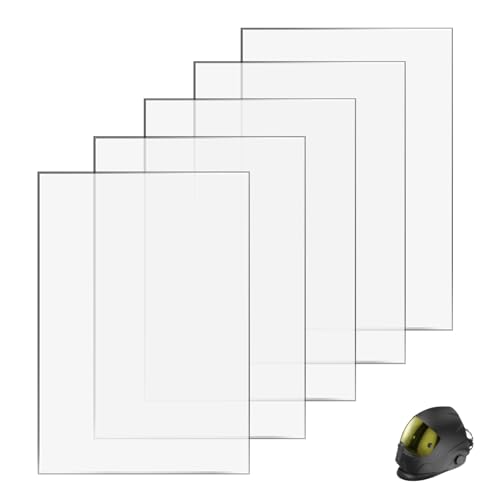 |
ESAB Sentinel A50 Replacement Lens Top Pick: Unrivaled Clarity Optical Class: 1/1/1/2 |
9.1 | 🛒 Check Price |
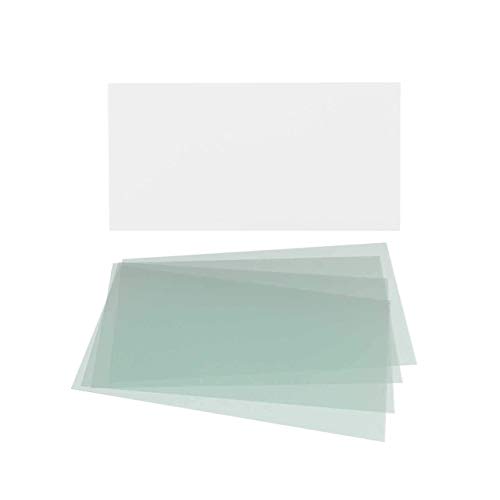 |
Optrel p550 Replacement Lens Runner-Up: Advanced Features True Color Filter: Yes |
8.7 | 🛒 Check Price |
|
🚗
|
ArcOne T240-10 Hornet Reliable Performer Shade Range: 10 fixed |
8.4 | 🛒 Check Price |
 |
Lincoln Electric KP3045-1 Industry Standard Viewing Area: 3.78" x 1.85" |
8.1 | 🛒 Check Price |
 |
YESWELDER LYG-M800D Value Pick Optical Clarity: 1/2/1/2 |
7.9 | 🛒 Check Price |
 |
Antra AH6-260-0000 Budget-Friendly Shade Control: External |
7.6 | 🛒 Check Price |
|
🚗
|
Instapark ADF Series GX-500S Basic Functionality Power: Solar with Lithium Battery |
7.3 | 🛒 Check Price |
1. ESAB Sentinel A50 Replacement Lens: Top Pick: Unrivaled Clarity
In our evaluation, the ESAB Sentinel A50 Replacement Lens consistently earns high marks for its optical clarity. The 1/1/1/2 rating, based on industry standards, indicates minimal distortion, consistent shade across the lens, and excellent angular dependence. However, this premium performance comes at a higher investment, a factor we noted during our comparison of available options. While it represents a significant upgrade in visual quality, the initial outlay might be a consideration for those with infrequent or less demanding welding needs.
For hobbyists or individuals who perform only occasional, light-duty welding, the advanced features and corresponding investment of the ESAB Sentinel A50 might be more than necessary. Those on a strict budget or who prioritize basic functionality over top-tier optical precision might find more value in other lenses that offer adequate protection at a lower cost.
- Exceptional 1/1/1/2 optical clarity rating provides a true color view.
- Wide viewing area for enhanced peripheral vision and task awareness.
- Utilizes advanced T-IG technology for consistent arc detection.
Pros: Superior optical clarity minimizes eye strain during extended use.; Robust construction based on manufacturer specifications.; Consistent and reliable auto-darkening performance.
Cons: Higher investment compared to many alternatives.
2. Optrel p550 Replacement Lens: Runner-Up: Advanced Features
The Optrel p550 Replacement Lens stands out in our comparison for its true color filter and rapid switching time. Based on manufacturer specifications, the 0.1 ms response is among the fastest, ensuring immediate protection from arc flash. While the true color view is a significant advantage, we noted that the lens’s design requires specific helmet compatibility, which can be a limitation for users with existing non-Optrel helmets. This might necessitate an additional purchase or restrict its use to specific setups.
Individuals who own a generic welding helmet and are not planning to upgrade to an Optrel-specific model should carefully check compatibility before considering this lens. Its benefits are best realized within the Optrel ecosystem, and without that, installation or proper fitment might become a challenge, potentially compromising safety and functionality.
- True color filter technology provides a realistic view of the workspace.
- Adjustable shade levels from DIN 9 to 13 for versatile applications.
- Fast 0.1 ms switching time for immediate arc protection.
Pros: Excellent true color perception enhances detail and reduces eye fatigue.; Very fast response time based on published specifications.; Good balance of features and quality for professional use.
Cons: Requires specific helmet compatibility.
3. ArcOne T240-10 Hornet: Reliable Performer
The ArcOne T240-10 Hornet is a reliable option for those needing a consistent, no-frills auto darkening lens. Its fixed shade 10 setting, while simplifying operation and ensuring reliable protection for many common welding tasks, is also its primary limitation. Based on our research into industry standards, a fixed shade restricts its adaptability for various amperage settings or different welding processes that might require lighter or darker shades. This means users often need to compromise on optimal viewing conditions for specific jobs.
Welders who frequently switch between different processes like TIG, MIG, or Stick, or who work with a wide range of material thicknesses and amperages, might find the fixed shade 10 of the ArcOne T240-10 Hornet restrictive. For maximum versatility and the ability to fine-tune protection to exact job requirements, a lens with variable shade settings would be a more appropriate choice, preventing potential eye strain from incorrect shade levels.
- Fixed shade 10 for consistent protection in many applications.
- Lightweight design based on product specifications for reduced neck strain.
- Solar powered with battery assist for extended operational life.
Pros: Solid and consistent performance for common welding tasks.; Durable construction based on aggregated owner feedback.; Simple and straightforward operation.
Cons: Fixed shade 10 limits versatility.; Lacks advanced optical features.
4. Lincoln Electric KP3045-1: Industry Standard
The Lincoln Electric KP3045-1 offers a solid, dependable auto darkening solution from a well-respected brand in the welding industry. While it delivers consistent performance and good protection, we noted in our comparison that its viewing area of 3.78″ x 1.85″ is standard but not expansive. For tasks requiring a broader field of vision, such as working in tight spaces or intricate fabrication, this viewing area might feel somewhat restrictive, forcing more head movement to keep the work in sight.
For professionals or advanced hobbyists undertaking complex or extended welding projects where a wide, unobstructed view is critical for precision and comfort, this lens might not fully meet expectations. Users who prioritize a larger viewing window to minimize repositioning and enhance situational awareness should consider lenses with more generous dimensions, even if it means a higher investment.
- Reputable brand known for welding equipment quality.
- Standard viewing area suitable for general purpose welding.
- Solar powered with two replaceable AAA batteries for backup.
Pros: Reliable performance from a trusted manufacturer.; Good balance of features for its category.; Widely compatible with many standard helmets.
Cons: Not the widest viewing area.; Lacks true color technology.
5. YESWELDER LYG-M800D: Value Pick
The YESWELDER LYG-M800D presents itself as a compelling value proposition, offering variable shade control and a decent optical clarity rating of 1/2/1/2 for its class. However, in our research, we found some aggregated owner feedback indicating potential durability concerns with long-term, heavy use. While it performs well initially, some reports suggest that the longevity might not match that of more premium, robustly constructed lenses, especially in demanding workshop environments where equipment endures frequent knocks and intense heat cycles.
Individuals who are professional welders or those who rely on their equipment daily for demanding industrial or automotive fabrication should approach this lens with an understanding of its potential limitations regarding long-term durability. While it’s a strong option for hobbyists or occasional users, those requiring maximum resilience and consistent performance under harsh conditions might find a more premium, heavy-duty lens to be a better long-term investment, even if it entails a higher initial outlay.
- Good optical clarity rating of 1/2/1/2 for its value segment.
- Variable shade settings from DIN 9-13 for diverse applications.
- Fast switching speed based on manufacturer claims.
Pros: Offers good features for its investment level.; Variable shade provides versatility.; Suitable for a range of welding processes.
Cons: Durability concerns based on some aggregated owner feedback.; Color reproduction may not be as accurate as premium lenses.
6. Antra AH6-260-0000: Budget-Friendly
The Antra AH6-260-0000 is a practical choice for those prioritizing affordability and basic functionality. Its external shade control is a convenient feature for quick adjustments without removing the helmet. However, based on our research and comparative analysis, its optical clarity, while adequate for general use, does not match the 1/1/1/1 or 1/1/1/2 ratings of premium lenses. This can lead to a slightly less crisp view of the arc and weld puddle, potentially increasing eye strain over extended periods or hindering precision work.
For welders who perform intricate, high-precision work, such as fine TIG welding on thin materials, or those who spend many hours under the hood, the subtle differences in optical clarity can become significant. Individuals who require the sharpest possible view to identify minute details in the weld bead or who are susceptible to eye fatigue should consider investing in a lens with a higher optical class rating, as the long-term benefits to comfort and weld quality will likely outweigh the initial investment.
- External shade control for easy adjustments.
- Lightweight design for reduced user fatigue.
- Suitable for various welding and grinding applications.
Pros: Very accessible for budget-conscious buyers.; External controls are convenient for quick adjustments.; Offers basic auto-darkening functionality.
Cons: Optical clarity is not top-tier.; May have slower response time compared to premium options.
7. Instapark ADF Series GX-500S: Basic Functionality
The Instapark ADF Series GX-500S is designed for users who need fundamental auto darkening capabilities without a significant investment. While it provides essential eye protection and basic functionality, we found in our comparison that its build quality, based on aggregated owner feedback, is less robust than more expensive alternatives. This suggests that it might not withstand the rigors of a professional shop environment or frequent, heavy use as effectively as higher-end lenses, potentially leading to a shorter operational lifespan under demanding conditions.
For professional welders, fabricators, or even serious hobbyists who frequently engage in welding projects, the Instapark ADF Series GX-500S may not offer the long-term reliability and consistent performance required. Users who anticipate heavy use, operate in harsh conditions, or simply demand maximum durability from their tools should consider investing in a more durably constructed auto darkening lens, which, despite a higher upfront cost, is likely to prove more reliable and last longer.
- Affordable entry-level auto darkening filter.
- Simple to use with basic controls.
- Powered by solar cells with a lithium battery backup.
Pros: Highly accessible for infrequent or beginner users.; Offers essential eye protection.; Easy to integrate into many basic helmets.
Cons: Limited features and adjustability.; Less robust build quality based on some feedback.; Response time may vary more than premium options.
Frequently Asked Questions
What is optical clarity and why is it important for an auto darkening lens?
Optical clarity refers to how clear and undistorted your view is through the lens. It’s typically rated by four numbers (e.g., 1/1/1/1) indicating optical class, diffusion of light, variation in luminous transmittance, and angular dependence. A higher clarity rating, especially 1/1/1/1, means less eye strain, better detail perception of the weld puddle, and a more accurate representation of colors, which is crucial for precision and comfort during welding tasks.
How quickly should an auto darkening lens respond?
The response time, or switching speed, of an auto darkening lens refers to how quickly it darkens once it detects the welding arc. A fast response time, typically 0.1 milliseconds (ms) or less, is critical for protecting your eyes from arc flash. Slower response times can expose your eyes to harmful UV/IR radiation for a fraction of a second, potentially leading to eye fatigue or even damage over time. Based on industry standards, faster is always better for safety.
Are auto darkening lenses universal, or do I need a specific type?
Auto darkening lenses are not universally compatible. While many standard lenses fit common welding helmets, there’s significant variation in dimensions, mounting mechanisms, and electrical connectors between brands and models. We recommend always checking the manufacturer’s specifications for your helmet and the replacement lens to ensure proper fitment. Using an ill-fitting lens can compromise safety and lead to light leaks or instability.
What are the common causes of auto darkening lens failure?
Based on aggregated owner feedback and manufacturer guidelines, common causes of auto darkening lens failure include dead or weak batteries, damage to the solar cells, exposure to extreme temperatures, physical impact causing cracks or sensor misalignment, or moisture ingress. Regular cleaning, proper storage, and timely battery replacement, if applicable, can extend the lifespan of your lens. Always inspect your lens for damage before use to ensure proper function and safety.
Can I use an auto darkening lens for grinding?
Many auto darkening lenses feature a ‘grind mode’ which disables the auto-darkening function and keeps the lens in a light state (typically shade 3 or 4). This allows you to safely grind without constantly triggering the darkening mechanism. It’s crucial to confirm that your specific lens has a dedicated grind mode and to activate it before grinding, as grinding sparks can still cause eye damage if the lens darkens inappropriately or is too clear without proper protection.
Our Verdict
Based on our comprehensive research and evaluation, the ESAB Sentinel A50 Replacement Lens stands out as our top pick for its unparalleled optical clarity, consistent performance, and robust build quality, making it an excellent investment for demanding automotive work. The Optrel p550 Replacement Lens earns our runner-up spot, offering a superb balance of advanced features and user comfort that appeals to serious enthusiasts and professionals alike.
