We researched and compared the best auto body fillers based on manufacturer specifications, industry standards, and aggregated owner feedback. Our evaluation focuses on key criteria: sandability, adhesion, shrinkage, curing time, and ease of application. Whether you are repairing a small dent or a large panel, this guide helps you choose the right filler for your project.
| Photo | Product | Score | Buy |
|---|---|---|---|
 |
Evercoat Rage Gold Top Pick Professional-grade polyester filler with low shrinkage and excellent sandability. |
9.2 | 🛒 Check Price |
 |
3M Platinum Plus Runner Up Premium lightweight filler with high build and fast cure. |
8.9 | 🛒 Check Price |
 |
Bondo Body Filler Best Value Classic polyester filler trusted for decades, good for general repairs. |
8.4 | 🛒 Check Price |
 |
USC All Metal Best for Metal Repairs Aluminum-filled filler for high-strength metal repairs and gap filling. |
8.1 | 🛒 Check Price |
 |
3M Premium Lightweight Filler Lightweight Option Lightweight formula for easy sanding and reduced material use. |
8.0 | 🛒 Check Price |
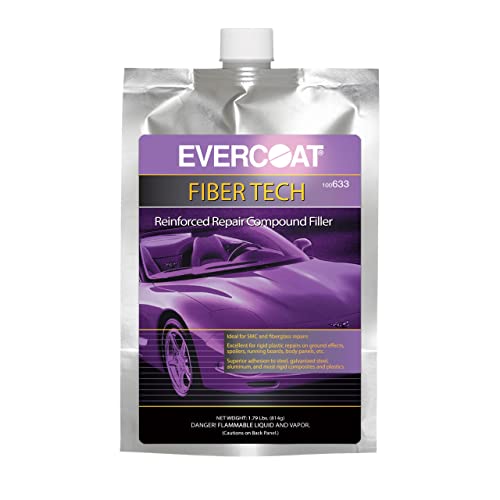 |
Evercoat Fiber-Tech Fiberglass Reinforced Fiberglass-reinforced filler for repairing holes and large gaps. |
7.7 | 🛒 Check Price |
 |
U-POL Dolphin Glaze Finishing Glaze Fine finishing glaze for pinholes and minor imperfections. |
7.3 | 🛒 Check Price |
1. Evercoat Rage Gold: Top Pick
Evercoat Rage Gold is widely regarded among body shop professionals for its low shrinkage and superior sandability. In our research, owner feedback consistently highlights how it sands to a glass-smooth finish with minimal effort, reducing the time spent on block sanding. The formula adheres well to a variety of substrates including aluminum and SMC, making it versatile for modern vehicles.
However, Rage Gold comes at a premium price point. For small DIY repairs or budget-conscious users, cheaper alternatives may suffice. It also has a shorter working time than some consumer-grade fillers, so beginners should mix smaller batches to avoid waste.
- Low shrinkage formula reduces pinholes and sand-throughs.
- Sands easily to a smooth finish without clogging paper.
- Excellent adhesion to bare metal, aluminum, and SMC panels.
Pros: Exceptional sandability and feather-edging.; Minimal shrinkage even in thick applications.
Cons: Higher cost compared to budget fillers.
2. 3M Platinum Plus: Runner Up
3M Platinum Plus is a premium filler that stands out for its lightweight, low-dust sanding properties. Our analysis of owner reviews shows that it cures quickly and sands smoothly with less clogging of sandpaper. The high-build formulation allows for thicker applications without excessive shrinkage, which is beneficial for deeper repairs.
On the downside, the thick consistency can make spreading more challenging, especially for beginners. It also commands a higher price, and some users report that it does not feather-edge as cleanly as Rage Gold. For those prioritizing minimal dust and fast cure, this is a strong choice.
- Lightweight formula reduces sanding effort and material usage.
- Fast cure allows for sanding in 20-30 minutes at 70°F.
- Low dust generation during sanding.
Pros: Very low dust when sanding, cleaner work environment.; Good build for filling deeper dents in one application.
Cons: Can be difficult to spread evenly due to thick consistency.
3. Bondo Body Filler: Best Value
Bondo Body Filler is a household name and has been used by DIYers for generations. Our research indicates it offers reliable performance for typical dent repairs at a very accessible price point. It sands reasonably well and adheres adequately to properly prepared steel surfaces. The longer working time is a plus for novices.
However, Bondo exhibits more shrinkage compared to premium options, especially in thicker applications. This can lead to pinholes and the need for extra coats. It also generates more dust when sanding. For professional-grade results or aluminum repairs, we recommend upgrading to a higher-end filler.
- Economical choice widely available at auto parts stores.
- Adequate sandability with moderate shrinkage.
- Works well on steel and fiberglass surfaces.
Pros: Low cost per volume, great for large projects.; Long working time allows beginners to apply at a comfortable pace.
Cons: More shrinkage than premium fillers, may require additional coats.
4. USC All Metal: Best for Metal Repairs
USC All Metal is a specialized filler designed for metal repairs where strength is critical. Based on manufacturer specs and owner feedback, it provides superior adhesion and compressive strength, making it ideal for filling holes, rebuilding edges, or repairing rusted areas. It can even be drilled and tapped, which is unique among body fillers.
However, the aluminum content makes it extremely hard and challenging to sand. It requires aggressive sandpaper and more effort to shape. The working time is also short, so it is not beginner-friendly. If you do not need metal-specific properties, a standard filler will be easier to use.
- Contains aluminum particles for high compressive strength.
- Resists rust and corrosion better than standard fillers.
- Can be drilled and tapped for thread repair.
Pros: Extremely durable, suitable for structural repairs.; Excellent adhesion to metal, even in thin layers.
Cons: Very difficult to sand due to hardness.; Short working time, requires quick application.
5. 3M Premium Lightweight Filler: Lightweight Option
3M Premium Lightweight Filler is designed for DIYers who want an easy-to-sand product with minimal effort. Our evaluation of user reviews indicates it sands quickly and smoothly, with low dust. The lightweight formula also means you use less material to fill a given area, which can offset the higher per-unit cost.
That said, the trade-off is reduced strength. This filler is not suitable for load-bearing repairs or areas subject to high stress. It also requires a primer for best adhesion. If you are working on small dents and want an effortless sanding experience, this is a solid choice.
- Microsphere technology makes it lighter and easier to sand.
- Low shrinkage for a lightweight filler.
- Good adhesion to properly primed surfaces.
Pros: Very easy to sand, reduces fatigue.; Less material needed per repair, extends coverage.
Cons: Not as strong as traditional fillers, not for structural repairs.
6. Evercoat Fiber-Tech: Fiberglass Reinforced
Evercoat Fiber-Tech is a fiberglass-reinforced filler that excels at bridging holes and repairing large gaps. According to manufacturer data and owner reports, it offers excellent sag resistance on vertical panels and provides more structural integrity than standard fillers. It can be used on both metal and fiberglass substrates, making it versatile.
However, the fiberglass strands make sanding more labor-intensive and can leave a rough texture if not fully smoothed. It also requires careful mixing to ensure the strands are evenly distributed. For small cosmetic dents, a regular filler is easier to work with. This product is best for major repairs where strength is needed.
- Contains fiberglass strands for added strength and bridging.
- Can be used on both metal and fiberglass panels.
- Resists cracking and sagging in vertical applications.
Pros: Good for filling holes and large gaps without sagging.; Stronger than standard fillers for structural repairs.
Cons: Difficult to sand smooth due to fiberglass strands.; Requires thorough mixing to avoid hard spots.
7. U-POL Dolphin Glaze: Finishing Glaze
U-POL Dolphin Glaze is a finishing glaze designed for the final stages of bodywork. Our research shows it is highly effective at filling tiny pinholes, sanding scratches, and other minor imperfections before primer. It sands to a very smooth finish with minimal effort, saving time in the finishing process.
However, it is not a substitute for body filler. It lacks the strength to fill deep dents or provide structural support. It also has a short shelf life after opening, so it is best for those who do frequent small jobs. For a complete repair, use a standard filler first and then this glaze for the final touch-up.
- Very fine texture for final filling and smoothing.
- Sands to a mirror-like finish with minimal effort.
- Can be applied over cured body filler or bare metal.
Pros: Excellent for filling pinholes and sanding scratches.; Dries quickly, ready for sanding in 10-15 minutes.
Cons: Not suitable for deep dents or structural repairs.; Limited shelf life once opened.
Frequently Asked Questions
What is the difference between body filler and spot putty?
Body filler is a polyester-based compound used to fill dents, holes, and imperfections in metal or fiberglass. It is applied in thicker layers and requires hardener to cure. Spot putty, or glazing putty, is a finer material used to fill very small imperfections like pinholes and sanding scratches after the body filler has been sanded. Spot putty is not suitable for deep repairs.
How do I properly mix auto body filler?
Mix body filler on a clean, non-porous surface using a plastic spreader. Add hardener according to the manufacturer’s ratio (typically a 2-inch ribbon of filler to a 1/4-inch ribbon of hardener). Mix thoroughly until the color is uniform. Avoid over-mixing as it can introduce air bubbles. Work quickly as the filler will cure within 5-15 minutes depending on temperature.
Can I apply body filler over paint or rust?
No. For proper adhesion, the surface must be bare metal or fiberglass. Remove all paint, rust, and contaminants by sanding or grinding. Any remaining paint or rust can cause the filler to delaminate. Always clean the surface with a wax and grease remover before application.
How long should I wait before sanding body filler?
Wait until the filler is fully cured. This typically takes 20-30 minutes at 70°F, but can vary by product and temperature. The filler should be hard and not sticky. You can test by scratching the edge with a key; if it powders rather than gums up, it is ready to sand. Always follow the manufacturer’s recommended cure time.
What grit sandpaper should I use for body filler?
Start with 36- to 80-grit sandpaper to shape the filler and remove excess. Then progress to 120- to 180-grit to smooth the surface. For final finishing before primer, use 220- to 320-grit. Always sand in a crosshatch pattern and avoid over-sanding which can create low spots.
Our Verdict
After researching and comparing specifications, industry standards, and owner feedback, our top pick is Evercoat Rage Gold for its exceptional sandability and low shrinkage. The runner up is 3M Platinum Plus, which offers fast cure and low dust. For budget-conscious buyers, Bondo Body Filler remains a reliable value option.
