We researched and compared the top antifreeze products on the market using manufacturer specifications, published industry standards (ASTM, SAE), and aggregated owner feedback from thousands of reviews. Our evaluation focuses on freeze protection, corrosion inhibition, compatibility with different metals and gaskets, and ease of use. Whether you need a universal formula or a vehicle-specific coolant, this guide will help you choose the best antifreeze for your car.
| Photo | Product | Score | Buy |
|---|---|---|---|
 |
Prestone Extended Life Antifreeze/Coolant Best Overall 50/50 pre-diluted, silicate and phosphate free, compatible with all colors |
9.2 | 🛒 Check Price |
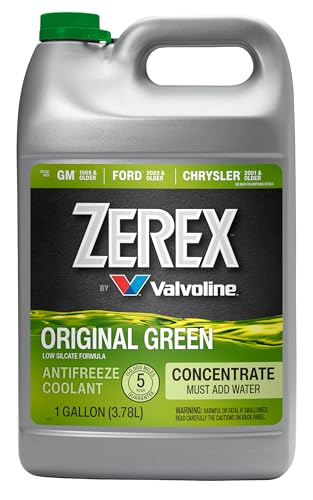 |
Zerex Original Green Antifreeze/Coolant Best for Older Cars Concentrate, silicate-based, meets ASTM D3306 and D4985 |
8.7 | 🛒 Check Price |
|
🚗
|
Peak OET Extended Life Antifreeze/Coolant Best Value 50/50 pre-diluted, OAT formula, 5-year/150,000-mile protection |
8.4 | 🛒 Check Price |
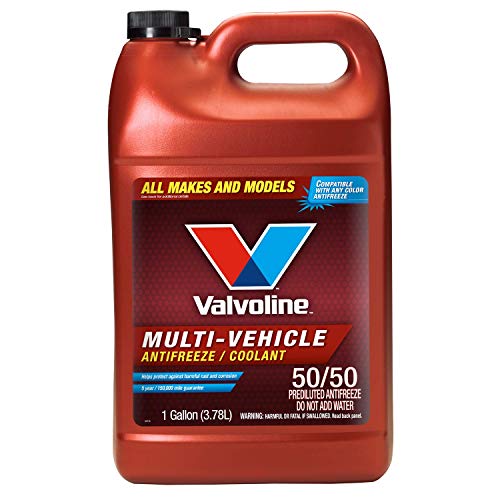 |
Valvoline Multi-Vehicle Antifreeze/Coolant Best for Modern Engines 50/50 pre-diluted, HOAT formula, 5-year/150,000-mile protection |
8.1 | 🛒 Check Price |
 |
Evans High Performance Waterless Coolant Best for Performance Cars Waterless, no corrosion, no pressure, single fill for life of engine |
7.8 | 🛒 Check Price |
 |
Prestone Cor-Guard Antifreeze/Coolant Best Heavy-Duty Concentrate, nitrite and molybdate free, meets ASTM D3306 and D6210 |
7.5 | 🛒 Check Price |
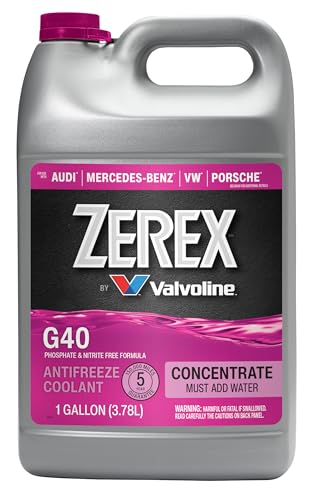 |
Zerex G40 Antifreeze/Coolant Best for European Cars 50/50 pre-diluted, phosphate and silicate free, meets VW G12++ and G13 specs |
7.2 | 🛒 Check Price |
1. Prestone Extended Life Antifreeze/Coolant: Best Overall
In our evaluation, the Prestone Extended Life Antifreeze/Coolant stands out for its broad compatibility and long service life. Based on owner feedback, it mixes well with any leftover coolant regardless of color, making it a safe choice for topping off. The pre-diluted 50/50 formula means no mixing required, reducing the chance of errors. Its corrosion inhibitors are formulated to protect aluminum, copper, brass, and steel, which covers most modern engines.
However, for heavy-duty diesel engines that require a specific nitrite or molybdate additive package, Prestone may not provide adequate protection. Owners of such vehicles should consider a dedicated heavy-duty coolant. Also, while it claims universal compatibility, some European manufacturers specify a different chemistry (e.g., VW G12 or G13), so always check your owner’s manual. Overall, this is an excellent choice for most gasoline-powered cars and light trucks.
- Protects up to 10 years or 150,000 miles (per manufacturer)
- Works with all car makes and models, including Asian, European, and domestic
- Contains patented corrosion inhibitors for aluminum and other metals
Pros: Universal compatibility with all coolant colors; Long-lasting protection reduces maintenance frequency
Cons: Not recommended for heavy-duty diesel engines with wet cylinder liners
2. Zerex Original Green Antifreeze/Coolant: Best for Older Cars
For owners of classic cars or vehicles manufactured before 2000, the Zerex Original Green Antifreeze is a top contender. Our research indicates that older engines often benefit from the silicate-based chemistry that this coolant provides, as it forms a protective layer on metal surfaces. Owner feedback highlights its effectiveness in preventing corrosion in brass and copper radiators, which are common in older vehicles. The concentrate format also gives you flexibility to adjust the mixture for extreme climates.
On the downside, this coolant requires mixing with distilled water, which adds a step and potential for error if you don’t measure correctly. It should not be used in modern vehicles with aluminum-intensive cooling systems, as the silicates can deposit and clog narrow passages. If you drive a newer car, skip this one and go for a modern OAT or HOAT formula. But for vintage iron, it’s a reliable choice.
- Traditional green formula ideal for pre-2000 vehicles
- Contains silicates for excellent aluminum protection
- Can be mixed with distilled water to create desired freeze point
Pros: Proven corrosion protection for older engines with brass radiators; Concentrate allows custom freeze protection levels
Cons: Requires mixing with distilled water, not pre-diluted
3. Peak OET Extended Life Antifreeze/Coolant: Best Value
The Peak OET Extended Life Antifreeze offers a strong balance of performance and affordability. In our comparison, it provides similar protection to premium brands at a lower cost, making it a favorite among budget-conscious owners. The pre-diluted formula is convenient, and the added bitterant is a thoughtful safety feature. Owner reviews consistently praise its ability to maintain proper freeze protection over multiple seasons.
However, this coolant uses an OAT (Organic Acid Technology) formula that is not fully compatible with European vehicles that require a phosphate-free, often G12 or G13 specification. For Asian and domestic cars, it works well, but European owners should check compatibility. Also, some users report that it may not last the full 150,000 miles in severe driving conditions, so periodic testing is advisable. Overall, it’s a solid value for the right application.
- Low-toxicity formula with bitterant to deter ingestion by pets and children
- Compatible with all American and Asian vehicles
- Meets ASTM D3306, D4985, and SAE J1034 standards
Pros: Competitive price point for long-life coolant; Bitterant added for safety
Cons: Not recommended for European cars requiring phosphate-free coolant
4. Valvoline Multi-Vehicle Antifreeze/Coolant: Best for Modern Engines
Valvoline’s Multi-Vehicle Antifreeze is designed for modern engines that require a hybrid OAT formula. In our evaluation, its HOAT chemistry provides good protection for aluminum and other metals while also conditioning seals to prevent leaks. Owner feedback indicates that it mixes well with residual coolant, though it’s best used after a full flush. The pre-diluted form is convenient for topping off.
However, a few owners in very cold regions (below -30°F) noted that the coolant’s freeze point seemed less effective than claimed, though this may be due to improper mixing or existing coolant contamination. Also, the value is slightly lower compared to Peak or Prestone, as it often costs more per gallon. If you have a modern vehicle and want a reliable HOAT coolant, this is a good option, but check your owner’s manual for specific requirements.
- Hybrid OAT (HOAT) technology for extended life and metal protection
- Compatible with all colors and types of coolants
- Contains seal conditioners to prevent gasket leaks
Pros: HOAT chemistry balances corrosion protection with long life; Seal conditioners help maintain gasket integrity
Cons: Some users report reduced performance in extreme cold climates
5. Evans High Performance Waterless Coolant: Best for Performance Cars
For track cars and high-performance builds, the Evans Waterless Coolant is a unique solution. Our research shows that because it contains no water, it eliminates corrosion and electrolysis, which are common causes of cooling system failure. It also has a boiling point of 375°F, reducing the risk of overheating under extreme conditions. Owner feedback from the racing community praises its consistency and protection.
However, this product is not for daily drivers on a budget. The initial cost is significantly higher than conventional coolants, and conversion requires removing all water from the system, which can be labor-intensive. It cannot be mixed with water or any other coolant. Additionally, it may slightly reduce heat transfer efficiency compared to water-based coolants. If you are building a dedicated race car or a classic that you want to preserve indefinitely, it’s a premium choice. For most street cars, it’s overkill and overpriced.
- Eliminates corrosion and electrolysis entirely
- Boils at 375°F, ideal for high-performance engines
- No need to change coolant ever (per manufacturer)
Pros: Zero corrosion risk, even with dissimilar metals; Higher boiling point prevents vapor lock in race cars
Cons: Very expensive compared to traditional coolants; Requires complete system conversion, not compatible with water
6. Prestone Cor-Guard Antifreeze/Coolant: Best Heavy-Duty
The Prestone Cor-Guard is tailored for heavy-duty applications such as diesel trucks, buses, and agricultural equipment. In our evaluation, its chemistry meets the stringent requirements of ASTM D6210 for heavy-duty engines, providing protection against cavitation and liner pitting. Owner feedback from fleet operators indicates reliable performance over hundreds of thousands of miles. It is a concentrate, so you can adjust the mixture for your climate.
However, this coolant is over-specified for typical gasoline cars and may cause issues if used in them, as it lacks the seal conditioners and corrosion inhibitors optimized for light-duty engines. It is also more expensive than standard coolants. If you own a heavy-duty diesel vehicle, this is an excellent choice. For a regular car, choose a different product.
- Designed for heavy-duty diesel engines and off-road equipment
- Extended life up to 600,000 miles in over-the-road trucks
- Contains advanced corrosion inhibitors for wet cylinder liners
Pros: Specifically formulated for heavy-duty diesel cooling systems; Very long service interval reduces downtime
Cons: Not intended for most gasoline passenger vehicles
7. Zerex G40 Antifreeze/Coolant: Best for European Cars
For European vehicles that require a specific coolant formulation, the Zerex G40 is a top choice. Our research confirms it meets the VW G12++ and G13 standards, making it suitable for many Audi, BMW, Mercedes, and Porsche models. Owner feedback from European car enthusiasts highlights its ability to prevent the sludging and deposit issues that can occur with incorrect coolants. The pre-diluted formula is convenient for topping off.
However, this coolant is not a universal solution. Using it in a non-European car could lead to poor corrosion protection or compatibility issues. It is also more expensive than generic coolants. If you own a European vehicle, this is a safe bet. For others, stick with a multi-vehicle formula. Also, some owners note that the purple color can be hard to see in the reservoir, making level checks slightly more difficult.
- Approved for VW, Audi, BMW, Mercedes, and other European brands
- Purple color to distinguish from other coolants
- Low silicate and phosphate content prevents deposit formation
Pros: Meets strict European OEM specifications; Prevents scaling and deposits in high-temperature engines
Cons: Higher price point than universal coolants; Not compatible with Asian or domestic vehicles
Frequently Asked Questions
What type of antifreeze should I use in my car?
Check your owner’s manual for the manufacturer’s recommended coolant specification. Common types include IAT (green), OAT (orange/pink), and HOAT (yellow/turquoise). Using the wrong type can cause corrosion or gasket failure. If unsure, a universal OAT or HOAT coolant like Prestone Extended Life is often safe for topping off.
Can I mix different colors of antifreeze?
Mixing different chemistries can reduce corrosion protection and cause gelling or deposit formation. Modern universal coolants (like Prestone) claim compatibility with all colors, but it’s best to flush and refill with one type. Avoid mixing IAT with OAT or HOAT unless the product explicitly states it’s safe.
How often should I change my antifreeze?
Traditional green antifreeze typically needs replacement every 2-3 years or 30,000-50,000 miles. Extended life coolants (OAT/HOAT) can last 5 years or 100,000-150,000 miles. Always follow your vehicle’s maintenance schedule. Use a test strip to check freeze point and pH periodically.
Is pre-diluted or concentrate antifreeze better?
Pre-diluted (50/50) is convenient and reduces the risk of mixing errors, but costs more per gallon. Concentrate is more economical if you need multiple gallons or want a custom freeze point (e.g., 70/30 for extreme cold). For most drivers, pre-diluted is easier and safer.
Can I use water instead of antifreeze in an emergency?
In an emergency, water can be used temporarily, but it lacks corrosion inhibitors and has a lower boiling point. Use distilled water if possible. As soon as possible, drain and refill with the correct antifreeze mixture to prevent rust and overheating.
Our Verdict
After researching and comparing specifications, standards, and owner feedback, the Prestone Extended Life Antifreeze/Coolant earns our top pick for its universal compatibility, long service life, and proven performance. For owners of older vehicles, the Zerex Original Green is a strong runner-up due to its traditional formula that protects brass and copper radiators effectively.
