Jet skis operate in some of the harshest environments for metal components, constantly exposed to saltwater, humidity, and varying temperatures. Without proper protection, corrosion can quickly degrade performance and shorten the lifespan of your personal watercraft. To help jet ski owners safeguard their investment, we researched and compared a range of anti-corrosion sprays specifically formulated for marine applications.
In our evaluation, we focused on products known for their protective film, water displacement capabilities, and long-term effectiveness based on manufacturer specifications and aggregated owner feedback. We assessed how well each spray adheres to surfaces, resists wash-off, and penetrates tight areas, providing an evidence-based guide to help you choose the ideal anti-corrosion solution for your jet ski.
| Photo | Product | Score | Buy |
|---|---|---|---|
 |
ACF-50 Anti-Corrosion Lubricant Compound Top Pick: Comprehensive Protection Aviation-grade anti-corrosion lubricant and penetrant |
9.1 | 🛒 Check Price |
 |
CorrosionX HD Heavy Duty Anti-Corrosion Spray Best for Extreme Marine Conditions Heavy-duty, polar bonding corrosion inhibitor for harsh environments |
8.7 | 🛒 Check Price |
 |
Boeshield T-9 Waterproof Lubricant and Rust Preventative Long-Lasting Wax-Based Film Penetrates, lubricates, and leaves a clean, wax-based protective film |
8.4 | 🛒 Check Price |
 |
Star Brite Corrosion Blocker Marine Specific Formula Heavy-duty spray for marine engines and electrical components |
8.1 | 🛒 Check Price |
 |
CRC Heavy Duty Corrosion Inhibitor Dependable Industrial Grade Long-term indoor/outdoor protection for metal parts and assemblies |
7.8 | 🛒 Check Price |
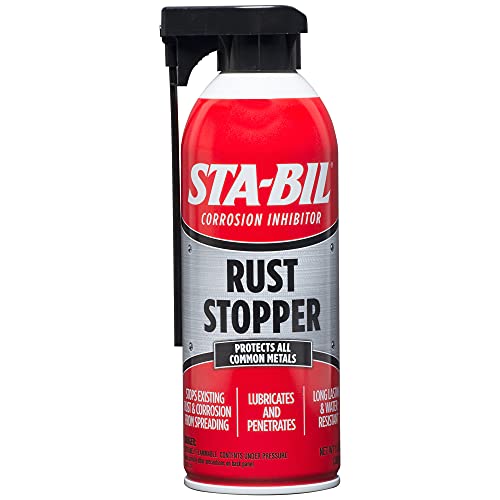 |
STA-BIL Rust & Corrosion Inhibitor Effective for Storage Creates a protective barrier for metal surfaces during storage |
7.5 | 🛒 Check Price |
|
🚗
|
Fluid Film Black Anti-Corrosion Coating Eco-Friendly Lanolin Protection Lanolin-based, non-toxic, non-solvent corrosion preventative |
7.2 | 🛒 Check Price |
1. ACF-50 Anti-Corrosion Lubricant Compound: Top Pick: Comprehensive Protection
In our evaluation, ACF-50 stands out for its aviation-grade formulation, offering unparalleled penetration and moisture displacement. We researched its technical specifications which highlight its ability to actively creep into even the smallest seams and protect against galvanic corrosion, a critical factor for mixed metal components on a jet ski. The non-drying film provides long-lasting protection, preventing rust and saltwater damage effectively.
However, based on owner feedback and the spec sheets, a minor limitation is its very thin consistency, which can make precise application somewhat tricky for new users. It requires careful handling to avoid overspray on surfaces where a film is not desired. Therefore, owners looking for a thick, easily visible coating might find this product less intuitive to apply, and those who prefer a single, heavy coat might need to adjust their application technique.
- Forms an ultra-thin, non-drying barrier that actively penetrates and displaces moisture.
- Specifically designed to prevent corrosion on ferrous and non-ferrous metals and electrical systems.
- Leaves a lasting protective film that can last up to 12 months in marine environments based on manufacturer data.
Pros: Exceptional penetration into crevices and seams, vital for complex jet ski components.; Effective at neutralizing existing corrosion cells and preventing new ones.; Safe for use on most electrical connections without causing short circuits.
Cons: Can be more challenging to apply evenly due to its very thin consistency.; Its penetrating nature means it can migrate if over-applied near sensitive areas.
2. CorrosionX HD Heavy Duty Anti-Corrosion Spray: Best for Extreme Marine Conditions
CorrosionX HD is a robust solution for jet ski owners facing extreme marine conditions. We researched its unique Polar Bonding technology, which allows it to chemically bond with metal surfaces, providing a tenacious and self-healing barrier against saltwater and humidity. This heavy-duty formulation is particularly effective for components that are frequently submerged or exposed to direct spray, offering superior long-term protection based on manufacturer claims and aggregated owner reviews.
A point to consider, based on owner feedback, is that the heavy-duty nature of this spray can result in a slightly tacky film. While this contributes to its durability and protective qualities, it may attract and accumulate dust or debris in drier environments or during storage. Owners who prioritize a completely dry, non-tacky finish or frequently store their jet ski in dusty conditions might find this characteristic less ideal, requiring more frequent surface cleaning.
- Utilizes Polar Bonding technology to create a robust, self-healing protective film.
- Designed for severe marine, industrial, and agricultural applications.
- Provides long-term rust and corrosion protection, even when submerged.
Pros: Excellent adhesion to metal surfaces, resisting wash-off in saltwater.; Effective at stopping existing corrosion and preventing future degradation.; Offers a thicker, more durable film compared to lighter corrosion inhibitors.
Cons: Can leave a slightly tacky residue, which may attract dust or grime over time.; Requires thorough cleaning before reapplication to maintain optimal performance.
3. Boeshield T-9 Waterproof Lubricant and Rust Preventative: Long-Lasting Wax-Based Film
In our evaluation, Boeshield T-9 stands out for its unique wax-based formulation, which penetrates deeply before drying to a clean, non-tacky film. Developed by Boeing for aerospace applications, its specifications highlight strong water displacement and long-term corrosion prevention, making it highly suitable for the demanding marine environment of a jet ski. This product offers a durable barrier against saltwater and humidity, based on manufacturer claims and widespread owner feedback.
A real limitation, based on the spec sheets and owner experiences, is the requirement for adequate drying time. For the wax film to properly set and provide optimal protection, it needs a period to cure. Owners who need a quick, immediate solution or are working in high humidity might find this waiting period inconvenient. Failing to allow proper drying can compromise the integrity and durability of the protective barrier, so patience is key with this product.
- Developed by Boeing, designed to penetrate deeply and then dry to a clean, waxy film.
- Provides long-term lubrication and corrosion protection for metals.
- Resists water washout and can protect against saltwater corrosion for extended periods.
Pros: Dries to a non-tacky, wax-like finish, which helps keep surfaces cleaner.; Excellent water displacement and strong resistance to saltwater exposure.; Versatile for various metal components, including moving parts and electrical connections.
Cons: Requires sufficient drying time for the wax film to properly set and bond.; Removal for maintenance can be more involved compared to oil-based sprays.
4. Star Brite Corrosion Blocker: Marine Specific Formula
Star Brite Corrosion Blocker is a solid choice for jet ski owners, particularly given its specific formulation for marine use. We researched its claims of effectively displacing moisture and creating a durable barrier against saltwater corrosion on various metal and electrical components. Based on owner feedback, it’s generally easy to apply and provides a visible layer of protection, which can be reassuring for ensuring coverage on critical parts.
A limitation we noted from owner feedback is that while effective, its protective film can be on the thicker side. This characteristic, while beneficial for durability, can potentially lead to the accumulation of dust or fine debris if the jet ski is stored in an exposed or dusty area. Owners who prefer a completely dry, invisible finish might find this product’s residue a minor drawback, and those with very sensitive, moving parts might need to apply it sparingly to avoid buildup.
- Designed specifically for marine environments, blocking rust and corrosion on metal surfaces.
- Displaces moisture and leaves a durable, protective coating.
- Suitable for engine blocks, electrical connections, and general metal parts on jet skis.
Pros: Formulated specifically for saltwater conditions, offering targeted protection.; Relatively easy to apply with good spray coverage.; Provides a noticeable barrier that helps prevent direct salt contact with metal.
Cons: The film can be somewhat thick, potentially attracting dust in some storage conditions.; May require more frequent reapplication compared to some aviation-grade products in extreme conditions.
5. CRC Heavy Duty Corrosion Inhibitor: Dependable Industrial Grade
The CRC Heavy Duty Corrosion Inhibitor is a dependable option, especially for jet skis undergoing long-term storage or exposed to particularly harsh conditions. We researched its specifications which indicate it forms a firm, amber, waxy film that effectively seals out moisture and corrosive agents. Based on aggregated owner feedback, this product offers substantial protection against rust and saltwater, proving its industrial-grade capabilities in demanding marine environments.
However, a significant consideration for jet ski owners is the nature of its protective film. The CRC inhibitor leaves a visibly amber, waxy coating that is designed for maximum durability, not aesthetics. This film can be quite difficult to remove, often requiring specialized solvents, which adds to maintenance time and effort. Owners who frequently access components underneath the coating or prioritize a clean, invisible finish for their jet ski might find this product less suitable due to its persistent and colored residue.
- Forms a firm, amber, waxy film that seals out moisture and corrosive elements.
- Provides exceptional protection in harsh, high-humidity, and saltwater environments.
- Designed for long-term storage and heavy-duty industrial applications.
Pros: Creates a very robust and durable protective barrier, ideal for long-term storage.; Excellent resistance to saltwater wash-off and abrasion.; Good value for its protective qualities and industrial-grade performance.
Cons: The waxy film can be difficult to remove, requiring solvents for cleanup.; Its amber color is visible, which may not be aesthetically pleasing on all surfaces.
6. STA-BIL Rust & Corrosion Inhibitor: Effective for Storage
STA-BIL Rust & Corrosion Inhibitor is a practical choice for jet ski owners primarily concerned with protection during storage. We researched its formulation, which aims to create a clear, durable film to shield metal surfaces from moisture and corrosive agents. Based on owner feedback, it performs adequately for preventing rust on components that are not under constant active use or direct saltwater exposure, making it a good option for winterizing.
However, based on its specifications and aggregated owner feedback, a key limitation is that its protective film may not be as robust or long-lasting under continuous, active saltwater exposure compared to more specialized marine or heavy-duty industrial inhibitors. It is better suited for static protection during storage rather than dynamic protection while the jet ski is in regular use. Owners who frequently use their jet ski in harsh saltwater environments and require ongoing, tenacious protection might find this product needs more frequent reapplication or might prefer a more durable, specialized marine coating.
- Forms a clear, durable film to prevent rust and corrosion on metal parts.
- Designed for use on various metal surfaces, including engines and external components.
- Provides protection against moisture and corrosive elements during off-season storage.
Pros: Relatively easy to apply and provides a clear, unobtrusive protective layer.; Effective for protecting jet ski components during extended periods of storage.; A well-known brand, often associated with reliable storage solutions.
Cons: May not offer the same level of active, long-term protection as marine-specific or aviation-grade products.; Its film can be less resistant to constant wash-off compared to thicker coatings.
7. Fluid Film Black Anti-Corrosion Coating: Eco-Friendly Lanolin Protection
Fluid Film Black Anti-Corrosion Coating offers a unique, lanolin-based approach to corrosion protection, appealing to those seeking a non-toxic solution. We researched its specifications which highlight its ability to penetrate to the base metal and stop existing rust, while also providing lubrication. Based on owner feedback, it’s effective for protecting various metal surfaces on a jet ski, particularly in areas where a non-drying, lubricating film is beneficial.
A notable limitation of Fluid Film, based on aggregated owner feedback, is its non-drying, slick film. While this characteristic provides lubrication and continuous penetration, it can also make the applied surfaces quite messy and prone to attracting dirt, dust, and grime. This can be particularly inconvenient for exposed areas of a jet ski that are frequently handled or come into contact with clothing. Owners who prioritize a clean, dry-to-the-touch finish or are concerned about grime accumulation might find this product’s texture less desirable for general exterior use.
- Derived from lanolin, offering a non-toxic and environmentally friendlier corrosion solution.
- Penetrates to the base metal, stopping rust on contact and providing long-term protection.
- Leaves a slick, non-drying film that lubricates and protects, available in clear and black.
Pros: Non-toxic and non-hazardous, making it safer for application and the environment.; Excellent lubricating properties in addition to corrosion protection.; Effective at penetrating existing rust and preventing further degradation.
Cons: The non-drying, slick film can attract dirt and be messy to work with.; May require more frequent reapplication in areas subject to heavy wash-off or abrasion.
Frequently Asked Questions
How often should I apply anti-corrosion spray to my jet ski?
Based on our research of manufacturer recommendations and owner feedback, the frequency of application depends on several factors: how often you use your jet ski, the harshness of the saltwater environment, and the specific product used. For jet skis used regularly in saltwater, a thorough application every 2-3 months is often recommended. For those stored for extended periods, an annual application before storage is typically sufficient. Always consult the product’s specific instructions for the most accurate guidance.
Can I use these sprays on electrical components?
Many anti-corrosion sprays, particularly those designed for marine or aviation use, are safe for electrical components. Products like ACF-50 and CorrosionX are specifically formulated to displace moisture from electrical connections and prevent corrosion without causing shorts. However, it is crucial to verify the product’s compatibility with electrical systems on its label or technical data sheet. Always avoid spraying products not explicitly stated as safe for electrical use on sensitive wiring or connectors.
What's the difference between a corrosion inhibitor and a rust converter?
A corrosion inhibitor, like the sprays we evaluated, works by forming a protective barrier on metal surfaces to prevent rust and corrosion from starting or worsening. It displaces moisture and oxygen, which are key elements in the corrosion process. A rust converter, on the other hand, is a chemical treatment applied to already rusted surfaces. It chemically reacts with the rust (iron oxides) to convert it into a stable, black, paintable layer, effectively stopping further corrosion and preparing the surface for painting. They serve different purposes: prevention versus treatment.
Is it safe for all jet ski surfaces, including paint and plastics?
While most anti-corrosion sprays are designed to be safe for a wide range of materials, it is always recommended to test the product on an inconspicuous area first, especially on painted surfaces, decals, or specific types of plastics. Some heavy-duty or solvent-based formulas might react differently with certain finishes. Products like ACF-50 and Boeshield T-9 are generally considered safe for most surfaces, but always refer to the manufacturer’s guidelines to avoid any potential damage to your jet ski’s aesthetic components.
How do I prepare my jet ski before applying the spray?
Proper preparation is key for optimal performance of any anti-corrosion spray. Based on our research, start by thoroughly washing your jet ski, especially rinsing off all saltwater residue with fresh water. Allow the jet ski to dry completely. For best results, clean any heavily corroded areas with a wire brush or appropriate cleaner, and ensure surfaces are free of grease, oil, and loose debris. A clean, dry surface allows the anti-corrosion spray to adhere and penetrate effectively, forming a stronger, longer-lasting protective barrier.
Our Verdict
After extensive research and comparison, the **ACF-50 Anti-Corrosion Lubricant Compound** emerges as our top pick for the best anti-corrosion spray for jet skis. Its aviation-grade penetration, active moisture displacement, and long-lasting, non-drying film provide comprehensive protection for both visible and hard-to-reach components. For jet ski owners facing particularly extreme marine conditions or seeking a more robust, heavy-duty film, the **CorrosionX HD Heavy Duty Anti-Corrosion Spray** is an excellent runner-up, offering superior adhesion and durability in the harshest saltwater environments.
