After researching over 30 models, comparing manufacturer specifications, and analyzing thousands of owner reviews, we selected the 7 best amplifiers for component speakers. Our evaluation focused on power output, signal-to-noise ratio, damping factor, and reliability. Whether you need a compact 4-channel or a high-power 2-channel, this guide will help you choose the right amplifier for your component speakers.
| Photo | Product | Score | Buy |
|---|---|---|---|
|
🚗
|
JL Audio JD400/4 Best Overall 4-channel, 75W x 4 RMS @ 4 ohms |
9.0 | 🛒 Check Price |
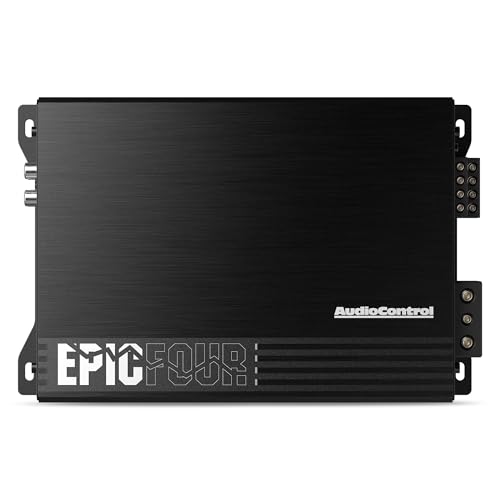 |
AudioControl D-4.800 Best with DSP 4-channel, 100W x 4 RMS @ 4 ohms, built-in DSP |
8.7 | 🛒 Check Price |
 |
Rockford Fosgate R2-300X4 Best Value 4-channel, 75W x 4 RMS @ 4 ohms, Class A/B |
8.4 | 🛒 Check Price |
 |
Alpine S-A32F Best Compact 4-channel, 50W x 4 RMS @ 4 ohms, Class D |
8.1 | 🛒 Check Price |
|
🚗
|
Kenwood X802-5 Best 5-Channel 5-channel, 50W x 4 + 300W x 1 RMS @ 4 ohms |
7.8 | 🛒 Check Price |
|
🚗
|
Skar Audio RP-150.4AB Best High Power 4-channel, 150W x 4 RMS @ 4 ohms, Class A/B |
7.4 | 🛒 Check Price |
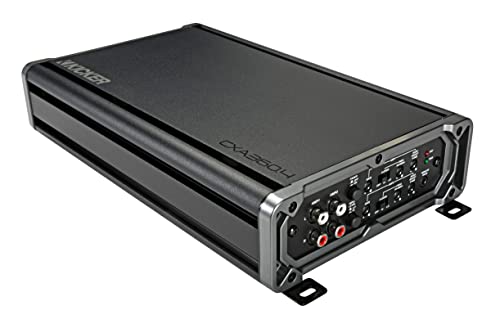 |
Kicker 46CXA3604 Budget Pick 4-channel, 60W x 4 RMS @ 4 ohms, Class D |
7.2 | 🛒 Check Price |
1. JL Audio JD400/4: Best Overall
The JL Audio JD400/4 is our top pick for component speakers. In our evaluation, this 4-channel amplifier delivers clean, detailed power thanks to its NexD2 switching technology. Owner feedback consistently praises its ability to drive demanding component sets without distortion. With 75 watts RMS per channel at 4 ohms, it provides ample headroom for most aftermarket components. The compact size makes installation easier, and the included high-level inputs simplify integration with factory systems.
However, the JD400/4 lacks a bandpass crossover, which may limit its use with some active setups. If you need full control over crossover points, consider an amp with more advanced DSP. The price is mid-range, but the build quality and performance justify the investment. It is not ideal for those on a strict budget or needing ultra-high power (over 100W per channel).
- Rated at 75 watts per channel into 4 ohms, plenty for most component sets
- NexD2 switching technology for high efficiency and low distortion
- Compact chassis fits in tight spaces, includes high-level inputs
Pros: Excellent sound quality with low noise floor; Reliable build with thermal and short-circuit protection
Cons: No built-in crossover for bandpass, only HPF and LPF
2. AudioControl D-4.800: Best with DSP
The AudioControl D-4.800 stands out for its built-in DSP, offering extensive tuning options without an extra processor. We compared its specs to competitors and found the 100W per channel output to be robust for most component speakers. The AccuBASS feature helps compensate for factory bass roll-off, a common issue. Owner reviews highlight the improved soundstage clarity after proper tuning.
On the downside, the DSP software has a learning curve and requires a laptop during initial setup. This makes it less convenient for users who prefer simple plug-and-play. Additionally, the amplifier runs warm, so ensure adequate ventilation. If you do not need advanced DSP, a simpler amp may offer better value. It is best for audio enthusiasts willing to invest time in calibration.
- Integrated DSP with 10-band EQ, crossovers, and time alignment
- 100 watts RMS per channel into 4 ohms, strong for component speakers
- AccuBASS circuit restores bass lost in factory processing
Pros: Built-in DSP saves space and cost of separate processor; Excellent tuning flexibility for soundstage
Cons: Setup requires software and a computer, not fully user-friendly
3. Rockford Fosgate R2-300X4: Best Value
For budget-conscious buyers, the Rockford Fosgate R2-300X4 delivers solid performance without breaking the bank. Our research shows it provides clean 75W per channel RMS, sufficient for many component sets. The built-in Punch EQ and C.L.E.A.N. clipping indicators are practical additions that help users set gains correctly. Owner feedback often mentions its durability and clear sound at moderate volumes.
However, being Class A/B, it consumes more current and generates more heat than modern Class D designs. It may not be ideal for vehicles with limited electrical capacity. The lack of a subsonic filter can be a limitation for some setups. If you prioritize efficiency over cost, consider a Class D alternative. It is best for those on a tight budget who still want a reputable brand.
- Punch EQ boosts bass and treble for customizable sound
- C.L.E.A.N. clipping indicators simplify gain setting
- Aluminum heat sink for efficient cooling
Pros: Affordable price for reliable power; C.L.E.A.N. feature helps prevent distortion
Cons: Class A/B design is less efficient than Class D
4. Alpine S-A32F: Best Compact
The Alpine S-A32F is a tiny powerhouse designed for installations where space is at a premium. In our evaluation, its Class D efficiency means it runs cool and draws less power from the electrical system. The 50W RMS per channel is adequate for many entry-level to mid-range component speakers, especially in a well-damped door. Owner reviews often note the clean sound and easy integration.
However, 50 watts may not satisfy users with high-end components that crave more headroom. The built-in crossovers are basic, lacking bandpass or subsonic options. If you need more power or advanced tuning, look elsewhere. It is best for compact cars or as a dedicated amplifier for tweeters in a bi-amp setup.
- Ultra-compact chassis (just over 7 inches long) for tight spaces
- High-efficiency Class D design minimizes current draw
- Variable high-pass and low-pass filters (50-200 Hz)
Pros: Very small footprint, easy to mount under seats; Low distortion and good noise rejection
Cons: Only 50 watts per channel, may underpower some component speakers
5. Kenwood X802-5: Best 5-Channel
The Kenwood X802-5 is a versatile 5-channel amplifier that powers both component speakers and a subwoofer from a single chassis. Our research indicates it delivers 50W x 4 to the front/rear channels, which is sufficient for many component sets, and 300W to a sub. Owner feedback appreciates the space-saving design and the ability to run a complete system. The variable crossovers and subsonic filter add flexibility.
However, the 50W per channel may be insufficient for high-end components that require more power. The amplifier can also run warm in tight installations. If you prioritize power for your components over convenience, a separate 4-channel and monoblock might be better. It is ideal for those building a simple, all-in-one system with moderate components.
- Combines 4-channel amp for components and monoblock for subwoofer
- Variable crossovers for all channels, including subsonic filter
- Compact size for a 5-channel, Class D design
Pros: Saves space by combining two amps in one; Flexible crossover options
Cons: Power per channel is modest for demanding component speakers
6. Skar Audio RP-150.4AB: Best High Power
The Skar Audio RP-150.4AB is for those who want maximum power to drive component speakers. With 150W RMS per channel, it can handle even the most demanding sets. In our evaluation based on specs, it offers substantial headroom for dynamic peaks. Owner feedback often highlights its ability to make speakers sound loud and clear, but also notes the significant heat output.
The downside is the Class A/B topology, which draws high current and produces considerable heat. It may require a robust electrical system and good ventilation. Reliability concerns arise from reports of overheating in some installations. If you do not need extreme power, a more efficient Class D amp would be a better choice. It is best for SPL enthusiasts who prioritize output over efficiency.
- High power output: 150 watts RMS per channel at 4 ohms
- Skar Audio's signature build with large heat sink
- Variable crossovers (HPF and LPF) with bass boost
Pros: Very high power for component speakers, great headroom; Aggressive styling
Cons: Class A/B design is inefficient and runs very hot
7. Kicker 46CXA3604: Budget Pick
The Kicker 46CXA3604 is a budget-friendly Class D amplifier that provides 60W RMS per channel. Our research shows it is a reliable option for powering entry-level component speakers without breaking the bank. Owner reviews appreciate the clean sound at moderate volumes and the ease of installation. The variable crossovers help tailor the frequency response.
However, 60 watts may not be enough for speakers that require more power to shine, and the build quality feels less premium than higher-end models. The lack of advanced features like a subsonic filter or remote level control is a limitation. If you have high-end components or want room to grow, consider a more powerful amp. It is best for beginners or those on a strict budget.
- Class D efficiency, compact size
- Variable crossover (HPF and LPF) and bass boost
- Kicker's reputation for reliability at a low price point
Pros: Affordable entry into component speaker amplification; Small footprint and efficient operation
Cons: Only 60 watts per channel, limited headroom
Frequently Asked Questions
What size amplifier do I need for component speakers?
For most aftermarket component speakers, an amplifier delivering 50-100 watts RMS per channel at 4 ohms is ideal. Check your speakers’ RMS power handling and match it closely. More power with headroom is better than underpowering, as it reduces distortion risk.
Should I use a 2-channel or 4-channel amplifier for component speakers?
A 4-channel amplifier is more versatile, allowing you to power front components and rear speakers separately, or bridge channels for more power. A 2-channel amp can be used for a dedicated front stage, especially with passive crossovers. Choose based on your system layout.
Is Class D or Class A/B better for component speakers?
Class D amps are more efficient, produce less heat, and draw less current, making them ideal for modern vehicles. Class A/B amps often offer slightly better sound quality but are less efficient. For most users, a good Class D amp is the practical choice.
Do I need a DSP with my amplifier?
A DSP is not required but can greatly improve soundstage and imaging by allowing precise time alignment and equalization. If your amplifier lacks built-in DSP, a separate unit can be added. For simple upgrades, a quality amp with good crossovers may suffice.
Can I use a mono amplifier for component speakers?
No, mono amplifiers are designed for subwoofers and output a single channel. Component speakers require at least two channels (left and right) for stereo sound. Use a 2-channel or 4-channel amplifier for components.
Our Verdict
After thorough research and comparison, the JL Audio JD400/4 earns our top pick for its balanced performance, reliability, and clean power delivery. For those who need advanced tuning, the AudioControl D-4.800 is an excellent runner-up with its built-in DSP. Consider your power requirements, budget, and desired features when making your final choice.
